Portugal
Sintra
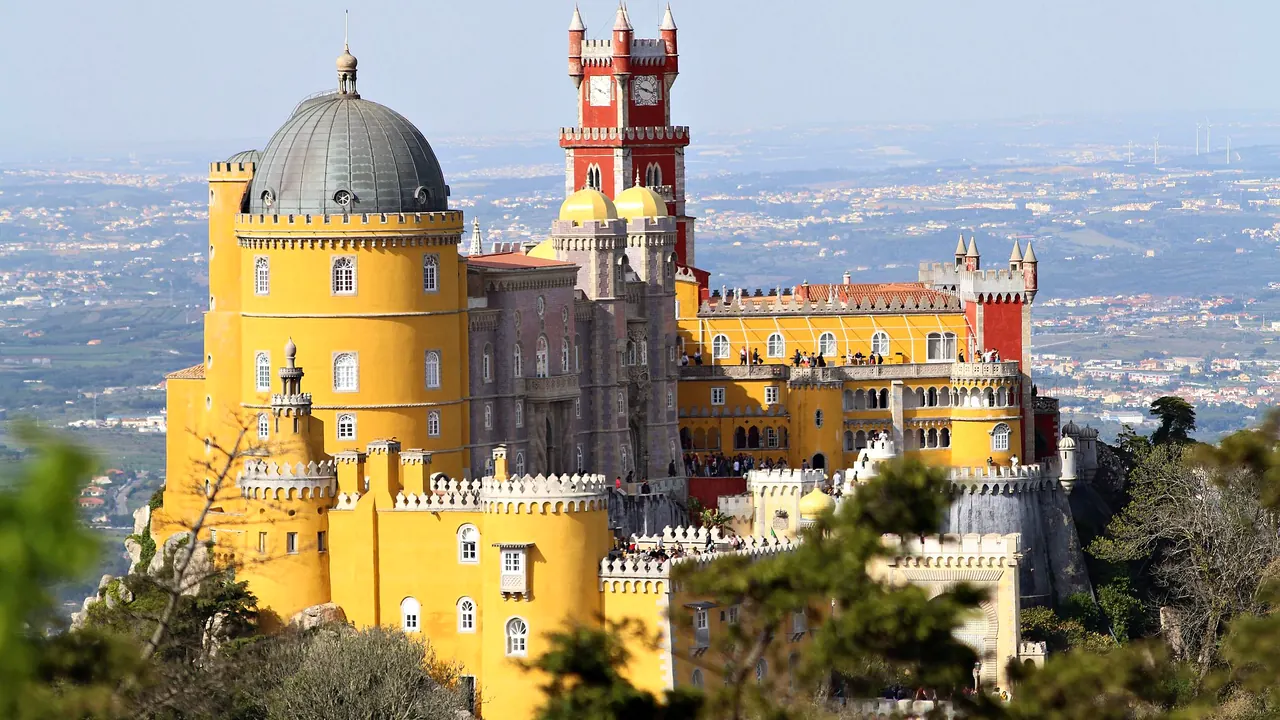
Pena Palace with its yellow and red towers
- Day trips83
- Nature & outdoors78
- Culture & sights77
Photo: Chabe01, CC BY-SA 4.0, cropped
Match
47
Every category weighted equally
- Beach & sun47
- Culture & arts49
- Food & nightlife39
- Family trip53
- Outdoors58
- Relax & unwind50
- Shopping & style42
- On a budget48
Sintra in twelve categories
Our verdict on each, scored 0 to 100 against the same fixed benchmark cities, so a score means the same thing on every page.
Beaches & swimming. Scores 45 out of 100.
Food & drink. Scores 38 out of 100.
Culture & sights. Scores 77 out of 100.
Nightlife. Scores 8 out of 100.
Nature & outdoors. Scores 78 out of 100.
Day trips. Scores 83 out of 100.
Good for families. Scores 45 out of 100.
Getting around. Scores 55 out of 100.
Shopping & style. Scores 25 out of 100.
Affordability. Scores 52 out of 100.
Live music & performing arts. Scores 20 out of 100.
Wellness & relaxation. Scores 40 out of 100.
Sintra category by category
Beaches & swimming
45Sintra's coast is the wild Atlantic edge of the Sintra hills, about 20 minutes' drive or a bus ride from town. Praia Grande and Praia das Maçãs are proper sandy beaches with lifeguards in summer, Praia da Adraga sits in a cove under dark cliffs, and the village of Azenhas do Mar has a tidal pool below its whitewashed houses. In summer a historic tram rattles down from the hills to Praia das Maçãs.
The water is cold, around 17-19°C even in August, the surf is often heavy and fog can roll in on a sunny inland day. Most visitors treat the beach as an afternoon out from the palaces rather than the reason for the stay.
Food & drink
38Sintra's own food signature is its pastry: the travesseiro, a puff-pastry pillow filled with almond and egg cream, and the queijada, a small cheese tart, both sold warm from old pastry houses in the historic centre. Piriquita, baking since the nineteenth century, is the one name worth knowing.
Beyond that, the old town's restaurants mostly serve standard Portuguese dishes to day-trippers, and quality is uneven. The better meals are grilled fish and seafood in the coastal villages of Azenhas do Mar and Praia das Maçãs, and simple tascas in the outlying parishes. Evenings are quiet, the choice is small, and serious eating means going into Lisbon.
Culture & sights
77Sintra is a romantic fantasy built on a hill, and its UNESCO-listed cultural landscape packs an extraordinary set of palaces into a few square kilometres. The Pena Palace sits on a peak in yellow and red, a nineteenth-century royal folly in Manueline, Moorish and Gothic dress. Below it lie the ramparts of the Moorish Castle, and in the town itself the National Palace, with its two huge conical kitchen chimneys and rooms lined with old azulejos.
Quinta da Regaleira, with its spiralling Initiation Well and grottoes, Monserrate's Moorish-style palace and the cork-lined Capuchos convent add to the list. What Sintra lacks is museums of any weight. The best is seen in two full days, ideally early before the crowds.
Nightlife
8Once the last trains take the day-trippers back to Lisbon, Sintra goes quiet. There are a few bars and wine spots in the old town and a café terrace or two that stay open into the evening, but nothing runs late and there is no club scene. Anyone wanting a night out takes the train into Lisbon, about 40 minutes away, and plans the trip back.
Nature & outdoors
78Sintra is set in the Serra de Sintra, a granite ridge covered in damp, mossy forest of oak, cork, pine and giant ferns, often wrapped in cloud while the plain below is in sun. Trails lead from the town up to the Pena Park, the high viewpoint of Cruz Alta and on to Peninha, with views over the Atlantic and the Tagus estuary. The microclimate is cooler and wetter than Lisbon's, which keeps it green and pleasant to walk in summer.
West of the hills the land ends in high cliffs at Cabo da Roca, continental Europe's westernmost point, with clifftop paths along the coast. Praia Grande draws surfers and bodyboarders, and mountain biking and horse riding are popular in the park. The hills are modest rather than mountainous.
Day trips
83The strongest day trip is Lisbon itself, about 40 minutes by suburban train, a full capital with its own sights and neighbourhoods. Closer still are Cascais, an old fishing town turned seaside resort, and the Estoril coast, reachable by bus over the hills.
With a car the list widens. The vast baroque palace and basilica at Mafra are about 20 minutes away, the surf village of Ericeira a little further, and the walled town of Óbidos about an hour north. The UNESCO monasteries of Alcobaça and Batalha and the pilgrimage town of Fátima are within about an hour and a half, while Setúbal and the Roman and medieval centre of Évora mark the outer limit.
Good for families
45Children often love Sintra more than adults expect. Climbing the walls of the Moorish Castle, going down the spiral of the Initiation Well at Quinta da Regaleira and exploring its tunnels and grottoes, or seeing the brightly coloured Pena Palace feels like a storybook. The parks are cool and shady in summer.
The difficulties are practical. The paths are steep and cobbled, buggies struggle, the crowded hill buses and queues test patience, and the beaches have strong surf. There is nothing built specifically for children; the aquarium and science museums are in Lisbon. It suits families with school-age children for a few days rather than toddlers for a week.
Getting around
55The historic centre is small and easy to walk, and the suburban train from Lisbon arrives a short stroll from it. Beyond that, Sintra is a town of steep, winding lanes. The Pena Palace and Moorish Castle sit high above the centre, a stiff uphill hike or a ride on the circular tourist bus, which fills up at peak times. Tuk-tuks and taxis fill the gaps.
Driving in the hills is frustrating, with narrow one-way roads and very little parking near the palaces. Buses link the town to Cascais and the beaches, but anyone planning several coastal villages or the wider region is better off with a car kept outside the centre.
Shopping & style
25Shopping in Sintra means the narrow streets of the old town, lined with shops selling souvenirs, hand-painted tiles and ceramics, cork goods, linen and boxes of local pastries. A few antique dealers trade in old azulejos and furniture, and the long-established Sunday fair at São Pedro de Penaferrim mixes antiques, plants, food and bric-a-brac. There are no fashion streets or department stores; serious shopping means Lisbon.
Affordability
52Sintra costs about what a well-visited small town in southern Europe usually does. Simple meals in local tascas, coffee and pastries, and the train from Lisbon are inexpensive. What adds up is the palaces: each charges its own entry, and a visitor who wants to see four or five will spend more on tickets than on food. Rooms in historic manor houses and guesthouses in the centre are at the higher end, while staying in the outlying villages or near the coast is noticeably cheaper.
Live music & performing arts
20Sintra's main musical event is its long-running summer festival of classical music and dance, which uses the palaces and quintas as concert settings and makes for memorable evenings. The Olga Cadaval cultural centre hosts concerts and theatre through the year, and an occasional restaurant has fado. For most of the year, though, there is little to attend, and opera, theatre and regular live music mean an evening in Lisbon.
Wellness & relaxation
40Sintra has no bathing tradition or public baths, and spas are limited to a few hotels and converted manor houses in the hills. Its restorative quality comes from the setting instead. Staying overnight in a quinta among old gardens and forest, with mist moving through the trees and the town empty after the day-trippers leave, is the calmest way to experience it.
During the day the historic centre and the road to the palaces are crowded and noisy, so the peace belongs to the early mornings, the evenings and the quieter estates outside the centre, such as Monserrate's gardens.
When should you go?
Pick a month to see what it is like. The climate figures are measured averages, not a forecast.
Sintra in July
Daytime high, °C
Rainfall in the month, mm
The whole year
Shaded against this city’s own year: the deepest cell is its best month for that figure and the palest its weakest.
Temperature and rainfall are climate normals, averaged over the years shown. Sintra: 1991-2020 (rainfall 1961-1990) normals, Lisboa / Geof (22.7 km from centre).
Before you go
| Measure | Sintra |
|---|---|
| Official language | Portuguese |
| Currency | Euro (EUR) |
| Sockets | CF230 V, 50 Hz |
| Driving side | Right |
| Time zone | UTC, UTC+1 in summer |
| Emergency number | 112 |
| Elevation | 193 m |
| Main airport | Lisbon Humberto Delgado Airport (LIS)22 km from centre156 non-stop destinations |
| Public holidays this year | 14 days |
By the numbers
| Measure | Sintra |
|---|---|
| City population | 385,606 |
| People per km² | 1,208 |
| Museums within 10 km | 12 |
| UNESCO World Heritage sites within 50 km | 3 |
| Swim season, months above 21 °C | None |
Compare Sintra with
Every comparison with a written verdict behind it.
- Cadiz
- Coimbra
- Cordoba
- Faro
- Lisbon
- Malaga
- Marbella
- Porto
- Ronda
- Salamanca
- Santiago de Compostela
- Seville
- Tangier
- Toledo