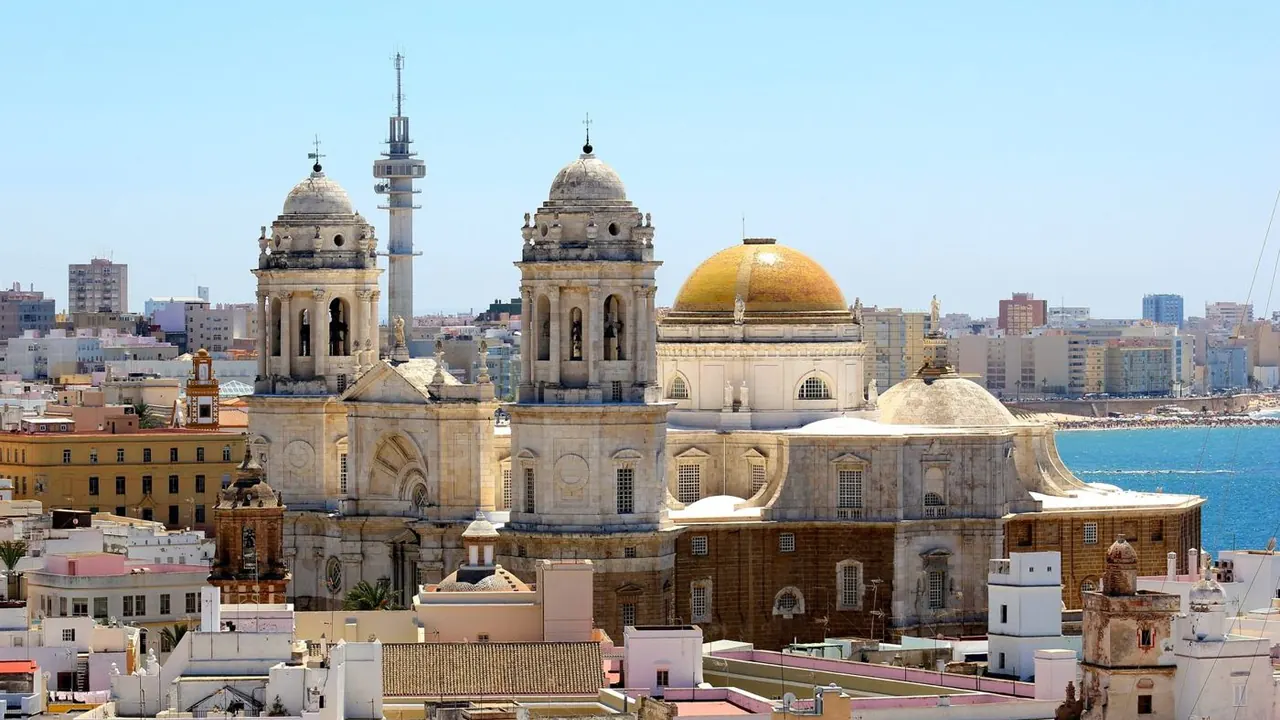
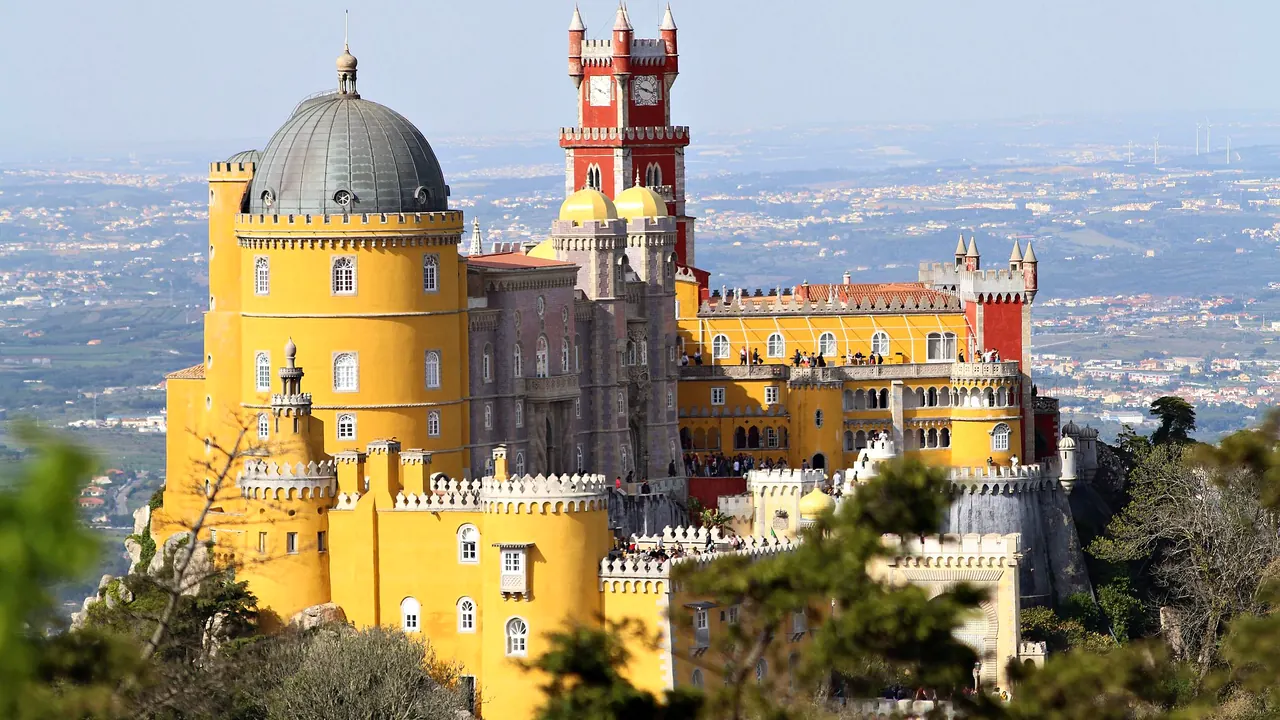
Photos: Cadiz by Bronch, CC BY-SA 3.0 ES, cropped; Sintra by Chabe01, CC BY-SA 4.0, cropped.
Cadiz or Sintra?
Our verdict in twelve categories, each scored against the same fixed benchmark cities, and the climate month by month, so you can choose for your trip.
Choose Cadiz for
- nightlife
- beaches
- live music and the arts
Cadiz is the better choice for a summer trip built around the sea and the table. You get a sandy town beach you can walk to, the long strands of the Costa de la Luz within an hour, fried fish and almadraba tuna in the tapas bars, and warm evenings that run late in La Viña. It also stays lively after dark, which Sintra does not, and it hands you flamenco peñas and the Carnival songs of the Gran Teatro Falla. Pick it if you want a flat, easy town where the evenings matter as much as the days.
Choose Sintra for
- culture and sights
- nature and the outdoors
- day trips
Sintra suits travellers who come for the palaces and the forest. The Pena Palace, Quinta da Regaleira, the Moorish Castle and Monserrate stand close together in mossy hills cut through with walking trails, and the cliffs at Cabo da Roca are a short way west. Food, nightlife and beaches are all thin, so the best fit is a couple of days of sightseeing and walking, ideally with a night in a quinta once the crowds go home, and Lisbon close by for everything else.
Scoreboard
Twelve categories on one fixed scale from 0 to 100. The shaded stretch is the gap between the two.
Your match
Pick a travel style or drag the sliders, and both match scores follow your weighting.
Wins on nightlife and beaches with your weighting.
Wins on culture and sights and nature and the outdoors with your weighting.
What matters to you?
Category by category
What the scores mean for a trip.
Beaches & swimming
For a beach trip, Cadiz is in another league. The sea is part of daily life in town: La Caleta between its two castles for a sheltered swim, the long golden sweep of Playa Victoria a bus ride away, and the Atlantic here is warm enough for real swimming through the summer. Beyond the city lie the dune-backed bay of Bolonia and the open beaches of El Palmar and Conil, though the levante can whip sand across them for days.
Sintra's beaches are a side trip from the palaces. Praia Grande, Praia das Maçãs and the cove at Adraga are dramatic, and the tidal pool at Azenhas do Mar is lovely, but the water stays cold, the surf runs heavy and fog can roll in off the sea.
Food & drink
Cadiz eats far better. Paper cones of fried dogfish, shrimp fritters, almadraba bluefin in the La Viña bars and a morning at the Mercado Central make a trip in their own right, washed down with fino and manzanilla from the sherry towns nearby. The range is narrow, but within seafood and tapas it rarely disappoints.
Sintra's real treat is pastry: warm travesseiros and queijadas from the old bakeries in the centre. Old-town restaurants cater mostly to day-trippers and are uneven, so the better meals are grilled fish down in the coastal villages, and serious dining means heading into Lisbon.
Culture & sights
Sintra is the stronger sightseeing destination. Its UNESCO landscape packs the hilltop Pena Palace, the Moorish Castle ramparts, the National Palace with its giant chimneys, Quinta da Regaleira's Initiation Well, Monserrate and the cork-lined Capuchos convent into a few square kilometres. That is two full days of palaces, best started early before the queues build.
Cadiz offers deeper history rather than spectacle: Phoenician sarcophagi in the Museo de Cádiz, a Roman theatre in the Barrio del Pópulo, the gold-domed cathedral and the 1812 constitution at San Felipe Neri. Neither has weighty museums, but Sintra's set pieces are the more memorable.
Nightlife
Cadiz is the only one of the two with a night out. Late tapas rounds in La Viña and around Plaza de San Francisco give way in summer to seafront terraces along Playa Victoria open into the small hours, and Carnival turns the whole town into an all-night street party each February. Outside summer it calms to a few late bars and a student club scene.
Sintra effectively closes once the last trains leave for Lisbon. A wine bar or a café terrace in the old town is the extent of it, and anything livelier means the 40-minute train into the capital and a plan for getting back.
Nature & outdoors
Sintra has the better outdoors on the doorstep. You can walk straight from town into the misty granite ridge of the Serra de Sintra, through oak, cork and giant ferns up to Pena Park, Cruz Alta and Peninha, then out to the cliffs at Cabo da Roca. It stays green and cool for summer walking.
Cadiz itself is flat, with the sea as its scenery. Its strengths lie further out: flamingos and kayaking in the salt pans of the Bahía de Cádiz, the clifftop pines of La Breña, kitesurfing and whale-watching from Tarifa, and real mountain walking in Grazalema about two hours away.
Day trips
Both make excellent bases, and the difference is in character. From Cadiz the outings are Andalusian: sherry bodegas and the riding school in Jerez, the bay ferry to El Puerto, Seville by train, and by car the white towns of Vejer and Arcos and the Roman ruins of Baelo Claudia.
From Sintra the big draw is Lisbon, a whole capital about 40 minutes away by train, with Cascais and the Estoril coast nearer still. With a car you add the baroque palace at Mafra, walled Óbidos and the monasteries of Alcobaça and Batalha.
Good for families
Cadiz is easier with children. A wide, lifeguarded sandy beach, the sheltered cove at La Caleta, a flat, car-light old town and shady parks like the Genovés make days simple, and late family evenings are normal. Midday summer heat and the gusty levante are the things to plan around.
Sintra can enchant school-age children with castle walls and the tunnels at Regaleira, but steep cobbles defeat buggies, hill buses and queues test patience, and the beaches have strong surf. It works for a few days with older children rather than a week with toddlers.
Getting around
Cadiz is the simpler place to get around. The old town is flat and mostly traffic-free, buses run the isthmus to Playa Victoria, and trains to Jerez and Seville and the catamaran across the bay leave from the centre. Only the Costa de la Luz and the white towns really need a car.
Sintra's compact centre sits a short stroll from the Lisbon train, but the palaces lie up steep, winding lanes reached by a stiff hike or a crowded circular bus. Driving and parking near the sights are frustrating, so a car is best kept outside town for coastal outings.
Shopping & style
Neither is a shopping destination, but Cadiz offers a little more. Calle Ancha and Columela mix Spanish chains with family-run shops, and fans, flamenco fashion, ceramics and sherry make good souvenirs.
Sintra's old-town lanes lean heavily towards tiles, cork goods, linen and boxed pastries, with a few antique dealers and the Sunday fair at São Pedro de Penaferrim for browsing. For anything serious, Cadiz sends you to Seville and Sintra to Lisbon.
Affordability
Cadiz is slightly kinder to the budget, mainly because eating out is so cheap: freidurías, tapas and market counters feed you well for little, and the sights charge small fees if any. Rooms are its weak point in July, August and Carnival week, so staying near Playa Victoria or coming in spring or autumn helps.
In Sintra the palace tickets are what mount up, since each charges separately and a full round can outstrip what you spend on food. Manor-house rooms in the centre are dear, while the coast and outlying villages are cheaper.
Live music & performing arts
Cadiz has much more to see on stage. It is a cradle of flamenco, and the peñas of the Santa María quarter keep alegrías alive for knowing audiences. The Gran Teatro Falla hosts the satirical chirigotas of Carnival, a year-round programme of plays and an autumn festival of Ibero-American theatre.
Sintra's highlight is its summer festival of classical music and dance in palace and quinta settings, a memorable backdrop. Beyond that the Olga Cadaval centre offers occasional concerts, and most evenings of opera, theatre or fado mean Lisbon.
Wellness & relaxation
Neither town has a bathing tradition, and spas in both come down to hotels. Cadiz has resort spas with sea-water treatments a short drive away at Novo Sancti Petri and Arab-style baths in Jerez. Its calm comes from rhythm: sea-wall walks, long lunches, siesta and a sunset at La Caleta.
Sintra's calm comes from place instead. A night in a quinta among old gardens, the forest wrapped in mist and Monserrate's grounds early in the day are restful, though the centre is crowded and noisy by day.
When should you go?
Pick your month. The climate figures are measured averages, not a forecast.
Cadiz in July
Sintra in July
Daytime high, °C
Rainfall in the month, mm
Temperature and rainfall are climate normals, averaged over the years shown. Cadiz: 1991-2020 (sunshine 1961-1990) normals, Cadiz Bay / Puntales (5.2 km from centre). Sintra: 1991-2020 (rainfall 1961-1990) normals, Lisboa / Geof (22.7 km from centre).
The two share almost the same daytime temperatures through the year, peaking around 28°C in July and August, but they feel quite different. Cadiz is the sunnier and drier of the two, with summers that are virtually rainless from June to August and an Atlantic warm enough for long swims from June to early October, reaching about 23°C at its height. Midday in high summer is hot for walking, so mornings and evenings are the time for the old town. May and late September are the sweet spot if you want warm days without the full heat.
Sintra's winters are noticeably wetter, with rainfall climbing past 100mm in November and staying high until spring, and its sea never gets much above 19°C, so swimming is bracing even in August. Its season for walking the hills and palaces runs from late spring to early autumn, and the cool, often misty forest makes summer pleasant there too. From October onwards both turn rainy, Sintra more so.
Which traveller are you?
On a beach and sun trip, Cadiz wins easily. Playa Victoria's golden sand is walkable from town, La Caleta offers a sheltered dip, the water is warmer, and the empty strands at Bolonia and Zahara are within an hour.
For a food and nightlife trip, Cadiz is again the answer. Freidurías, tuna tapas and cold manzanilla fill the evenings, the seafront bars stay open late in summer, and Carnival takes over the streets in February. Sintra goes quiet once the day-trippers leave.
On an outdoors trip, Sintra has the edge. Trails climb through fern and cork forest to Cruz Alta and Peninha, clifftop paths run past Cabo da Roca, and there is surfing at Praia Grande. Cadiz's best landscapes, Grazalema and Doñana, take a longer drive.
Before you go
| Measure | Cadiz | Sintra |
|---|---|---|
| Official language | Spanish | Portuguese |
| Currency | Euro (EUR) | Euro (EUR) |
| Sockets | CF230 V, 50 Hz | CF230 V, 50 Hz |
| Driving side | Right | Right |
| Time zone | UTC+1, UTC+2 in summer | UTC, UTC+1 in summer |
| Emergency number | 112 | 112 |
| Elevation | 11 m | 193 m |
| Main airport | Jerez Airport (XRY)31 km from centre25 non-stop destinations | Lisbon Humberto Delgado Airport (LIS)22 km from centre156 non-stop destinations |
| Public holidays this year | 12 days | 14 days |
By the numbers
| Measure | Cadiz | Sintra |
|---|---|---|
| City population | 109,950 | 385,606 |
| People per km² | 9,087 | 1,208 |
| Museums within 10 km | 12 | 12 |
| UNESCO World Heritage sites within 50 km | 0 | 3 |
| Swim season, months above 21 °C | 3 months | None |
Where else could you go?
Every comparison below shares a destination with this one, so you can follow Cadiz or Sintra somewhere new.