Photos: Ronda by Julia Kostecka, CC BY 2.0, cropped; Sintra by Chabe01, CC BY-SA 4.0, cropped.
Ronda or Sintra?
Our verdict in twelve categories, each scored against the same fixed benchmark cities, and the climate month by month, so you can choose for your trip.
Choose Ronda for
- prices
- nightlife
- food and drink
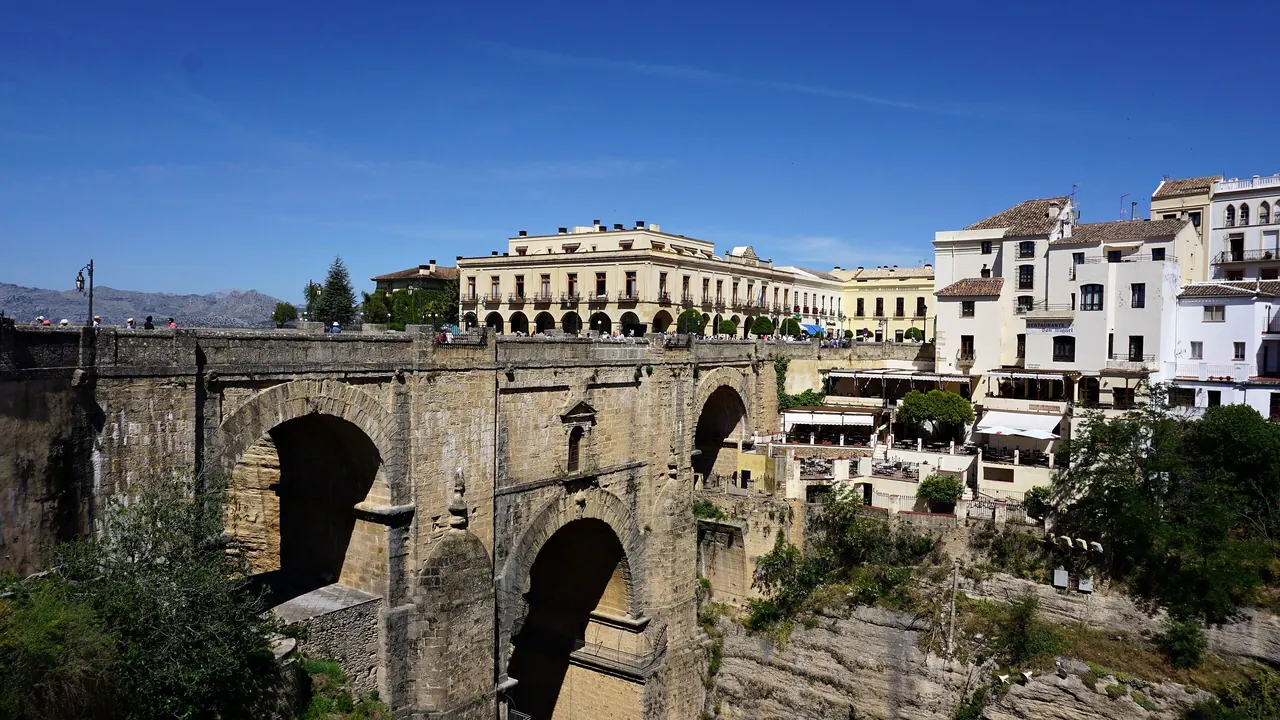
Ronda suits travellers who want mountain walking, white villages and a slower, cheaper base. It is a place to hire a car, stay in a country house with a pool, spend the days in the Grazalema and Sierra de las Nieves hills and come back to tapas in the Mercadillo. The gorge and its bridge are unforgettable, but the sightseeing in town takes only a day or two.
Choose Sintra for
- beaches
- culture and sights
- families
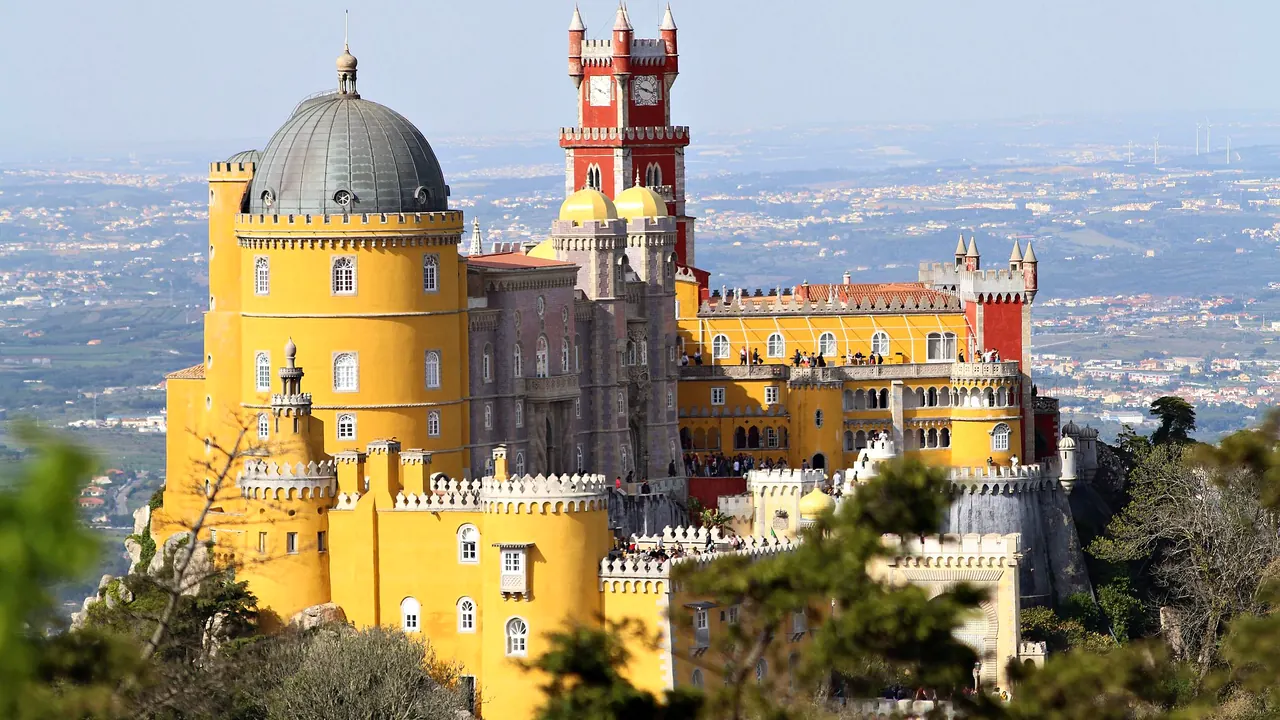
Pick Sintra if palaces are the point. The Pena Palace, Quinta da Regaleira and the Moorish Castle make for fuller and more theatrical sightseeing, children tend to love them, and Lisbon is a short train ride away for the food, nightlife and museums the town itself lacks. Atlantic beaches are close as well, though the water is cool.
Scoreboard
Twelve categories on one fixed scale from 0 to 100. The shaded stretch is the gap between the two.
Your match
Pick a travel style or drag the sliders, and both match scores follow your weighting.
Wins on prices and nightlife with your weighting.
Wins on beaches and culture and sights with your weighting.
What matters to you?
Category by category
What the scores mean for a trip.
Beaches & swimming
Neither is a beach town, but Sintra's coast is far easier to use. Praia Grande, Praia das Maçãs and the cove at Adraga are about 20 minutes away by car or bus, close enough for an afternoon after the palaces, and Azenhas do Mar has a tidal pool below the village.
From Ronda the nearest sand is around Estepona and San Pedro, some 50km away down hairpin bends, so a swim takes a whole day. The water is the trade-off: the Costa del Sol is warmer and calmer than Sintra's cold Atlantic with its heavy surf.
Food & drink
Both towns eat modestly, and the difference is in the kind of food. Ronda's strength is hearty mountain cooking: oxtail stew, lamb, game, cured hams, and mushrooms and chestnuts in autumn. There is local Sierras de Málaga wine and there are tastings at wineries nearby, and the tapas bars of the Mercadillo are better than the terraces over the gorge.
Sintra's speciality is sweet rather than savoury, the travesseiros and queijadas from its old pastry houses, and the best meals are grilled fish in the coastal villages. For a serious dinner, visitors to Sintra simply take the train to Lisbon.
Culture & sights
Sintra has the richer sightseeing. The Pena Palace, the Moorish Castle, the National Palace with its giant chimneys, Quinta da Regaleira, Monserrate and the Capuchos convent are all packed into a few square kilometres of UNESCO-listed hillside, enough for two full days.
Ronda's heritage is real but smaller: the Puente Nuevo over El Tajo, the old Maestranza bullring, the Arab baths and Santa María la Mayor. The setting on the gorge is the great sight, and a day or two covers it. Neither town has museums of any weight.
Nightlife
Both towns go quiet early, but Ronda has a little more going on after dark. In summer the Plaza del Socorro and the streets nearby stay busy with late dinners and a few bars, and the September fair livens things up.
Sintra empties once the day-trippers catch the train back to Lisbon, leaving a couple of wine bars and terraces. For a real night out you go to the capital, about forty minutes away, and plan your journey back.
Nature & outdoors
Both are excellent bases for walking, in very different landscapes. Ronda is real mountain country, with limestone crags, the green, rain-fed Sierra de Grazalema with its vultures, the Spanish fir forests of the Sierra de las Nieves, climbing on the cliffs of the Tajo, and the Caminito del Rey about an hour away.
Sintra's hills are gentler: a granite ridge of mossy forest and ferns that stays cool in summer, with trails up to Cruz Alta and Peninha. What Sintra adds is the ocean, with the cliffs at Cabo da Roca, paths along the coast and surf at Praia Grande.
Day trips
Sintra has the edge, mainly because Lisbon is a quick train ride away and Cascais and the Estoril coast are a short bus ride over the hills. With a car, Mafra, Ericeira, Óbidos and the monasteries of Alcobaça and Batalha are all within easy reach.
Ronda's outings are rural: white villages such as Setenil de las Bodegas, Grazalema and Zahara de la Sierra, the Roman ruins of Acinipo and the cave paintings of the Cueva de la Pileta. The big cities, Seville and Málaga, are up to two hours away, and you really need a hire car for the villages.
Good for families
In Ronda, children's interest comes from the landscape rather than from anything built for them. Older children and teenagers who enjoy heights and walking get the most out of it, with the cliff edges, the cave paintings at the Cueva de la Pileta and the houses tucked under the rock at Setenil. Younger ones tire quickly on the steep lanes, and the sheer drops at the lookouts mean small children need holding on to. For many families, the pool at a rural house is what the little ones remember.
Sintra gives children more to do, and for more days. The gardens at Pena and Regaleira are made for exploring, with towers, tunnels and lakes. In summer, an afternoon at the beach or at the tidal pool at Azenhas do Mar breaks up the sightseeing, though the open beaches have strong surf. On a wet day, Lisbon's aquarium is a train ride away. Queues and full hill buses are the main strain, so it works best for families with children of school age and older.
Getting around
Ronda's trains on the Algeciras to Antequera line and its buses to Málaga and Seville are fine for arriving but too slow and infrequent for exploring. In town that hardly matters, because the bridge, the bullring and the Mercadillo are a few minutes apart on foot, with only the lanes down into La Ciudad to climb. The white villages and natural parks need a car, and parking in the old town is tight.
Sintra is about forty minutes from Lisbon by suburban train, and the station is a short stroll from the centre. Here the effort goes uphill: the Pena Palace and the Moorish Castle are at the end of a stiff climb or a ride on a tourist bus that fills up, with tuk-tuks and taxis as the alternatives. The hill roads are narrow and one-way, so anyone driving to the coast or the wider region should leave the car outside the centre.
Shopping & style
Neither town is a place to shop, and both send serious shoppers to a big city. Ronda's best buys are edible: local wine, cured meats, olive oil and convent sweets, alongside ordinary shops on Carrera Espinel.
Sintra's old-town streets lean towards crafts, such as hand-painted tiles, cork goods and linen. Antique dealers sell old azulejos, and the Sunday fair at São Pedro de Penaferrim is good for browsing.
Affordability
Ronda is the cheaper place to stay. Tapas and set lunches in the Mercadillo are good value, the sights cost little to enter and country houses are fairly priced. The main extra cost is a hire car, and the hotels with gorge views cost more.
In Sintra, food and the train are inexpensive, but each palace has its own ticket, so seeing all the main sights costs more than the meals. Rooms in the manor houses in the centre are expensive, and staying near the coast or in the villages outside town saves money.
Live music & performing arts
Neither town has much to see on an ordinary evening, and what they do offer is quite different. Ronda's is Andalusian. There is flamenco for visitors in small rooms, which comes to life more at fiesta time, and there is the Corrida Goyesca at the September fair: a bullfight in period costume in the Maestranza, as much a historical pageant as a performance.
Sintra leans towards the classical. Its summer festival puts concerts and dance into palace halls and quinta gardens, and the setting is half the pleasure. Its cultural centre keeps up a modest programme through the rest of the year. For fado or opera you go to Lisbon, which is close by train, whereas Ronda's nearest big-city stages are a long drive away.
Wellness & relaxation
Sintra is a little more restful, mainly because of where you can stay: quintas among old gardens and forest, with the town empty and misty after dark and quiet estates such as Monserrate nearby. The drawback is the daytime crowds on the road to the palaces.
Ronda's calm comes from country hotels and farmhouses among olive groves, with pools and big views, and the town quietens once the coaches leave. Neither has a bathing tradition: Ronda's Arab baths are a monument, and in both towns the spas are limited to a few hotels.
When should you go?
Pick your month. The climate figures are measured averages, not a forecast.
Ronda in July
Sintra in July
Daytime high, °C
Rainfall in the month, mm
Where the figures come from
Ronda has no weather station within reach, so its figures come from a gridded climate model rather than a measured record, and read a broad area rather than the city itself.
Temperature and rainfall are climate normals, averaged over the years shown. Ronda: 1991-2020 normals, TerraClimate 4 km grid at the town, no weather station within 90 km. Sintra: 1991-2020 (rainfall 1961-1990) normals, Lisboa / Geof (22.7 km from centre).
Ronda's weather changes more through the year. July and August reach about 32°C with almost no rain, which is too hot for walking in the afternoon. Winter is cool and wet, and December brings around 120mm. April and May in spring, and September and October in autumn, are the best months for the streets and the trails. The coast below Ronda warms to about 22°C by August, so a summer beach day down there is pleasant.
Sintra stays milder. Summer highs are around 28°C with long sunny days, and the shaded hills stay comfortable for walking, though the Atlantic only gets to about 19°C. The rain returns in October and stays heavy all winter, so May, June and September give the best mix of warmth, sunshine and dry paths.
Which traveller are you?
On a culture and arts trip, Sintra is the stronger choice. Its palaces, castle and gardens fill two full days with varied sightseeing, against Ronda's small group of sights around the gorge, and Lisbon's museums are about forty minutes away by train.
On a family trip with children, Sintra again comes out ahead. Climbing castle walls and going down the Initiation Well feel like a storybook, and there are beaches nearby. Ronda has its bridge and the walk into the gorge, but little else made for children.
On a trip with a tight budget, Ronda goes further. Tapas bars and set lunches in the Mercadillo are good value, entry to the sights costs little and you can walk everywhere in town, whereas Sintra's separate palace tickets soon add up.
Before you go
| Measure | Ronda | Sintra |
|---|---|---|
| Official language | Spanish | Portuguese |
| Currency | Euro (EUR) | Euro (EUR) |
| Sockets | CF230 V, 50 Hz | CF230 V, 50 Hz |
| Driving side | Right | Right |
| Time zone | UTC+1, UTC+2 in summer | UTC, UTC+1 in summer |
| Emergency number | 112 | 112 |
| Elevation | 724 m | 193 m |
| Main airport | Málaga-Costa del Sol Airport (AGP)60 km from centre166 non-stop destinations | Lisbon Humberto Delgado Airport (LIS)22 km from centre156 non-stop destinations |
| Public holidays this year | 12 days | 14 days |
By the numbers
| Measure | Ronda | Sintra |
|---|---|---|
| City population | 33,671 | 385,606 |
| People per km² | 87 | 1,208 |
| Museums within 10 km | 5 | 12 |
| UNESCO World Heritage sites within 50 km | 0 | 3 |
| Swim season, months above 21 °C | 1 month | None |
Where else could you go?
Every comparison below shares a destination with this one, so you can follow Ronda or Sintra somewhere new.