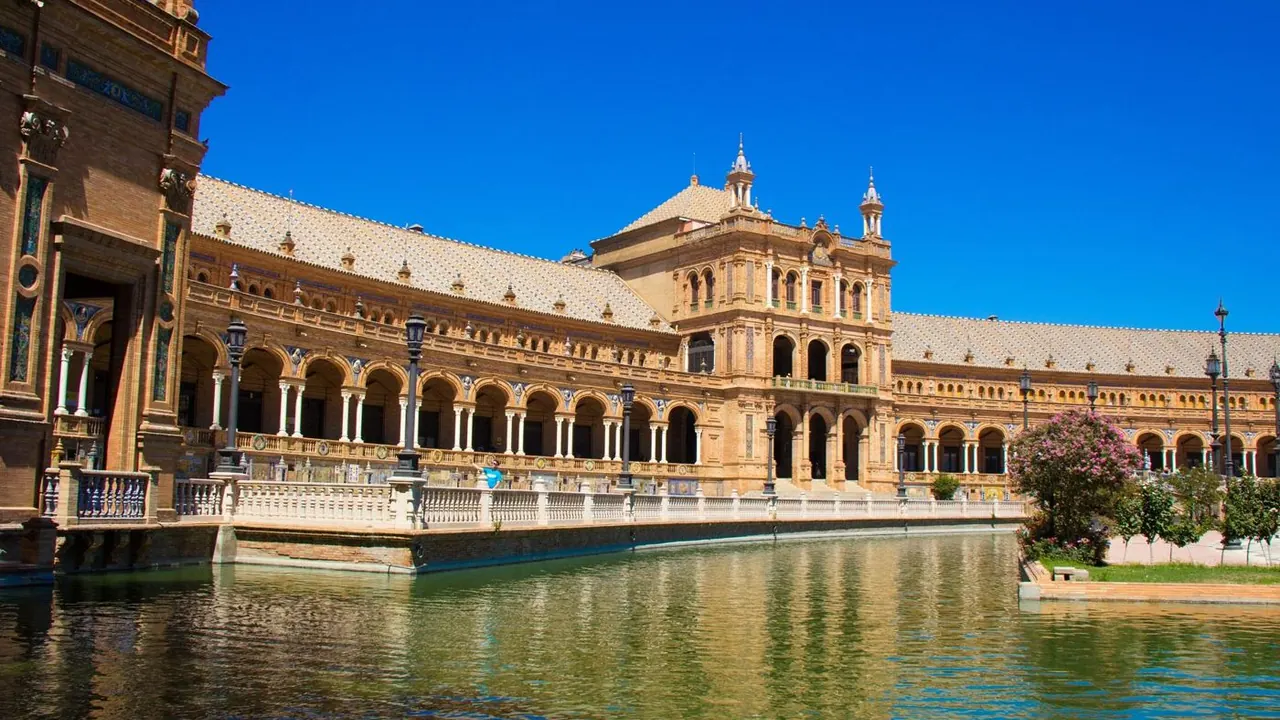
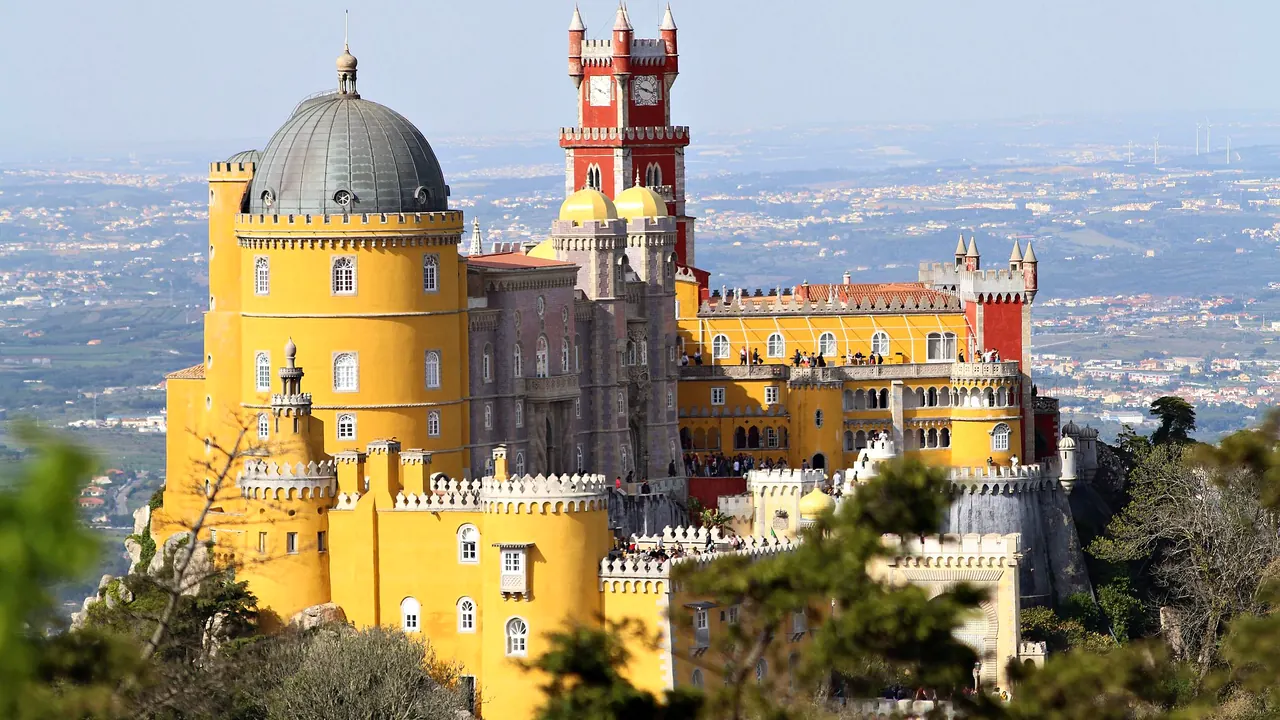
Photos: Seville by Tibor Kovacs, CC BY 2.0, cropped; Sintra by Chabe01, CC BY-SA 4.0, cropped.
Seville or Sintra?
Our verdict in twelve categories, each scored against the same fixed benchmark cities, and the climate month by month, so you can choose for your trip.
Choose Seville for
- nightlife
- live music and the arts
- food and drink
Seville is the choice for a trip built around a living city. Its great monuments sit in a flat, walkable centre, evenings run late through tapas bars and squares, and flamenco is on every night. Travellers who want food, music and a social life after dark, with Córdoba and Cádiz an easy train ride away, will get far more out of it.
Choose Sintra for
- beaches
- nature and the outdoors
- day trips
Sintra suits people who would rather spend their days among forest, cliffs and fairy-tale palaces than in bars. It is a hill town with a green ridge to walk, Atlantic beaches a short ride away and Lisbon within reach by train. The evenings are very quiet, so it works best for a few unhurried days, or as a calm base for someone who doesn't mind going into the capital for dinner and a night out.
Scoreboard
Twelve categories on one fixed scale from 0 to 100. The shaded stretch is the gap between the two.
Your match
Pick a travel style or drag the sliders, and both match scores follow your weighting.
Wins on nightlife and live music and the arts with your weighting.
Wins on beaches and nature and the outdoors with your weighting.
What matters to you?
Category by category
What the scores mean for a trip.
Beaches & swimming
Sintra has the coast on its doorstep. Praia Grande, Adraga and the tidal pool at Azenhas do Mar are about twenty minutes from town, and in summer the old tram runs down to Praia das Maçãs. The water is cold and the surf often heavy, so these are afternoons of sand and spray rather than long swims.
From Seville, the sea takes a whole day. The Huelva beaches at Matalascañas and Mazagón are well over an hour by car, and inside the city a dip means a pool. The water there is warmer, which is why many travellers add a few nights on the coast instead.
Food & drink
Seville is one of the great tapas cities. Salmorejo, pork cheek, spinach with chickpeas and fried fish from Cádiz are eaten standing at tiled counters in Santa Cruz, El Arenal and Triana, with manzanilla or fino from the sherry towns. Grazing like this through an evening is a good reason to go on its own.
Sintra's own speciality is pastry, the warm travesseiro and queijada. Its old-town restaurants are uneven and mostly cater to day-trippers. The best meals are grilled fish in the coastal villages, and anyone who wants real choice goes to Lisbon.
Culture & sights
Both are first-rank for sightseeing, but in different ways. Seville is a great historic city: the Alcázar's Mudéjar courtyards, a Gothic cathedral built over a mosque and the Archivo de Indias stand together, with the Bellas Artes, Casa de Pilatos and Plaza de España all within walking distance. That fills three or four days.
Sintra is a landscape of palaces scattered over a wooded hill. There is the red and yellow Pena, the Moorish Castle ramparts, the Initiation Well at Quinta da Regaleira and Monserrate. It is more theatrical than Seville but has no museums of weight, and two full days, starting early, cover the best of it.
Nightlife
Seville has proper nights out, Sintra hardly any. In Seville dinner starts around ten and the evening carries on outdoors, on the Alameda de Hércules, around the Alfalfa and along the river terraces in summer, though serious clubbing is limited.
Sintra goes quiet once the day-trippers leave. A drink in the old town is about as far as it goes, and a real night out means the train into Lisbon and a plan for getting back.
Nature & outdoors
Sintra is far greener. The Serra de Sintra is a granite ridge of mossy oak, cork and fern forest, with trails up to Cruz Alta and Peninha, and its cooler microclimate means you can walk there even in summer. Beyond it the land ends in the cliffs of Cabo da Roca, with coastal paths, surfing and mountain biking.
Seville sits in a flat valley of farmland and orange groves. In the city you get María Luisa Park and kayaking on the river. Its big natural draw is the Doñana wetland, about an hour and a half away, best seen on a guided trip in spring or autumn.
Day trips
From Seville the day trips are a tour of Andalusian towns by fast train, while from Sintra they lead to a capital city and the Portuguese coast. Córdoba's Great Mosque and Jewish quarter are under an hour from Seville, Carmona and the Roman ruins of Itálica are closer still, and Jerez's bodegas and the old port of Cádiz are an easy run south. Much of it works without a car.
Sintra's best day out is Lisbon itself, forty minutes away by suburban train, with Cascais and the Estoril coast just over the hills. With a car you can add the palace at Mafra, the surf village of Ericeira, walled Óbidos and the monasteries of Alcobaça and Batalha.
Good for families
Seville is somewhat easier with children. The centre is flat for buggies, children are welcome in tapas bars late into the evening, and there are rowing boats at Plaza de España, a maze in the Alcázar gardens, an aquarium and a theme park with a water park on La Cartuja. The catch is the summer heat.
In Sintra, school-age children love the castle walls and Regaleira's tunnels, which feel like a storybook. But the lanes are steep and cobbled, the hill buses get crowded, the surf is strong, and nothing is built with children in mind.
Getting around
Seville is the easier place to get around on foot. Its flat centre puts the cathedral, Triana and Plaza de España within a half-hour walk, and bike lanes, a tram and buses fill the gaps. The obstacle is heat, not distance.
Sintra's small centre is easy enough, but the Pena Palace and Moorish Castle are a steep climb above it. That means a crowded tourist bus, a tuk-tuk or a hard hike, and the coastal villages are easiest with a car parked outside town.
Shopping & style
Seville gives you more to buy and more that is made locally. Triana's pottery workshops sell hand-painted tiles, and the shops around Sierpes and Cuna sell flamenco dresses, mantillas, fans and guitars made for the April Fair. Spanish high-street chains are close by.
Sintra's old town is mostly souvenirs, cork goods, linen and boxed pastries. The Sunday fair at São Pedro de Penaferrim and a few azulejo antique dealers add interest, but there are no fashion streets.
Affordability
Seville is somewhat cheaper overall, mostly because of how little it costs to eat. A tapas evening costs far less than a sit-down dinner, beer and wine are cheap, and you walk everywhere. The exception is rooms, which jump sharply in Holy Week and during the Fair.
In Sintra, food and the train from Lisbon are inexpensive, but each palace charges its own entry, so seeing four or five of them can cost more than your meals. Rooms are cheaper in the outlying villages than in the manor houses of the centre.
Live music & performing arts
Seville is the home of flamenco, with performances every night in Santa Cruz and Triana tablaos, cultural centres and local peñas. Opera and the city's symphony orchestra play at the Teatro de la Maestranza, fittingly for the city where Carmen is set.
Sintra's highlight is its summer festival of music and dance, held in palaces and quintas, with concerts at the Olga Cadaval centre the rest of the year. Otherwise there is little on, and Lisbon fills the gap.
Wellness & relaxation
Neither has a bathing tradition, so the calm comes from different places. Seville has a few Arab-style bath houses in old mansions, plus shaded courtyards and long lunches, but its narrow streets are noisy at night. In Sintra, the restful option is a night in a quinta among misty gardens, with early mornings and evenings to yourself once the daytime crowds have gone.
When should you go?
Pick your month. The climate figures are measured averages, not a forecast.
Seville in July
Sintra in July
Daytime high, °C
Rainfall in the month, mm
Temperature and rainfall are climate normals, averaged over the years shown. Seville: 1991-2020 (sunshine 1981-2010, rainfall 1981-2010) normals, Sevilla / San Pablo (8.1 km from centre). Sintra: 1991-2020 (rainfall 1961-1990) normals, Lisboa / Geof (22.7 km from centre).
Seville is at its best in spring, from March to May, and again in October, when days are warm without being punishing. From June to September the inland heat builds to around 36°C, which makes midday sightseeing hard work, though the evenings are long and the sun is almost constant. The rain comes in late autumn and winter, but even then winter afternoons stay mild enough for walking.
Sintra runs cooler all year, with summer highs nearer 28°C. That makes July and August comfortable for the palace hills and the forest trails, and the beach season sits in the same months. The sea never gets much above 19°C, though. Its wet season is heavier than Seville's, peaking at about 122mm in February, and from October to February the hills are often damp and misty. Seville is the better pick in spring, and Sintra is the cooler, greener option in high summer.
Which traveller are you?
On a food and nightlife trip, Seville is the clear pick. You can drift from one tapas counter to the next with sherry and cold beer, then stay out late on the Alameda or in Triana. Sintra empties after dark and sends you to Lisbon for dinner.
For a culture and arts trip, Seville gives more. The Alcázar, the cathedral and the Bellas Artes sit together in one walkable centre, and you can see flamenco in tablaos and peñas or opera at the Maestranza. In Sintra the palaces are superb, but the stage is thin outside its summer festival.
On an outdoors trip, Sintra is the better base. Forest trails climb the Serra de Sintra to Cruz Alta, clifftop paths run along to Cabo da Roca and surfers head for Praia Grande. Around Seville the land is flat farmland, and the summer heat rules out most activity.
Before you go
| Measure | Seville | Sintra |
|---|---|---|
| Official language | Spanish | Portuguese |
| Currency | Euro (EUR) | Euro (EUR) |
| Sockets | CF230 V, 50 Hz | CF230 V, 50 Hz |
| Driving side | Right | Right |
| Time zone | UTC+1, UTC+2 in summer | UTC, UTC+1 in summer |
| Emergency number | 112 | 112 |
| Elevation | 18 m | 193 m |
| Main airport | Seville Airport (SVQ)9 km from centre96 non-stop destinations | Lisbon Humberto Delgado Airport (LIS)22 km from centre156 non-stop destinations |
| Public holidays this year | 12 days | 14 days |
By the numbers
| Measure | Seville | Sintra |
|---|---|---|
| City population | 689,423 | 385,606 |
| People per km² | 4,896 | 1,208 |
| Museums within 10 km | 24 | 12 |
| UNESCO World Heritage sites within 50 km | 1 | 3 |
| Swim season, months above 21 °C | - | None |
Where else could you go?
Every comparison below shares a destination with this one, so you can follow Seville or Sintra somewhere new.