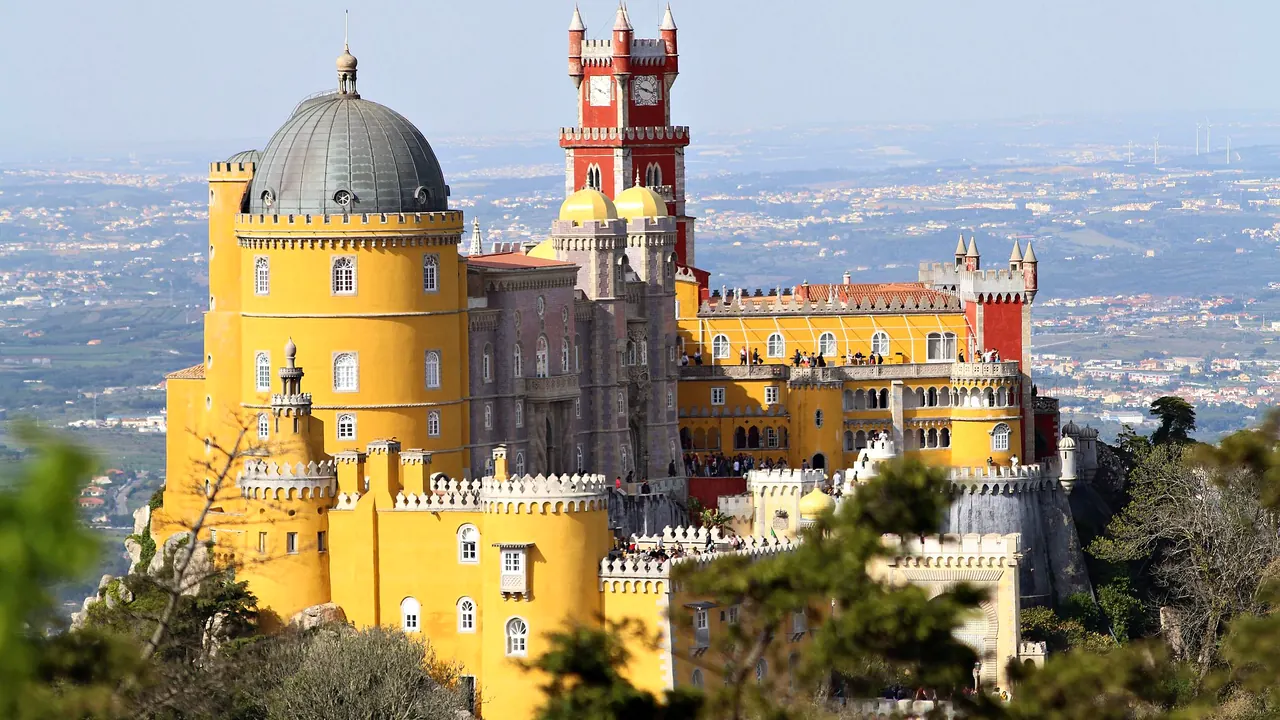
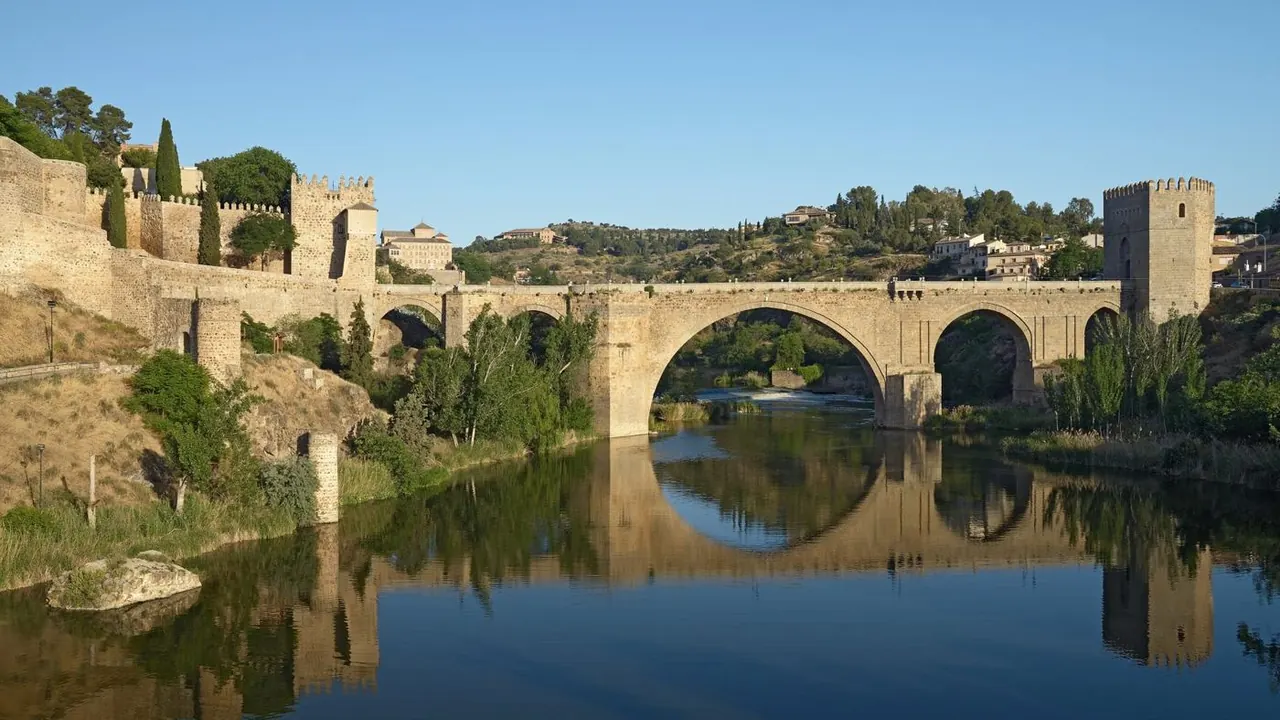
Photos: Sintra by Chabe01, CC BY-SA 4.0, cropped; Toledo by Ввласенко, CC BY-SA 3.0, cropped.
Sintra or Toledo?
Our verdict in twelve categories, each scored against the same fixed benchmark cities, and the climate month by month, so you can choose for your trip.
Choose Sintra for
- beaches
- nature and the outdoors
- wellness
Sintra suits travellers who want romance and green landscape in one place. You get a hill of storybook palaces wrapped in damp forest, trails out to Atlantic viewpoints and wild sandy beaches a short ride away. It's the better choice for walkers, for couples who want misty evenings in an old quinta, and for anyone who wants to mix sightseeing with an afternoon by the sea. Lisbon is close enough to supply the nightlife and restaurants the town lacks.
Choose Toledo for
- nightlife
- getting around
- shopping
Toledo is for the traveller who wants history packed tightly together. A great cathedral, synagogues, a small mosque and El Greco's paintings all sit on one compact hilltop that you can walk around. It gives more back after dark, with rounds of tapas bars around Zocodover, and it has better craft shopping and slightly easier everyday costs. In return there's no sea at all, and the summer heat rules out walking in the middle of the day.
Scoreboard
Twelve categories on one fixed scale from 0 to 100. The shaded stretch is the gap between the two.
Your match
Pick a travel style or drag the sliders, and both match scores follow your weighting.
Wins on beaches and nature and the outdoors with your weighting.
Wins on nightlife and getting around with your weighting.
What matters to you?
Category by category
What the scores mean for a trip.
Beaches & swimming
Sintra has a real coast, and Toledo has none. Sintra's Atlantic shore offers broad sandy beaches at Praia Grande and Praia das Maçãs, the cliff-backed cove at Adraga and the tidal pool below Azenhas do Mar, and a historic tram runs down to the sea in summer. The water is cold and the surf is often heavy, so it works best as an afternoon out.
Toledo is far inland on the plateau of La Mancha. The Tagus runs through a rocky gorge that nobody swims in, so on a hot day the only option is a hotel or municipal pool.
Food & drink
Neither town is a food destination, and both have menus aimed at day-trippers around their main sights. What they do well is quite different. Sintra's strength is sweet and coastal: warm travesseiros and queijadas from the old pastry houses, then grilled fish and seafood in the villages by the sea.
Toledo eats heavier, from the plains and hills of La Mancha. There's partridge stewed in wine and vinegar, wild boar, carcamusas and Manchego, with convent marzipan for dessert and a small tapa with your drink in the taverns a few streets back from the cathedral.
Culture & sights
Both towns carry a great deal of history in a small space, and each needs about two full days, but the experience is different. Sintra is a landscape of royal fantasies spread over a forested hill: the Pena Palace on its peak, the Moorish Castle ramparts, the grottoes and Initiation Well of Quinta da Regaleira, and Monserrate. You move between them by bus or on foot uphill.
Toledo is a single walled city where Roman, Islamic, Jewish and Christian Spain sit on top of one another. It has a cathedral full of El Greco and Goya, two medieval synagogues and a mosque. It also has the real museum content Sintra lacks, in the Sephardic Museum and the El Greco sites.
Nightlife
Toledo has the better evenings of the two. A late dinner turns into a round of tapas bars around Zocodover, and a handful of bars stay open later at weekends, some of them full of university students. It is still no clubbing town, and Madrid is a short train ride away for anything bigger.
Sintra closes up once the last trains leave for Lisbon. A few wine bars and café terraces stay open into the evening, but a proper night out means the 40-minute train ride to Lisbon and planning how you get back.
Nature & outdoors
Sintra is far stronger for the outdoors. Its granite ridge is covered in mossy forest of oak, cork and giant fern, with trails up to Cruz Alta and Peninha looking over the Atlantic. The hills drop to the cliffs of Cabo da Roca, and there's surfing at Praia Grande. The cooler, damp microclimate keeps walking pleasant even in summer.
Toledo's best outdoor experience is the footpath around the Tagus gorge below its walls, with views back from the cigarrales on the far bank. Beyond that lie the dry plains of La Mancha, with the low Montes de Toledo and Cabañeros a drive away, and the summer heat limits walking to spring and autumn.
Day trips
Both are excellent bases, and each has a capital on its doorstep. Lisbon is about 40 minutes from Sintra by suburban train, and Madrid, with the Prado and the Reina Sofía, is half an hour from Toledo by high-speed train. Beyond the capitals, Sintra adds the seaside at Cascais by bus, and with a car the palace at Mafra, walled Óbidos and the monasteries of Alcobaça and Batalha.
Toledo's options lean towards royal Spain and the countryside of La Mancha: Aranjuez and El Escorial, the windmills of Consuegra and Almagro's Golden Age theatre. Segovia and Cuenca make long but rewarding days out.
Good for families
Neither town is built for children, and both have steep cobbled lanes that defeat pushchairs. Sintra's appeal is adventure in a cool setting: climbing castle walls, going down the Initiation Well's spiral into its tunnels, and shady parks on hot days. The beaches have strong surf, though.
Toledo has armour shops, the castle-like Alcázar and a large history-show theme park on its outskirts, but most of its sights are churches and paintings. Summer afternoons are fiercely hot, so long midday breaks are essential.
Getting around
Sintra's train station is a short stroll from its small centre, but the Pena Palace and the Moorish Castle sit high above it. You reach them by a hard climb or on a tourist bus that fills up at peak times. Driving its narrow one-way hill lanes is frustrating, and there's very little parking near the palaces.
Toledo is the easier of the two, because nearly every sight is inside an old town you can cross on foot in twenty minutes. Its lanes are still steep, narrow and cobbled, so walking is tiring, though public escalators take the worst out of the climb from the car parks. The railway station is across the river, a bus ride or a steep walk from the centre.
Shopping & style
Toledo has more worth taking home, because its crafts are still made in the city. Damascene jewellery of gold thread inlaid in black steel, Toledo blades, convent marzipan and painted Talavera ceramics are the best buys, as long as you look for workshops rather than souvenir stock.
Sintra's old-town shops sell hand-painted tiles, cork goods, linen and boxes of pastries, and a few dealers trade in antique azulejos. Its best outing is the long-established Sunday fair at São Pedro de Penaferrim. For fashion, both send you to the capital.
Affordability
Toledo is a little easier on the wallet day to day. The free tapa with a drink and the good-value set lunches in the taverns keep eating costs down, though hotels inside the walls with views over the Tagus charge more at weekends.
Sintra's coffee, pastries and tasca meals are cheap, but each palace charges its own entry, so seeing four or five can cost more than eating. Its manor-house rooms are also expensive. In both places, staying outside the historic core saves money.
Live music & performing arts
Both are quiet on an ordinary evening, and serious opera or theatre means a trip to the capital. The highlights are different, though. Sintra's long-running summer festival puts classical music and dance inside its palaces and quintas, which makes for memorable settings, and the Olga Cadaval centre programmes concerts year round.
Toledo has the nineteenth-century Teatro de Rojas just off Zocodover and organ or choral music in its churches. Its great occasion is Corpus Christi, when the monstrance is carried through streets hung with awnings and tapestries.
Wellness & relaxation
Sintra is the more restful place to stay, thanks to its setting rather than any bathing culture. A night in a quinta among old gardens and forest, with mist in the trees and the town empty after dark, is properly calming, and Monserrate's gardens are peaceful outside the busy hours.
Toledo offers a few Arab-style bath houses and hotel spas in vaulted rooms, and quiet lanes in the early morning and at night. The summer heat and the stone of the city make it better for a slow evening or two than for a restful stay.
When should you go?
Pick your month. The climate figures are measured averages, not a forecast.
Sintra in July
Toledo in July
Daytime high, °C
Rainfall in the month, mm
Temperature and rainfall are climate normals, averaged over the years shown. Sintra: 1991-2020 (rainfall 1961-1990) normals, Lisboa / Geof (22.7 km from centre). Toledo: 1991-2020 normals, Toledo (2.3 km from centre).
Sintra stays mild all year. Summer highs reach about 28°C, and from June to August it's almost dry and very sunny, so the beaches are at their best. The Atlantic never warms much, though, and peaks at around 19°C in late summer. The rain sets in during October and stays through the winter, at its heaviest in November with 97mm, and the hills are often in cloud. May, June and September are the easiest months for combining palaces, forest walks and the coast.
Toledo has a much harsher swing. July and August reach about 35°C, with even more sunshine than Sintra, and afternoons are too hot for climbing its lanes, so they're best kept for a pool or a siesta. Spring, from April into May, and the stretch from late September through October are the comfortable seasons for walking. Winter is cooler, with highs around 12°C, but much drier than Sintra's wet season, so a crisp winter weekend works better in Toledo.
Which traveller are you?
For a beach and sun trip, Sintra is the only real choice, if you like the sea wild and cool. The sand makes an easy afternoon out from the palaces, though it suits bodyboarding better than lazy swims. Toledo has no coast.
On an outdoors trip, Sintra lets you walk straight out of town and spend several days in forest and along the coast, and it stays cool enough even in summer. Toledo gives you one fine riverside walk. Anything more needs a car and a milder season.
For a food and nightlife trip, Toledo lets you eat and drink without leaving town. There's hearty La Mancha cooking, and evenings drift from one bar to the next. In Sintra, a good dinner or a late night usually means going into Lisbon and catching a train back.
Before you go
| Measure | Sintra | Toledo |
|---|---|---|
| Official language | Portuguese | Spanish |
| Currency | Euro (EUR) | Euro (EUR) |
| Sockets | CF230 V, 50 Hz | CF230 V, 50 Hz |
| Driving side | Right | Right |
| Time zone | UTC, UTC+1 in summer | UTC+1, UTC+2 in summer |
| Emergency number | 112 | 112 |
| Elevation | 193 m | 523 m |
| Main airport | Lisbon Humberto Delgado Airport (LIS)22 km from centre156 non-stop destinations | Adolfo Suárez Madrid–Barajas Airport (MAD)80 km from centre239 non-stop destinations |
| Public holidays this year | 14 days | 13 days |
By the numbers
| Measure | Sintra | Toledo |
|---|---|---|
| City population | 385,606 | 87,216 |
| People per km² | 1,208 | 376 |
| Museums within 10 km | 12 | 14 |
| UNESCO World Heritage sites within 50 km | 3 | 2 |
| Swim season, months above 21 °C | None | - |
Where else could you go?
Every comparison below shares a destination with this one, so you can follow Sintra or Toledo somewhere new.