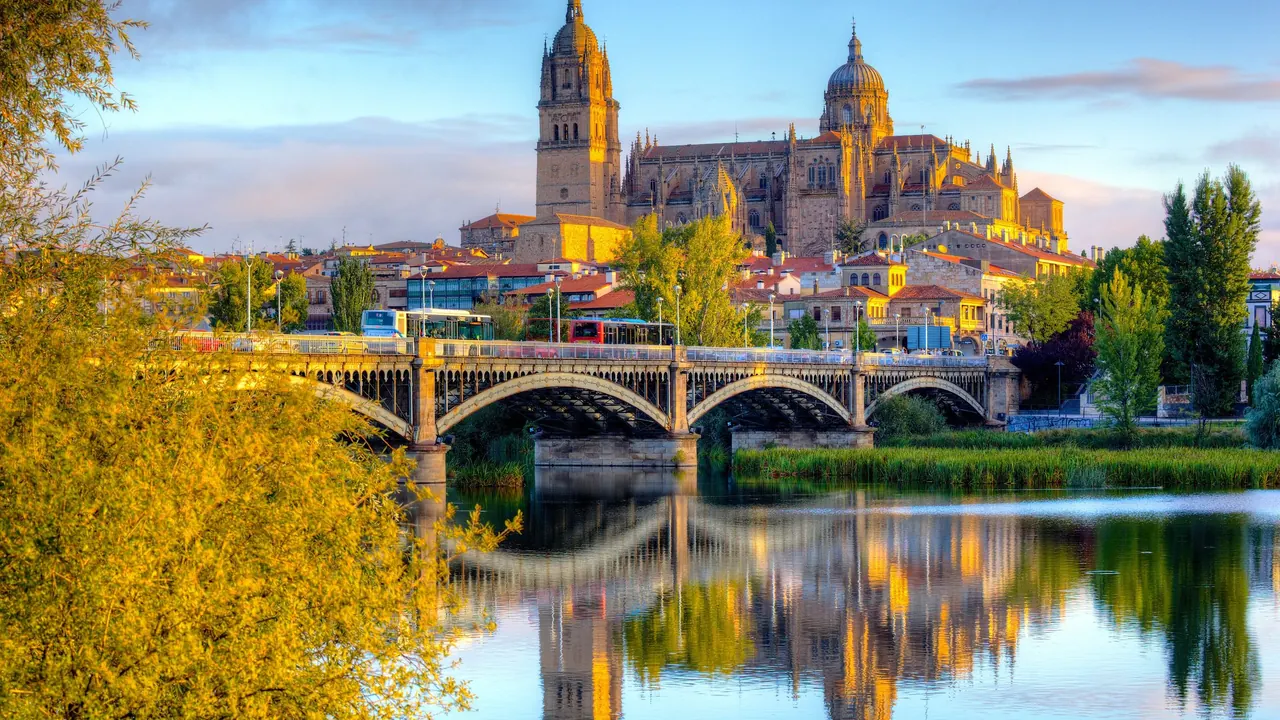
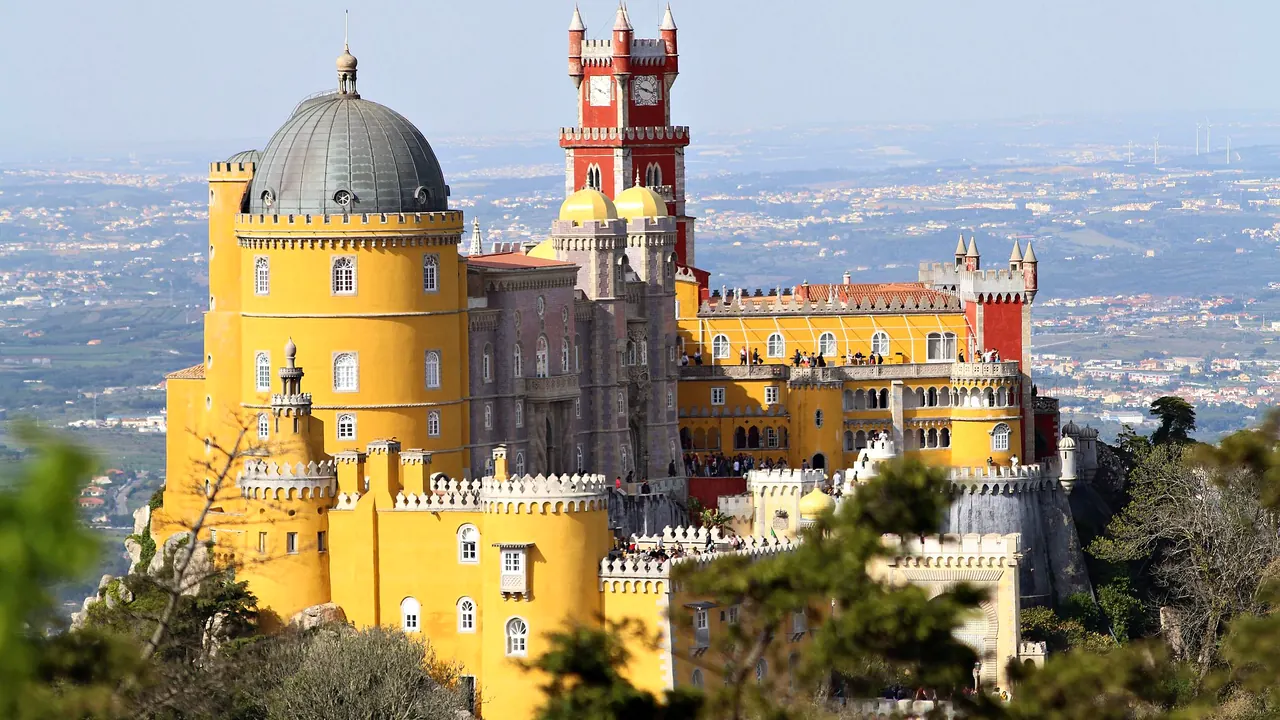
Photos: Salamanca by Jiuguang Wang, CC BY-SA 3.0 ES, cropped; Sintra by Chabe01, CC BY-SA 4.0, cropped.
Salamanca or Sintra?
Our verdict in twelve categories, each scored against the same fixed benchmark cities, and the climate month by month, so you can choose for your trip.
Choose Salamanca for
- nightlife
- food and drink
- getting around
Salamanca is the better pick if you want a walkable city with a real evening life. The golden old town is compact enough to cover on foot. The tapas bars around the Plaza Mayor feed you well for little, and in term time the nights run late with students. It suits a city break built around eating, drinking and stone architecture rather than landscape.
Choose Sintra for
- beaches
- nature and the outdoors
- day trips
For scenery and fairy-tale palaces, choose Sintra. Pena, the Moorish Castle and Quinta da Regaleira sit on a forested granite ridge, with Atlantic cliffs and surf beaches below and Lisbon a short train ride away. Go there for walking, gardens and day trips, and expect quiet evenings and plainer food.
Scoreboard
Twelve categories on one fixed scale from 0 to 100. The shaded stretch is the gap between the two.
Your match
Pick a travel style or drag the sliders, and both match scores follow your weighting.
Wins on nightlife and food and drink with your weighting.
Wins on beaches and nature and the outdoors with your weighting.
What matters to you?
Category by category
What the scores mean for a trip.
Beaches & swimming
Sintra is far ahead here, simply because it has a coast. Praia Grande and Praia das Maçãs are sandy beaches with lifeguards in summer, about twenty minutes from town. Adraga sits beneath dark cliffs and Azenhas do Mar has its tidal pool. Cold water, heavy surf and sea fog make them an afternoon out rather than a reason for a beach stay.
Salamanca lies far inland on the Castilian plain. Summer swimming there means the municipal pools or the river beaches along the Tormes and in the reservoirs of the province.
Food & drink
Salamanca eats better. Evenings move from counter to counter around the Plaza Mayor and Calle Van Dyck, with Guijuelo ham, farinato and hornazo on the bar. The Mercado Central and roast suckling pig or morucha beef cover the Castilian side, though seafood and international cooking are thin.
Sintra's strengths are narrow: warm travesseiros and queijadas from the old pastry houses, and grilled fish in the coastal villages. The old-town restaurants cater to day-trippers and the choice at dinner is small, so a serious meal means Lisbon.
Culture & sights
Both are UNESCO-listed and both reward a couple of days, but their sights are different in kind. Salamanca is a single townscape in golden sandstone: the baroque Plaza Mayor, the Plateresque university façade, the twin cathedrals and a dense run of convents and colleges, all floodlit at night.
Sintra is a landscape of romantic and royal buildings spread over a wooded hill. It runs from the painted Pena Palace and the Moorish Castle to the National Palace's great chimneys, Regaleira's Initiation Well and Monserrate. Neither has strong museums, though Salamanca's Casa Lis is a worthwhile Art Nouveau collection.
Nightlife
This is the widest gap between the two. Students fill Salamanca's old centre from Thursday to Saturday, moving from tapas to packed bars on Calle Bordadores and Gran Vía and on to small clubs open past 3am. The crowd is young, and the city goes quiet in high summer.
Sintra has a few wine bars and terraces and nothing that runs late. A night out there means taking the train to Lisbon and planning the ride back.
Nature & outdoors
In Sintra, nature starts at the door. The town sits in the mossy forest of the Serra de Sintra, with trails to Pena Park, Cruz Alta and Peninha, clifftop paths at Cabo da Roca and surf at Praia Grande. The hills stay cool and green even in summer.
Around Salamanca there is open wheat plain, with riverside paths along the Tormes. Its bigger landscapes are about an hour away by car: the chestnut forests of the Sierra de Francia and Las Batuecas, peaks above 2,000m in Béjar and Gredos, and the Arribes del Duero canyon.
Day trips
Sintra has the stronger list. It is led by Lisbon itself, about forty minutes away by train, with Cascais and the Estoril coast reachable by bus. With a car you can add Mafra, Ericeira, Óbidos, Alcobaça and Batalha, and go as far as Évora.
Salamanca is a good base for the historic towns of Old Castile. Walled Ávila and Romanesque Zamora are about an hour away, Ciudad Rodrigo stands near the border and La Alberca and Mogarraz keep their half-timbered houses. There is no capital on the doorstep, though, and many of the villages need a car.
Good for families
Neither place is built for children, and both work best as a few days within a wider trip. Salamanca is compact and largely pedestrian, with a frog and an astronaut to find in the stonework and cathedral towers to climb, but summer afternoons are very hot and winters are cold.
Sintra offers more storybook excitement: castle walls, the Initiation Well, Regaleira's tunnels and shady parks in summer. The cost is steep cobbled paths, crowded buses and rough surf, which make it better for school-age children than for toddlers.
Getting around
Salamanca is the easier place to get around. Almost everything lies in a pedestrian old town you can cross on foot in about twenty minutes, and trains link the city to Madrid and Valladolid. Only the mountain villages and the Arribes really need a car.
Sintra's centre is small, but the main palaces sit high above it. You reach them by a stiff climb, a crowded circular bus or a tuk-tuk. Driving in the hills is awkward, with narrow one-way lanes and little parking, though buses do reach Cascais and the beaches.
Shopping & style
Neither place is for serious shopping, but Salamanca has a little more. The pedestrian streets north of the Plaza Mayor carry Spanish chains and a department store. The local buys are ibérico ham, cheese and charro silver filigree.
Sintra has no fashion streets at all. Its old town sells tiles, ceramics, cork, linen and boxed pastries, a few dealers trade in old azulejos, and the Sunday fair at São Pedro de Penaferrim sells antiques and bric-a-brac.
Affordability
Salamanca is easier on the budget. Students keep tapas and drinks cheap, often with a free tapa, rooms are moderately priced, and you walk everywhere. Only the cathedral and university tickets add up.
In Sintra, the tascas, the pastries and the train from Lisbon are inexpensive. Separate palace tickets, though, can cost more than your food if you see four or five, and manor-house rooms in the centre are dear. Staying in the outer villages or near the coast cuts the bill.
Live music & performing arts
Salamanca has more on through the year. Touring theatre, dance and flamenco play at the Teatro Liceo and the municipal arts centre, and the university holds choral concerts in its historic halls. In the evenings, caped student tunas sing under the Plaza Mayor arcades. There is no opera or major orchestra.
Sintra's high point is its summer festival of classical music and dance, staged in the palaces and quintas. For the rest of the year there are concerts and theatre at the Olga Cadaval centre and fado now and then. Otherwise, regular performances mean an evening in Lisbon.
Wellness & relaxation
Neither has a bathing culture of its own, so rest comes from pace and setting. Salamanca has small Arab-style bath houses in town, an old balneario at Ledesma and the Roman-era springs of Baños de Montemayor within about an hour. The city's slow rhythm of long lunches, siestas and the cloisters of San Esteban and Las Dueñas does the rest.
Sintra's calm lies in its quintas among old gardens and misty forest. It is best early in the morning and after the day-trippers leave, since the centre is crowded during the day.
When should you go?
Pick your month. The climate figures are measured averages, not a forecast.
Salamanca in July
Sintra in July
Daytime high, °C
Rainfall in the month, mm
Temperature and rainfall are climate normals, averaged over the years shown. Salamanca: 1991-2020 normals, Salamanca / Matacan (13.9 km from centre). Sintra: 1991-2020 (rainfall 1961-1990) normals, Lisboa / Geof (22.7 km from centre).
Salamanca has the climate of a high inland plain. Winters are cold, with January days reaching only about 9°C. July and August climb to around 31°C, which is too hot for afternoon sightseeing, though almost no rain falls. The best months for walking the streets are May and June, then September and October, which are warm and sunny, with October the wettest month of the year.
Sintra is milder all year and its winters are much gentler, but its rain falls between October and January and peaks at 97mm in November, often with mist over the hills. Summer is dry and sunny at about 28°C, which is the time for the beaches, though the Atlantic warms to only 19°C at best. Spring and early autumn suit palace visits and hill walks.
Which traveller are you?
For a food and nightlife trip, Salamanca is the clear choice. Guijuelo ham, a free tapa with your drink and bar-hopping around the Plaza Mayor lead into dance bars open past 3am. Sintra empties in the evening, and serious dining means Lisbon.
On an outdoors trip, Sintra has the edge. Forest trails climb from town to Cruz Alta and Peninha, clifftop paths run past Cabo da Roca, and Praia Grande has surf. Salamanca's sierras and the Arribes del Duero gorge are an hour's drive away.
For a beach and sun trip, only Sintra has sand, with Praia Grande, Praia das Maçãs and the cove at Adraga about twenty minutes away. The Atlantic is cold and rough, so plan afternoons out rather than beach days. Salamanca has only pools and river beaches.
Before you go
| Measure | Salamanca | Sintra |
|---|---|---|
| Official language | Spanish | Portuguese |
| Currency | Euro (EUR) | Euro (EUR) |
| Sockets | CF230 V, 50 Hz | CF230 V, 50 Hz |
| Driving side | Right | Right |
| Time zone | UTC+1, UTC+2 in summer | UTC, UTC+1 in summer |
| Emergency number | 112 | 112 |
| Elevation | 798 m | 193 m |
| Main airport | Adolfo Suárez Madrid–Barajas Airport (MAD)184 km from centre239 non-stop destinations | Lisbon Humberto Delgado Airport (LIS)22 km from centre156 non-stop destinations |
| Public holidays this year | 12 days | 14 days |
By the numbers
| Measure | Salamanca | Sintra |
|---|---|---|
| City population | 146,110 | 385,606 |
| People per km² | 3,690 | 1,208 |
| Museums within 10 km | 13 | 12 |
| UNESCO World Heritage sites within 50 km | 1 | 3 |
| Swim season, months above 21 °C | - | None |
Where else could you go?
Every comparison below shares a destination with this one, so you can follow Salamanca or Sintra somewhere new.