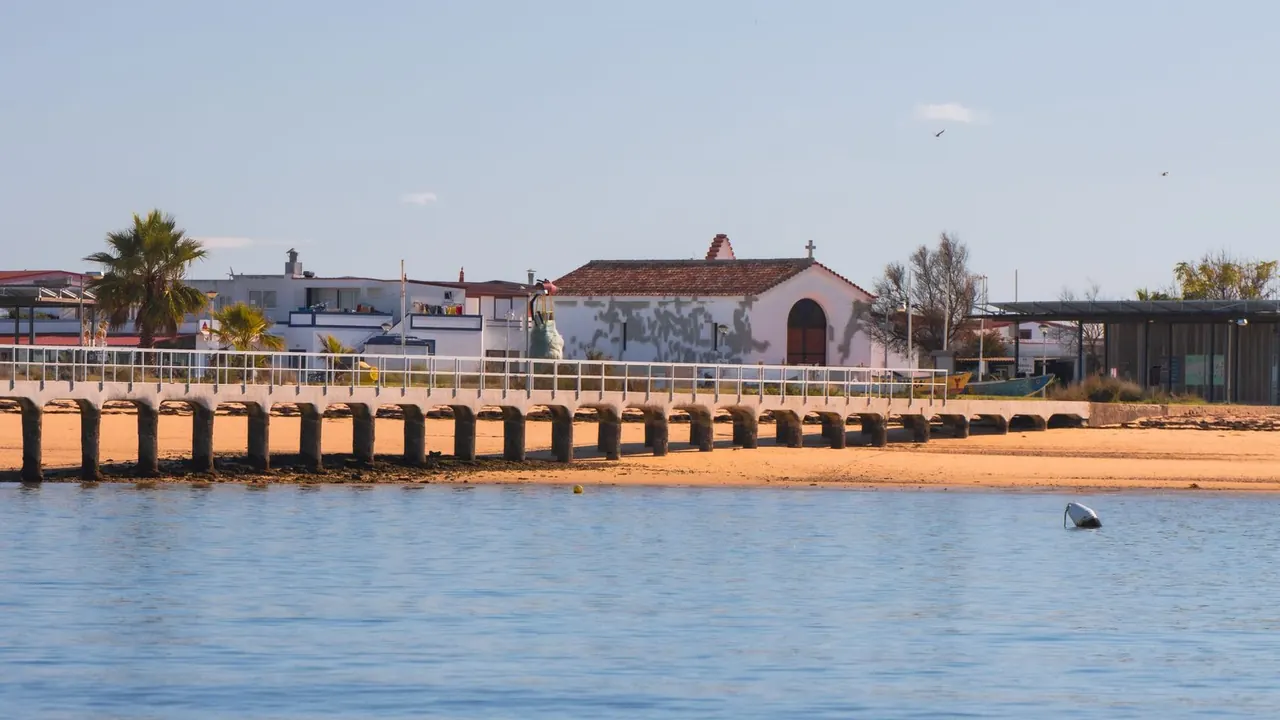
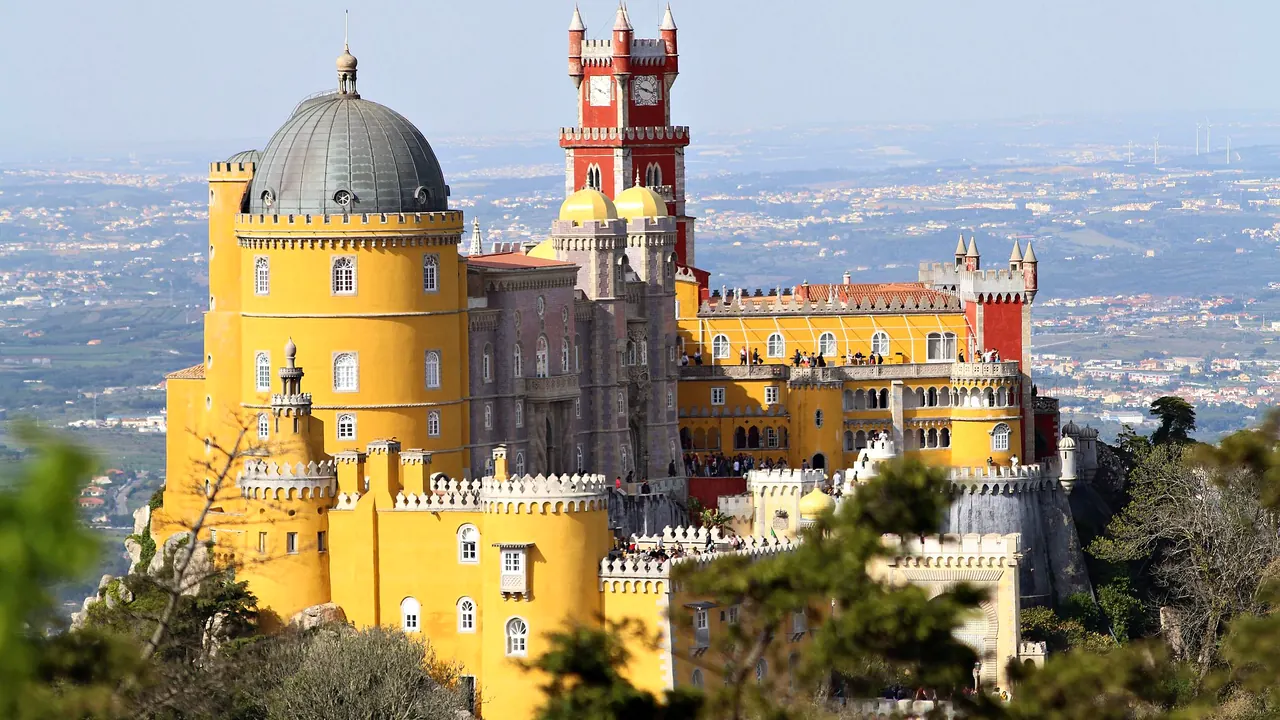
Photos: Faro by Vitor Oliveira, CC BY-SA 2.0, cropped; Sintra by Chabe01, CC BY-SA 4.0, cropped.
Faro or Sintra?
Our verdict in twelve categories, each scored against the same fixed benchmark cities, and the climate month by month, so you can choose for your trip.
Choose Faro for
- beaches
- nightlife
- families
Faro is the better choice for a warm, easy-going trip built around sand and water. The barrier islands of the Ria Formosa give long, calm beaches in a sea that warms up properly by late summer, the lagoon itself is there to explore by boat or kayak, and the little walled old town makes a quiet, unhurried base. Families, beach lovers and anyone wanting long seafood lunches in the sun will be happier here.
Choose Sintra for
- culture and sights
- day trips
- nature and the outdoors
Sintra suits a traveller who comes for palaces, gardens and forested hills rather than the beach. Pena, the Moorish Castle, Quinta da Regaleira and Monserrate make it one of Portugal's great sightseeing destinations, the misty Serra de Sintra is lovely to walk, and Lisbon and a string of historic towns are close enough for day trips. Its sea is cold and its evenings are very quiet, so it works best as a few days of walking and looking rather than a long stay by the water.
Scoreboard
Twelve categories on one fixed scale from 0 to 100. The shaded stretch is the gap between the two.
Your match
Pick a travel style or drag the sliders, and both match scores follow your weighting.
Too close to call, 2 points apart
Wins on beaches and nightlife with your weighting.
Wins on culture and sights and day trips with your weighting.
What matters to you?
Category by category
What the scores mean for a trip.
Beaches & swimming
Faro has much the better beaches. Praia de Faro, Ilha Deserta and Culatra are long sandy barrier islands across the lagoon, reached by bus or ferry, with calm water that turns properly warm by late summer. The catch is that the sand is always a short trip from town.
Sintra's coast is wilder and more dramatic: Praia Grande, Praia das Maçãs, the cliff cove at Adraga and the tidal pool at Azenhas do Mar. But the Atlantic stays cold, the surf runs heavy and fog can roll in, so it works as an afternoon out rather than days of swimming.
Food & drink
Faro eats better, mainly thanks to the lagoon: clams, oysters, cockles, grilled sardines and cataplana served in simple grill houses around the old town and marina, with Olhão's fish markets a short train ride away. Neither place is a dining destination, but Faro gives you more good meals.
Sintra's strength is pastry, the warm travesseiros and queijadas of the old town. Its centre otherwise caters to day-trippers with uneven results, and the better fish is out in the coastal villages or in Lisbon.
Culture & sights
This is Sintra's great advantage. The Pena Palace, the Moorish Castle ramparts, the National Palace with its conical chimneys, Quinta da Regaleira's Initiation Well and Monserrate together fill two full days, all within a UNESCO-listed landscape of a few square kilometres.
Faro offers a pleasant day instead: the walled Cidade Velha entered through the Arco da Vila, the cathedral tower over the lagoon, a Roman mosaic in the convent museum and the bone chapel at the Igreja do Carmo. It is charming but small beside Sintra.
Nightlife
Neither town is a party place, but Faro at least has an evening life: bar terraces on Rua do Prior and near the marina, a few small clubs, and more going on when the university is in term. Albufeira's big clubs are about forty minutes away.
Sintra empties once the day-trippers leave, with a handful of bars and nothing open late. A real night out means the train to Lisbon and planning the ride back.
Nature & outdoors
Sintra is the stronger choice for being outdoors. Mossy forest covers the granite Serra de Sintra, trails climb to Cruz Alta and Peninha with views over the Atlantic and the Tagus, and the coast ends at the cliffs of Cabo da Roca. The cool microclimate keeps the walking pleasant even in summer.
Faro's nature is flatter and quieter, centred on the Ria Formosa, where you paddle the channels and watch flamingos and spoonbills in the salt pans at Ludo. It is excellent for birdwatching and kayaking, but the summer heat confines it to mornings.
Day trips
Sintra is the better base for excursions, with Lisbon about forty minutes away by suburban train and Cascais just over the hills. With a car you can reach Mafra's palace, Ericeira, Óbidos and the great monasteries of Alcobaça and Batalha.
Faro has a decent list of its own: Tavira's Roman bridge, Olhão's markets, Loulé's castle, the Roman ruins at Milreu and Silves' red sandstone castle. Lagos, Sagres and even Seville are possible on longer days, but nothing nearby matches a capital city on the doorstep.
Good for families
Faro is easier with children. The lagoon beaches are gentle, the boat trips to the islands are a treat, the old town is flat and calm, and there is a small science centre by the water. The Algarve's marine park and water parks are within reach, though awkward without a car.
Sintra delights older children with castle walls, tunnels and the storybook Pena Palace, but steep cobbles, queues and rough surf make it hard work with toddlers.
Getting around
Both have a small, walkable centre, and the difference is in the terrain. Faro is flat, with the old town, marina and station close together, the airport near by and ferries leaving from below the walls. Beyond town, though, the slow railway and patchy buses push most visitors towards a hire car.
Sintra's centre sits a short stroll from the Lisbon train, but the palaces are high above it, reached by a stiff climb or a crowded circular bus. Driving the narrow one-way lanes is frustrating, so a car is best left outside the centre.
Shopping & style
Faro has a little more to offer: the pedestrian Rua de Santo António with Portuguese chains, a large shopping centre for mainstream brands, and local buys such as lagoon salt flower, almond sweets and pottery, with Loulé's market close by.
Sintra's old town is mostly souvenirs, tiles, cork and linen. Its interest lies in antique azulejos and the long-running Sunday fair at São Pedro de Penaferrim, while anything more serious means Lisbon.
Affordability
Faro is somewhat kinder on the budget. Fish lunches, coffee and buses are cheap, and its few sights cost little, though rooms rise sharply in July and August and a hire car adds up.
In Sintra, the palaces are the main expense: each charges its own entry, so a full round of them costs more than the meals. Manor-house rooms in the centre are expensive, while the outlying villages are cheaper.
Live music & performing arts
Faro has the steadier calendar, with chamber music and plays at the ornate nineteenth-century Teatro Lethes and touring concerts, dance and the regional orchestra at the Teatro das Figuras. On many evenings there is still nothing on.
Sintra's high point is its summer festival of classical music and dance staged in palaces and quintas, which is memorable if your dates fit. The rest of the year the Olga Cadaval centre is the only regular venue.
Wellness & relaxation
Neither town has a bathing tradition, and spas in both mean hotels. Sintra has the slight edge for restoring calm: a night in a quinta among old gardens, with mist in the trees and the town empty after the day-trippers leave, is very peaceful, though the days around the palaces are crowded.
Faro relaxes you through its pace instead, with long lunches, sunset walks by the lagoon and quiet winters. Its nearest real spa, at Caldas de Monchique, is over an hour away.
When should you go?
Pick your month. The climate figures are measured averages, not a forecast.
Faro in July
Sintra in July
Daytime high, °C
Rainfall in the month, mm
Temperature and rainfall are climate normals, averaged over the years shown. Faro: 1991-2020 normals, Faro / Aeroporto (2.8 km from centre). Sintra: 1991-2020 (rainfall 1961-1990) normals, Lisboa / Geof (22.7 km from centre).
Faro is the warmer and drier of the two all year. Its beach season runs from June to September, with highs near 29°C in July and August, the lagoon sea reaching about 22°C and hardly any rain, and October is still warm enough to swim. Midsummer afternoons are hot for walking, so spring and autumn suit sightseeing better. The rain comes in late autumn and winter, peaking around 102mm in December, but even then Faro gets plenty of sun and mild days.
Sintra is a little cooler in summer and much wetter in the colder half of the year, with November bringing around 97mm. Its hills often sit in cloud while the coast below is sunny, and it gets noticeably fewer sunshine hours than Faro. The Atlantic stays cold, only about 19°C even at its warmest, so swimming is brief. The best time for the palaces and trails is May to June and September, when it is dry and mild. High summer is pleasant in the shady parks, and winter is damp and grey.
Which traveller are you?
For a beach and sun trip, Faro is the clear pick. Ferries and a short bus ride reach kilometres of sand on the barrier islands, the lagoon water is calm and warm, while Sintra's beaches face cold, heavy Atlantic surf.
On a culture and arts trip, Sintra wins easily. A cluster of royal palaces, a Moorish castle and fantastical gardens sits within a few square kilometres, and Lisbon is close. Faro's walled old town and cathedral fill only a relaxed day.
On a family trip with young children, Faro is easier. Its gentle beaches, island boat rides and flat, quiet centre suit buggies and small legs, whereas Sintra's steep cobbles, crowded hill buses and rough surf suit school-age children better.
Before you go
| Measure | Faro | Sintra |
|---|---|---|
| Official language | Portuguese | Portuguese |
| Currency | Euro (EUR) | Euro (EUR) |
| Sockets | CF230 V, 50 Hz | CF230 V, 50 Hz |
| Driving side | Right | Right |
| Time zone | UTC, UTC+1 in summer | UTC, UTC+1 in summer |
| Emergency number | 112 | 112 |
| Elevation | 10 m | 193 m |
| Main airport | Faro - Gago Coutinho International Airport (FAO)3 km from centre91 non-stop destinations | Lisbon Humberto Delgado Airport (LIS)22 km from centre156 non-stop destinations |
| Public holidays this year | 14 days | 14 days |
By the numbers
| Measure | Faro | Sintra |
|---|---|---|
| City population | 64,560 | 385,606 |
| People per km² | 319 | 1,208 |
| Museums within 10 km | 2 | 12 |
| UNESCO World Heritage sites within 50 km | 0 | 3 |
| Swim season, months above 21 °C | 3 months | None |
Where else could you go?
Every comparison below shares a destination with this one, so you can follow Faro or Sintra somewhere new.