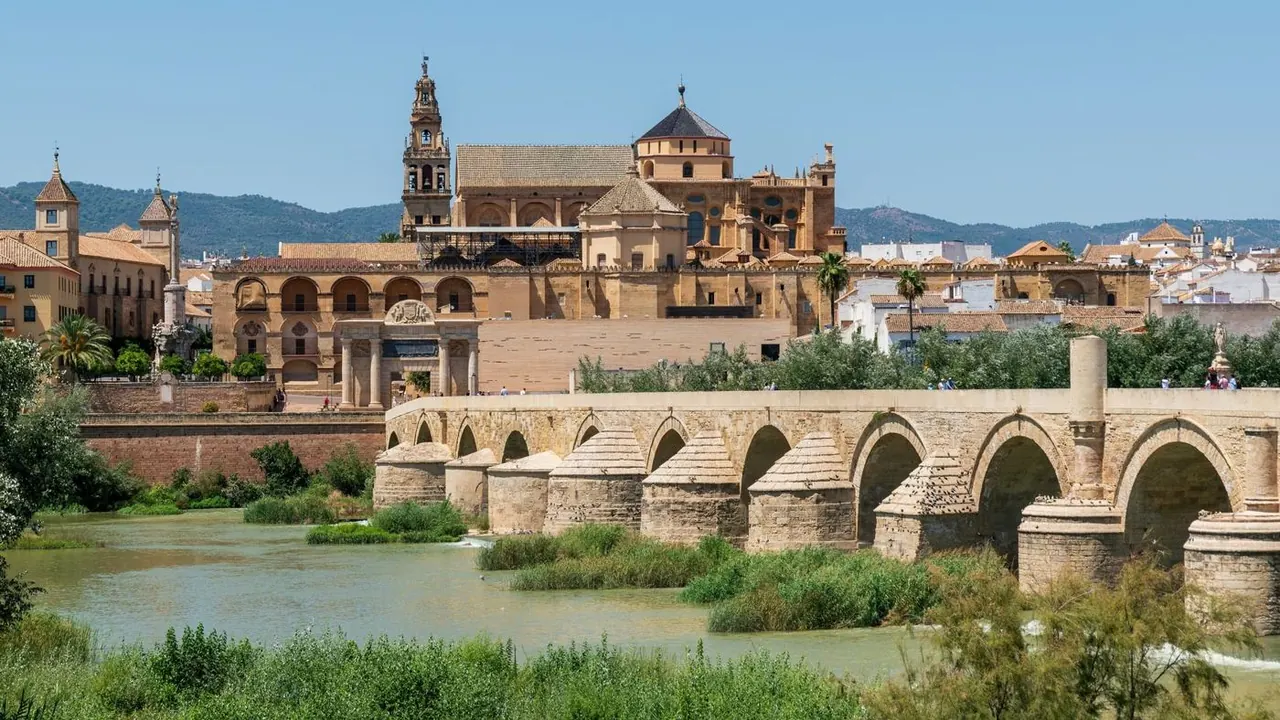
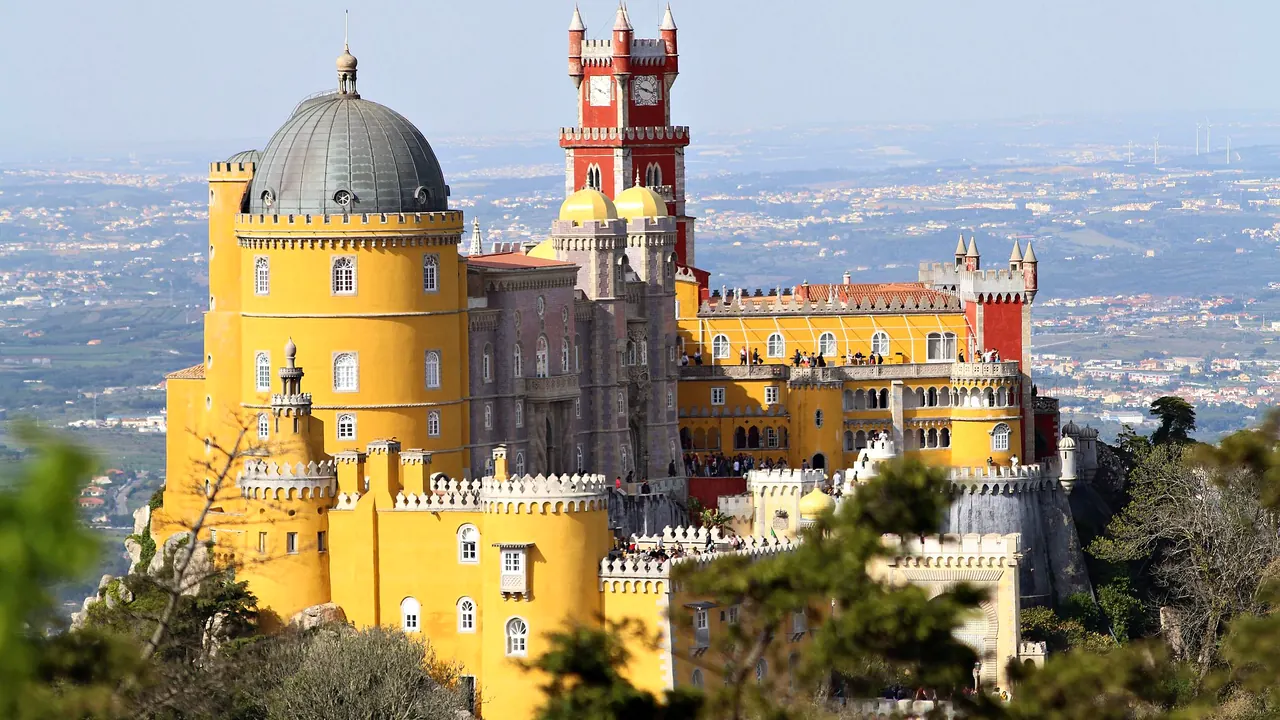
Photos: Cordoba by Jose María Ligero Loarte, CC BY-SA 4.0, cropped; Sintra by Chabe01, CC BY-SA 4.0, cropped.
Cordoba or Sintra?
Our verdict in twelve categories, each scored against the same fixed benchmark cities, and the climate month by month, so you can choose for your trip.
Choose Cordoba for
- nightlife
- live music and the arts
- food and drink
Cordoba suits travellers who want a proper city for a few days. You get the Mezquita and the lanes of the Juderia, long evenings of tapas and Montilla wine in the squares, flamenco in the peñas, and fast trains that put Seville, Granada and Malaga within a day's reach. It is the cheaper of the two and the easier to cover on foot, but it is far inland and fiercely hot in high summer.
Choose Sintra for
- nature and the outdoors
- beaches
- families
Choose Sintra if palaces, forest and sea air matter more to you than dinner and late nights. The Pena Palace, Quinta da Regaleira and the Moorish Castle stand in wooded hills crossed by walking trails, and Cabo da Roca and the Atlantic beaches are a short ride away. Evenings are quiet and the food is limited, so it works best as a slower, greener stay, with Lisbon close by for everything else.
Scoreboard
Twelve categories on one fixed scale from 0 to 100. The shaded stretch is the gap between the two.
Your match
Pick a travel style or drag the sliders, and both match scores follow your weighting.
Wins on nightlife and live music and the arts with your weighting.
Wins on nature and the outdoors and beaches with your weighting.
What matters to you?
Category by category
What the scores mean for a trip.
Beaches & swimming
Neither is a beach destination, but only Sintra has a coast close at hand. Cordoba lies in the Guadalquivir valley, about 160km from the Costa del Sol, so a swim means either a full day out by fast train to Malaga or a hotel pool in the summer heat.
Sintra's Atlantic shore is about 20 minutes away. It has sandy Praia Grande and Praia das Maçãs, the cove under the cliffs at Adraga and the tidal pool at Azenhas do Mar. The water is cold and the surf strong, so it suits an afternoon out rather than a week of sunbathing.
Food & drink
Cordoba is by far the better place to eat. Its tabernas, often old houses with patios, serve dishes from the region such as salmorejo, rabo de toro and fried aubergine with cane honey, with Montilla-Moriles wine poured cold. A tapas round through Santa Marina or San Agustin makes a whole evening.
Sintra's strength is narrower: warm travesseiros and queijadas from the old pastry houses. Meals in the old town are uneven in quality, and the good eating is grilled fish in the coastal villages, or a trip into Lisbon.
Culture & sights
Both are first-rate for sights, and each can be covered in two or three days, but they are very different in character. Cordoba centres on one great monument, the Mezquita-Cathedral with its striped arches, set among the lanes of the Juderia. The Alcazar, the Roman bridge and the caliphal ruins of Medina Azahara add Roman, Islamic and Christian layers.
Sintra is a landscape of romantic palaces spread across a wooded hill: the Pena Palace, the Moorish Castle, the National Palace and the grottoes of Quinta da Regaleira. It feels more theatrical and is more spread out, with steep walks between the sights and few museums of any weight.
Nightlife
Cordoba has an evening life that Sintra lacks. On warm nights the terraces of the Corredera, Las Tendillas and the riverside stay busy until late, students fill the bars at weekends, and the May fair runs until dawn, even if the club scene is small.
Sintra goes quiet once the last trains leave for Lisbon. There are a few bars and wine spots, but nothing stays open late. A night out means about 40 minutes on the train each way and planning how you will get back.
Nature & outdoors
Sintra is the place for the outdoors. The Serra de Sintra is a granite ridge of damp forest and giant ferns, with trails from the town up to Cruz Alta and Peninha, and the land ends in the cliffs of Cabo da Roca. There is surfing at Praia Grande, and people ride horses and mountain bikes in the park.
Cordoba's countryside is drier, and you need a car for most of it: the holm oak hills of the Sierra Morena, Hornachuelos with its birds of prey, and the limestone Subbeticas. Spring and autumn are good for walking, but the summer heat pushes walks into the dawn hours, while Sintra's cool hills stay comfortable.
Day trips
Both make excellent bases, but they lead in different directions. From Cordoba, high-speed trains reach Seville, Granada and Malaga in an hour or so, so Andalusia's great cities are all within reach. A car adds Ubeda, Baeza, Carmona and the bodegas of Montilla.
Sintra's best day out is Lisbon, a short train ride away, with Cascais and the Estoril coast close by. With a car you can explore central Portugal: Mafra, Ericeira, Óbidos, the monasteries of Alcobaça and Batalha, and Évora at the outer limit.
Good for families
For families, the choice is between ease and excitement. Cordoba is the easier town with children: its small, mostly traffic-free centre lets them roam the lanes and squares, and the Alcazar fountains, the horse show and the castle at Almodovar are the highlights. The summer heat is hard on little ones, though.
Sintra does more to fire young imaginations, with castle walls to climb, the spiral well and tunnels at Regaleira, and shady parks that stay cool. The steep cobbles, crowded buses and strong surf make it better for school-age children than for toddlers.
Getting around
Cordoba is the easier town to get around. The Mezquita, Juderia, Alcazar and Roman bridge are a short walk from one another, and the station for the fast trains is close to the old town. Medina Azahara and the villages need a bus, taxi or car.
Sintra's centre is small too, and the Lisbon train stops right beside it, but the Pena Palace and Moorish Castle stand high above. You reach them by a stiff climb or on a crowded tourist bus. The hill roads are narrow with little parking, so drivers do better to leave the car outside town.
Shopping & style
Cordoba offers more, though neither is worth a trip for shopping alone. Its crafts are distinctive: silver filigree, embossed cordobán leather, and guitars and ceramics from local workshops. Cruz Conde and Las Tendillas add high-street chains and a department store.
Sintra's old town sells tiles, cork goods, linen and boxes of pastries, a few dealers sell antique azulejos, and there is the Sunday fair at São Pedro de Penaferrim. For anything more, you go to Lisbon.
Affordability
Cordoba is the cheaper stay. A tapa and a glass of Montilla cost little, rooms are good value outside the May festivals, and the compact centre saves on transport.
Sintra's everyday costs are modest as well, but each palace charges its own entry, and seeing four or five quickly adds up. Rooms in the manor houses in the centre are expensive, so staying in the outlying villages or near the coast is the way to save.
Live music & performing arts
Cordoba has much more to see, and most of it is flamenco: small tablaos in the old town, more serious nights in the peñas, a long-running guitar festival and the Noche Blanca del Flamenco. The Gran Teatro adds the city orchestra and touring theatre.
Sintra's highlight is its summer festival of classical music and dance, held in the palaces and quintas, along with concerts at the Olga Cadaval cultural centre. Outside that season there is little on, and regular live music means going into Lisbon.
Wellness & relaxation
Neither is a spa destination, and in both the calm comes from the setting rather than from treatments. Cordoba has a few Arab-style bath houses in the old town, with warm and hot pools under horseshoe arches, and patios with fountains and orange trees to sit in during the midday lull.
Sintra has no bathing tradition, just spas in a few hotels and manor houses. Its quiet comes from staying overnight in a quinta among misty gardens and forest, after the day-trippers have gone.
When should you go?
Pick your month. The climate figures are measured averages, not a forecast.
Cordoba in July
Sintra in July
Daytime high, °C
Rainfall in the month, mm
Temperature and rainfall are climate normals, averaged over the years shown. Cordoba: 1991-2020 normals, Cordoba / Aeropuerto (7.6 km from centre). Sintra: 1991-2020 (rainfall 1961-1990) normals, Lisboa / Geof (22.7 km from centre).
Cordoba is at its best in spring. April and May are warm and very sunny, good weather for the lanes and patios, though April still brings some showers and only May is fairly dry. Late September and early October give a shorter second window, but the rain returns through October, and the wet months run on to December, the wettest of the year. July and August reach 37°C, far too hot for sightseeing except early in the morning and in the evening. Winter days are mild and still fine for walking between showers.
Sintra never gets that hot. Summer peaks at around 28°C, so June to September are the most comfortable months for the palace trails and the beaches, and May to August bring the most sunshine. The Atlantic is cool all year, reaching only about 19°C at the end of summer. Its wet season is longer and heavier than Cordoba's, running from October to January and peaking at 121mm in November. Spring is cooler than in Andalusia but pleasant for walking in the hills.
Which traveller are you?
For a food and nightlife trip, Cordoba is the clear choice. Its tabernas serve salmorejo, flamenquin and chilled Montilla, and on warm nights the Corredera and Las Tendillas fill up after ten. Sintra empties once the day-trippers leave, and a good dinner usually means going into Lisbon.
On an outdoors trip, Sintra wins easily. Trails climb from the town through mossy forest to Cruz Alta and Peninha, and clifftop paths run past Cabo da Roca. The cool hills stay walkable in summer, when Cordoba's heat limits the Sierra Morena to outings at dawn.
For a beach and sun trip, Sintra is the better of two imperfect options. Praia Grande and Praia das Maçãs are sandy, lifeguarded beaches about 20 minutes away, though the water is cold and the surf heavy. From Cordoba the sea means a long day out to Malaga.
Before you go
| Measure | Cordoba | Sintra |
|---|---|---|
| Official language | Spanish | Portuguese |
| Currency | Euro (EUR) | Euro (EUR) |
| Sockets | CF230 V, 50 Hz | CF230 V, 50 Hz |
| Driving side | Right | Right |
| Time zone | UTC+1, UTC+2 in summer | UTC, UTC+1 in summer |
| Emergency number | 112 | 112 |
| Elevation | 120 m | 193 m |
| Main airport | Córdoba Airport (ODB)8 km from centre3 non-stop destinations | Lisbon Humberto Delgado Airport (LIS)22 km from centre156 non-stop destinations |
| Public holidays this year | 12 days | 14 days |
By the numbers
| Measure | Cordoba | Sintra |
|---|---|---|
| City population | 323,262 | 385,606 |
| People per km² | 258 | 1,208 |
| Museums within 10 km | 16 | 12 |
| UNESCO World Heritage sites within 50 km | 2 | 3 |
| Swim season, months above 21 °C | - | None |
Where else could you go?
Every comparison below shares a destination with this one, so you can follow Cordoba or Sintra somewhere new.