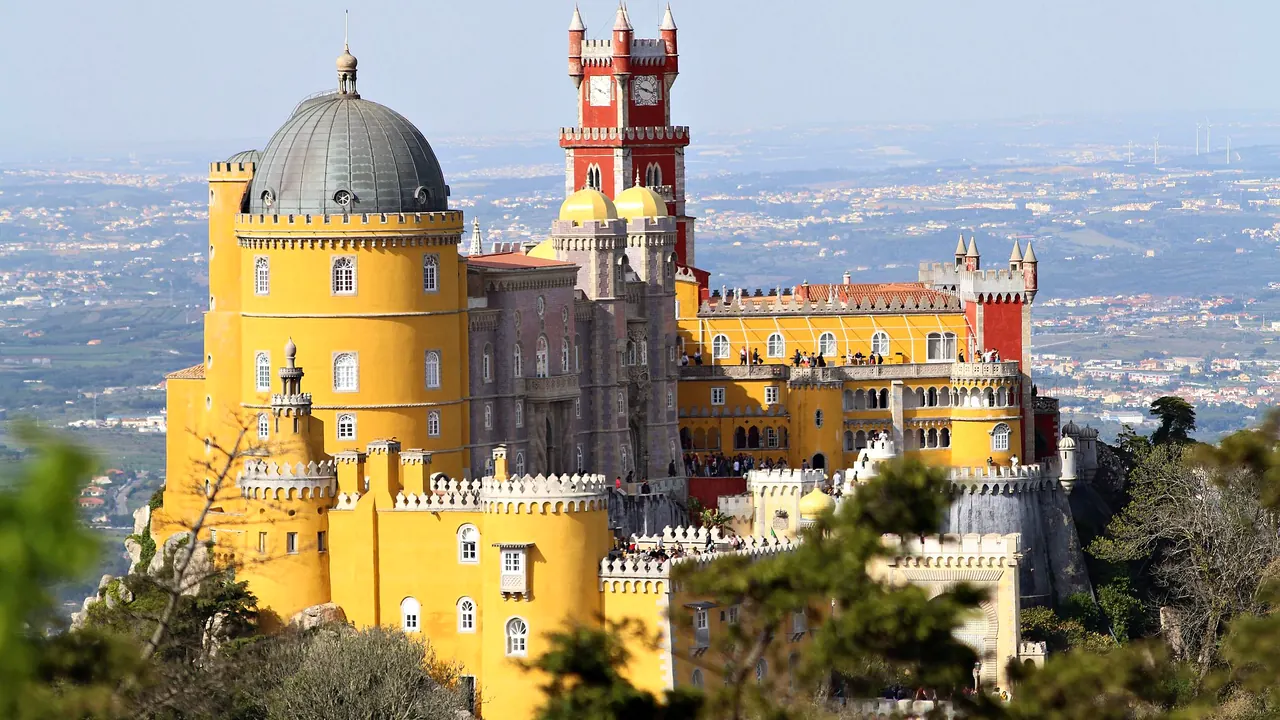
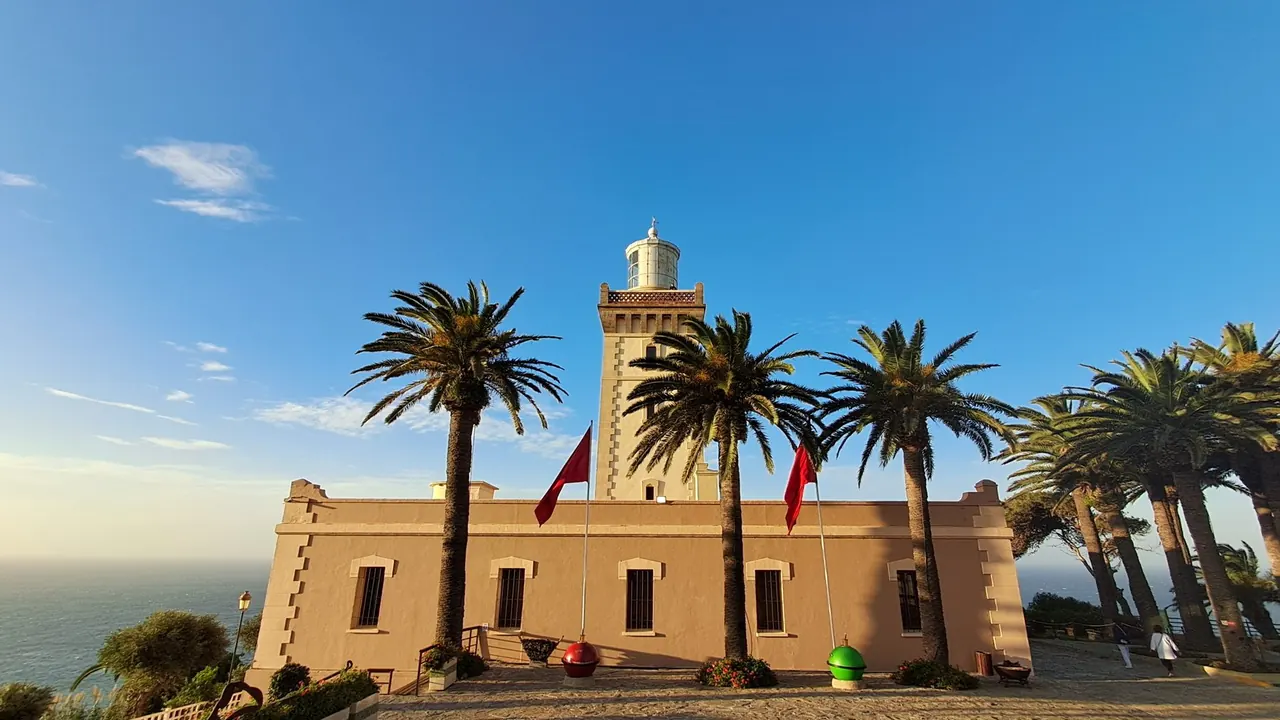
Photos: Sintra by Chabe01, CC BY-SA 4.0, cropped; Tangier by Ideophagous, CC BY-SA 4.0, cropped.
Sintra or Tangier?
Our verdict in twelve categories, each scored against the same fixed benchmark cities, and the climate month by month, so you can choose for your trip.
Choose Sintra for
- nature and the outdoors
- culture and sights
- getting around
Sintra suits travellers who come for the sights themselves. Its palaces, castle walls and romantic gardens sit close together in forested hills, with walking trails and Atlantic cliffs just beyond and Lisbon a train ride away for the evenings Sintra cannot provide. It rewards two or three unhurried days and good walking shoes, and families with school-age children will find its castles and grottoes easier going than a Moroccan medina.
Choose Tangier for
- prices
- nightlife
- food and drink
For a trip built around daily life rather than monuments, and a budget that needs to go further, Tangier is the better choice. Grilled fish from the port, mint tea on terraces above the Strait, a neighbourhood hammam and the medina's lanes make up the trip, and day-to-day costs are much lower. It also has a little more going on after dark, though neither place is somewhere for big nights out.
Scoreboard
Twelve categories on one fixed scale from 0 to 100. The shaded stretch is the gap between the two.
Your match
Pick a travel style or drag the sliders, and both match scores follow your weighting.
Too close to call, 2 points apart
Wins on nature and the outdoors and culture and sights with your weighting.
Wins on prices and nightlife with your weighting.
What matters to you?
Category by category
What the scores mean for a trip.
Beaches & swimming
Neither is a beach destination, and the sand is about equal. The difference is in character. Sintra's coast is wild: Praia Grande and Praia das Maçãs for proper sandy beaches, the cove at Adraga under dark cliffs and the tidal pool below Azenhas do Mar, with cold water, heavy surf and fog that can arrive on a sunny day.
Tangier's beach is a city affair, a long bay below the promenade with water few visitors want to swim in. The better swimming is out west at Achakar and Cap Spartel, or near Asilah to the south. The sea is a few degrees warmer, the summer crowds are mostly Moroccan families and dress on the beach is more modest.
Food & drink
Tangier is the better place to eat. Its kitchen is everyday Moroccan cooking with a strong seafood accent: fish picked at the port and grilled, bissara at breakfast, harira, couscous on Fridays and snacks from the grill counters around the Grand Socco. Long hours over mint tea on terraces facing Spain are as much part of eating here as the meals. The range is narrow, though, and wine or beer is limited to certain restaurants and hotels.
Sintra's real treat is pastry, warm travesseiros and queijadas from the old bakeries in the centre. Restaurants in the historic town cater mostly to day-trippers and vary in quality, so the better meals are grilled fish in the coastal villages, and an ambitious dinner usually means going into Lisbon.
Culture & sights
Sintra is the stronger sightseeing destination by some distance. Its UNESCO-listed hills hold a run of palaces and follies that few places of any size can match, from the red and yellow Pena Palace and the Moorish Castle ramparts to the National Palace's huge kitchen chimneys, the Initiation Well at Regaleira and the cork-lined Capuchos convent. What it lacks is serious museums, and it needs two full days.
Tangier works on mood more than monuments. The kasbah palace museum, the American Legation and its account of the international era, St Andrew's church and the Art Deco Ville Nouvelle are all worth seeing, and the Bowles and Beat connections add a literary layer. The whitewashed medina rising from the port is the real draw.
Nightlife
Neither city is lively at night, but Tangier has more to offer. Summer evenings on its seafront are busy with families, and there are old bars from the international era, hotel lounges in the Ville Nouvelle and beach clubs along the bay in season. The drinking is discreet, though, and the medina is silent after dark.
Sintra empties once the day-trippers catch their trains home. A few wine bars and terraces stay open into the evening, but a real night out means taking the train to Lisbon, about 40 minutes away, and planning the trip back.
Nature & outdoors
Sintra is the better choice for the outdoors. The town sits inside its landscape, a granite ridge of mossy oak, cork and fern forest, with trails up through Pena Park to Cruz Alta and Peninha and views over the Atlantic and the Tagus. To the west the cliffs end at Cabo da Roca, Praia Grande has surf, and the park is used for mountain biking and riding.
Tangier's nature lies mostly on the headland at Cap Spartel, with its lighthouse, pine paths and the Caves of Hercules, and in the wooded Perdicaris park. Its special asset is the Strait itself, with storks and raptors migrating overhead in spring and autumn and boats going out to see dolphins. Real hiking in the Rif needs an overnight stay.
Day trips
Sintra has the better range of day trips, mainly because Lisbon is just a suburban train ride away, with Cascais and the Estoril coast even closer. A car adds the baroque palace at Mafra, Ericeira, walled Óbidos, the monasteries of Alcobaça and Batalha, and Évora at the outer limit.
Tangier's list is shorter but more varied. It takes in whitewashed Asilah, the UNESCO-listed medina of Tetouan, a long day to blue Chefchaouen and Rabat by high-speed train, and a ferry crossing to Tarifa puts a day in Spain within easy reach.
Good for families
Sintra is the easier choice with children. Climbing the Moorish Castle walls, going down the spiral of the Initiation Well and exploring Regaleira's tunnels feels like a storybook to school-age children, and the shady parks stay cool in summer. Steep cobbles, crowded hill buses and rough surf make it harder with toddlers.
Tangier is warm towards children, but there is less for them to do. The promenade, Perdicaris park, the caves and the ferry to Spain make good outings, but the stairs of the medina defeat a pushchair and the touts wear parents down. A hotel with a pool usually becomes the base.
Getting around
Sintra is easier to get around. The train from Lisbon stops a short walk from the compact centre, and the circular bus, tuk-tuks and taxis cover the steep climb to Pena and the castle, though the buses fill at busy times. Driving in the hills is a struggle, so a car is only worth having for the coast and the wider region, and best parked outside the centre.
Tangier has no metro or tram, and its buses are of little help to a visitor. The medina, kasbah and Boulevard Pasteur can be walked, if steeply, and cheap blue petit taxis do the rest, including the trips out to Cap Spartel. Good rail links south and a ferry port in the centre help with longer journeys.
Shopping & style
Tangier is the better place to shop. The lanes between the Petit Socco and the kasbah sell leather slippers, rugs, lanterns and the red-and-white striped Rif cloth, and the Saturday market at the Grand Socco brings farm women down from the hills. Bargaining is expected and the selling is pushy, and there are malls on the bay for ordinary needs.
Sintra's old town offers hand-painted tiles, cork goods, linen and boxes of pastries, along with a few dealers in old azulejos and the Sunday fair at São Pedro de Penaferrim. For anything more, shoppers go to Lisbon.
Affordability
Tangier is much cheaper day to day. Meals of fish or tagine, mint tea, petit taxis and museum entry all cost little, and medina riads are good value, particularly outside summer. Alcohol and sea-view hotels are where the bill rises.
In Sintra, food and the train are reasonable, but each palace charges its own entry and seeing four or five of them costs more than eating. Manor-house rooms in the centre are expensive, so budget travellers do better staying near the coast or in the outlying villages.
Live music & performing arts
Both are thin on stage culture, and Tangier has a slightly better claim. Its musical heritage includes the Jajouka musicians, Andalusian classical music, gnawa and a long-running jazz festival, and the historic art-house cinema on the Grand Socco is a real cultural landmark. On an ordinary night, though, live music mostly means what hotels and restaurants put on.
Sintra's highlight is its summer festival of classical music and dance in the palaces and quintas, which makes for a memorable evening. The Olga Cadaval centre programmes concerts and theatre, but for most of the year opera and regular live music mean going into Lisbon.
Wellness & relaxation
Tangier has the stronger tradition of bathing. Neighbourhood hammams in the medina offer steam, black soap and a scrub with the kessa glove as part of local life, with plainer rooms and separate hours for men and women, while riads and larger hotels offer gentler spa versions. Rooftop terraces over the Strait set a slow pace.
Sintra has no bathing culture and only a few hotel spas. Its calm comes from staying overnight in a quinta among old gardens and misty forest, and from early mornings and evenings when the crowds have gone, with Monserrate's gardens the quietest spot.
When should you go?
Pick your month. The climate figures are measured averages, not a forecast.
Sintra in July
Tangier in July
Daytime high, °C
Rainfall in the month, mm
Temperature and rainfall are climate normals, averaged over the years shown. Sintra: 1991-2020 (rainfall 1961-1990) normals, Lisboa / Geof (22.7 km from centre). Tangier: 1991-2020 normals, Tanger Aerodrome (9.5 km from centre).
Sintra and Tangier share the same Atlantic pattern of dry, sunny summers and wet winters, with almost no rain from June to August. In Sintra the rain returns heavily in October and builds to about 100mm a month by December, while Tangier's wet season starts just as heavily, with November and December its wettest months. Sintra's hills are cooler than the plain below and are often wrapped in mist. That makes summer, with highs around 28°C, a good time for walking between the palaces. Winter there is mild but damp and grey.
Tangier is a couple of degrees warmer all year and reaches about 30°C in August, which makes the medina's stairs hard work at midday. Its sea is warmer too, reaching about 22°C in July and August. Sintra's water stays near 19°C at best, so swimming there is a quick, bracing dip rather than a long swim. Late spring and September bring warm, sunny days and little rain to both cities, and are the best months for sightseeing in either.
Which traveller are you?
For a culture and arts trip, Sintra wins clearly. Pena Palace, the Moorish Castle, the National Palace, Quinta da Regaleira and Monserrate lie within a few square kilometres, while Tangier offers atmosphere and a handful of modest museums rather than landmarks of that rank.
On a trip on a tight budget, Tangier goes much further. Grilled fish, tagines, street snacks, petit taxis and riad rooms all cost little, whereas in Sintra the separate palace tickets and the manor-house rooms in the centre soon add up.
For an outdoors trip, choose Sintra. Forest trails climb from town to Cruz Alta and Peninha, clifftop paths run out to Cabo da Roca, and there is surfing, mountain biking and riding. Tangier's real hiking country, the Rif, needs an overnight stay inland.
Before you go
| Measure | Sintra | Tangier |
|---|---|---|
| Official language | Portuguese | Arabic, Standard Moroccan Tamazight |
| Currency | Euro (EUR) | Moroccan Dirham (MAD) |
| Sockets | CF230 V, 50 Hz | CE50 Hz |
| Driving side | Right | Right |
| Time zone | UTC, UTC+1 in summer | UTC+1 |
| Emergency number | 112 | Police 19/112, ambulance 15, fire 15 |
| Elevation | 193 m | 56 m |
| Main airport | Lisbon Humberto Delgado Airport (LIS)22 km from centre156 non-stop destinations | Tangier Ibn Battuta Airport (TNG)11 km from centre50 non-stop destinations |
| Public holidays this year | 14 days | 11 days |
By the numbers
| Measure | Sintra | Tangier |
|---|---|---|
| City population | 385,606 | 1,275,428 |
| People per km² | 1,208 | 6,393 |
| Museums within 10 km | 12 | 6 |
| UNESCO World Heritage sites within 50 km | 3 | 1 |
| Swim season, months above 21 °C | None | 3 months |
Where else could you go?
Every comparison below shares a destination with this one, so you can follow Sintra or Tangier somewhere new.