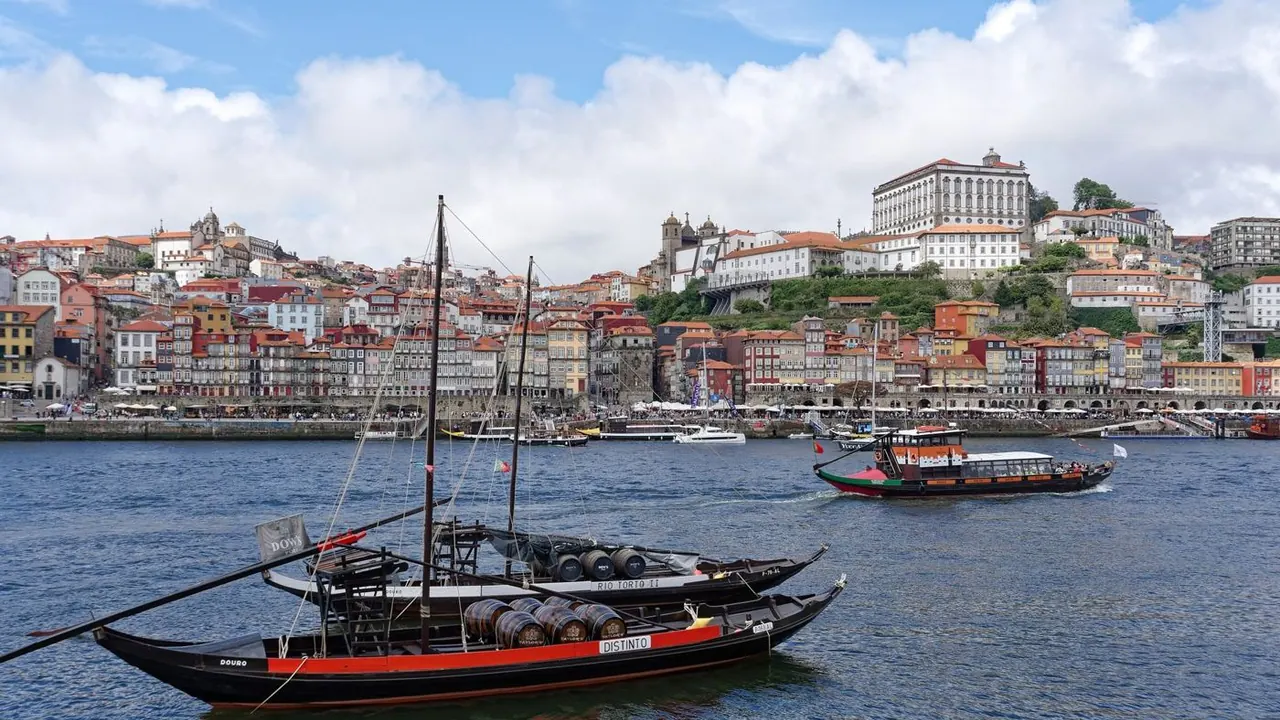
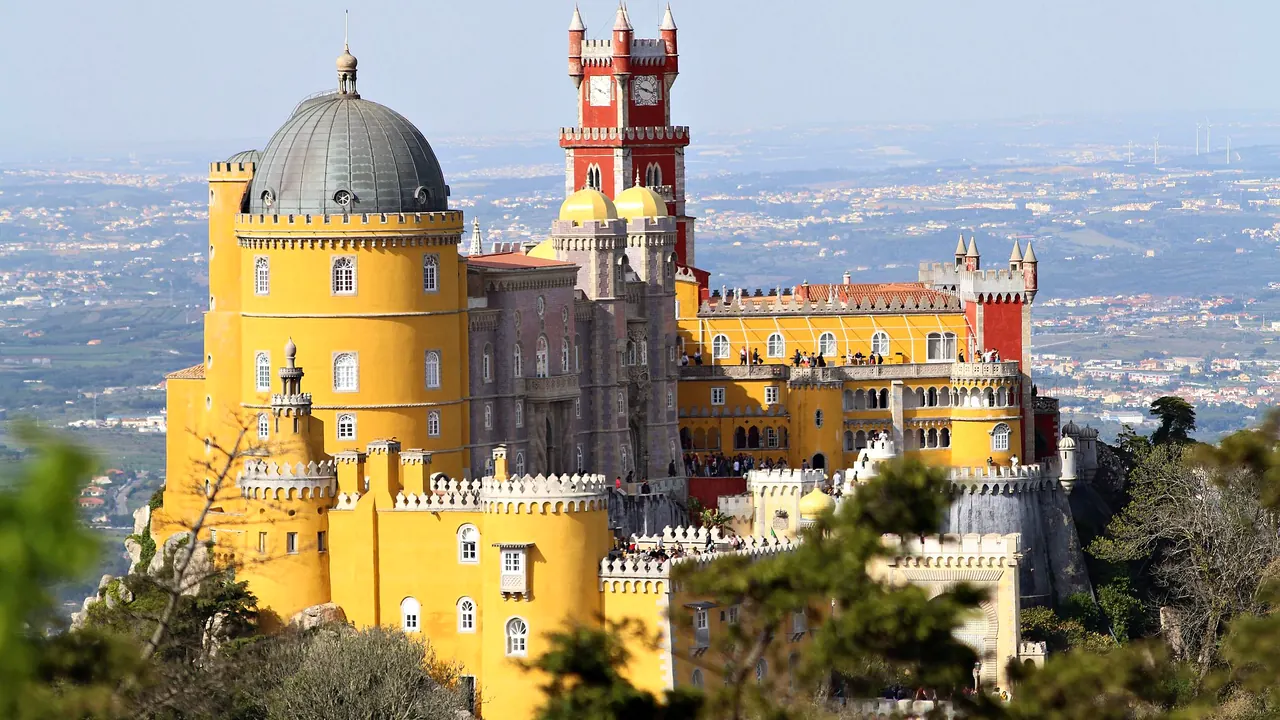
Photos: Porto by Jakub Hałun, CC BY 4.0, cropped; Sintra by Chabe01, CC BY-SA 4.0, cropped.
Porto or Sintra?
Our verdict in twelve categories, each scored against the same fixed benchmark cities, and the climate month by month, so you can choose for your trip.
Choose Porto for
- nightlife
- food and drink
- live music and the arts
Porto is the better pick if you want a real city with evenings to match its days. It has a UNESCO-listed old town falling down to the river, port cellars across the water in Gaia, charcoal grills in Matosinhos and a crowded bar district behind the Clérigos tower. It also has a metro, concerts at Casa da Música and trains to Guimarães, Braga and the Douro valley. It suits travellers who want to eat, drink and go out as much as sightsee, and who want all of it close together without a car.
Choose Sintra for
- nature and the outdoors
- culture and sights
- wellness
Sintra suits a slower trip built around palaces and forest. Pena, the Moorish Castle, Quinta da Regaleira and Monserrate sit together on a misty ridge, with trails running to Cruz Alta and clifftop paths out to Cabo da Roca. Sintra is a better place to stay in a quinta and walk than to dine or go out. Its evenings are very quiet, so it suits couples and walkers who are happy to take the train into Lisbon when they want a city night.
Scoreboard
Twelve categories on one fixed scale from 0 to 100. The shaded stretch is the gap between the two.
Your match
Pick a travel style or drag the sliders, and both match scores follow your weighting.
Wins on nightlife and food and drink with your weighting.
Wins on nature and the outdoors and culture and sights with your weighting.
What matters to you?
Category by category
What the scores mean for a trip.
Beaches & swimming
Neither place is a beach destination, and in both the Atlantic is cold, the surf rough and fog likely. The real difference is the setting. Porto's beaches are city beaches: you take the metro to broad Matosinhos or walk the boardwalks along the Gaia shore.
Sintra's coast feels wilder. There's the cove at Adraga under dark cliffs, the tidal pool below Azenhas do Mar and the surf at Praia Grande, but you reach them by car, bus or the summer tram rather than straight from your door.
Food & drink
Porto is a place to eat well. Local dishes such as tripas and the francesinha, bacalhau in family tascas, whole streets of fish grills in Matosinhos and port lodges in Gaia make meals one of the main reasons to go.
Sintra's best food is its pastry, travesseiros and queijadas bought warm in the old town. Beyond that, the centre mostly serves day-trippers. The better meals are the seafood in the coastal villages, and serious eating means going to Lisbon.
Culture & sights
Sintra comes out ahead because so much is concentrated in one place. The Pena Palace, the Moorish Castle, the National Palace with its huge chimneys, Quinta da Regaleira and Monserrate fill a single UNESCO landscape of fantasy architecture that's hard to match anywhere.
Porto's appeal is a whole historic city rather than a set of palaces. There are gilded church interiors at São Francisco, the tiled hall at São Bento and modern architecture at Serralves and Casa da Música. Neither has major museum collections, and both take about two or three days to see.
Nightlife
In Porto, the bars around Rua Cândido dos Reis fill the streets at weekends, helped by a large student population, and a few clubs keep going until dawn. Quieter evenings mean wine by the river in Ribeira.
Sintra has almost no nightlife. Once the day-trippers have gone there are a handful of bars and terraces, nothing open late, and a night out means the train to Lisbon and back.
Nature & outdoors
Sintra's nature starts at the edge of town. The mossy granite ridge of the Serra de Sintra, with its cork oaks and giant ferns, has trails up to Cruz Alta and Peninha, and the land drops away to the cliffs of Cabo da Roca. Walking, mountain biking and riding are all close by.
Porto's outdoor side is the Douro gorge and the long riverside and seafront path to Matosinhos, which is ideal for an easy ride. Its wilder country, the Douro vineyards and the Peneda-Gerês national park, needs a day out and preferably a car.
Day trips
Both make good bases for day trips, but in different ways. From Sintra the standout is a whole capital: Lisbon is forty minutes away by train, with Cascais just over the hills. With a car you can also reach Mafra, Óbidos, Alcobaça, Batalha and Évora.
Porto's trips go mostly by train to historic northern towns: Guimarães and Braga each take about an hour, Coimbra's university is about an hour away, and Aveiro is closer still. The scenic line up the Douro to Pinhão leads to the wine estates.
Good for families
Porto is the easier choice with children. The aquarium at Foz, river cruises, the Gaia cable car, the peacocks in the Crystal Palace gardens and the space of the Parque da Cidade add up to a good choice of outings, although the steep centre is hard going with a buggy.
Sintra appeals to older children, who love the castle walls and the Initiation Well's tunnels. However, it has nothing built for children, long queues and crowded hill buses, so it suits a few days with school-age children better than a week with toddlers.
Getting around
Porto is steep but well connected. A light-rail metro links the airport, the centre, Gaia and Matosinhos, heritage trams run to Foz, and the funicular helps with the climb up from Ribeira. You won't need a car.
Sintra's centre is small and you can walk it from the station, but the palaces sit high above. Getting up to them means a stiff climb or a crowded circular bus. Reaching the coast and the wider region is much easier with a car, as long as you leave it outside the narrow lanes of the centre.
Shopping & style
Porto gives you more to browse. Rua de Santa Catarina has the high-street chains, independent design and craft shops cluster around Rua das Flores and Miguel Bombarda, and you can buy port straight from the Gaia lodges.
Sintra's shopping comes down to the souvenir lanes of the old town, a few antique tile dealers and the Sunday fair at São Pedro de Penaferrim, which is worth a look for bric-a-brac.
Affordability
Porto is the cheaper stay. Everyday meals, wine, coffee and the metro all cost little, and rooms are the main expense. Sintra's food and train fares are also inexpensive, but its separate palace tickets add up quickly over a few days, and manor-house rooms in the centre are expensive. In both, staying a little outside the centre saves a good deal.
Live music & performing arts
Porto has a real year-round programme. Casa da Música hosts its symphony orchestra along with jazz and electronic music, the São João theatre stages drama, and the Rivoli and Coliseu bring in dance and touring shows.
Sintra has one highlight, its summer festival of classical music and dance held in the palaces and quintas. Outside that, there's the Olga Cadaval centre and not much else.
Wellness & relaxation
Neither has its own bathing culture, and spas mostly mean hotel spas. Sintra relaxes you more because of where you stay: a night in a quinta among misty gardens, with the town empty once the day-trippers have left, is restful in a way Porto can't easily offer.
Porto's calm comes from its pace instead: long lunches, wine on a terrace above the Douro and slow walks at Foz or in the Serralves gardens. The thermal spa towns of the north are a day trip away.
When should you go?
Pick your month. The climate figures are measured averages, not a forecast.
Porto in July
Sintra in July
Daytime high, °C
Rainfall in the month, mm
Temperature and rainfall are climate normals, averaged over the years shown. Porto: 1991-2020 normals, Porto / Serra Do Pilar (2.1 km from centre). Sintra: 1991-2020 (rainfall 1961-1990) normals, Lisboa / Geof (22.7 km from centre).
Porto is the cooler and damper of the two. Its summer days peak at about 25°C, which is comfortable for climbing its steep streets. June to August is the dry, sunny stretch, though the odd wet day still turns up. Sintra runs a few degrees warmer, reaching about 28°C in July and August, with almost no rain and more sunshine. Its wooded hills stay cooler than Lisbon, which helps on the palace trails, though fog can settle on the ridge. The sea is cold off both coasts: about 17°C at best off Porto and a little milder near Sintra, at 19°C in late summer. Either is good for a quick dip rather than a long swim.
Spring is mild and sunny in both, but rain still falls regularly, more of it in Porto. September is the best month. It is still warm, and Sintra stays mostly dry, while Porto starts to get showers. From October the rain sets in hard in the north, and November brings about 181mm to Porto. Porto's winter is greyer and wetter than Sintra's, though neither gets truly cold.
Which traveller are you?
For a food and nightlife trip, Porto is the clear choice. Tascas, francesinhas, grilled fish in Matosinhos and port tastings fill the day, and the streets around Rua da Galeria de Paris are busy until late. Sintra mostly offers pastries and a quiet evening.
On an outdoors trip, Sintra comes out ahead. Forest trails climb from the town to Pena Park, Cruz Alta and Peninha, clifftop paths run along the coast to Cabo da Roca, and Praia Grande has surf, all without needing a car.
For a culture and arts trip focused on architecture and sights, choose Sintra. Its palaces, castle and quintas are packed together in one storybook landscape. Choose Porto instead if evening concerts, theatre and a tiled, walkable city centre matter more to you.
Before you go
| Measure | Porto | Sintra |
|---|---|---|
| Official language | Portuguese | Portuguese |
| Currency | Euro (EUR) | Euro (EUR) |
| Sockets | CF230 V, 50 Hz | CF230 V, 50 Hz |
| Driving side | Right | Right |
| Time zone | UTC, UTC+1 in summer | UTC, UTC+1 in summer |
| Emergency number | 112 | 112 |
| Elevation | 104 m | 193 m |
| Main airport | Francisco de Sá Carneiro Airport (OPO)12 km from centre133 non-stop destinations | Lisbon Humberto Delgado Airport (LIS)22 km from centre156 non-stop destinations |
| Public holidays this year | 14 days | 14 days |
By the numbers
| Measure | Porto | Sintra |
|---|---|---|
| City population | 273,476 | 385,606 |
| People per km² | 6,606 | 1,208 |
| Museums within 10 km | 42 | 12 |
| UNESCO World Heritage sites within 50 km | 3 | 3 |
| Swim season, months above 21 °C | None | None |
Where else could you go?
Every comparison below shares a destination with this one, so you can follow Porto or Sintra somewhere new.
- Lisbonvs Sintra
- Coimbravs Porto
- Coimbravs Sintra
- Santiago de Compostelavs Porto
- Farovs Sintra
- Salamancavs Porto