Portugal
Cascais
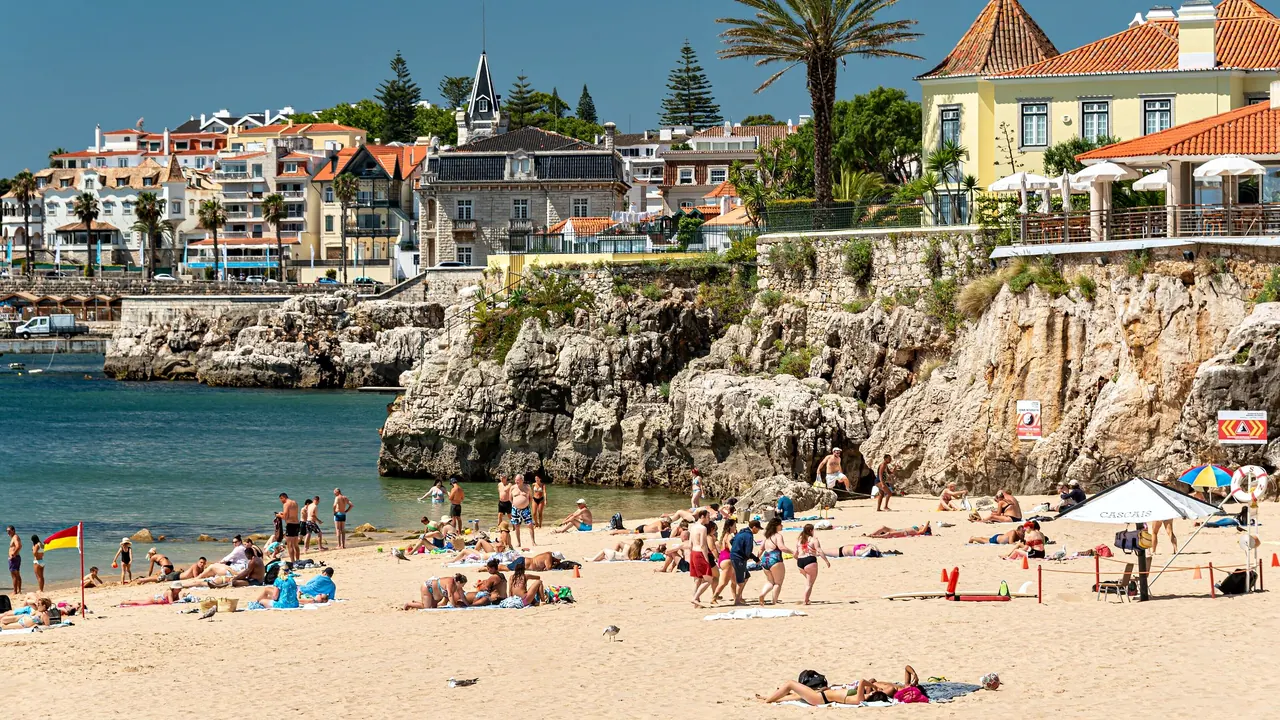
Praia da Rainha below the town
- Day trips84
- Nature & outdoors78
- Getting around68
Photo: Jorge Franganillo, CC BY 2.0, cropped
Match
51
Every category weighted equally
- Beach & sun53
- Culture & arts48
- Food & nightlife45
- Family trip57
- Outdoors60
- Relax & unwind54
- Shopping & style47
- On a budget50
Cascais in twelve categories
Our verdict on each, scored 0 to 100 against the same fixed benchmark cities, so a score means the same thing on every page.
Beaches & swimming. Scores 58 out of 100.
Food & drink. Scores 48 out of 100.
Culture & sights. Scores 36 out of 100.
Nightlife. Scores 30 out of 100.
Nature & outdoors. Scores 78 out of 100.
Day trips. Scores 84 out of 100.
Good for families. Scores 62 out of 100.
Getting around. Scores 68 out of 100.
Shopping & style. Scores 34 out of 100.
Affordability. Scores 38 out of 100.
Live music & performing arts. Scores 28 out of 100.
Wellness & relaxation. Scores 48 out of 100.
Cascais category by category
Beaches & swimming
58Beaches are part of the town rather than an outing from it. Small sandy coves such as Conceição, Duquesa and Rainha sit right below the old centre, and a seafront promenade links them with the longer beaches at Estoril. Carcavelos, a broad stretch of sand known for its surf, is a few stops up the train line. The bay faces south, so the water is usually calm, and in July and August the coves fill with families from Lisbon.
The water is still the Atlantic, though, at about 18-19°C in high summer. It is refreshing, never warm, and the season for swimming is short. Guincho, the wide beach west of town, is beautiful, but strong wind and currents make it a place to watch the surf more than to swim. Best for travellers who want a swim and a towel on the sand between other things, not long days in warm water.
Food & drink
48Eating in Cascais is mostly about the sea. Grilled sardines, sea bream and bass, clams in garlic and coriander, and seafood platters are the backbone, and the fishing harbour still lands a daily catch that ends up in restaurants nearby. The Mercado da Vila, the covered market, sells fish, fruit and local cheeses and is worth a morning visit. Along the coast towards Guincho there are seafood restaurants with views over the waves, a classic long lunch for people from Lisbon.
Beyond that the range is narrow. The old centre has plenty of tourist menus, and pastry shops and gelato counters fill the gaps between meals. The ambitious cooking and the depth of tascas belong to the capital, so people who care most about food often take the train in for dinner.
Culture & sights
36Cascais has an appealing small-town heritage rather than major sights. It became the royal family's summer retreat in the late 19th century, and the villas and mansions built by the aristocracy who followed give the seafront its look. The Citadel guards the bay, and the Casa das Histórias Paula Rego, in its red pyramid towers, shows work by Portugal's best-known modern painter. The Condes de Castro Guimarães museum sits in a turreted villa by a small cove, and the Santa Marta lighthouse has a little museum of its own.
The old centre is a tangle of white streets with wave-patterned cobbles. All of it fits into a day of easy walking, and for real museums and monuments most visitors head to Lisbon or Sintra.
Nightlife
30Evenings here are relaxed. A handful of narrow streets in the old centre hold pubs, wine bars and cocktail terraces that fill with locals and visitors on summer nights, and the casino at Estoril gives a dressier option nearby. Outside July and August things wind down early, and the town is mostly in bed by midnight. Anyone who wants a real night out takes the train into Lisbon, though the last trains back mean planning or a taxi.
Nature & outdoors
78This is one of the town's real strengths. West of the centre the coast turns wild. The sea crashes into the rock arch of Boca do Inferno, and a cycle path runs past dunes and cliffs to Guincho, where the steady wind draws kitesurfers and windsurfers and the waves draw surfers. Beyond lies Cabo da Roca, the westernmost point of mainland Europe, with cliff walks high above the Atlantic.
Inland, the forested Serra de Sintra rises within the Sintra-Cascais Natural Park, with trails through cork oak, pine and mossy boulders, often wrapped in sea mist. Spring and autumn are best for walking. Summer brings the strong north wind, the nortada, which is good for sailing and hard work on a bike. There are no high mountains, but plenty for a week outdoors.
Day trips
84Cascais is a fine base for days out because Lisbon is on the doorstep. The coastal train reaches the capital in about 40 minutes, passing the monuments of Belém on the way. Sintra, with its palaces and romantic gardens across the hills, is about half an hour by bus or car over the ridge.
Further out, the vast palace and convent at Mafra and the surf town of Ericeira are under an hour by car, and the walled village of Óbidos is about an hour and a quarter. Across the Tagus, the fishing town of Sesimbra and the Setúbal wine country make another outing. With a full day, Évora's Roman temple and old town or the great monasteries of Alcobaça and Batalha are within reach, though at the edge of a comfortable trip.
Good for families
62For a vacation with young children Cascais is easy. The town is small, safe and calm. The sheltered coves in the bay are shallow and gentle on most summer days, and the long seafront promenade towards Estoril is flat and good for pushchairs, scooters and bikes. The Marechal Carmona park has peacocks, ducks and a playground, and an ice cream on the harbour wall is a daily ritual.
What it lacks are attractions built for children. There is no zoo, aquarium or theme park in town, and the Lisbon Oceanarium and the capital's zoo mean a train trip. The cold sea can put off small swimmers, and the old centre's cobbles are bumpy with a buggy.
Getting around
68The town centre, harbour, coves and promenade are all within a short walk, and the seafront path to Estoril makes a pleasant way to get about on foot. The coastal train from Cascais station runs straight along the shore to Cais do Sodré in Lisbon, the simplest link a visitor will use. Local buses reach Sintra and Guincho, and a cycle path heads west along the coast.
Things get harder further out. Buses to the wilder coast and the hills are slower and less frequent, and the twisting roads over the Serra de Sintra are crowded in summer. Many visitors manage without a car, but those planning several days around the region find one useful.
Shopping & style
34Shopping is a pleasant stroll rather than a reason to come. The pedestrian streets of the old centre have beachwear, surf brands, small clothing boutiques, and shops selling azulejo tiles, ceramics, cork goods and tinned fish in decorative packaging. The Mercado da Vila adds local produce. There is a large shopping centre on the edge of town, but for serious fashion, design or department stores visitors go into Lisbon.
Affordability
38Cascais is one of the more expensive places to stay in Portugal. It is an upmarket resort with a wealthy local population, and seafront hotels and summer rentals are priced high for the country, above all in July and August, when the best rooms book up early. Grilled-fish restaurants on the promenade and around the harbour charge resort prices too.
Things are cheaper away from the water. Simple cafés and set lunches in the back streets cost little, and the coastal train into the capital is cheap. Visiting outside high summer makes a clear difference to the cost of a stay, particularly for rooms.
Live music & performing arts
28The live arts are modest. The Teatro Experimental de Cascais, one of Portugal's longest-running theatre companies, stages plays in Portuguese at its theatre in Estoril. The Centro Cultural de Cascais hosts exhibitions and small concerts, and the Estoril casino puts on shows and cabaret. Summer adds outdoor concerts and festivals on the coast, including a long jazz tradition. For opera, orchestras or an evening of fado, visitors go to Lisbon.
Wellness & relaxation
48The pace is the main restorative draw. Cascais is quiet for most of the year, with mornings walking the seafront promenade, coffee looking out over the bay and early nights. Estoril grew up partly as a spa resort around its thermal springs, and that tradition carries on in the area's spa and thalassotherapy offer. Several large hotels have good spas, and yoga by the sea is easy to find in summer.
There is no public bathing culture of the kind that defines a stay elsewhere, though, and summer weekends bring crowds and traffic from Lisbon. It suits a gentle, unhurried break more than a dedicated spa vacation.
When should you go?
Pick a month to see what it is like. The climate figures are measured averages, not a forecast.
Cascais in July
Daytime high, °C
Rainfall in the month, mm
The whole year
Shaded against this city’s own year: the deepest cell is its best month for that figure and the palest its weakest.
Temperature and rainfall are climate normals, averaged over the years shown. Cascais: 1991-2020 normals, Lisboa / Geof (23.6 km from centre).
Before you go
| Measure | Cascais |
|---|---|
| Official language | Portuguese |
| Currency | Euro (EUR) |
| Sockets | CF230 V, 50 Hz |
| Driving side | Right |
| Time zone | UTC, UTC+1 in summer |
| Emergency number | 112 |
| Elevation | 0 m |
| Main airport | Lisbon Humberto Delgado Airport (LIS)26 km from centre157 non-stop destinations |
| Public holidays this year | 14 days |
By the numbers
| Measure | Cascais |
|---|---|
| City population | 214,124 |
| People per km² | 2,198 |
| Museums within 10 km | 6 |
| UNESCO World Heritage sites within 50 km | 3 |
| Swim season, months above 21 °C | None |
Compare Cascais with
Every comparison with a written verdict behind it.
- Albufeira
- Biarritz
- Cadiz
- Coimbra
- Cordoba
- Faro
- Jerez de la Frontera
- Lagos, Portugal
- Lisbon
- Malaga
- Marbella
- Porto
- Ronda
- Salamanca
- Santiago de Compostela
- Seville
- Sintra
- Tangier
- Toledo