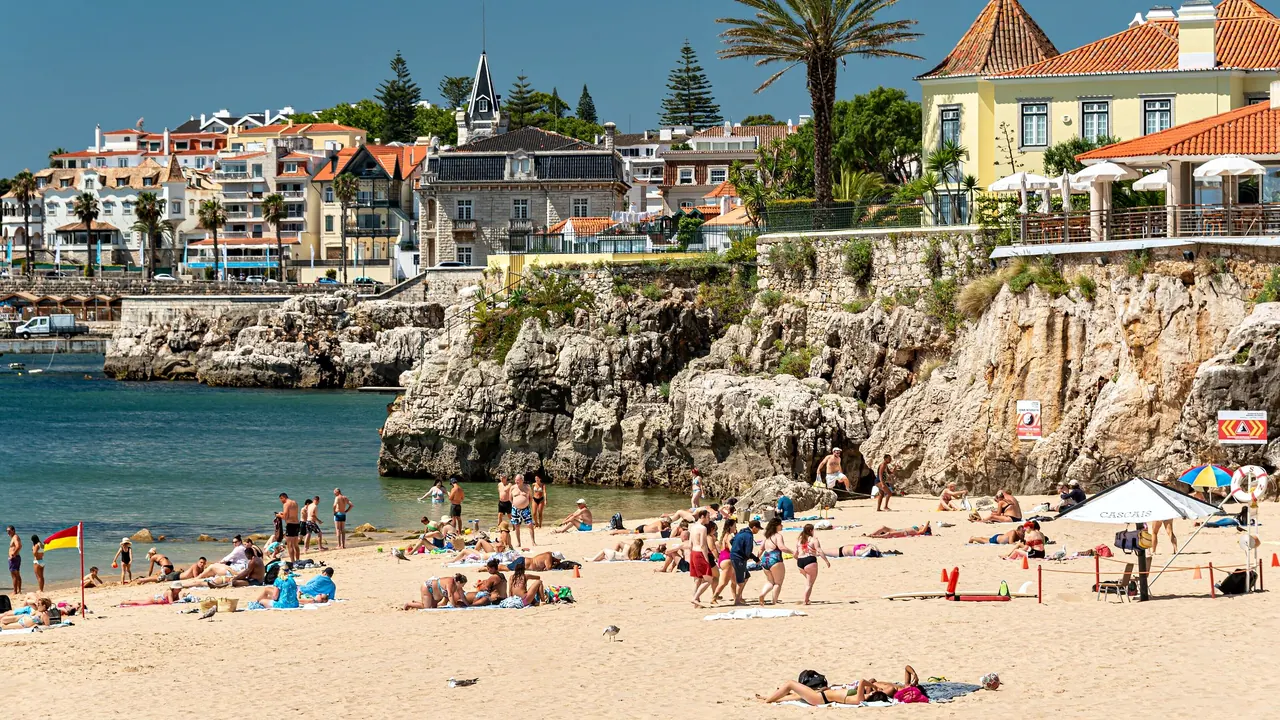

Photos: Cascais by Jorge Franganillo, CC BY 2.0, cropped; Jerez de la Frontera by PEPE GADEIRAS, CC BY 4.0, cropped.
Cascais or Jerez de la Frontera?
Our verdict in twelve categories, each scored against the same fixed benchmark cities, and the climate month by month, so you can choose for your trip.
Choose Cascais for
- nature and the outdoors
- families
- wellness
Cascais suits travellers who want the sea and the outdoors on the doorstep. There are coves below the old town, a wild coast out to Guincho and Cabo da Roca, forest trails in the Serra de Sintra, and Lisbon a short train ride away for whatever a small resort lacks. It is the calmer and easier choice with young children and the better one for an unhurried stay, as long as the budget stretches to resort prices.
Choose Jerez de la Frontera for
- live music and the arts
- prices
- culture and sights
For sherry, flamenco and a fuller Andalusian evening, Jerez is the stronger pick. Its tabancos, bodegas and peñas give it a character Cascais cannot match, the old town has more to see, and a stay costs noticeably less. The beach is a day out rather than a stroll, and summer is fierce, so Jerez is best for people who come for the town itself, ideally in spring or autumn.
Scoreboard
Twelve categories on one fixed scale from 0 to 100. The shaded stretch is the gap between the two.
Your match
Pick a travel style or drag the sliders, and both match scores follow your weighting.
Wins on nature and the outdoors and families with your weighting.
Wins on live music and the arts and prices with your weighting.
What matters to you?
Category by category
What the scores mean for a trip.
Beaches & swimming
The two come out about even, but the beaches work very differently. In Cascais the sand is part of the town: small sheltered coves below the old centre, a promenade to Estoril, and Carcavelos for surf a few stops up the line. The catch is cold water and a short swimming season, and wild Guincho is better for watching than for swimming.
Jerez has no beach of its own. The Costa de la Luz, from El Puerto to Cádiz and La Barrosa, has long, open stretches of golden sand, and the sea is several degrees warmer in summer. In return you take a train or a drive instead of strolling down, and the Levante wind makes some days rough.
Food & drink
Jerez is the better place to eat and drink, because sherry runs through everything. Fino is poured from the barrel in the tabancos, the bodegas offer tastings, kidneys and oxtail are cooked in sherry, and late tapas rounds go on around Plaza del Arenal and San Miguel.
Cascais does one thing well: grilled fish and shellfish from its own harbour, with long lunches along the Guincho road. Beyond that the old centre relies on tourist menus, and keen eaters head into Lisbon.
Culture & sights
Jerez has the deeper heritage. The Almohad Alcázar, the Baroque cathedral, the Gothic-Mudéjar parish churches and the flamenco quarters of Santiago and San Miguel fill two or three days, and the sherry bodegas and the dancing horses are found only here.
Cascais is charming rather than weighty. The royal-era villas on the seafront, the Citadel and the Paula Rego museum in its red towers make a pleasant day on foot, but for major monuments it relies on Lisbon and Sintra next door.
Nightlife
Neither is a party town, but Jerez stays up later. Its nights follow the Andalusian clock, with tabancos and copa bars busy past midnight at weekends, a few clubs, and the Feria del Caballo in May, which goes on until dawn for a week.
Cascais keeps to pubs, wine bars and terraces in a few old-centre streets, and it is quiet by midnight outside high summer. The Estoril casino offers a dressier evening, and Lisbon is the place for anything more.
Nature & outdoors
Cascais has the more dramatic outdoors, and it starts at the edge of town. A cycle path runs past Boca do Inferno and the dunes to Guincho, which draws kitesurfers and surfers, and Cabo da Roca and the misty trails of the Serra de Sintra are close by.
Around Jerez the vineyard country is gentle. The bigger landscapes, the gorges of Grazalema, the cork forests of Los Alcornocales and the Doñana wetlands, take an hour or more to reach. Birdwatching and horse riding are real draws, but a car is part of the deal.
Day trips
From Cascais the days out lead to Lisbon and its hills, and from Jerez to the cities and white towns of Andalusia. The coastal train reaches the capital in about 40 minutes, passing the monuments of Belém, and the palaces and romantic gardens of Sintra are half an hour over the ridge. Mafra, Ericeira and walled Óbidos make longer outings.
Jerez has Seville about an hour away by train, ancient Cádiz half an hour, and Sanlúcar and El Puerto, the other sherry towns, close by. The white towns, from Arcos on its cliff to Ronda in the hills, need a car, so Cascais is the easier base if you won't be driving.
Good for families
Cascais is the easier choice with small children. It is compact and calm, the coves in the bay are shallow and sheltered, and the flat promenade to Estoril suits pushchairs and scooters. The sea is cold, though, and the zoo and aquarium mean a trip to Lisbon.
Jerez has a good zoo and the dancing-horse show, and children fit naturally into late Andalusian evenings. But the town is very hot in July and August, and its gentle sandy beaches are a journey rather than a short walk.
Getting around
Both are easy on foot, with Cascais slightly ahead. Its coves, harbour and promenade are a short walk apart, and the coastal train to Cais do Sodré makes reaching Lisbon easy without a car.
Jerez's flat centre keeps the Alcázar, the bodegas and the tapas streets close together, and the station has direct trains to Seville and Cádiz. The white towns, Grazalema and many of the beaches, though, are hard to reach without a hired car.
Shopping & style
Shopping is a sideline in both, and the difference is in what you take home. Cascais has beachwear, surf brands, azulejo tiles, cork goods and decoratively packed tinned fish, and Lisbon is the place for serious fashion. Jerez sells its own traditions: sherry and brandy from the bodegas, handmade saddlery and riding boots, and flamenco dresses and guitars near the old quarters.
Affordability
Jerez is much the cheaper stay. Tapas and sherry cost little, central hotels are moderately priced, bodega tours are inexpensive and you can walk almost everywhere. Only the Feria, the flamenco festival and the motorcycle race weekends push room prices up.
Cascais is among the pricier places to stay in Portugal, with seafront hotels and promenade fish restaurants charging resort rates, most of all in July and August. Back-street cafés, set lunches and the cheap train to Lisbon help, and so does coming outside high summer.
Live music & performing arts
Cascais has little to build an evening around. Its plays, staged by one of Portugal's oldest theatre companies, are in Portuguese, the Estoril casino leans towards cabaret, and the jazz and open-air concerts mostly happen in summer. If you want fado or a symphony concert, you will be taking the train to Lisbon.
Jerez is another matter, because flamenco grew up in its streets and the bulería is its own rhythm. Locals still gather for it all year in the members' clubs of Santiago and San Miguel, which welcome visitors on their regular nights, and in tabancos where the singers are an arm's length away, rough edges and all. The late-winter festival brings leading dancers to the Teatro Villamarta stage. Unlike a play in Portuguese, flamenco needs no translation.
Wellness & relaxation
Cascais is the better place for a restful stay. Estoril's spa tradition carries on in thalassotherapy and good hotel spas, yoga by the sea is easy to find in summer, and quiet mornings on the seafront set the pace, though crowds from Lisbon fill summer weekends.
Jerez has an Arab-style bathhouse and a few hotel spas, and little more. What relaxes you there is the pace of the day: long lunches, shaded patios and evening strolls, best in spring and autumn before the heat.
When should you go?
Pick your month. The climate figures are measured averages, not a forecast.
Cascais in July
Jerez de la Frontera in July
Daytime high, °C
Rainfall in the month, mm
Temperature and rainfall are climate normals, averaged over the years shown. Cascais: 1991-2020 normals, Lisboa / Geof (23.6 km from centre). Jerez de la Frontera: 1991-2020 normals, Jerez De La Fronteraaeropuerto (9.9 km from centre).
Cascais has the milder summer. Days reach about 28°C in July and August, warm enough for the beach without being tiring in town, and June to August is almost free of rain and very sunny. The Atlantic stays cool all year and peaks at about 19°C, so swimming is brisk even in high summer. Rain arrives in October, and from then until January more than 100mm falls in most months, though winter days stay mild enough for walking.
Jerez is hotter and drier. July and August reach about 34°C, too hot for afternoon sightseeing, while the nearby sea warms to around 23°C, much kinder for swimming than the water off Cascais. Spring, from March to May, and October are the best months for walking the streets. Winter is slightly warmer and less wet than in Cascais, with most of the rain falling from October to December.
Which traveller are you?
On a culture and arts trip, Jerez is the clear choice. Flamenco is still a living local art in its peñas and tabancos, the Alcázar and the old quarters reward wandering, and the bodegas and the equestrian school are found nowhere else.
For an outdoors trip, Cascais wins. The cycle path to Guincho, the surf and kitesurfing, the cliff walks at Cabo da Roca and the forest trails of the Serra de Sintra all start close to town, while the bigger landscapes around Jerez need a car.
On a trip on a tight budget, Jerez goes much further. Sherry and tapas in the tabancos cost little, central hotels are moderately priced and nearly everything is walkable. Cascais is an upmarket resort where seafront rooms and harbour restaurants are priced high, above all in summer.
Before you go
| Measure | Cascais | Jerez de la Frontera |
|---|---|---|
| Official language | Portuguese | Spanish |
| Currency | Euro (EUR) | Euro (EUR) |
| Sockets | CF230 V, 50 Hz | CF230 V, 50 Hz |
| Driving side | Right | Right |
| Time zone | UTC, UTC+1 in summer | UTC+1, UTC+2 in summer |
| Emergency number | 112 | 112 |
| Elevation | 0 m | 58 m |
| Main airport | Lisbon Humberto Delgado Airport (LIS)26 km from centre157 non-stop destinations | Jerez Airport (XRY)10 km from centre26 non-stop destinations |
| Public holidays this year | 14 days | 12 days |
By the numbers
| Measure | Cascais | Jerez de la Frontera |
|---|---|---|
| City population | 214,124 | 213,634 |
| People per km² | 2,198 | 180 |
| Museums within 10 km | 6 | 14 |
| UNESCO World Heritage sites within 50 km | 3 | 1 |
| Swim season, months above 21 °C | None | 3 months |
Where else could you go?
Every comparison below shares a destination with this one, so you can follow Cascais or Jerez de la Frontera somewhere new.
- Sintravs Cascais
- Cadizvs Jerez de la Frontera
- Lisbonvs Cascais
- Sevillevs Jerez de la Frontera
- Rondavs Jerez de la Frontera
- Marbellavs Jerez de la Frontera