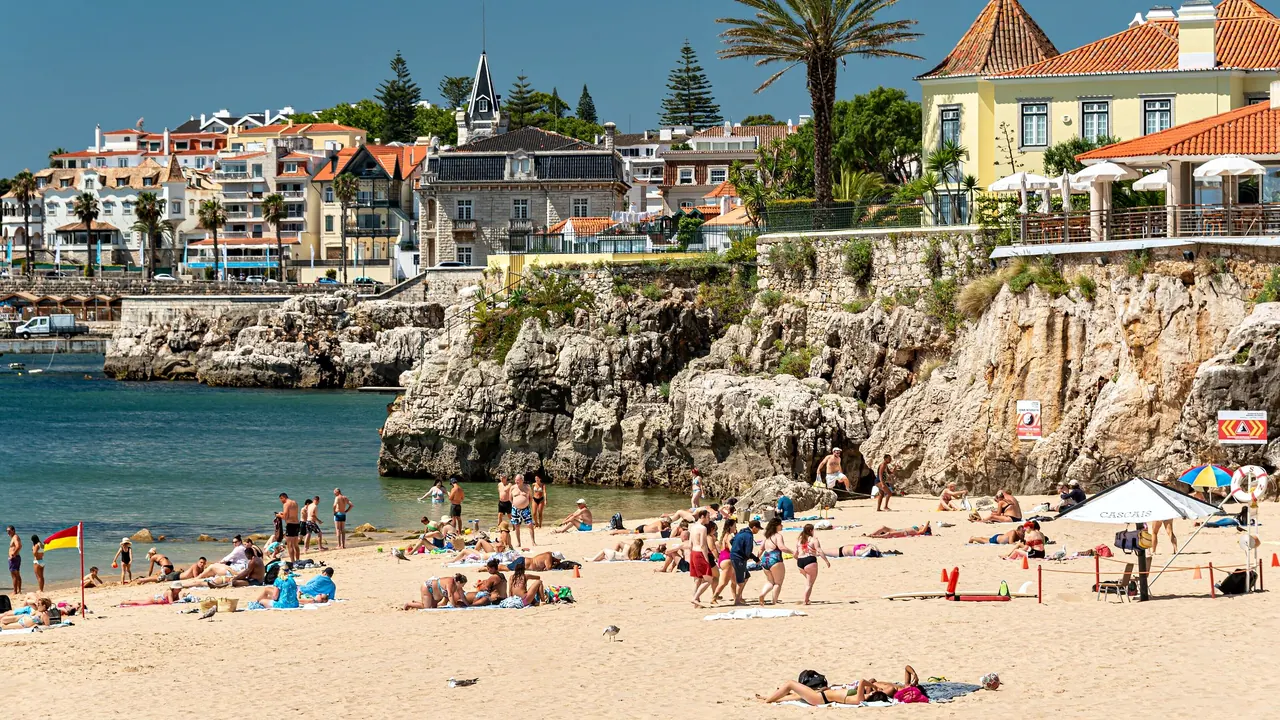
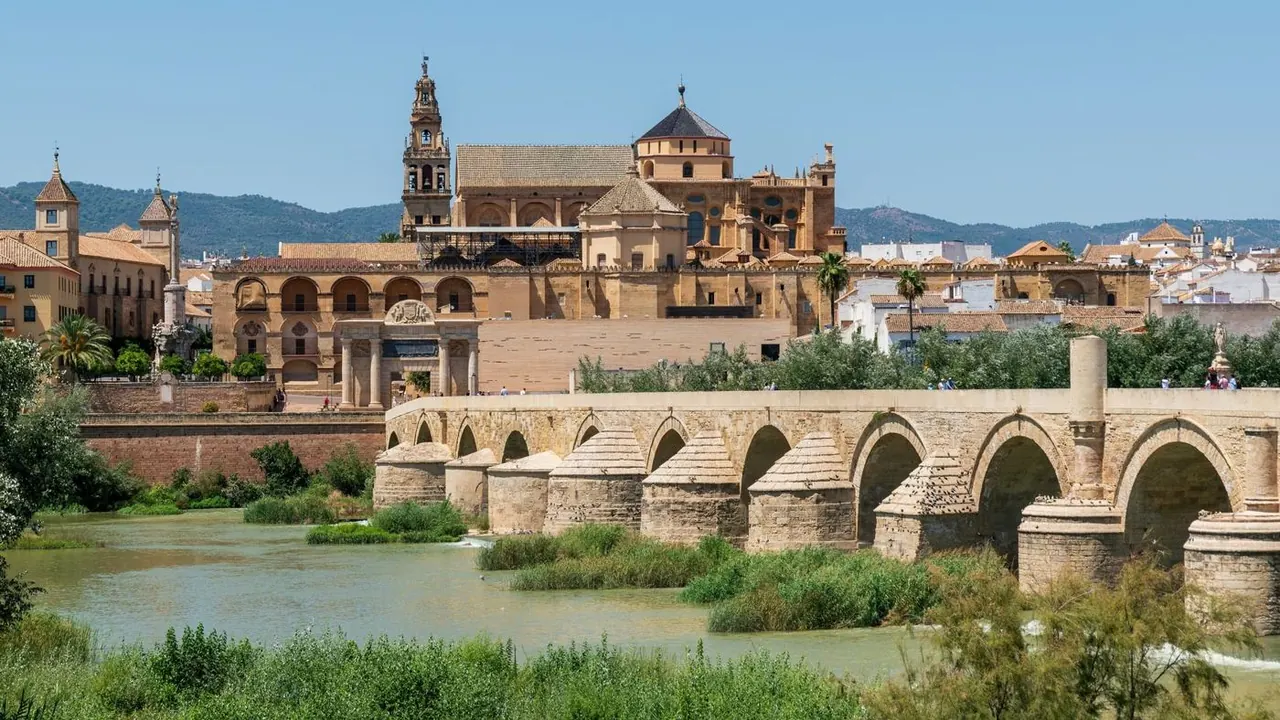
Photos: Cascais by Jorge Franganillo, CC BY 2.0, cropped; Cordoba by Jose María Ligero Loarte, CC BY-SA 4.0, cropped.
Cascais or Cordoba?
Our verdict in twelve categories, each scored against the same fixed benchmark cities, and the climate month by month, so you can choose for your trip.
Choose Cascais for
- beaches
- nature and the outdoors
- families
Cascais suits travellers who want the sea a few minutes' walk from their room and a calm small town to come back to. The coast west of town gives it real outdoor appeal, with surf at Guincho, cliff walks towards Cabo da Roca and forest trails in the Serra de Sintra. It is also the easier place to bring young children. Lisbon is close enough by train to supply the museums and late nights the town itself lacks.
Choose Cordoba for
- culture and sights
- prices
- live music and the arts
Choose Cordoba when the trip is about history and eating well rather than swimming. The Mezquita-Cathedral, the Juderia and the ruins of Medina Azahara give it far more to see than Cascais. Its tabernas serve salmorejo and chilled Montilla for little money, and fast trains put Seville and Granada within easy reach. The one condition is timing, because high summer heat shuts down much of the day.
Scoreboard
Twelve categories on one fixed scale from 0 to 100. The shaded stretch is the gap between the two.
Your match
Pick a travel style or drag the sliders, and both match scores follow your weighting.
Too close to call, 1 point apart
Wins on beaches and nature and the outdoors with your weighting.
Wins on culture and sights and prices with your weighting.
What matters to you?
Category by category
What the scores mean for a trip.
Beaches & swimming
In Cascais the beach is simply part of the day. The coves of Conceição, Duquesa and Rainha sit right below the old centre, the promenade continues to the longer sands at Estoril, and Carcavelos is a few train stops away for surf. The south-facing bay keeps the water calm, though at Atlantic temperatures a swim is bracing rather than warm.
Cordoba lies inland in the Guadalquivir valley, and the beach plays no part in a stay there. A day trip to the Costa del Sol is possible by fast train, but it makes for a long day. In summer locals cool off in pools or at reservoirs in the Sierra Morena.
Food & drink
Cordoba is the better place to eat. Its tabernas, often old houses with tiled patios, serve dishes that belong to the city: salmorejo, flamenquin, rabo de toro and fried aubergine with cane honey, with the dry Montilla-Moriles wines poured alongside. A tapas round through Santa Marina or San Agustin beats sitting down near the Mezquita.
Cascais eats almost entirely from the sea, with grilled sardines and bass from the harbour catch, clams and long seafood lunches on the road to Guincho. Beyond that the choice is narrow, and the centre leans on tourist menus, so keen eaters often go into Lisbon for dinner.
Culture & sights
Here the gap is wide, and it favours Cordoba. The Mezquita-Cathedral, with its forest of striped arches and a Renaissance cathedral built inside it, is one of the great buildings of Europe. Around it are the Juderia's lanes and synagogue, the Roman bridge, the Alcazar and the patios of San Basilio and the Palacio de Viana. Medina Azahara lies just outside the city.
Cascais has charm rather than monuments. There are the villas left by the royal summer court, the Citadel, and Paula Rego's paintings in their red pyramid towers. All of it fits into a single day's stroll, and for major sights people head to Sintra or Lisbon.
Nightlife
Neither is a clubbing destination, but Cordoba keeps going later. On warm nights the terraces around the Corredera, Las Tendillas and the river fill after ten, students keep weekend bars busy, and the May fair runs until dawn.
Cascais offers a quieter evening, with pubs, wine bars and cocktail terraces in a few old streets and the casino at Estoril if you want to dress up. Outside high summer the town is mostly asleep by midnight. A real night out means Lisbon and watching the time of the last train back.
Nature & outdoors
Cascais is much the stronger choice outdoors. A cycle path runs west past Boca do Inferno and the dunes to Guincho, where the wind and waves draw kitesurfers and surfers, and the cliffs at Cabo da Roca mark the western edge of mainland Europe. Inland, the Sintra-Cascais Natural Park has misty trails through cork oak and pine.
Around Cordoba the countryside takes more effort. The wooded Sierra Morena, the birds of prey of Hornachuelos and the gorges of the Sierras Subbeticas mostly need a car, and summer heat leaves only the dawn hours for walking or cycling.
Day trips
Both make excellent bases, and the difference lies in where you end up. From Cascais the outings are a capital and its hinterland: Lisbon by the coastal train past Belém, the palaces of Sintra over the ridge, and Mafra, Ericeira and Óbidos by car.
From Cordoba the high-speed trains link three great cities. Seville, Granada with the Alhambra, and Malaga are each roughly an hour or so away without changing hotel. A car adds the Renaissance towns of Ubeda and Baeza and the Montilla bodegas.
Good for families
Cascais is the easier choice with young children. Its shallow, sheltered coves, a flat promenade suited to pushchairs and scooters, and the peacocks and playground of the Marechal Carmona park make for simple, unplanned days. The drawbacks are a cold sea and the lack of a zoo or aquarium short of Lisbon.
Cordoba welcomes children warmly, and its traffic-free lanes are safe to roam. The Alcazar fountains, the horse show at the royal stables and Almodovar castle go down well, but most sights are made for adults and summer heat is hard on small children.
Getting around
On the ground the two are about level. In both, most of what a visitor wants is within walking distance, but the layout is different. Cascais stretches along the shore, so the seafront path carries you from the harbour and coves on to Estoril, and the train beside the water gives a direct line into Lisbon with no car needed. The wilder coast at Guincho and the Sintra hills are slower to reach by bus, and anyone touring the region for several days will be glad of a car.
Cordoba's sights sit close together in one tight old town, where the Mezquita, the Juderia and the Roman bridge are minutes apart on foot, and the fast-train station is close by. Its cobbled lanes are pleasant to walk but awkward with luggage, and in summer you have to fit walking around the shady hours. The caliphal ruins west of the city are too far to walk, so you need a taxi or an organised coach to reach them, and a car for the hill towns and the countryside.
Shopping & style
Neither city is a reason to go shopping, but what you bring home differs. In Cascais it is beachwear, surf brands, azulejo tiles, cork and tinned fish in decorative tins, with Lisbon for anything serious.
Cordoba's speciality is craft: silver filigree, embossed guadameci leather, ceramics and guitars from local workshops. Cruz Conde and Las Tendillas cover high-street needs.
Affordability
Cordoba is clearly the cheaper stay. Rooms are good value for most of the year, and a glass of Montilla with a tapa costs very little. The only real price spike comes in May, with the patio festival and the fair.
Cascais is one of Portugal's pricier resorts. Seafront hotels and harbour restaurants charge accordingly, above all in July and August. Eating in the back streets and coming outside high summer help a good deal.
Live music & performing arts
Cordoba gives you more to see in the evening, and almost all of it is flamenco. There are tablaos in the old town, rougher nights in the peñas, a respected guitar festival and the free Noche Blanca performances in summer, with the Gran Teatro for the city orchestra and touring shows.
Cascais has Portuguese-language theatre in Estoril, casino cabaret and a summer jazz tradition. For fado or opera you go to Lisbon.
Wellness & relaxation
Cascais has the slight edge for a restful stay. Estoril's history as a spa town carries on in thalassotherapy and hotel spas, and quiet mornings on the promenade with sea yoga in summer set the pace, though summer weekends bring Lisbon crowds.
Cordoba relaxes in its own way. There are Arab-style bath houses under horseshoe arches, courtyards of orange trees and fountains, and a forced midday rest in summer. Neither is built for a dedicated spa vacation.
When should you go?
Pick your month. The climate figures are measured averages, not a forecast.
Cascais in July
Cordoba in July
Daytime high, °C
Rainfall in the month, mm
Temperature and rainfall are climate normals, averaged over the years shown. Cascais: 1991-2020 normals, Lisboa / Geof (23.6 km from centre). Cordoba: 1991-2020 normals, Cordoba / Aeropuerto (7.6 km from centre).
Cascais is at its best from June to September. Days reach about 28°C, high summer is almost dry and the sun shines for long hours, so this is the beach season. The Atlantic stays cool even then, never above 19°C. Spring is mild, sunny and good for coastal walks, but from October the rain comes in earnest and stays through January, peaking at 121mm in November.
Cordoba runs on a different calendar. July and August reach 37°C, far too hot to walk the streets except early in the morning, so its best months are March to May and October, when days are warm and comfortable for sightseeing. Winter days are as mild as on the Portuguese coast but noticeably drier. In both cities the rain falls from autumn through winter, and both are very sunny in summer, Cordoba slightly more so.
Which traveller are you?
For a beach and sun trip, Cascais is the only real option. Sandy coves sit below the old centre, a seafront promenade leads to Estoril, and Carcavelos has surf, while Cordoba is about 160km from the nearest sea.
On a culture and arts trip, Cordoba is the clear choice. The Mezquita-Cathedral, the Juderia, the Alcazar gardens and Medina Azahara fill two or three days, and flamenco in peñas and tablaos rounds out the evenings. Cascais offers villas and a few museums.
On a trip with a tight budget, Cordoba stretches money further. Rooms are good value for most of the year, tapas with Montilla cost little and the centre is walkable. Cascais is an upmarket resort with high seafront prices, especially in July and August.
Before you go
| Measure | Cascais | Cordoba |
|---|---|---|
| Official language | Portuguese | Spanish |
| Currency | Euro (EUR) | Euro (EUR) |
| Sockets | CF230 V, 50 Hz | CF230 V, 50 Hz |
| Driving side | Right | Right |
| Time zone | UTC, UTC+1 in summer | UTC+1, UTC+2 in summer |
| Emergency number | 112 | 112 |
| Elevation | 0 m | 120 m |
| Main airport | Lisbon Humberto Delgado Airport (LIS)26 km from centre157 non-stop destinations | Córdoba Airport (ODB)8 km from centre3 non-stop destinations |
| Public holidays this year | 14 days | 12 days |
By the numbers
| Measure | Cascais | Cordoba |
|---|---|---|
| City population | 214,124 | 323,262 |
| People per km² | 2,198 | 258 |
| Museums within 10 km | 6 | 16 |
| UNESCO World Heritage sites within 50 km | 3 | 2 |
| Swim season, months above 21 °C | None | - |
Where else could you go?
Every comparison below shares a destination with this one, so you can follow Cascais or Cordoba somewhere new.