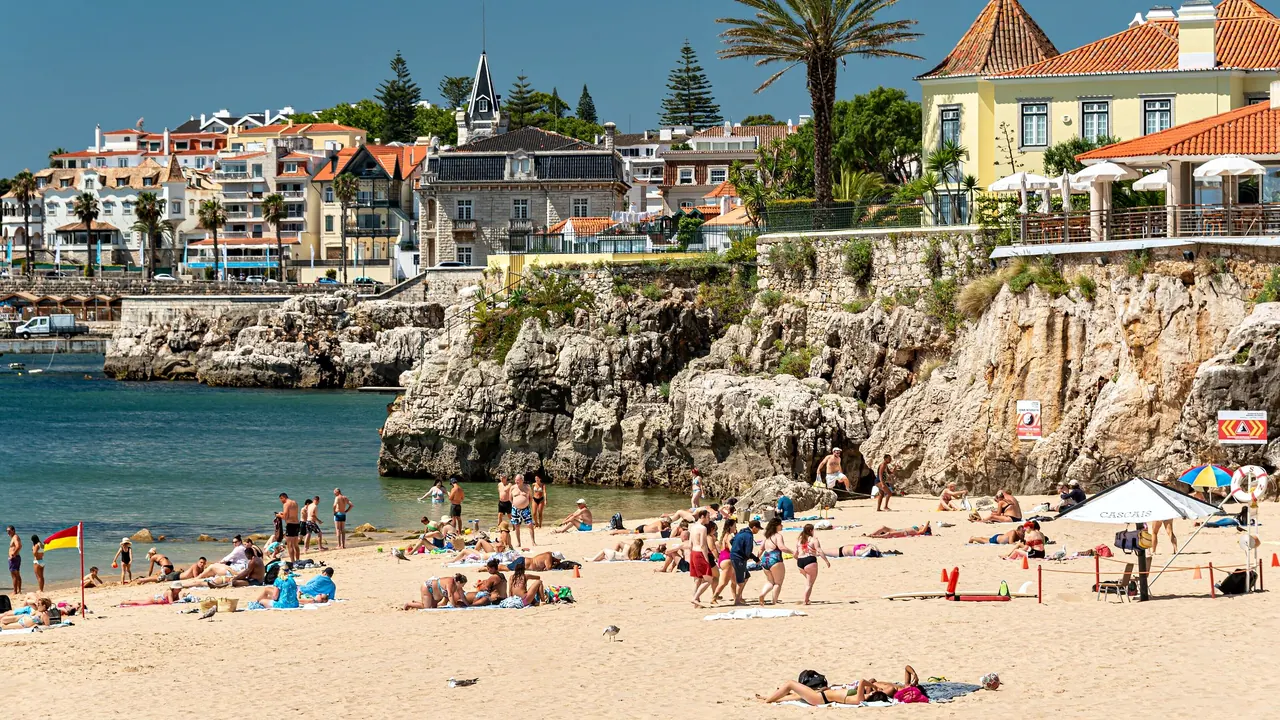
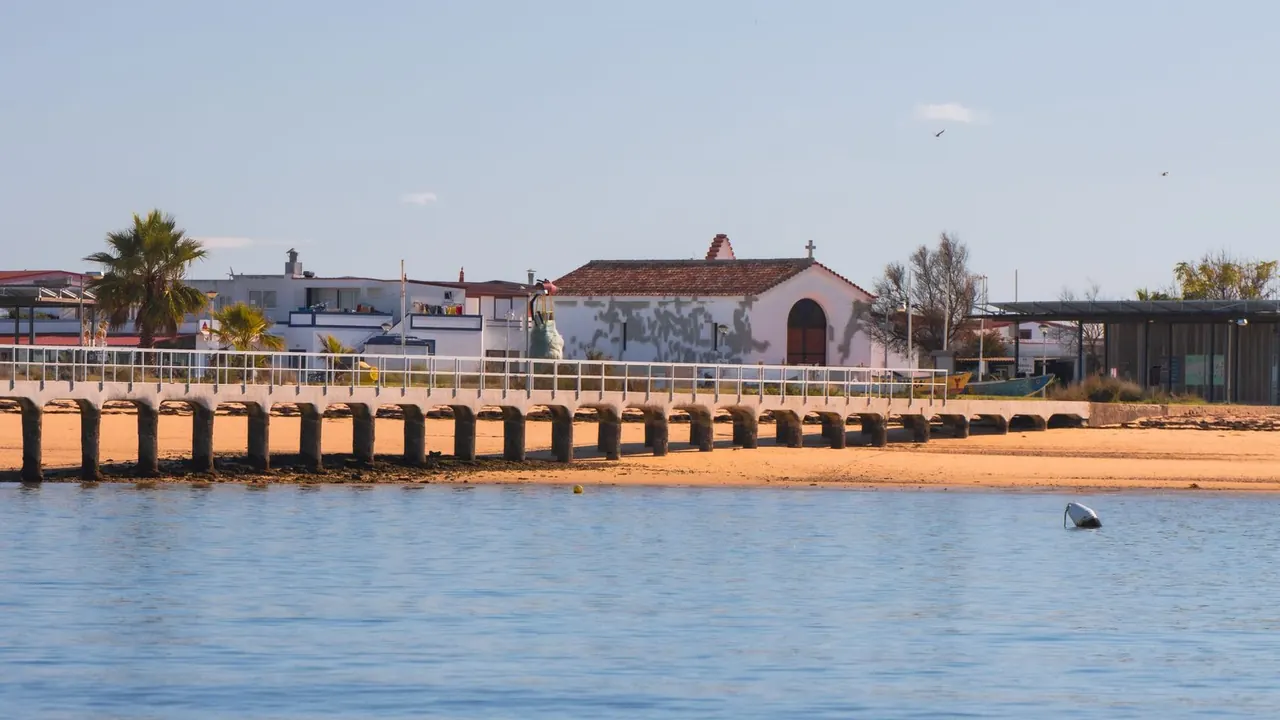
Photos: Cascais by Jorge Franganillo, CC BY 2.0, cropped; Faro by Vitor Oliveira, CC BY-SA 2.0, cropped.
Cascais or Faro?
Our verdict in twelve categories, each scored against the same fixed benchmark cities, and the climate month by month, so you can choose for your trip.
Choose Cascais for
- day trips
- nature and the outdoors
- wellness
Cascais suits travellers who want the sea and a capital city in the same trip. Lisbon is a short train ride along the shore, Sintra's palaces are just over the ridge, and the wild coast at Guincho and Cabo da Roca gives you cliff walks, surf and forest trails within easy reach. It is quieter, greener and more polished than Faro, and you pay resort prices for that.
Choose Faro for
- prices
- beaches
- nightlife
Faro is the better pick when the beach is the point of the trip and the budget matters. The sand is on the barrier islands of the Ria Formosa, a bus or ferry ride away, but the water there is calmer and warmer than anything the Lisbon coast offers. Everyday costs are gentler, and with a hire car the rest of the Algarve opens up, from Tavira to the western cliffs.
Scoreboard
Twelve categories on one fixed scale from 0 to 100. The shaded stretch is the gap between the two.
Your match
Pick a travel style or drag the sliders, and both match scores follow your weighting.
Too close to call, 2 points apart
Wins on day trips and nature and the outdoors with your weighting.
Wins on prices and beaches with your weighting.
What matters to you?
Category by category
What the scores mean for a trip.
Beaches & swimming
Cascais has the more convenient beaches. Conceição, Duquesa and Rainha sit right below the old centre, a promenade runs on to Estoril, and Carcavelos is a few stops up the line for surf. The water is cool, though, and Guincho is too rough for most swimmers.
Faro has the better beaches for actually swimming, even though none are in town. You take the bus over the bridge to Praia de Faro or a ferry to Ilha Deserta and Culatra, where kilometres of sand back onto dunes and the sea is calmer and noticeably warmer. Within an hour you can reach the Tavira island beach or the golden coves around Albufeira.
Food & drink
Both places cook fish and shellfish simply, and neither has much range beyond that. In Cascais the highlights are the harbour's daily catch and the long seafood lunches with wave views along the Guincho road. Serious eaters often take the train into Lisbon for dinner.
Faro's table comes from the lagoon instead: Ria Formosa clams, oysters and cockles, cataplana stews and almond and fig sweets, served at fairer prices in plain grill houses. Olhão's fish markets are a short ride east.
Culture & sights
Each town has about a day's worth of sights, but different kinds. Cascais tells the story of a royal summer resort: aristocratic villas on the seafront, the Citadel and the Paula Rego museum in its red pyramid towers. Faro is older and enclosed, a walled Cidade Velha entered through the Arco da Vila, with a cathedral tower above the lagoon, a Roman mosaic in a convent cloister and the bone-lined chapel at the Igreja do Carmo.
Nightlife
Neither is a place for a big night out, and the evenings differ mainly in tone. Cascais means wine bars and cocktail terraces in a few old-centre streets, plus the dressier casino at Estoril, and the town is mostly asleep by midnight.
Faro is a little younger and stays out later, thanks to its university. The bars on Rua do Prior and a few small clubs keep going on term-time weekends. For more, Cascais looks to Lisbon by train, and Faro to the loud strip in Albufeira.
Nature & outdoors
Cascais has the more dramatic and varied outdoors. West of town the coast turns wild, with the sea arch at Boca do Inferno, the wind and waves of Guincho for kitesurfers and surfers, and cliff paths out to Cabo da Roca. Inland, the misty cork and pine forest of the Serra de Sintra is close by for proper walking.
Faro's nature is flatter and quieter, centred on the saltmarsh and channels of the Ria Formosa. It is superb for flamingos and spoonbills, for paddling and for easy cycling. Cliffs and real hills mean an hour's drive or more, and the summer heat confines outdoor time to mornings.
Day trips
Cascais is the stronger base for days out, mainly because Lisbon is so close. The coastal train passes Belém on its way into the capital, Sintra's palaces are about half an hour over the ridge, and Mafra, Ericeira and Óbidos are all comfortable day trips.
Faro's outings are smaller in scale but pleasant. Tavira, Olhão, Loulé's market and castle and the Roman villa at Milreu are all close, and Silves, Lagos and Sagres are further west. Seville is possible, but it makes a long day on the road.
Good for families
Both are calm, safe and easy with children, and neither has big attractions in town. Cascais is the better place for pushchairs and scooters, with a flat promenade to Estoril and a park with peacocks and a playground. Its cold sea can put off small swimmers, though.
Faro has warmer, gentler water on sandy island beaches, boat trips that children enjoy and a small science centre. The Algarve's water parks and marine park are a drive away, and the midsummer heat calls for a long break in the middle of the day.
Getting around
Both centres are compact and easy on foot. Cascais has the more useful link beyond the town, a coastal train that runs straight along the shore to Lisbon, with buses to Sintra and a cycle path west. Faro's airport is close by and ferries leave from below the old walls. Further out, though, its railway is slow, and seeing much of the Algarve usually means hiring a car.
Shopping & style
Both offer modest shopping, much the same as each other: pedestrian streets with cork, ceramics and tinned fish, and a shopping centre on the edge of town. Cascais leans towards beachwear, surf labels and small boutiques, with Lisbon nearby for anything serious. Faro is more practical, with Portuguese chains on Rua de Santo António, lagoon salt flower and almonds to take home, and Loulé's market a short drive inland.
Affordability
Faro is the cheaper place to stay by a clear margin. It is a working provincial town, so lunches, coffee, buses and entry fees all stay low, although summer rooms climb and a hire car adds to the bill.
Cascais is an upmarket resort with a wealthy local population, and its seafront hotels, summer rentals and harbour restaurants are expensive for Portugal. You can save by eating in the back streets and travelling outside July and August.
Live music & performing arts
Live performance is thin in both. Faro has slightly more on home ground: chamber music at the ornate Teatro Lethes and the regional orchestra, dance and occasional opera at the Teatro das Figuras. Cascais offers Portuguese-language theatre in Estoril, casino cabaret and a summer jazz tradition, and its real advantage is that Lisbon's fado houses and opera are a train ride away.
Wellness & relaxation
Cascais is the better choice for a restful break. Estoril grew up partly as a spa resort around thermal springs, and that heritage lives on in thalassotherapy, good hotel spas and summer yoga by the sea, all close to the quiet seafront walks.
Faro offers an unhurried pace and lagoon sunsets, but its spas are resort ones along the golf coast to the west. The region's one real bathing destination, Caldas de Monchique, is over an hour away by car.
When should you go?
Pick your month. The climate figures are measured averages, not a forecast.
Cascais in July
Faro in July
Daytime high, °C
Rainfall in the month, mm
Temperature and rainfall are climate normals, averaged over the years shown. Cascais: 1991-2020 normals, Lisboa / Geof (23.6 km from centre). Faro: 1991-2020 normals, Faro / Aeroporto (2.8 km from centre).
Both towns have a long dry summer, and from June to September they look alike on land, with afternoons around 28°C in Cascais and 29°C in Faro. The sea is where they part. Off Cascais the Atlantic peaks at about 19°C, bracing even in August, while Faro's water reaches about 22°C and stays swimmable into October. Faro is also the sunnier of the two in every month.
Winter shows the bigger difference. Cascais turns wet from October to December, with November the rainiest month at around 121mm, and its days are slightly cooler. Faro gets roughly half as much rain through most of the winter, and only December is as wet as on the Lisbon coast. For walking and sightseeing, spring and autumn are comfortable in both, and Faro's mild, drier winter makes it the easier off-season choice.
Which traveller are you?
For a beach and sun trip, Faro is the clear choice. The long sandy islands of Ilha Deserta and Culatra have calm water several degrees warmer than the cool Atlantic coves of Cascais, and the swimming season runs well into autumn.
On an outdoors trip, Cascais has much more to offer. Cliff walks to Cabo da Roca, forest trails in the Serra de Sintra and the kitesurfing and surf at Guincho beat Faro's gentle lagoon, although the Ria Formosa is excellent for birdwatching by kayak.
On a trip on a tight budget, Faro makes the money go further. It is a working provincial town with cheap grilled-fish lunches and buses, while Cascais is an upmarket resort where seafront rooms and harbour restaurants are priced high for Portugal.
Before you go
| Measure | Cascais | Faro |
|---|---|---|
| Official language | Portuguese | Portuguese |
| Currency | Euro (EUR) | Euro (EUR) |
| Sockets | CF230 V, 50 Hz | CF230 V, 50 Hz |
| Driving side | Right | Right |
| Time zone | UTC, UTC+1 in summer | UTC, UTC+1 in summer |
| Emergency number | 112 | 112 |
| Elevation | 0 m | 10 m |
| Main airport | Lisbon Humberto Delgado Airport (LIS)26 km from centre157 non-stop destinations | Faro - Gago Coutinho International Airport (FAO)3 km from centre91 non-stop destinations |
| Public holidays this year | 14 days | 14 days |
By the numbers
| Measure | Cascais | Faro |
|---|---|---|
| City population | 214,124 | 64,560 |
| People per km² | 2,198 | 319 |
| Museums within 10 km | 6 | 2 |
| UNESCO World Heritage sites within 50 km | 3 | 0 |
| Swim season, months above 21 °C | None | 3 months |
Where else could you go?
Every comparison below shares a destination with this one, so you can follow Cascais or Faro somewhere new.
- Sintravs Cascais
- Lisbonvs Cascais
- Albufeiravs Faro
- Lagos, Portugalvs Faro
- Cadizvs Faro
- Jerez de la Fronteravs Faro