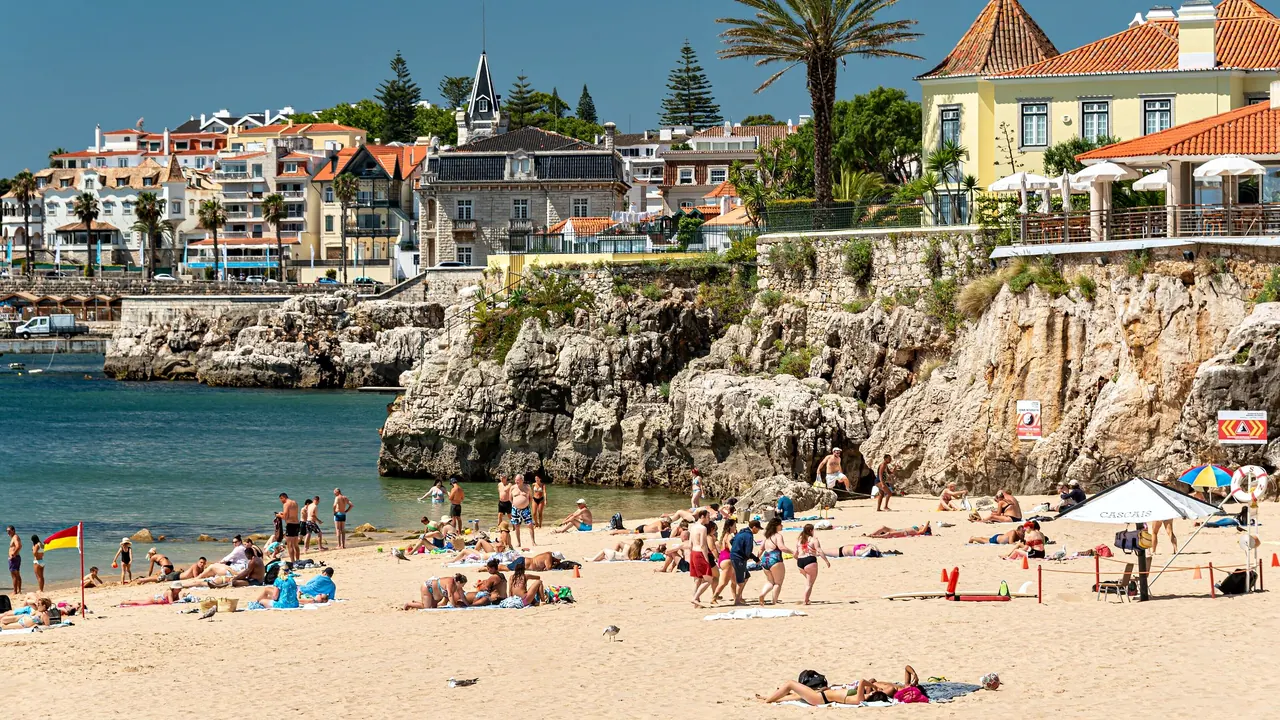
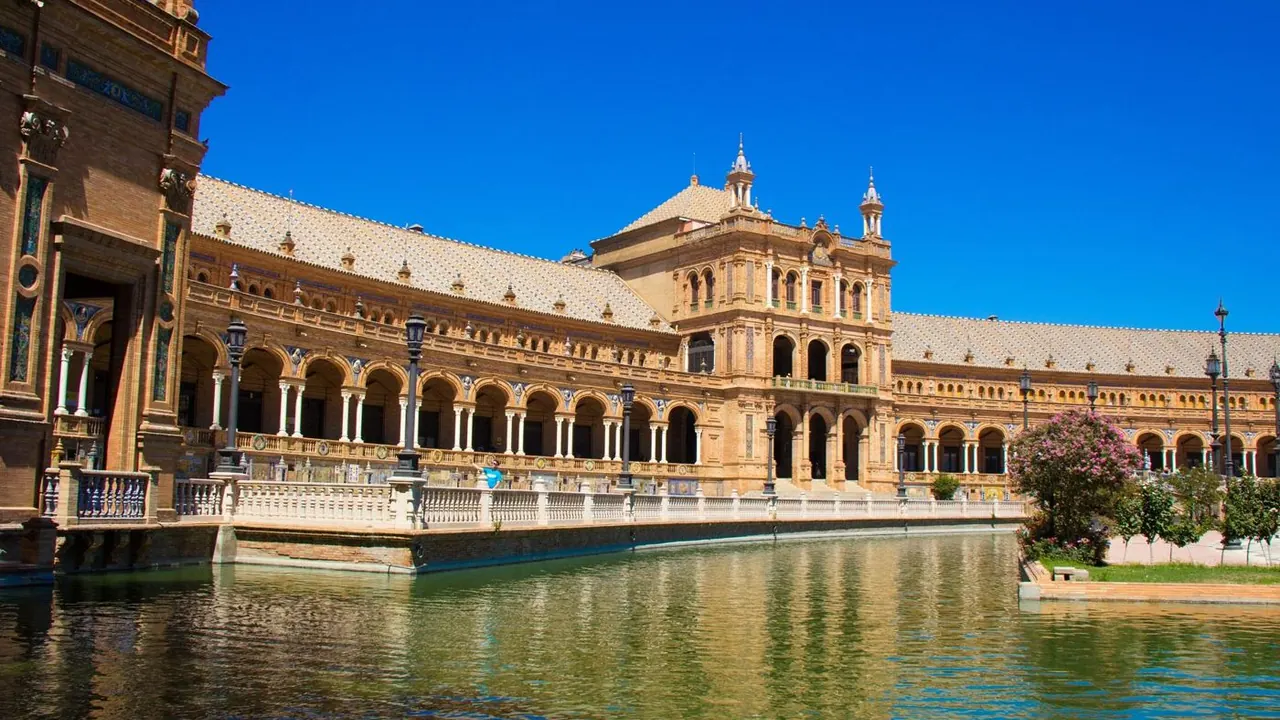
Photos: Cascais by Jorge Franganillo, CC BY 2.0, cropped; Seville by Tibor Kovacs, CC BY 2.0, cropped.
Cascais or Seville?
Our verdict in twelve categories, each scored against the same fixed benchmark cities, and the climate month by month, so you can choose for your trip.
Choose Cascais for
- beaches
- nature and the outdoors
- wellness
Cascais suits a slower trip by the Atlantic: a swim in a sheltered cove before lunch, a cycle out to the dunes and surf at Guincho, an afternoon on the cliffs at Cabo da Roca. It is calm and safe, which makes it an easy base with young children. Lisbon and Sintra are close enough to supply the monuments and dinners the town itself lacks. Choose it if the coast and the outdoors come first and quiet evenings are a pleasure rather than a drawback.
Choose Seville for
- culture and sights
- live music and the arts
- nightlife
For a trip built around the city itself, Seville is the much stronger choice. The Alcázar, the cathedral and the lanes of Santa Cruz give it a historic centre that Cascais cannot approach. Evenings of tapas, sherry and live flamenco carry on long after Cascais has gone to bed, and eating and sleeping there cost less. The trade-off is that there is no sea, and the summer heat rules out much of July and August.
Scoreboard
Twelve categories on one fixed scale from 0 to 100. The shaded stretch is the gap between the two.
Your match
Pick a travel style or drag the sliders, and both match scores follow your weighting.
Wins on beaches and nature and the outdoors with your weighting.
Wins on culture and sights and live music and the arts with your weighting.
What matters to you?
Category by category
What the scores mean for a trip.
Beaches & swimming
Cascais has the sea at its door. There are small coves such as Conceição and Rainha under the old centre, a promenade along to Estoril and the surf beach at Carcavelos a few stops up the line. The Atlantic stays cool even in August, but a swim fits easily around the rest of the day.
Seville has no beach of its own. The sands at Matalascañas and Mazagón on the Huelva coast are about an hour and a quarter away, where the water is warmer, but getting there takes most of a day. In town, a swim means a rooftop or municipal pool.
Food & drink
Seville is the better place to eat. People come for its tapas in themselves: salmorejo, spinach with chickpeas, pork cheek and fried fish, eaten standing at tiled counters in Triana or El Arenal with a glass of fino.
Cascais does one thing well, which is very fresh fish from its own harbour. It comes grilled in town or as long lunches overlooking the waves towards Guincho. Beyond that the choice thins out into tourist menus, and keen eaters take the train to Lisbon.
Culture & sights
This is the widest gap between the two. Seville has the Real Alcázar, the world's largest Gothic cathedral with the Giralda, the Archivo de Indias, Plaza de España and a fine art museum, enough for three or four full days.
Cascais offers charm instead: royal-era seaside villas, the Citadel, the Casa das Histórias Paula Rego and a cobbled old centre that takes a day to see. For serious sightseeing it relies on Lisbon and Sintra.
Nightlife
Seville's evenings start around ten and move from tapas bars to terraces and squares. The Alameda de Hércules, Triana and the streets around Alfalfa stay busy into the small hours, and in summer bars open along the river. There is little serious clubbing, but sociable late nights are easy to find.
Cascais is far quieter. It has a few streets of pubs, wine bars and cocktail terraces and the casino at Estoril, and outside high summer most of the town is asleep by midnight. A bigger night out means Lisbon and keeping an eye on the last train back.
Nature & outdoors
Cascais has wild landscape right on its edge. There is the Boca do Inferno arch, a cycle path to the dunes and kitesurfing beach at Guincho, cliff walks at Cabo da Roca and forest trails in the Serra de Sintra. A week outdoors needs little planning.
Around Seville the land is flat farmland, so nature means a trip out. The Doñana wetlands, with flamingos and migrating birds, are exceptional but about an hour and a half away, and the Sierra Norte has gentle hiking. All of it is best outside the summer heat.
Day trips
Both make excellent bases, but for different kinds of day out. From Cascais the main pull is Lisbon, about forty minutes along the shore by train. Sintra's palaces are just over the ridge, and Mafra, Ericeira and Óbidos are within reach by car.
Seville's outings are a series of separate historic towns: Córdoba's Great Mosque by high-speed train, Itálica and Carmona close by, sherry in Jerez and the old port of Cádiz. Days out from Cascais centre on one great capital, while from Seville they spread across a whole region.
Good for families
Cascais is the slightly easier choice with young children. It is small and calm, its sheltered coves are shallow, and the flat promenade to Estoril suits pushchairs and scooters, though there is no zoo or aquarium in town.
Seville has more that is built for children, with a theme park and summer water park on La Cartuja and an aquarium by the river, and children are welcome in tapas bars late into the evening. The summer heat, though, makes sightseeing with small children hard going in July and August.
Getting around
Both are easy on foot, in different ways. In Cascais the harbour, coves and promenade are all a short walk apart, and the coastal train to Lisbon is the one link most visitors need. The wilder coast and the hills are slower to reach by bus and easier with a car.
Seville's flat centre puts the cathedral, Triana and Plaza de España within a half-hour walk, with a tram, a metro line, buses and a public bike scheme as backup. The problem there is not distance but the midday heat in summer.
Shopping & style
Seville gives shoppers more to do. The potteries of Triana still sell hand-painted tiles, and Calle Sierpes and Calle Cuna have flamenco dresses, shawls, fans and guitars made for locals. The main Spanish chains and the Thursday flea market on Calle Feria add more.
Cascais is pleasant for browsing, with beachwear and surf brands, azulejo tiles, cork goods and decoratively packaged tinned fish in the old centre. For anything more serious, people go to Lisbon.
Affordability
Seville is the cheaper stay. A tapas evening costs far less than a sit-down dinner, you can walk everywhere in the centre, and rooms are moderately priced for most of the year, though they rise steeply during Holy Week and the April Fair.
Cascais is upmarket and expensive by Portuguese standards, above all for seafront rooms in July and August. Back-street cafés, set lunches and the cheap train to Lisbon help, and visiting outside high summer brings the cost down.
Live music & performing arts
Seville is the home of flamenco, with performances every night in tablaos, cultural centres and local peñas. The Teatro de la Maestranza adds opera and the city's symphony orchestra.
Cascais has plays in Portuguese by the Teatro Experimental, casino shows at Estoril, and summer jazz and outdoor concerts. For fado or opera, people go to Lisbon.
Wellness & relaxation
Cascais has the edge for unwinding. Its quiet pace, seafront walks and early nights are restful in themselves, and Estoril's history as a thermal spa resort lives on in its thalassotherapy and hotel spas. Summer weekends, though, bring crowds from Lisbon.
Seville has a few atmospheric Arab-style bath houses in old mansions, and the Alcázar gardens are cool during the afternoon lull. Noise in the narrow streets at night and the festival crowds make it harder to switch off completely.
When should you go?
Pick your month. The climate figures are measured averages, not a forecast.
Cascais in July
Seville in July
Daytime high, °C
Rainfall in the month, mm
Temperature and rainfall are climate normals, averaged over the years shown. Cascais: 1991-2020 normals, Lisboa / Geof (23.6 km from centre). Seville: 1991-2020 (sunshine 1981-2010, rainfall 1981-2010) normals, Sevilla / San Pablo (8.1 km from centre).
Cascais has the gentler year. Summer is warm rather than hot, with highs of around 28°C in July and August, almost no rain from June to August and long sunny days. That makes summer the time for the beach, though the Atlantic only reaches about 19°C. May, June and September are pleasant for walking the coast and the hills. The rain arrives in earnest from October and is heaviest in November, at around 121mm, so winter is mild but often wet.
Seville runs to extremes. July and August reach about 36°C, too hot for walking the streets in the middle of the day, so spring and autumn are its seasons, from March to May and again in October. Winter is mild and slightly warmer than in Cascais, and in both cities November is the wettest month. Spring is when Seville is at its best, while Cascais is still mild and showery, and high summer turns that the other way round.
Which traveller are you?
For a beach and sun trip, Cascais is the clear pick. Sandy coves sit right below the old town and Carcavelos is a few stops away, while from Seville the Huelva coast is more than an hour's drive. Expect bracing Atlantic water.
On a culture and arts trip, Seville wins easily. The Alcázar, the cathedral and Giralda, Murillo at the Museo de Bellas Artes and nightly flamenco fill several days. Cascais offers seaside villas and the Paula Rego museum, which take only one.
For a food and nightlife trip, Seville is the better choice. Moving between tapas bars in Triana and Santa Cruz, drinking manzanilla and staying out on the Alameda past midnight is the local rhythm. Cascais means a seafood lunch and an early night.
Before you go
| Measure | Cascais | Seville |
|---|---|---|
| Official language | Portuguese | Spanish |
| Currency | Euro (EUR) | Euro (EUR) |
| Sockets | CF230 V, 50 Hz | CF230 V, 50 Hz |
| Driving side | Right | Right |
| Time zone | UTC, UTC+1 in summer | UTC+1, UTC+2 in summer |
| Emergency number | 112 | 112 |
| Elevation | 0 m | 18 m |
| Main airport | Lisbon Humberto Delgado Airport (LIS)26 km from centre157 non-stop destinations | Seville Airport (SVQ)9 km from centre96 non-stop destinations |
| Public holidays this year | 14 days | 12 days |
By the numbers
| Measure | Cascais | Seville |
|---|---|---|
| City population | 214,124 | 689,423 |
| People per km² | 2,198 | 4,896 |
| Museums within 10 km | 6 | 24 |
| UNESCO World Heritage sites within 50 km | 3 | 1 |
| Swim season, months above 21 °C | None | - |
Where else could you go?
Every comparison below shares a destination with this one, so you can follow Cascais or Seville somewhere new.
- Sintravs Cascais
- Lisbonvs Cascais
- Jerez de la Fronteravs Seville
- Cadizvs Seville
- Rondavs Seville
- Cordobavs Seville