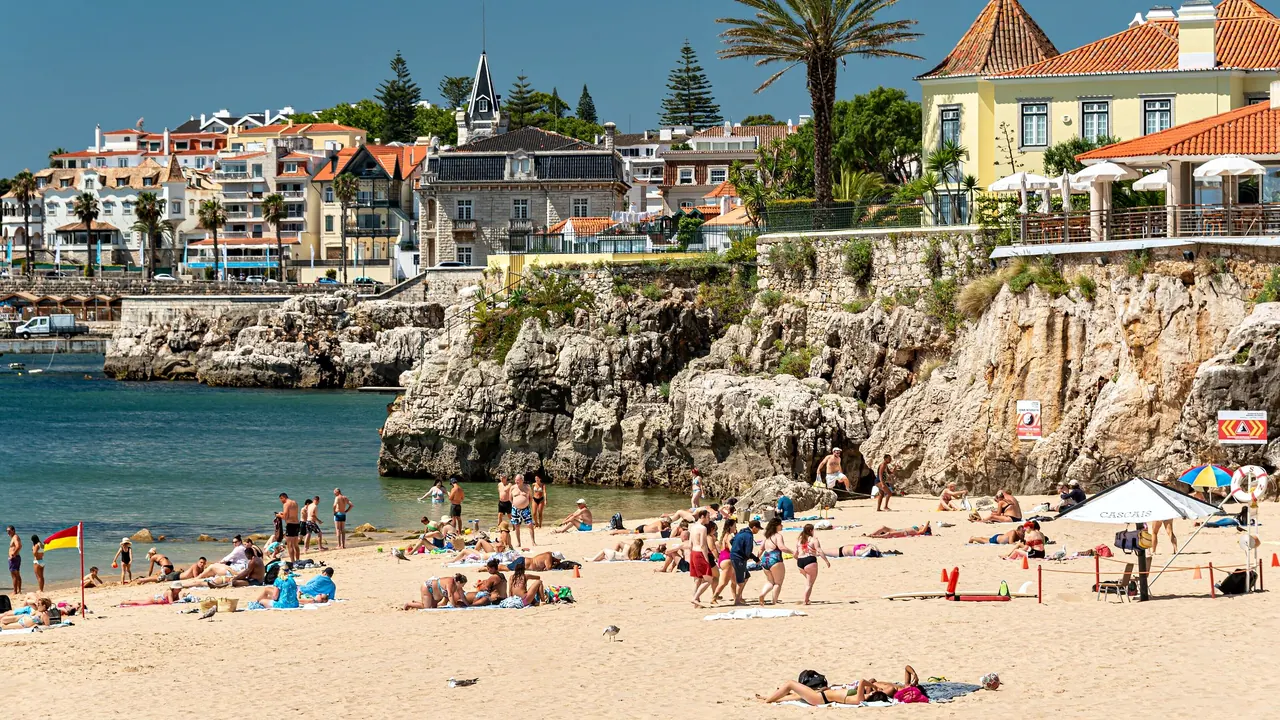
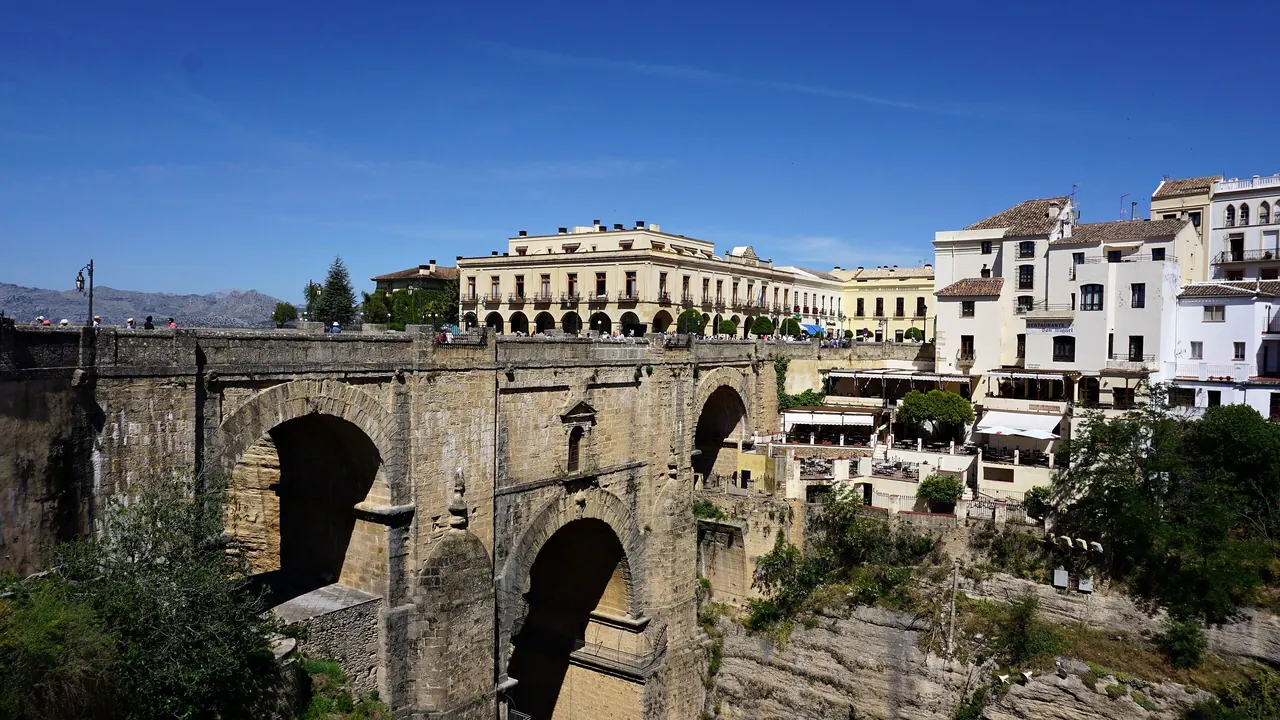
Photos: Cascais by Jorge Franganillo, CC BY 2.0, cropped; Ronda by Julia Kostecka, CC BY 2.0, cropped.
Cascais or Ronda?
Our verdict in twelve categories, each scored against the same fixed benchmark cities, and the climate month by month, so you can choose for your trip.
Choose Cascais for
- beaches
- families
- nightlife
Cascais suits travellers who want the sea, an easy rhythm and a capital city within reach. The coves below the old centre and the promenade to Estoril make swimming and strolling part of every day, and the coastal train puts Lisbon's restaurants, museums and nights out within easy reach. It is the better choice for families, for anyone without a car and for those who want a gentle seaside base with plenty of days out, as long as they accept resort prices.
Choose Ronda for
- prices
- culture and sights
Ronda is for people who come to look and walk rather than swim. The town on both sides of El Tajo, with its bridge, bullring and Arab baths, has more to see in its own streets, and the limestone sierras around it are among the finest walking country in Andalusia. It costs less, suits couples and walkers with a hire car, and repays a stay of a few unhurried days in the town or a farmhouse in the hills.
Scoreboard
Twelve categories on one fixed scale from 0 to 100. The shaded stretch is the gap between the two.
Your match
Pick a travel style or drag the sliders, and both match scores follow your weighting.
Wins on beaches and families with your weighting.
Wins on prices and culture and sights with your weighting.
What matters to you?
Category by category
What the scores mean for a trip.
Beaches & swimming
This is the starkest difference between the two. In Cascais the beach is part of daily life: Conceição, Duquesa and Rainha lie under the old centre, the promenade runs on to Estoril, and Carcavelos is a few stops up the line for surf. The water is cool Atlantic, and wild Guincho is for watching rather than swimming, but a swim is never more than a short walk away.
Ronda has no sea of its own. The Costa del Sol is roughly 50km away over hairpin roads, warmer but built up, and the trip uses up a whole day. Most visitors settle for a hotel or farmhouse pool instead.
Food & drink
Cascais eats better, mainly because of the sea and the capital next door. Grilled sardines and bream, clams and seafood platters come from a working harbour, the Mercado da Vila is worth a morning, and long lunches on the Guincho coast are a local habit. When the town's own range runs thin, Lisbon is close enough for dinner.
Ronda offers sturdy mountain cooking instead: oxtail stew, lamb and game, hams from the Serranía and chestnuts and mushrooms in autumn, with local wines from the Sierras de Málaga. The good eating is in the Mercadillo tapas bars rather than the gorge-view terraces, and a few days exhaust it.
Culture & sights
Ronda has the stronger sights by some distance. Its town is split by the Tajo gorge and joined by the eighteenth-century Puente Nuevo, and around it stand the Real Maestranza bullring, the Arab baths, the Mondragón palace and the rock-cut stairway of the Casa del Rey Moro.
Cascais has charm rather than monuments: the aristocratic villas of a former royal summer resort, the Citadel, and the Paula Rego museum in its red towers. It makes a pleasant day's walk, but for major heritage visitors go to Lisbon or Sintra.
Nightlife
Neither is a place for clubbing, but Cascais has a little more to offer after dinner. The old centre's narrow streets have pubs, wine bars and cocktail terraces that fill on summer nights, Estoril's casino adds a dressier evening, and Lisbon's nightlife is a train ride away if you plan for the last trains home.
In Ronda the evening is the late dinner itself, with tapas around the Plaza del Socorro and only a few bars afterwards. The town goes quiet early except during the September fair.
Nature & outdoors
Both are excellent for time outdoors, and the difference is ocean against mountain. Cascais looks to the Atlantic: the cycle path to Guincho, the Boca do Inferno arch, cliff walks at Cabo da Roca, wind and waves for kitesurfing and surfing, and misty cork oak trails in the Serra de Sintra.
Ronda is ringed by limestone sierras. Grazalema has crags, the Garganta Verde and griffon vultures, Sierra de las Nieves has its Spanish fir forests, the gorge cliffs draw climbers, and the Caminito del Rey is an hour away. It is the choice for serious hiking, while Cascais suits watersports and coastal walks.
Day trips
Cascais has the easier and grander set of outings. Lisbon and Belém are a short train ride along the shore, Sintra's palaces are just over the ridge, and Mafra, Ericeira and Óbidos are comfortable drives, so a week fills itself even without a car.
Ronda's outings are rewarding but more spread out. Setenil, Grazalema and Zahara are close, along with the Pileta cave and the Acinipo ruins, but the white villages really need a hire car, and Seville, Málaga or Gibraltar make long days on the road.
Good for families
Cascais is far more comfortable with young children. Its shallow, sheltered coves, the flat promenade for scooters and pushchairs and the peacocks in the Marechal Carmona park make easy days, and Lisbon's Oceanarium and zoo are a train ride away.
Ronda welcomes children in its squares late into the evening, and older ones enjoy the bridge and the gorge walk. But steep cobbled lanes, exposed viewpoints and no sea make it harder work, and families tend to stay in a country house with a pool.
Getting around
Both centres are walkable, but Cascais connects better beyond them. The coastal train runs straight to Lisbon, buses go to Sintra and Guincho, and a cycle path heads west, so many visitors never need a car.
Ronda is easy on foot apart from its steep lanes down into La Ciudad, but the trains and buses are slow and infrequent. For the villages and natural parks a car is close to essential, and parking in the old town is tight.
Shopping & style
Neither is a shopping destination, but Cascais has more to browse. Its pedestrian streets mix surf brands, beachwear and small boutiques with tiles, cork and tinned fish, and Lisbon is close for anything serious. Ronda has Carrera Espinel's everyday shops and some souvenir ceramics and leather, and its best buys are the edible ones: local wine, cured meats and convent sweets.
Affordability
Ronda is the cheaper stay. Tapas bars and set lunches are good value, the sights charge little, and rural houses in the hills are fairly priced, with costs rising mainly at the gorge-view hotels, at Easter and during the fair. A hire car is the main extra.
Cascais is an upmarket resort, priced high for Portugal, especially for seafront rooms in July and August. Back-street cafés, set lunches and the cheap train help, and coming outside high summer saves the most.
Live music & performing arts
Both have only a little on stage, and Cascais has slightly more. There is the long-running Teatro Experimental in Estoril, casino shows, small concerts at the cultural centre and a summer jazz tradition, with Lisbon's opera and fado houses a train ride away. Ronda has mainly flamenco staged for visitors and an occasional municipal programme, and its big occasion is the Corrida Goyesca at the September fair.
Wellness & relaxation
Cascais has more for a restful break. Estoril grew up as a spa resort around its thermal springs, the big hotels have good spas and thalassotherapy, and seaside yoga and promenade walks set a gentle pace, though summer weekends bring crowds from Lisbon.
Ronda's Arab baths are a monument to visit, not to bathe in, and treatments are limited to a few hotel spas. What it does have is the quiet of a farmhouse in the hills, with a pool and olive groves.
When should you go?
Pick your month. The climate figures are measured averages, not a forecast.
Cascais in July
Ronda in July
Daytime high, °C
Rainfall in the month, mm
Where the figures come from
Ronda has no weather station within reach, so its figures come from a gridded climate model rather than a measured record, and read a broad area rather than the city itself.
Temperature and rainfall are climate normals, averaged over the years shown. Cascais: 1991-2020 normals, Lisboa / Geof (23.6 km from centre). Ronda: 1991-2020 normals, TerraClimate 4 km grid at the town, no weather station within 90 km.
Cascais has a long, mild season. From June to September days reach the mid to high twenties, the summer is almost completely dry and July brings around 350 hours of sunshine, so the coves are at their best in high summer. Even then the Atlantic only reaches about 19°C, refreshing rather than warm. The rain arrives in October and stays through the winter, though days rarely drop below the mid teens, so a winter visit means coastal walks rather than beach days.
Ronda's year has bigger swings because it sits up in the mountains. July and August reach 32°C, which makes afternoons in the lanes and on the trails hard work, and winter days fall to about 13°C with cold nights and heavy rain, up to 120mm in December. The best walking weather is in May and June and again in September, when it is warm and mostly dry. October is still mild, but the rain returns and is about as heavy as in midwinter. In high summer Cascais is the more comfortable of the two. In late spring and September both are pleasant.
Which traveller are you?
On a beach and sun trip, Cascais is the clear pick. Sandy coves sit right below the town, Carcavelos and Estoril are a short train ride away, and the sheltered bay makes for calm swims, while Ronda's nearest sand is a winding hour's drive away.
For a culture and arts trip, Ronda gives more to see on foot. The Tajo gorge and Puente Nuevo, one of Spain's oldest bullrings and well-preserved Arab baths fill a couple of days, where Cascais's small museums take one and the real collections are in Lisbon.
On a trip on a tight budget, Ronda stretches the money further. Tapas bars and set lunches in the Mercadillo are good value and rural houses are fairly priced, whereas Cascais is an upmarket resort where seafront rooms and harbour restaurants cost more.
Before you go
| Measure | Cascais | Ronda |
|---|---|---|
| Official language | Portuguese | Spanish |
| Currency | Euro (EUR) | Euro (EUR) |
| Sockets | CF230 V, 50 Hz | CF230 V, 50 Hz |
| Driving side | Right | Right |
| Time zone | UTC, UTC+1 in summer | UTC+1, UTC+2 in summer |
| Emergency number | 112 | 112 |
| Elevation | 0 m | 724 m |
| Main airport | Lisbon Humberto Delgado Airport (LIS)26 km from centre157 non-stop destinations | Málaga-Costa del Sol Airport (AGP)60 km from centre165 non-stop destinations |
| Public holidays this year | 14 days | 12 days |
By the numbers
| Measure | Cascais | Ronda |
|---|---|---|
| City population | 214,124 | 33,671 |
| People per km² | 2,198 | 87 |
| Museums within 10 km | 6 | 5 |
| UNESCO World Heritage sites within 50 km | 3 | 0 |
| Swim season, months above 21 °C | None | 1 month |
Where else could you go?
Every comparison below shares a destination with this one, so you can follow Cascais or Ronda somewhere new.
- Sintravs Cascais
- Lisbonvs Cascais
- Marbellavs Ronda
- Malagavs Ronda
- Jerez de la Fronteravs Ronda
- Sevillevs Ronda