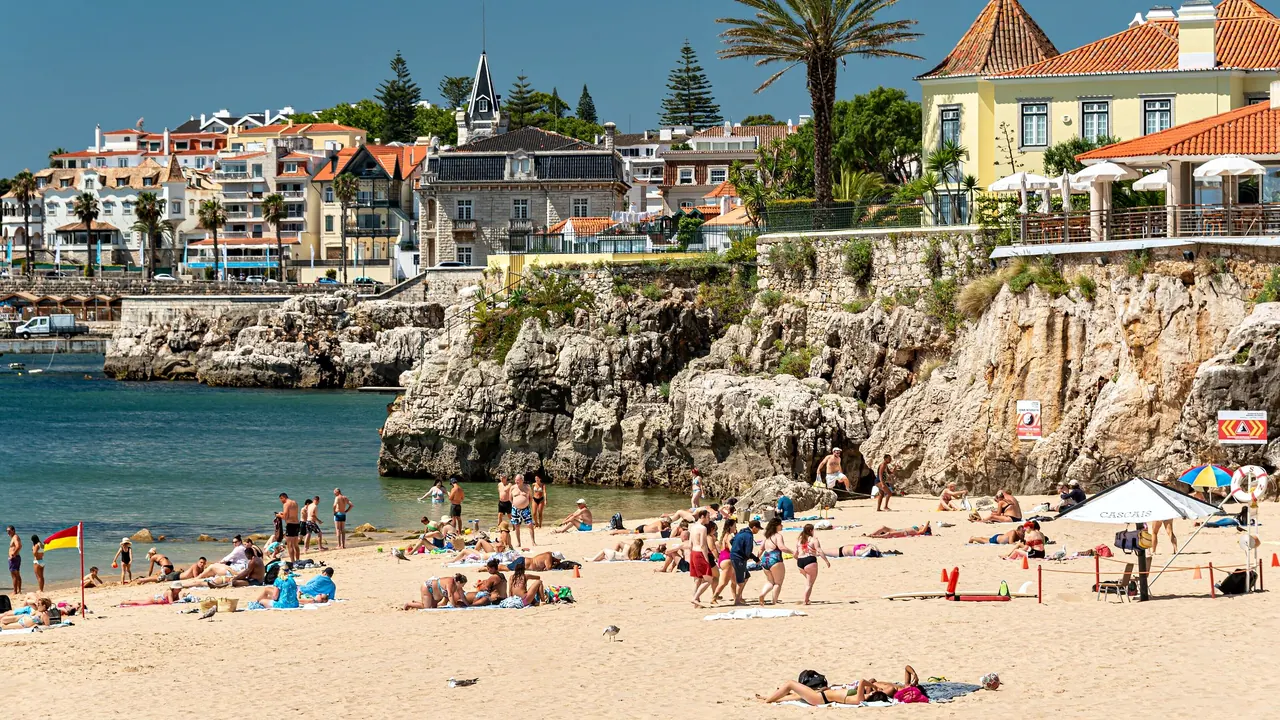
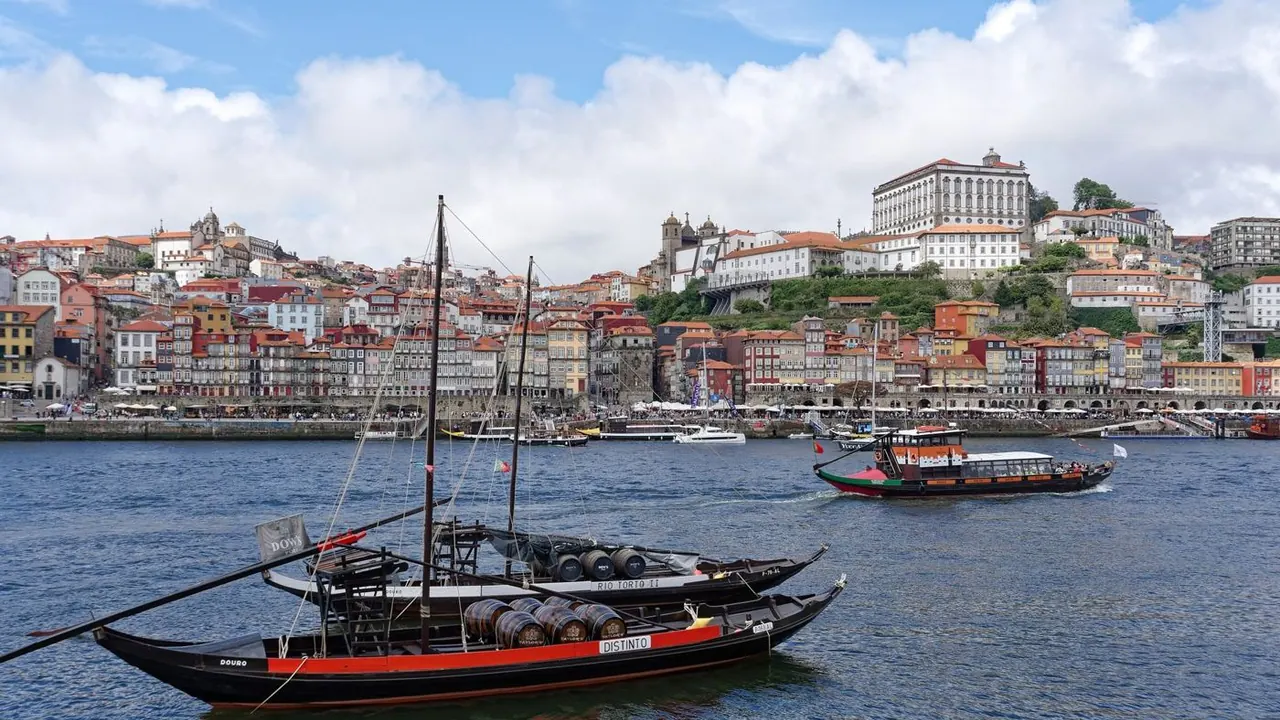
Photos: Cascais by Jorge Franganillo, CC BY 2.0, cropped; Porto by Jakub Hałun, CC BY 4.0, cropped.
Cascais or Porto?
Our verdict in twelve categories, each scored against the same fixed benchmark cities, and the climate month by month, so you can choose for your trip.
Choose Cascais for
- beaches
- nature and the outdoors
- wellness
Cascais suits a slower trip by the sea. You can swim in a sheltered cove in the morning, then walk the cliffs or watch the surf at Guincho in the afternoon, with Lisbon and Sintra close by for sightseeing. With young children it is the calmer and easier of the two, and it is the better choice for anyone who wants open coast and sea air more than a city. The trade-off is resort prices and quiet evenings.
Choose Porto for
- nightlife
- culture and sights
- prices
Porto works as a city trip in its own right. It has a UNESCO-listed centre of gilded churches and tiled façades, family tascas and port cellars, and weekend crowds in the streets behind the Clérigos tower, so there is far more to do on foot and after dark. Day to day it also costs noticeably less. You give up a warm, dry summer and calm swimming, and you get steep streets and a good deal more rain.
Scoreboard
Twelve categories on one fixed scale from 0 to 100. The shaded stretch is the gap between the two.
Your match
Pick a travel style or drag the sliders, and both match scores follow your weighting.
Wins on beaches and nature and the outdoors with your weighting.
Wins on nightlife and culture and sights with your weighting.
What matters to you?
Category by category
What the scores mean for a trip.
Beaches & swimming
In Cascais the beach is part of daily life. The small coves of Conceição, Duquesa and Rainha sit below the old centre, the south-facing bay keeps the water calm, and the promenade and train line lead on to Estoril and the surf beach at Carcavelos. Porto's beaches at Foz, Matosinhos and along the Gaia shore are a metro or tram ride away. They are rockier and more exposed, with rough surf and frequent morning fog.
Neither sea is warm, but Porto's is a degree or two colder. A beach visit there usually means a walk and a quick dip, while in Cascais you can have a proper swim on a summer afternoon.
Food & drink
Cascais eats well when it sticks to the sea. You get grilled sardines and bream from the harbour, clams with coriander and long seafood lunches on the road to Guincho. Away from that the choice narrows to tourist menus in the old centre, and keen eaters often take the train into Lisbon for dinner.
Porto is much the better place for food, with a cooking tradition of its own. The francesinha and tripe are local dishes, slow-cooked pork and bacalhau fill the lunch menus of family tascas, and whole streets in Matosinhos grill fish over charcoal on the pavement. Add port tastings in the Gaia lodges and cheap, good Douro reds and vinho verde, and eating and drinking can shape the whole trip.
Culture & sights
Cascais has the charm of a former royal summer resort: aristocratic villas along the seafront, the Citadel, Paula Rego's work in the red towers of the Casa das Histórias, and a turreted villa museum by a cove. An easy day of walking covers it, and anything grander means going to Lisbon or Sintra.
Porto's heritage fills several days. The whole centre, climbing from Ribeira to the Sé, is UNESCO-listed, and inside it are the gilded interior of São Francisco, the Arab Room of the Palácio da Bolsa and the azulejo hall of São Bento station. Serralves and Rem Koolhaas's Casa da Música add a modern layer that Cascais has nothing to match.
Nightlife
A night out in Cascais means a drink in a pub, wine bar or cocktail terrace in a few old-town streets, or a dressier evening at the Estoril casino. Outside high summer most of the town is in bed by midnight, and a bigger night means Lisbon and a careful eye on the last train.
Porto has a proper going-out quarter. On weekend nights the streets around Rua da Galeria de Paris fill with students and visitors drinking on the pavement, and a few clubs stay open until dawn. Ribeira and the Gaia terraces are there for a quieter glass by the river. Midweek it is much calmer.
Nature & outdoors
The wild coast starts at the edge of Cascais. A cycle path runs past Boca do Inferno and the dunes to Guincho, where kitesurfers and surfers use the steady wind. Further on are the cliff walks at Cabo da Roca, and inland the misty trails of the Sintra hills are within easy reach. You could spend a whole week outdoors without a long drive.
Porto's best scenery is the Douro gorge itself: the river cruises, the riverside path out to Foz and the rocky seafront walk to Matosinhos. For real hiking, the granite peaks and waterfalls of Peneda-Gerês are about an hour and a half away and really need a car.
Day trips
Both make excellent bases, but for different kinds of outing. From Cascais the big draws are close: Lisbon is about 40 minutes by the coastal train, and the palaces and gardens of Sintra are over the ridge. Mafra, Ericeira and Óbidos are further out.
Porto has a whole string of historic northern towns within about an hour by train, among them Guimarães, Braga, Coimbra and Aveiro. Its signature outing is the scenic railway up the Douro to the vineyard terraces around Pinhão, a wine-country day that Cascais can only partly match in Setúbal.
Good for families
Cascais is the easier choice with small children. The coves are shallow and sheltered, the flat promenade to Estoril suits pushchairs and scooters, and the park has peacocks and a playground. The catch is that there is no zoo or aquarium in town.
Porto has more attractions built for children, with the aquarium at Foz, river cruises, the Gaia cable car and zoos just outside the city. However, its steep, stepped cobbles make every outing with a buggy hard work, and the colder sea limits beach days.
Getting around
Both are easy without a car, though they work differently. Cascais is a small, mostly level town where the harbour, coves and promenade are all a short walk apart. A single coastal train runs to Lisbon, but a car helps if you want to explore the wilder coast and the hills.
Porto is a compact city of steep granite slopes. The light-rail metro runs from the airport into the centre and on to the coast, the funicular and heritage trams help with the climbs, and trains from São Bento reach the day-trip towns, so a car is more trouble than it is worth.
Shopping & style
Neither is a shopping destination, but Porto offers more. Its high street is Rua de Santa Catarina, and around Rua das Flores and Miguel Bombarda you find independent shops selling ceramics, linens and Portuguese design. Port bought straight from the Gaia lodges makes the natural souvenir. In Cascais the old-town streets stick to beachwear, surf brands, tiles and tinned fish, and for anything serious people go into Lisbon.
Affordability
Cascais is an upmarket resort. Seafront hotels and summer rentals are priced high for Portugal, and harbour restaurants charge resort prices. Back-street cafés, set lunches and the train into Lisbon keep things down a little.
Porto is noticeably easier on the wallet. Tasca lunches, Douro wine, coffee and pastries, metro rides and port tastings all cost less, and accommodation is the one item that adds up. In both places a visit outside high summer brings room prices down.
Live music & performing arts
The live arts in Cascais are small-scale. The long-running Teatro Experimental stages plays in Portuguese in Estoril, the casino puts on cabaret, and summer brings outdoor concerts and a long-standing jazz tradition. For orchestras, opera or fado you go to Lisbon.
Porto has a real concert hall in Casa da Música, home to its symphony orchestra, with programmes running from classical to electronic. The Teatro Nacional São João, the Rivoli and the Coliseu cover drama, dance and touring shows, and the June festival of São João fills the streets with music.
Wellness & relaxation
Cascais is the more restful of the two. It inherits Estoril's old spa-town tradition of thermal waters and thalassotherapy, and quiet seafront mornings and yoga by the sea set the pace, although summer weekends bring crowds from Lisbon.
Porto relaxes through long lunches, wine above the Douro and the gardens of Serralves rather than treatments. Beyond the spas in upmarket hotels, real thermal baths such as Caldas do Gerês mean a day out into the hills.
When should you go?
Pick your month. The climate figures are measured averages, not a forecast.
Cascais in July
Porto in July
Daytime high, °C
Rainfall in the month, mm
Temperature and rainfall are climate normals, averaged over the years shown. Cascais: 1991-2020 normals, Lisboa / Geof (23.6 km from centre). Porto: 1991-2020 normals, Porto / Serra Do Pilar (2.1 km from centre).
Cascais has the warmer, drier and sunnier summer. From June to September it is warm enough for the beach, with highs around 28°C in July and August and almost no rain from June to August. Even then the sea only reaches about 19°C, so swimming is refreshing rather than warm. May and late September to early October are the best months for walking the coast and the Sintra hills. The rain returns in October and stays through the winter, which is mild but grey.
Porto runs a few degrees cooler all year and peaks at about 25°C in high summer. That makes July and August comfortable for climbing its streets, but the beach is marginal, with the sea at around 17°C. Its dry season is shorter and less dependable than in Cascais. Autumn rain arrives earlier and falls harder, up to about 181mm in November, so late spring and early autumn are the best months for a city visit.
Which traveller are you?
For a beach and sun trip, Cascais is the clear pick. Calm, south-facing coves lie right below the old town, and summers are drier and sunnier. Porto's beaches are a metro ride out of the city, more exposed and often foggy in the morning.
On a food and nightlife trip, choose Porto. Eat your way from the Bolhão market to octopus grilled over charcoal in Matosinhos, then join the student crowd in the bars of Rua Cândido dos Reis. Cascais offers good seafood but an early night.
For a culture and arts trip, Porto has far more to offer: the Sé on its hilltop, the Clérigos tower, Livraria Lello and the tiled front of Santo Ildefonso, then a symphony concert in the evening. Cascais has a day's worth of villas and small museums.
Before you go
| Measure | Cascais | Porto |
|---|---|---|
| Official language | Portuguese | Portuguese |
| Currency | Euro (EUR) | Euro (EUR) |
| Sockets | CF230 V, 50 Hz | CF230 V, 50 Hz |
| Driving side | Right | Right |
| Time zone | UTC, UTC+1 in summer | UTC, UTC+1 in summer |
| Emergency number | 112 | 112 |
| Elevation | 0 m | 104 m |
| Main airport | Lisbon Humberto Delgado Airport (LIS)26 km from centre157 non-stop destinations | Francisco de Sá Carneiro Airport (OPO)12 km from centre133 non-stop destinations |
| Public holidays this year | 14 days | 14 days |
By the numbers
| Measure | Cascais | Porto |
|---|---|---|
| City population | 214,124 | 273,476 |
| People per km² | 2,198 | 6,606 |
| Museums within 10 km | 6 | 42 |
| UNESCO World Heritage sites within 50 km | 3 | 3 |
| Swim season, months above 21 °C | None | None |
Where else could you go?
Every comparison below shares a destination with this one, so you can follow Cascais or Porto somewhere new.
- Sintravs Cascais
- Lisbonvs Cascais
- Coimbravs Porto
- Coimbravs Cascais
- Lagos, Portugalvs Cascais
- Santiago de Compostelavs Porto