Portugal
Porto
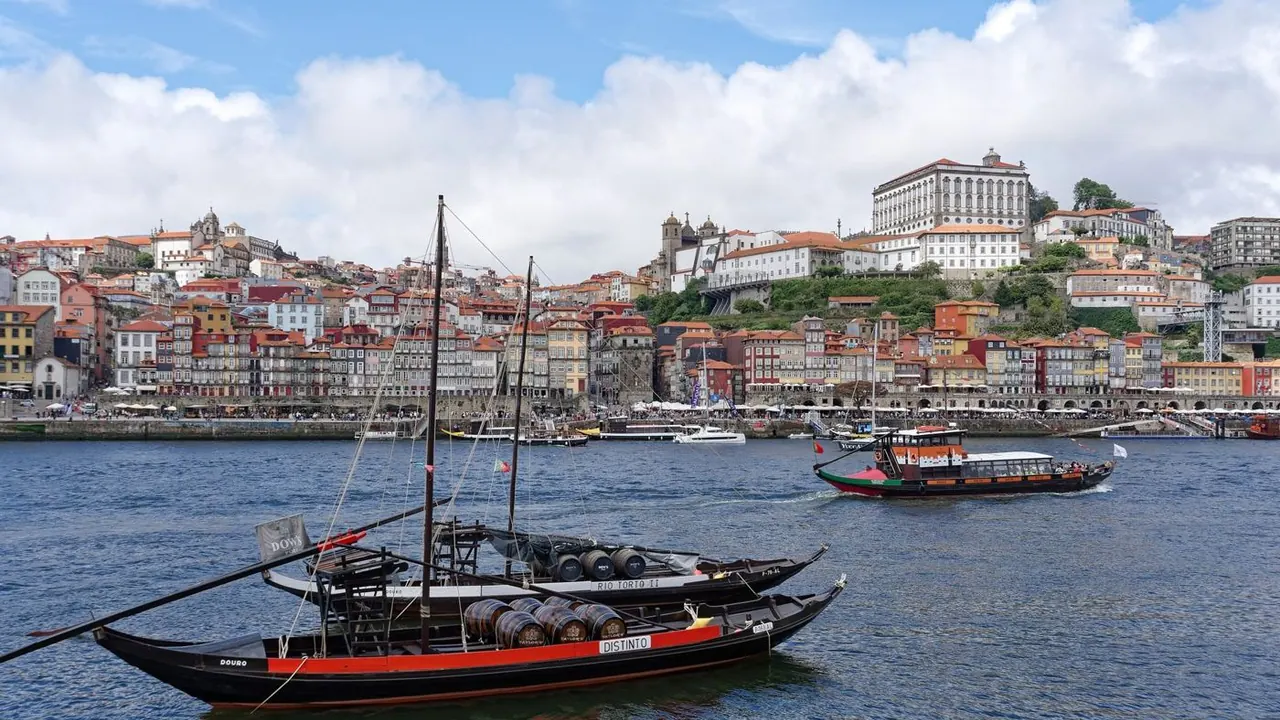
Rabelo boats on the Douro and the Ribeira
- Day trips79
- Food & drink70
- Culture & sights68
Photo: Jakub Hałun, CC BY 4.0, cropped
Match
59
Every category weighted equally
- Beach & sun56
- Culture & arts62
- Food & nightlife61
- Family trip58
- Outdoors61
- Relax & unwind55
- Shopping & style59
- On a budget59
Porto in twelve categories
Our verdict on each, scored 0 to 100 against the same fixed benchmark cities, so a score means the same thing on every page.
Beaches & swimming. Scores 40 out of 100.
Food & drink. Scores 70 out of 100.
Culture & sights. Scores 68 out of 100.
Nightlife. Scores 65 out of 100.
Nature & outdoors. Scores 64 out of 100.
Day trips. Scores 79 out of 100.
Good for families. Scores 52 out of 100.
Getting around. Scores 66 out of 100.
Shopping & style. Scores 52 out of 100.
Affordability. Scores 62 out of 100.
Live music & performing arts. Scores 52 out of 100.
Wellness & relaxation. Scores 34 out of 100.
Porto category by category
Beaches & swimming
40Porto runs straight out to the Atlantic. At Foz do Douro the river meets the sea, and a chain of sandy beaches broken by granite rocks stretches north to Matosinhos and south along the Gaia shore to Espinho. Matosinhos is the broad, easy one, reached by metro in about half an hour. The Gaia beaches are smaller and quieter, with boardwalks behind them.
The catch is the water. Even in August the sea off northern Portugal rarely gets past 17°C or 18°C, morning fog is common and the surf can be rough. Locals sunbathe, walk and take a short dip. A beach afternoon is a pleasant break from the city, not a reason to come.
Food & drink
70Northern Portuguese cooking is hearty and unfussy, and Porto takes it seriously. The francesinha, a meat-layered sandwich drowned in beer sauce, is the city's own creation. Tripas à moda do Porto has earned locals the nickname tripeiros, and bacalhau and slow-cooked pork turn up on every lunch menu in the small family tascas. In Matosinhos whole streets of grills cook sardines, sea bass and octopus over charcoal on the pavement.
Across the river in Vila Nova de Gaia, the old port lodges offer tastings in long, cool cellars, and the Douro's dry reds and the crisp vinho verde of the Minho make everyday drinking cheap and good. The Bolhão market hall and old-fashioned pastry shops fill in the day. The international and fine-dining range is narrower than in a capital.
Culture & sights
68The historic centre climbs from the Ribeira waterfront in a stack of tiled houses, and it is UNESCO-listed as a whole. The Sé cathedral stands on the hilltop. São Francisco hides a church interior almost entirely covered in gilded carving, and the Palácio da Bolsa has an over-the-top Arab Room. The Clérigos tower rises over the rooftops. São Bento station's hall of blue-and-white azulejos and the tiled fronts of churches such as Santo Ildefonso are sights in their own right. Livraria Lello, the neo-Gothic bookshop with its curling staircase, draws long queues.
The modern side is strong too: the Serralves museum and its gardens in a Siza Vieira building, and Rem Koolhaas's Casa da Música. Major museum collections are few, and most visitors see the essentials in two or three days.
Nightlife
65Going out in Porto centres on a few streets behind the Clérigos tower, around Rua da Galeria de Paris and Rua Cândido dos Reis. On weekend nights crowds spill out of narrow bars into the street, drinks in hand, until well after midnight. The mood is informal and cheap, helped along by a big university population. Later on, a handful of clubs in the centre and along the riverside keep going until dawn.
Ribeira suits a quieter evening of wine by the water, and the Gaia side has terraces facing the lit-up city. The scene is lively but compact. Midweek is much calmer, and it lacks the size and variety of a big capital.
Nature & outdoors
64The Douro gorge gives the city its drama: steep granite banks, the Dom Luís I bridge high above the water and river cruises under six bridges. A flat promenade and cycle path follow the river out to Foz and then north along the rocky Atlantic shore to Matosinhos, a fine walk or ride with lighthouses and surf on one side. The Parque da Cidade is the largest urban park in the country and runs down to the sea.
Further out, the terraced vineyards of the Douro valley make a beautiful landscape. The Peneda-Gerês national park, Portugal's only national park, is about an hour and a half by car, with granite peaks, oak forest, waterfalls and old Roman roads. Without a car, hiking country is harder to reach.
Day trips
79The north of Portugal is dense with towns worth a day. Guimarães, the medieval town where the country was founded, is about an hour by train, as is Braga with its cathedral and the stairway sanctuary of Bom Jesus. Coimbra's hilltop university and its baroque library are about an hour south on the fast train. Aveiro, with its canals, painted boats and striped beach houses at Costa Nova, is closer still.
The Douro wine region is the classic outing. Régua and Pinhão are about two hours upriver by a scenic train or by road, and the quintas there offer tastings among the terraces. Viana do Castelo, Ponte de Lima and Amarante add riverside and coastal towns of real charm.
Good for families
52Porto is relaxed and safe, and Portuguese culture is warm towards children, who are welcome in restaurants late into the evening. The aquarium at Foz, the riverboat cruises, the cable car over the Gaia waterfront and the peacocks in the Crystal Palace gardens make easy outings. The Parque da Cidade and the seafront promenade give space to run, and zoos lie just outside the city in Maia and Gaia.
The city's hills are the real obstacle. Streets in the centre are steep, cobbled and often stepped, so pushing a buggy is hard work. Cold sea and changeable weather also limit beach days, and many of the main sights are aimed at adults.
Getting around
66Most of what a visitor wants lies within a compact area between Aliados, Ribeira and the Gaia cellars, so walking covers much of a stay. The walking is steep, though. The old town drops sharply to the river on slippery granite cobbles and staircases, and climbing back up is a workout. The Guindais funicular and the upper deck of the Dom Luís I bridge help.
The metro is light rail, clean and easy to follow. It runs from the airport into the centre, out to Matosinhos and across the river to Gaia. Heritage trams follow the river to Foz, buses fill the gaps and trains from São Bento and Campanhã reach the day-trip towns. A car is unnecessary and a nuisance in the centre.
Shopping & style
52Rua de Santa Catarina is the main high street, lined with chain stores and old shopfronts. Around Rua das Flores and Rua de Miguel Bombarda in the gallery district, small independent shops sell Portuguese ceramics, cork goods, linens, soaps and design pieces. The Bolhão market hall and old grocers stock tinned fish, and port bought straight from the Gaia lodges makes the obvious thing to take home.
Luxury fashion is limited to a few boutiques along Avenida da Boavista and in the malls. The riverfront is mostly souvenirs. Shopping here is a pleasant sideline of local crafts and food rather than a draw.
Affordability
62For Western Europe, Porto is easy on the wallet. A weekday lunch menu in a local tasca, a glass of Douro wine, a coffee and pastry, or a metro ride all cost noticeably less than in most European cities. Port tastings and many churches and museums are modest in price. Accommodation is the main expense. Central rooms in summer and on festival weekends fill up and cost much more than the rest of the stay suggests, while staying a little out of the old centre or in winter brings prices down a good deal.
Live music & performing arts
52Casa da Música is the city's anchor: a striking concert hall, home to the Porto symphony orchestra, with a programme running from classical to jazz and electronic. The Teatro Nacional São João stages Portuguese-language drama in a handsome early twentieth-century theatre. The Rivoli and the Coliseu host dance, touring shows and concerts. There are small fado houses in Ribeira, but fado is less rooted here than in the south, and much of the theatre is in Portuguese. The festival of São João in June brings music and crowds onto the streets.
Wellness & relaxation
34Porto has no bathing tradition of its own, and spas mostly mean the ones in upmarket hotels. Its restorative side is the pace: long lunches, late-afternoon wine on a terrace above the Douro, slow walks along the seafront at Foz and the quiet gardens of Serralves. For proper thermal waters, northern Portugal has old spa towns in the hills, such as Vizela and Caldas do Gerês, but they need a day out.
When should you go?
Pick a month to see what it is like. The climate figures are measured averages, not a forecast.
Porto in July
Daytime high, °C
Rainfall in the month, mm
The whole year
Shaded against this city’s own year: the deepest cell is its best month for that figure and the palest its weakest.
Temperature and rainfall are climate normals, averaged over the years shown. Porto: 1991-2020 normals, Porto / Serra Do Pilar (2.1 km from centre).
Before you go
| Measure | Porto |
|---|---|
| Official language | Portuguese |
| Currency | Euro (EUR) |
| Sockets | CF230 V, 50 Hz |
| Driving side | Right |
| Time zone | UTC, UTC+1 in summer |
| Emergency number | 112 |
| Elevation | 104 m |
| Main airport | Francisco de Sá Carneiro Airport (OPO)12 km from centre133 non-stop destinations |
| Public holidays this year | 14 days |
By the numbers
| Measure | Porto |
|---|---|
| City population | 273,476 |
| People per km² | 6,606 |
| Museums within 10 km | 42 |
| UNESCO World Heritage sites within 50 km | 3 |
| Swim season, months above 21 °C | None |
Compare Porto with
Every comparison with a written verdict behind it.