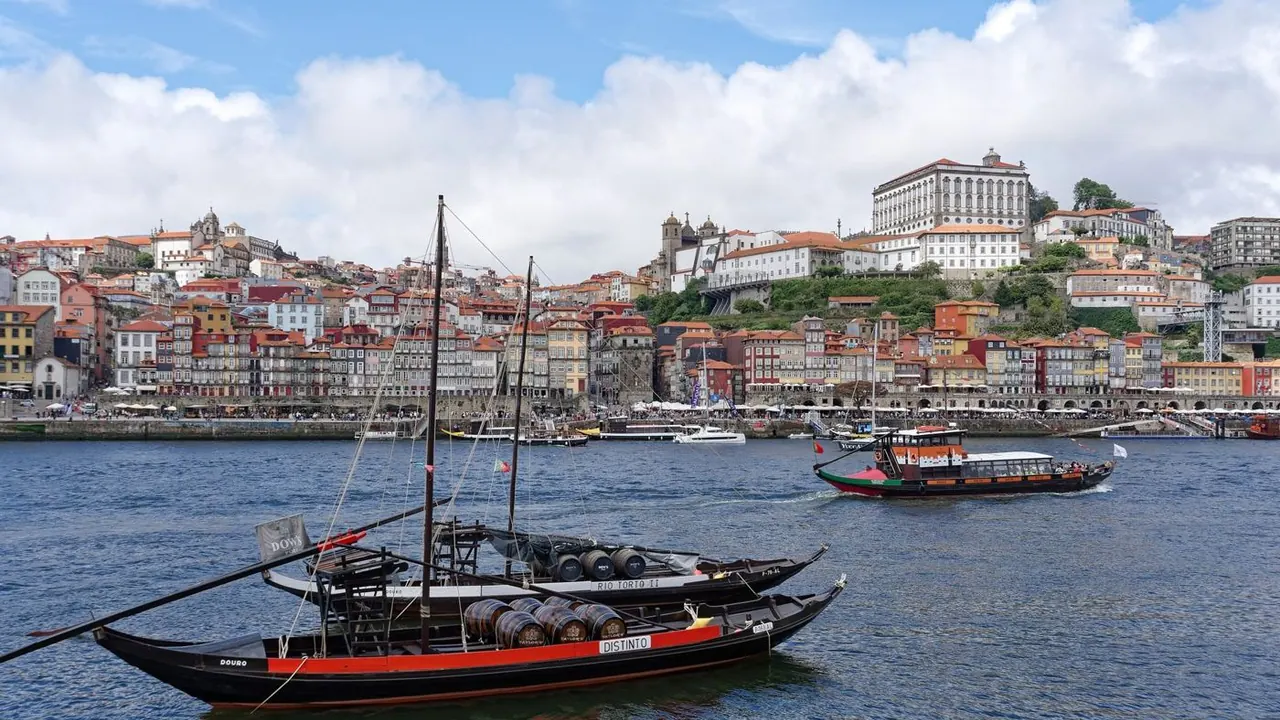
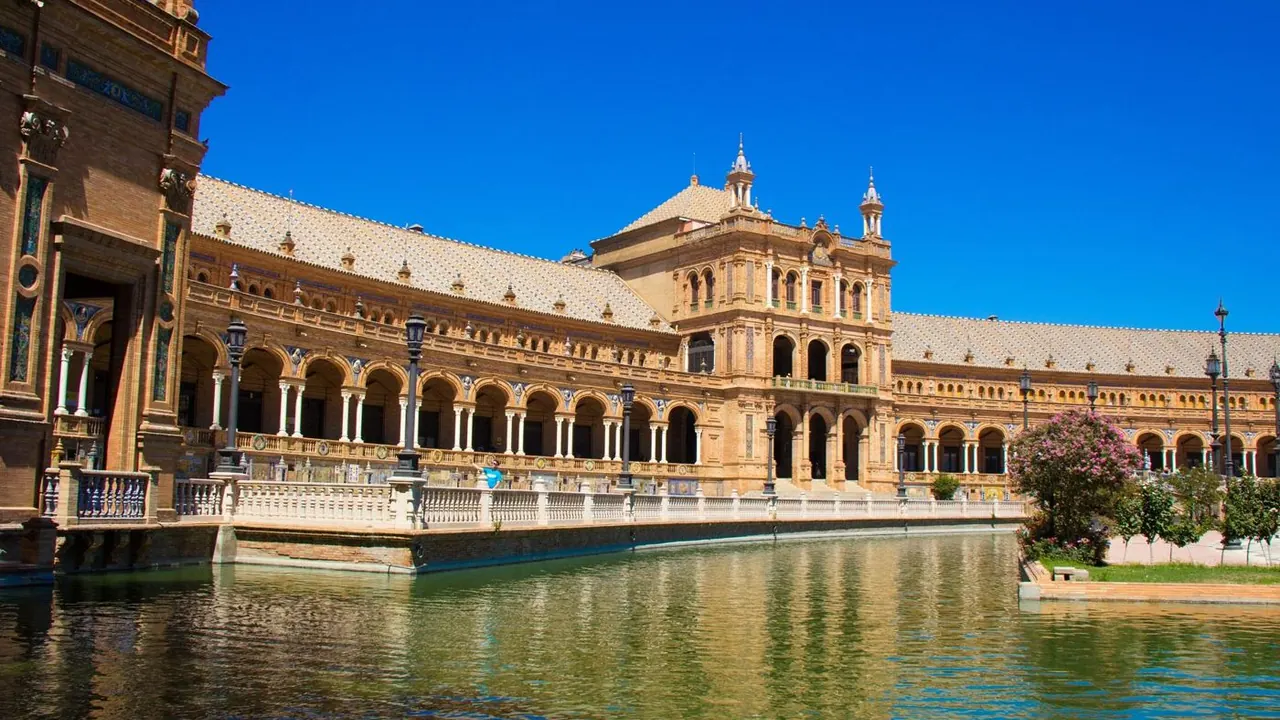
Photos: Porto by Jakub Hałun, CC BY 4.0, cropped; Seville by Tibor Kovacs, CC BY 2.0, cropped.
Porto or Seville?
Our verdict in twelve categories, each scored against the same fixed benchmark cities, and the climate month by month, so you can choose for your trip.
Choose Porto for
- beaches
- nature and the outdoors
- prices
Porto suits travellers who want water around them. It has the Douro gorge, the Atlantic shore at Foz, wine cellars across the river and a summer that stays mild enough to walk all day. Choose it for an unhurried trip of long lunches, seafront rides and outings to the vineyards and the old towns of the north. It also costs a little less day to day, as long as you can live with steep cobbled streets and a cold sea.
Choose Seville for
- live music and the arts
- culture and sights
- getting around
Seville is the stronger choice for monuments and atmosphere. The Alcázar, the cathedral and the lanes of Santa Cruz make a historic core that Porto cannot match, and flamenco gives the evenings a reason to stay out. The centre is flat, so walking is easy, and Córdoba and Cádiz are close. The condition is the season: come in spring or autumn, not at the height of summer.
Scoreboard
Twelve categories on one fixed scale from 0 to 100. The shaded stretch is the gap between the two.
Your match
Pick a travel style or drag the sliders, and both match scores follow your weighting.
Too close to call, 1 point apart
Wins on beaches and nature and the outdoors with your weighting.
Wins on live music and the arts and culture and sights with your weighting.
What matters to you?
Category by category
What the scores mean for a trip.
Beaches & swimming
Porto actually has beaches of its own. Sand and granite rocks run from Foz north to Matosinhos and south along the Gaia boardwalks, and they make an easy afternoon out of the city. The limits are cold, sometimes rough water and morning fog.
Seville has no sea at all. The Huelva beaches at Matalascañas and Mazagón are warmer to swim in, but reaching them takes a car or coach and most of a day, and in town swimming means a pool. If you want the sea within easy reach, Porto wins, even if it is the colder sea.
Food & drink
Both cities eat well, but in different ways. Porto's food is sit-down and hearty: francesinha, tripe, bacalhau and pork in family tascas at lunchtime, and whole fish grilled over charcoal on the pavements of Matosinhos. Port tastings in the Gaia lodges and cheap vinho verde set the drinking.
Seville eats on its feet, a few tapas at a time, moving from counter to counter through Santa Cruz, El Arenal and Triana, with fino, manzanilla and cold beer alongside. Neither city has much range beyond its own cuisine, so choose by whether you prefer long lunches or grazing.
Culture & sights
Seville has the bigger set of sights. The Alcázar's Mudéjar courtyards, the cathedral built over a mosque with the Giralda rising above it, and the Archivo de Indias form one of Europe's great monumental groups. Plaza de España, Casa de Pilatos and a fine collection of Murillo and Zurbarán add to them, enough for three or four full days.
Porto's appeal is the whole tiled, UNESCO-listed hillside above Ribeira, with the gilded interior of São Francisco, São Bento's azulejos and modern architecture at Serralves and Casa da Música. It is lovely, but there are fewer major collections, and most visitors have seen it in two or three days.
Nightlife
The two are fairly evenly matched, but they go out differently. Porto's nights are packed into a few streets behind Clérigos, where students and visitors drink outside narrow bars. A handful of clubs in the centre and by the river keep going until dawn, which Seville largely lacks.
Seville's evenings start later and spread further. Dinner comes around ten, then terraces in Triana and Alfalfa, the mixed and LGBT-friendly crowd on the Alameda de Hércules, and riverbank bars on summer nights. Go to Seville for long, sociable evenings outdoors, and to Porto if you want a night that ends in a club.
Nature & outdoors
Porto has more landscape close at hand. The Douro cuts a steep granite gorge through the city, and a flat path runs from there out past lighthouses and surf to Matosinhos. The Parque da Cidade reaches down to the sea, and the vineyard terraces of the Douro and the peaks and waterfalls of Peneda-Gerês are further afield, best reached by car.
Around Seville the country is flat river valley under olives and orange groves. Its outstanding outing is the Doñana wetlands, with flamingos and migrating birds on guided trips, and the Sierra de Aracena offers gentler walking. Summer heat rules out most of it for months on end.
Day trips
Both are excellent bases, and the choice comes down to the kind of place you want to visit. From Porto the trips are to the green north: medieval Guimarães, Braga and Bom Jesus, Coimbra's university and the canals of Aveiro, with the scenic train up the Douro to the quintas around Pinhão as the highlight.
Seville's trips are classic Andalusia. The Great Mosque of Córdoba is under an hour by fast train, and Roman Itálica and Carmona are close by. Further south are the sherry bodegas of Jerez, the old port of Cádiz and the white villages beyond Arcos. Wine lovers have a strong reason to pick either.
Good for families
Both cities welcome children, who are happy in restaurants late into the evening in either country, and each has a drawback. In Porto it is the terrain: stepped, cobbled hills make pushing a buggy hard. The aquarium, the Gaia cable car, river cruises and the seafront promenade make good outings, but the sea is too cold for much paddling.
Seville is flat and easy on small legs. It has rowing boats at Plaza de España, the Alcázar maze and a theme park with a water park on La Cartuja. Its problem is summer heat above 40°C, so families do better there in spring and autumn, and in Porto in high summer.
Getting around
Seville is easier to get around on foot. Its centre is flat, much of it is pedestrianised, and almost everything lies within a half-hour walk. Bike lanes and a public bike scheme make cycling a genuine option, so the single metro and tram lines hardly matter. Only the midday heat in summer gets in the way.
Porto's centre is just as compact but steep, with slippery granite slopes and staircases down to Ribeira. In return its light-rail metro is more useful, linking the airport, Matosinhos and Gaia. The Guindais funicular, the heritage trams to Foz and trains from São Bento to the day-trip towns fill in the rest.
Shopping & style
Neither is a fashion destination, and both are best for local crafts, but the crafts differ. In Porto they are ceramics, cork, linen and soaps in the small shops around Rua das Flores and Miguel Bombarda, plus tinned fish from the old grocers and port bought at the Gaia lodges.
Seville's speciality is Andalusian dress and decoration. Flamenco dresses, shawls, mantillas, fans and guitars fill the shops around Sierpes and Cuna, Triana's potteries sell hand-painted tiles, and the Thursday flea market on Calle Feria is good for browsing.
Affordability
Both are good value for Western Europe, with Porto a touch easier on everyday spending: lunch menus, local wine, coffee and pastries, and metro rides. Seville makes its savings on tapas evenings and on a centre you can walk.
The real difference is when rooms get expensive. In Porto it is summer and festival weekends, and winter brings rates down. In Seville prices peak sharply around Holy Week and the April Fair, while the hot summer months are good value for anyone who can take the heat.
Live music & performing arts
Seville has the stronger reason to go out for a performance: it is the heartland of flamenco. You can see it live every night in intimate tablaos, cultural centres and the peñas where local fans gather, and the Bienal brings the leading names in autumn. The Teatro de la Maestranza adds opera, fitting for the city where Carmen and The Barber of Seville are set.
Porto's highlight is Casa da Música, whose programme runs from symphonic concerts to jazz and electronic music. Beyond that there are the Rivoli and the Coliseu for touring shows. Fado is played in Ribeira but is less rooted than in the south, and most theatre is in Portuguese.
Wellness & relaxation
Porto has no bathing culture of its own. A spa here means a treatment room in a smart hotel, or a day trip into the northern hills to old thermal towns such as Vizela or Caldas do Gerês. The city's calm is mostly free and outdoors: sea air along the Foz front or an hour in the Serralves grounds.
Seville lets you have a proper soak without leaving the centre. A few bath houses in the Moorish style, set in old mansions, let you move between pools of different temperatures and add a massage, which makes a good end to a day of sightseeing. Night noise in the narrow lanes and the crowds of Holy Week and the Fair work against it. Seville is better for a pampered evening, but neither city is worth visiting just to recharge, and in both you fit rest around the sightseeing.
When should you go?
Pick your month. The climate figures are measured averages, not a forecast.
Porto in July
Seville in July
Daytime high, °C
Rainfall in the month, mm
Temperature and rainfall are climate normals, averaged over the years shown. Porto: 1991-2020 normals, Porto / Serra Do Pilar (2.1 km from centre). Seville: 1991-2020 normals, Sevilla / San Pablo (8.1 km from centre).
Porto is at its best from June to August. Days reach about 25°C, rain is scarce and the long sunny evenings suit terraces above the river. The sea stays cold even then, around 17°C, so beach days mean sunbathing and a quick dip. September is still warm, but the showers come back, and from October the Atlantic weather takes over. November to January are cool, grey and very wet, with up to 181mm of rain a month. Late spring is mild enough for walking the streets but brings frequent showers.
Seville's calendar is almost the reverse. July and August reach about 36°C, which is too hot for walking the streets in the middle of the day, although both months are dry and very sunny. March to May is the ideal time, warm and bright with comfortable walking. October is also pleasantly warm, but it is one of Seville's wetter months, so expect some rainy days. Winter is mild at around 16°C, sunnier than Porto's and much less wet. For a summer trip Porto is the cooler choice, and from autumn to spring Seville has the better weather.
Which traveller are you?
On a beach and sun trip, Porto is the better of the two. Its sandy beaches start within the city at Foz and Matosinhos, a metro ride from the centre. Seville's nearest sand is over an hour's drive away, although Porto's Atlantic stays bracing all summer.
For a culture and arts trip, Seville wins clearly. The Alcázar, the vast Gothic cathedral and the Museo de Bellas Artes fill several days, and evenings bring live flamenco in tablaos and peñas or opera at the Maestranza. Porto's tiled churches and Casa da Música make a shorter programme.
On an outdoors trip, Porto offers more. A riverside and coastal path runs from the Douro gorge out along the Atlantic shore, and the terraced Douro valley and the granite peaks of Peneda-Gerês are within reach. Around Seville the land is flat farmland, apart from the Doñana wetlands.
Before you go
| Measure | Porto | Seville |
|---|---|---|
| Official language | Portuguese | Spanish |
| Currency | Euro (EUR) | Euro (EUR) |
| Sockets | CF230 V, 50 Hz | CF230 V, 50 Hz |
| Driving side | Right | Right |
| Time zone | UTC, UTC+1 in summer | UTC+1, UTC+2 in summer |
| Emergency number | 112 | 112 |
| Elevation | 104 m | 18 m |
| Main airport | Francisco de Sá Carneiro Airport (OPO)12 km from centre134 non-stop destinations | Seville Airport (SVQ)9 km from centre96 non-stop destinations |
| Public holidays this year | 14 days | 12 days |
By the numbers
| Measure | Porto | Seville |
|---|---|---|
| City population | 273,476 | 689,423 |
| People per km² | 6,606 | 4,896 |
| Museums within 10 km | 42 | 24 |
| UNESCO World Heritage sites within 50 km | 3 | 1 |
| Swim season, months above 21 °C | None | - |
Where else could you go?
Every comparison below shares a destination with this one, so you can follow Porto or Seville somewhere new.