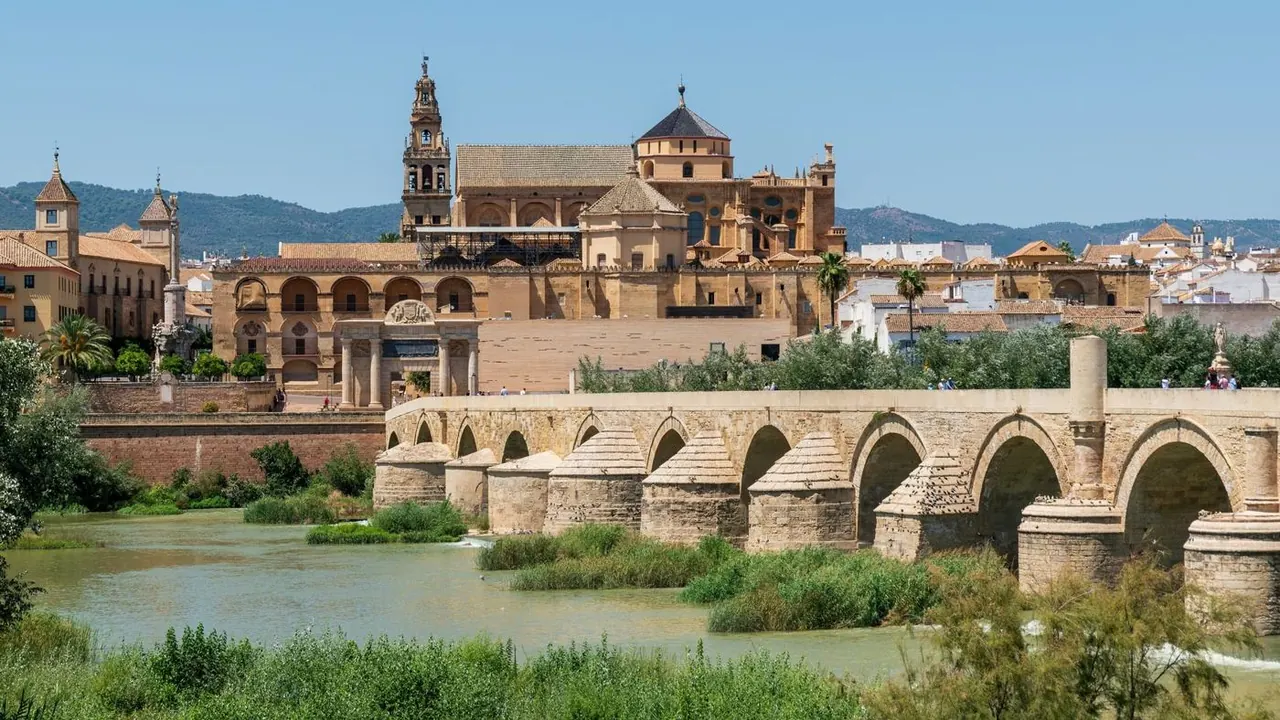
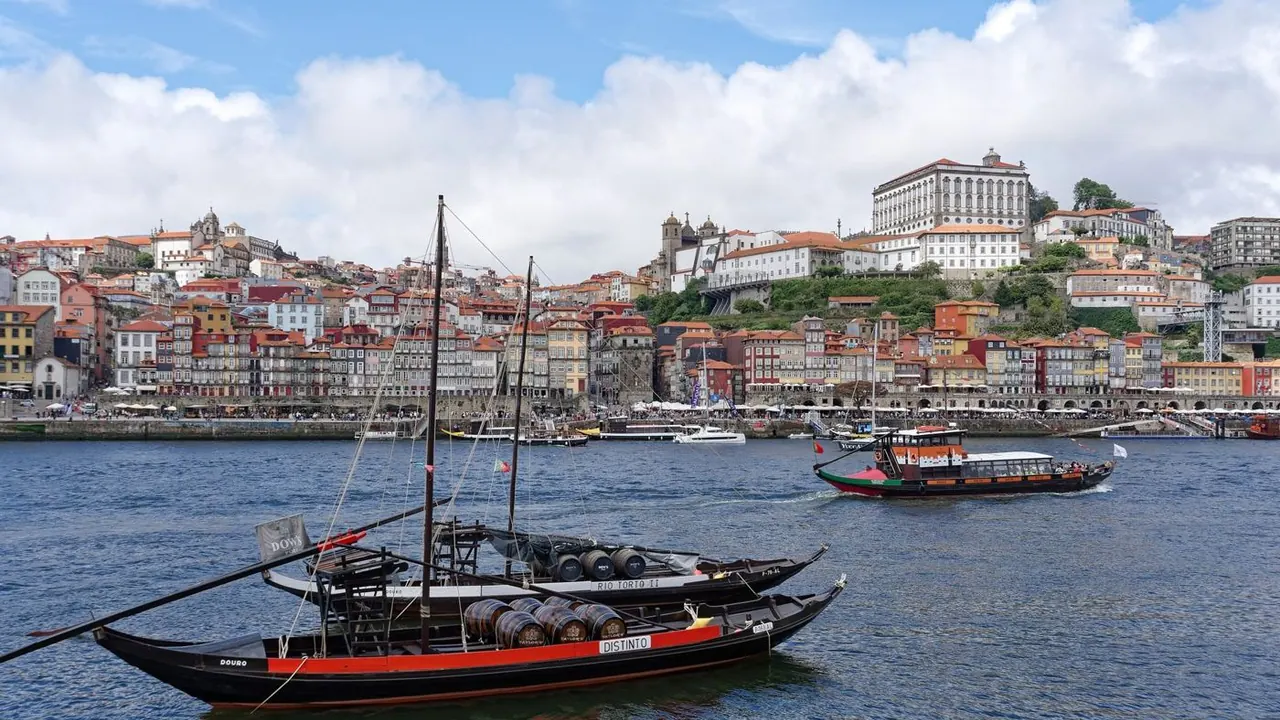
Photos: Cordoba by Jose María Ligero Loarte, CC BY-SA 4.0, cropped; Porto by Jakub Hałun, CC BY 4.0, cropped.
Cordoba or Porto?
Our verdict in twelve categories, each scored against the same fixed benchmark cities, and the climate month by month, so you can choose for your trip.
Choose Cordoba for
- culture and sights
- day trips
- wellness
Cordoba suits travellers who want one extraordinary monument and a base for the rest of Andalusia. The Mezquita-Cathedral, the Juderia and Medina Azahara give it the deeper historic sights of the two, and fast trains put Seville, Granada and Malaga within a day out. Evenings run long and slow over tapas in the squares, and the pace stays gentle. Go in spring or autumn, and leave the sea out of the plan.
Choose Porto for
- beaches
- nightlife
- nature and the outdoors
Porto is the better pick for a trip that mixes city, river and coast with livelier nights. Its bar streets behind the Clérigos fill at weekends, the cooking is heartier and more varied, and the Atlantic shore, the Douro gorge and the vineyard terraces give you more to do outside. The hills are steep and the sea is cold, but the summers stay mild enough for walking all day.
Scoreboard
Twelve categories on one fixed scale from 0 to 100. The shaded stretch is the gap between the two.
Your match
Pick a travel style or drag the sliders, and both match scores follow your weighting.
Wins on culture and sights and day trips with your weighting.
Wins on beaches and nightlife with your weighting.
What matters to you?
Category by category
What the scores mean for a trip.
Beaches & swimming
Neither is a beach destination, but only Porto has a shore at all. Matosinhos is a broad sandy beach half an hour away by metro, and the Gaia shore adds smaller coves with boardwalks, good for sunbathing and walks even if the cold Atlantic and rough surf keep swims short.
Cordoba lies far inland, and the Costa del Sol is a long day out by fast train. Summer cooling off there means a pool or a drive to a Sierra Morena reservoir.
Food & drink
Porto has the edge for eating. Its cooking is hearty and broad, from the francesinha and tripe stews of the tascas to whole streets of pavement grills in Matosinhos, and port lodge tastings, Douro reds and vinho verde make the drinking a pleasure in itself.
Cordoba's table is narrower but very distinctive: salmorejo, flamenquin, rabo de toro and fried aubergine with cane honey, eaten in old tabernas with tiled patios and washed down with chilled Montilla-Moriles. Both are thin on fine dining, so in either city the best meals are the local ones.
Culture & sights
Cordoba has the more remarkable sights. The Mezquita-Cathedral, with its striped arches and a cathedral set inside a caliphal mosque, is one of the great buildings of Europe, and the Juderia synagogue, Roman bridge, Alcazar gardens and the ruins of Medina Azahara make a rare concentration of history.
Porto's appeal is more about the townscape as a whole: the tiled houses stacked above the Ribeira, gilded São Francisco, the azulejos of São Bento and the Palácio da Bolsa. It adds a modern dimension Cordoba lacks, with Serralves and Casa da Música, though neither city has major museum collections.
Nightlife
Porto is the clear pick for a night out. On weekends the streets around Rua da Galeria de Paris turn into one crowded open-air bar, students keep things cheap and informal, and a few clubs run to dawn, with Ribeira and the Gaia terraces for a calmer glass of wine.
Cordoba's evenings are about late tapas on the terraces of the Corredera and Las Tendillas rather than dancing. It comes alive in summer and during the May fair, but at other times there is little beyond a long dinner and a few late bars.
Nature & outdoors
Porto has the better landscape on its doorstep. The Douro gorge cuts right through the city, and a flat promenade follows the river to Foz and along the rocky Atlantic coast to Matosinhos, while the vineyard terraces upriver and the granite peaks of Peneda-Gerês are within reach for longer outings.
Cordoba's countryside is gentler: the oak and cork woods of the Sierra Morena, birds of prey in Hornachuelos and the limestone gorges of the Subbeticas. It is lovely in spring and autumn, but needs a car and becomes too hot for anything but dawn walks in summer.
Day trips
Both are excellent bases, and Cordoba is slightly the better one because of what lies within reach. Seville, Granada with the Alhambra and Malaga are each an hour or so away by fast train, so you can see the great cities of Andalusia without moving hotel, with Ubeda, Baeza and the Montilla bodegas for those with a car.
Porto's trips are smaller in scale but plentiful: medieval Guimarães, Braga and Bom Jesus, Coimbra's university and canal-lined Aveiro by train, and the Douro wine valley by a scenic rail line. They are towns of real charm rather than headline cities.
Good for families
Porto gives families more to do. The aquarium at Foz, river cruises, the Gaia cable car, the peacocks of the Crystal Palace gardens and the space of the Parque da Cidade make easy outings, though steep, stepped streets make buggies a struggle.
Cordoba's flat, traffic-free lanes are easier on small legs, and the Alcazar fountains, the horse show and the Almodovar castle please children. Beyond those the sights are for adults, and summer heat is hard on little ones.
Getting around
Both centres are compact and walkable, and the difference lies in the terrain. Cordoba is flat, with the Mezquita, Juderia, Alcazar and the patio quarters a short stroll apart, though the narrow cobbled lanes are awkward with luggage and buses are basic.
Porto's walking is steep, down slippery cobbles and stairs to the river and back up again, helped by the funicular and the upper deck of the Dom Luís I bridge. In return it has a proper light-rail metro to the airport, Matosinhos and Gaia, plus heritage trams to Foz.
Shopping & style
Porto is the more rewarding place to browse. Around Rua das Flores and Miguel Bombarda small shops sell ceramics, cork, linens and design pieces, Santa Catarina covers the high street, and tinned fish and port from the Gaia lodges make easy things to take home.
Cordoba's shopping is narrower and more specialist: silver filigree, embossed leather, ceramics and guitars from local workshops, with chains around Cruz Conde. In neither city is luxury fashion much of a draw.
Affordability
Both are easy on the wallet by Western European standards, with cheap tapas, wine and generous lunch menus. The difference is in the timing of the spikes: Cordoba's rooms jump in May with the patio festival and fair, while Porto's are dearest in summer and on festival weekends, and drop markedly in winter or just outside the old centre. Cordoba's walkable size also means you rarely pay for transport, whereas in Porto the metro is part of most stays.
Live music & performing arts
The two are broadly level, but the evenings could hardly be more different. Cordoba is a flamenco city, with tablaos, aficionado peñas, a well-known guitar festival and the Noche Blanca del Flamenco, when performances fill the squares until dawn.
Porto's strength is the concert hall: Casa da Música hosts the symphony orchestra alongside jazz and electronic programmes, and the Rivoli and Coliseu bring dance and touring shows. Fado exists but is less rooted than in the south, and much of the theatre is in Portuguese.
Wellness & relaxation
Cordoba has a slight edge here thanks to its Arab-style bath houses in the old town, which revive the caliphal bathing tradition with warm pools under horseshoe arches. Add the courtyards with fountains and orange trees, and the enforced summer siesta, and slowing down comes naturally.
Porto has no baths of its own beyond hotel spas, and its calm is found in long lunches, wine above the Douro and walks along the seafront at Foz or through the Serralves gardens. Thermal waters mean a day out to the hill towns such as Caldas do Gerês.
When should you go?
Pick your month. The climate figures are measured averages, not a forecast.
Cordoba in July
Porto in July
Daytime high, °C
Rainfall in the month, mm
Temperature and rainfall are climate normals, averaged over the years shown. Cordoba: 1991-2020 normals, Cordoba / Aeropuerto (7.6 km from centre). Porto: 1991-2020 normals, Porto / Serra Do Pilar (2.1 km from centre).
Cordoba is at its best in spring, from March to May, when days climb from mild to about 28°C, and again in October. From June to September the heat in the Guadalquivir valley is fierce, with highs around 37°C in July and August, almost no rain and very long sunny days, so sightseeing shrinks to the early morning and late evening. Winters are mild and fairly bright, though October to December are the wettest months.
Porto runs on a much cooler, wetter Atlantic rhythm. Summer is its easy season: highs of about 25°C make walking the hills comfortable, rain is light and there is plenty of sunshine, though the sea stays around 17°C, which means a quick, bracing dip rather than long swims. From October the rain arrives in earnest, peaking at around 181mm in November, and winter is grey and damp. So the two swap places: Porto is the summer choice, while Cordoba wins in spring and, with an umbrella, in winter.
Which traveller are you?
On a culture and arts trip, Cordoba is the stronger choice. The Mezquita-Cathedral is in a class of its own, the Juderia, the Alcazar and the patio quarters lie a short walk apart, and the caliphal ruins of Medina Azahara are a short ride out.
For a food and nightlife trip, Porto pulls ahead. Francesinha, tripas and charcoal-grilled fish in Matosinhos give the eating more range, port cellars sit across the river, and the bar streets behind the Clérigos stay crowded well past midnight at weekends.
On an outdoors trip, Porto offers far more. You can walk or cycle the river and Atlantic promenade straight from the centre and cruise the Douro gorge, with Peneda-Gerês a drive away, while Cordoba's countryside needs a car and summer heat limits activity to dawn.
Before you go
| Measure | Cordoba | Porto |
|---|---|---|
| Official language | Spanish | Portuguese |
| Currency | Euro (EUR) | Euro (EUR) |
| Sockets | CF230 V, 50 Hz | CF230 V, 50 Hz |
| Driving side | Right | Right |
| Time zone | UTC+1, UTC+2 in summer | UTC, UTC+1 in summer |
| Emergency number | 112 | 112 |
| Elevation | 120 m | 104 m |
| Main airport | Córdoba Airport (ODB)8 km from centre3 non-stop destinations | Francisco de Sá Carneiro Airport (OPO)12 km from centre134 non-stop destinations |
| Public holidays this year | 12 days | 14 days |
By the numbers
| Measure | Cordoba | Porto |
|---|---|---|
| City population | 323,262 | 273,476 |
| People per km² | 258 | 6,606 |
| Museums within 10 km | 16 | 42 |
| UNESCO World Heritage sites within 50 km | 2 | 3 |
| Swim season, months above 21 °C | - | None |
Where else could you go?
Every comparison below shares a destination with this one, so you can follow Cordoba or Porto somewhere new.