Photos: Albufeira by Jose A., CC BY 2.0, cropped; Porto by Jakub Hałun, CC BY 4.0, cropped.
Albufeira or Porto?
Our verdict in twelve categories, each scored against the same fixed benchmark cities, and the climate month by month, so you can choose for your trip.
Choose Albufeira for
- beaches
- families
- nature and the outdoors
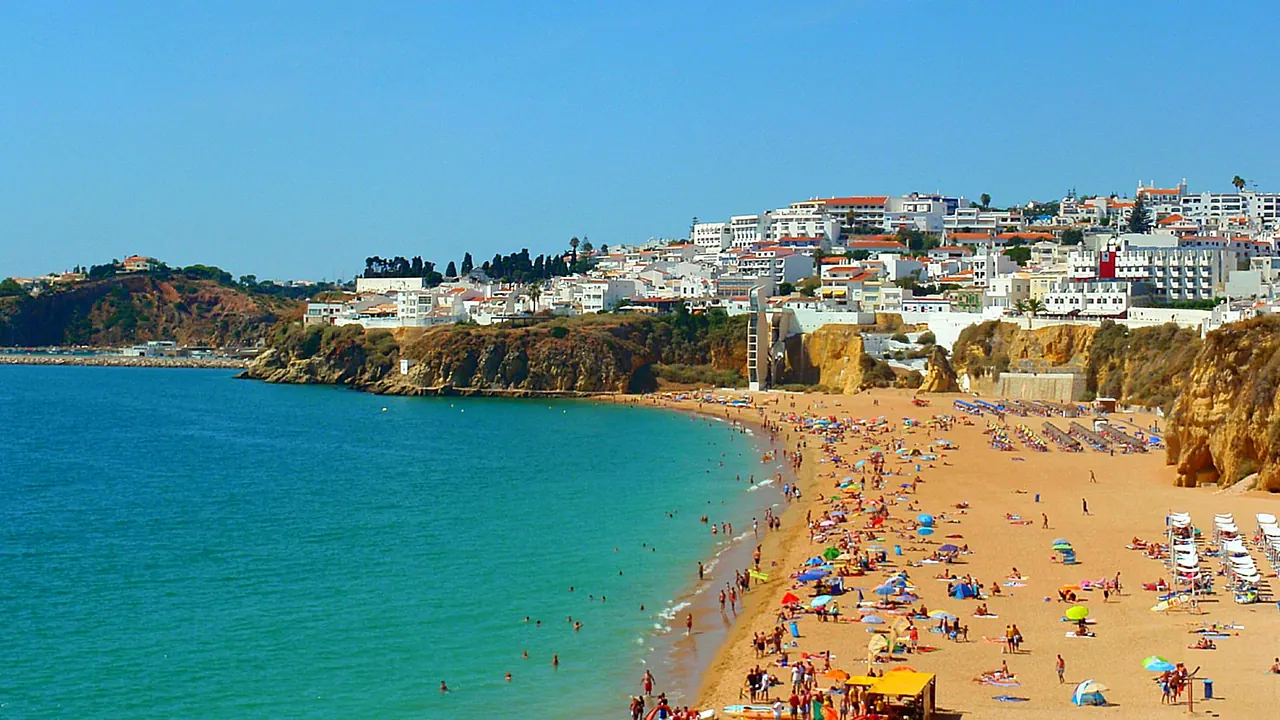
Albufeira is the pick for a sun-and-sand week. It has golden beaches and small coves below ochre cliffs, a calm sea that is pleasant for swimming through the summer, and resort hotels built around pools and kids' clubs. It also has the Algarve's loudest party strip for groups who want one. Come for the beach, the cliff walks and the boat trips to the caves, not for sightseeing or serious eating.
Choose Porto for
- culture and sights
- live music and the arts
- getting around
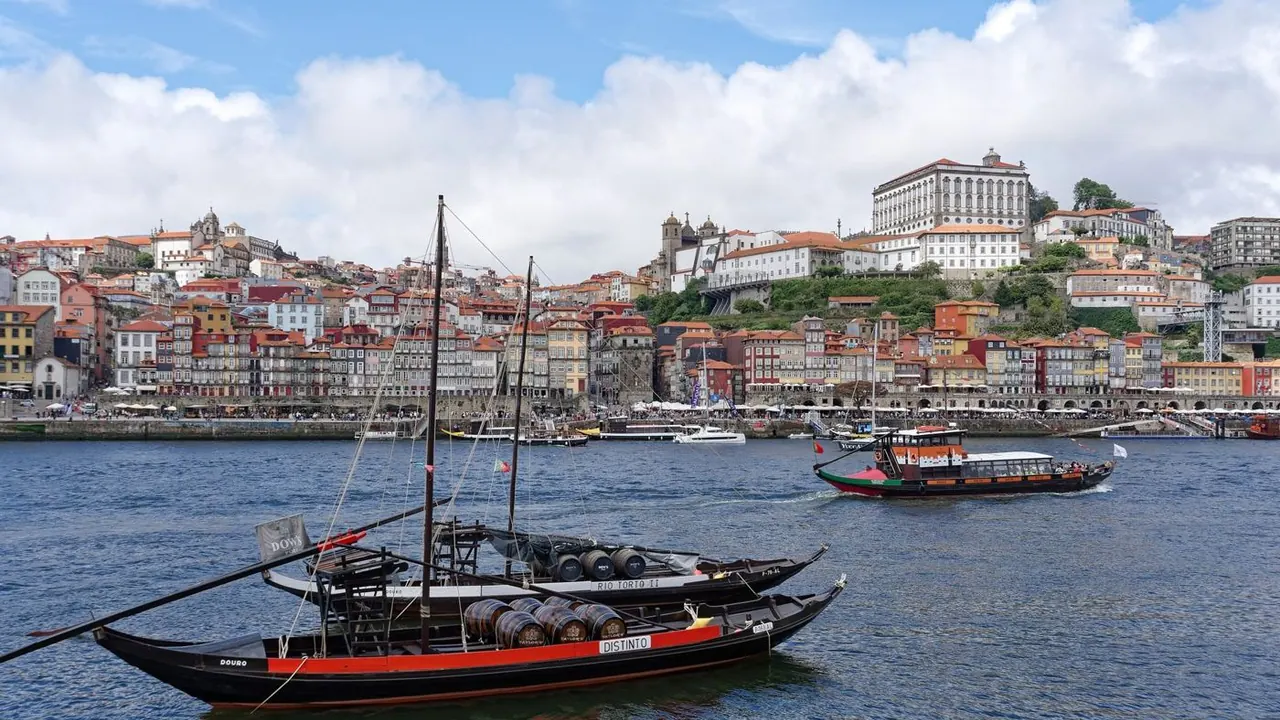
Travellers who want a city to explore will be happier in Porto. Its UNESCO-listed centre, gilded churches and tiled station, the port lodges across the river and proper northern cooking fill several days. Trains reach Guimarães, Braga, Coimbra and the Douro valley without a car. The Atlantic here is cold, so a beach visit is an afternoon off rather than the point of the trip.
Scoreboard
Twelve categories on one fixed scale from 0 to 100. The shaded stretch is the gap between the two.
Your match
Pick a travel style or drag the sliders, and both match scores follow your weighting.
Wins on beaches and families with your weighting.
Wins on culture and sights and live music and the arts with your weighting.
What matters to you?
Category by category
What the scores mean for a trip.
Beaches & swimming
Albufeira is a beach resort above all. Golden sand and sandstone stacks run from Praia dos Pescadores below the old town east to Falésia, and west to coves such as São Rafael. The water is usually calm and clear, there are lifeguards in summer, and swimming is comfortable from June into early October.
Porto has beaches too: Foz, the broad sands of Matosinhos on the metro, and the quieter Gaia shore with its boardwalks. But the northern Atlantic stays cold, fog rolls in and the surf can be rough. In Porto a beach is somewhere to walk or take a quick dip between sights.
Food & drink
Albufeira's good cooking takes some finding. There are grilled sardines, cataplana stews and octopus in simple places near the fishermen's beach and in the old town lanes, but they sit behind a front line of full breakfasts, pizza and curry on the Strip. It makes for a fine fish lunch by the sea, and not much more.
Porto treats food as part of who it is. The francesinha and tripe dishes were born here, family tascas serve bacalhau and slow-cooked pork at lunch, and Matosinhos grills fish on the pavement. Add port tastings in the Gaia cellars and cheap Douro reds and vinho verde, and eating becomes one of the reasons to go.
Culture & sights
Albufeira's whitewashed old town, its clock tower and a couple of small museums fill a morning. Anyone keen on history ends up driving to other towns.
Porto is in a different league. Its UNESCO-listed centre is stacked above the Ribeira, with the Sé, São Francisco's gilded interior, the Palácio da Bolsa and São Bento's azulejo hall, and Serralves and Casa da Música add modern architecture. It has few major museum collections, so two or three days cover the essentials.
Nightlife
Both cities go out late, but in very different moods. Albufeira's Strip in Montechoro is a neon run of karaoke, sports pubs, drinks offers and clubs open until dawn. It is full of young British and Irish groups and stag parties, and much of it shuts from November to March.
Porto's nights are informal street drinking among students outside the narrow bars behind Clérigos, with a few clubs later on and wine by the river in Ribeira. It is busiest at weekends rather than in one season, and it suits people who prefer a local crowd to promoters on the pavement.
Nature & outdoors
Each has a fine coast, made of different rock. Around Albufeira it is golden limestone carved into arches, sinkholes and sea caves. The best ways to see it are the Seven Hanging Valleys trail and a boat or kayak trip to Benagil, with dolphin trips offshore and the Monchique hills inland.
Porto's drama is the granite Douro gorge, plus a flat riverside path that runs out to Foz and up the rocky shore to Matosinhos, which is ideal for cycling. Its bigger landscapes, the terraced Douro vineyards and the peaks and waterfalls of Peneda-Gerês, lie further out and are best reached by car.
Day trips
From Albufeira, a pleasant string of Algarve towns lies within an hour: Moorish Silves, Loulé with its market hall, walled Faro, Lagos and Tavira. None of them is a major heritage site, and most are easier by car than by the slow buses.
Porto's choice is richer and easier to reach. Guimarães, Braga and Coimbra are each about an hour away by train, and Aveiro is closer still. The Douro valley around Pinhão, reached by a scenic railway, makes a classic day among the vineyards.
Good for families
Albufeira is built for a family beach vacation. Zoomarine is just outside town, water parks are a short drive away, beaches such as Oura and Galé are calm and lifeguarded, and apartment complexes have kids' clubs and shallow pools. Families simply base themselves away from the Strip.
Porto welcomes children warmly, and the aquarium, river cruises, Gaia cable car and the peacocks in the Crystal Palace gardens all make good outings. Its steep cobbled streets, cold sea and adult-focused sights make it better for a few days than for a long family stay.
Getting around
Albufeira spreads for kilometres through hotel zones such as Montechoro, Oura and Galé. Local buses are patchy and the railway station sits about 6km inland, so most visitors rely on taxis and a hire car.
Porto is much easier without wheels. The core from Aliados down to Ribeira is walkable if steep, and the light-rail metro runs from the airport to the centre, Matosinhos and Gaia. Trains from São Bento reach the day-trip towns, and a car is more hindrance than help.
Shopping & style
Albufeira's lanes sell beachwear, football shirts and souvenirs. The better buys are painted pottery, cork and medronho, and for everyday needs people drive to the mall at Guia.
Porto offers more, though shopping is still a sideline rather than a draw. Rua de Santa Catarina covers the high street, and independent shops around Rua das Flores and Miguel Bombarda sell ceramics, linen and design pieces. There is tinned fish from the Bolhão, and port bought straight from the lodges.
Affordability
Both are easy on the wallet by Western European standards, with cheap meals and local wine, but the costs fall in different places. In Albufeira, competition keeps eating out cheap, while summer sea-view rooms, taxis and car hire push the bill up. Out of season, the apartments are a bargain.
In Porto, everyday spending on lunch menus, coffee and the metro stays low, and you need no car. Accommodation is the main expense, especially central rooms in summer and on festival weekends.
Live music & performing arts
Albufeira's live entertainment is resort fare: cover bands, hotel cabaret, fado dinner shows for visitors and free summer concerts on the square by the fishermen's beach.
Porto has a real season. It is anchored by Casa da Música and its symphony orchestra, with drama at the Teatro Nacional São João and dance and touring shows at the Rivoli and the Coliseu. Much of the theatre is in Portuguese, but the concerts need no translation.
Wellness & relaxation
Neither city has a spa tradition. In both, a spa means an upmarket hotel, and real thermal waters are a drive away, at Caldas de Monchique in the south or in northern spa towns such as Caldas do Gerês. What differs is the kind of rest: in Albufeira it comes from a quiet cliff-top resort or a mild, sunny winter stay, and in Porto from long lunches, wine above the Douro and the gardens of Serralves.
When should you go?
Pick your month. The climate figures are measured averages, not a forecast.
Albufeira in July
Porto in July
Daytime high, °C
Rainfall in the month, mm
Where the figures come from
Albufeira's temperatures are measured 26 km from the centre, at Faro / Aeroporto.
Albufeira has no rain gauge within 25 km of the centre, so its rainfall comes from a gridded climate dataset read at the city rather than from a gauge further away.
Temperature and rainfall are climate normals, averaged over the years shown. Albufeira: 1991-2020 normals, Faro / Aeroporto (26.4 km from centre). Porto: 1991-2020 normals, Porto / Serra Do Pilar (2.1 km from centre).
Albufeira is the drier and sunnier of the two. The beach season runs from June to early October, and the sea stays at about 20°C from July into October. July and August reach 29°C with almost no rain, which is fine on the sand but tiring for walking at midday. Rain arrives in October and is heaviest in December, yet winter stays mild and fairly sunny. That makes the cooler months good for cliff walks and long, quiet stays.
Porto has softer summers, with highs of about 25°C in July and August. That is comfortable weather for climbing its hills, and June to August are the only reliably dry months. September is still warm, but the rain is already returning. From October to May it is properly wet, with November the worst at 181mm, and the days have less sunshine. The sea never gets past about 17°C, so even in August Porto is for walking the streets, not for swimming.
Which traveller are you?
On a beach and sun trip, Albufeira wins easily. Its long golden beaches and sheltered coves have lifeguards and calm, clear water all summer. Porto's Atlantic stays cold, often foggy and rough, which makes it good for a walk on the sand but rarely for a long swim.
For a culture and arts trip, Porto is the clear choice. The UNESCO-listed centre, São Francisco's gilded interior, Serralves and the concerts at Casa da Música fill several days. Albufeira's old town and its two small museums take a single morning.
On a family trip with young children, Albufeira suits better. Calm lifeguarded beaches, Zoomarine, nearby water parks and resort hotels with kids' clubs make the days easy. Porto's steep cobbles, cold sea and sights aimed at adults ask more of parents.
Before you go
| Measure | Albufeira | Porto |
|---|---|---|
| Official language | Portuguese | Portuguese |
| Currency | Euro (EUR) | Euro (EUR) |
| Sockets | CF230 V, 50 Hz | CF230 V, 50 Hz |
| Driving side | Right | Right |
| Time zone | UTC, UTC+1 in summer | UTC, UTC+1 in summer |
| Emergency number | 112 | 112 |
| Elevation | 22 m | 104 m |
| Main airport | Faro - Gago Coutinho International Airport (FAO)26 km from centre91 non-stop destinations | Francisco de Sá Carneiro Airport (OPO)12 km from centre133 non-stop destinations |
| Public holidays this year | 14 days | 14 days |
By the numbers
| Measure | Albufeira | Porto |
|---|---|---|
| City population | 44,168 | 273,476 |
| People per km² | 314 | 6,606 |
| Museums within 10 km | 1 | 42 |
| UNESCO World Heritage sites within 50 km | 0 | 3 |
| Swim season, months above 21 °C | None | None |
Where else could you go?
Every comparison below shares a destination with this one, so you can follow Albufeira or Porto somewhere new.
- Farovs Albufeira
- Lagos, Portugalvs Albufeira
- Coimbravs Porto
- Cadizvs Albufeira
- Santiago de Compostelavs Porto
- Jerez de la Fronteravs Albufeira