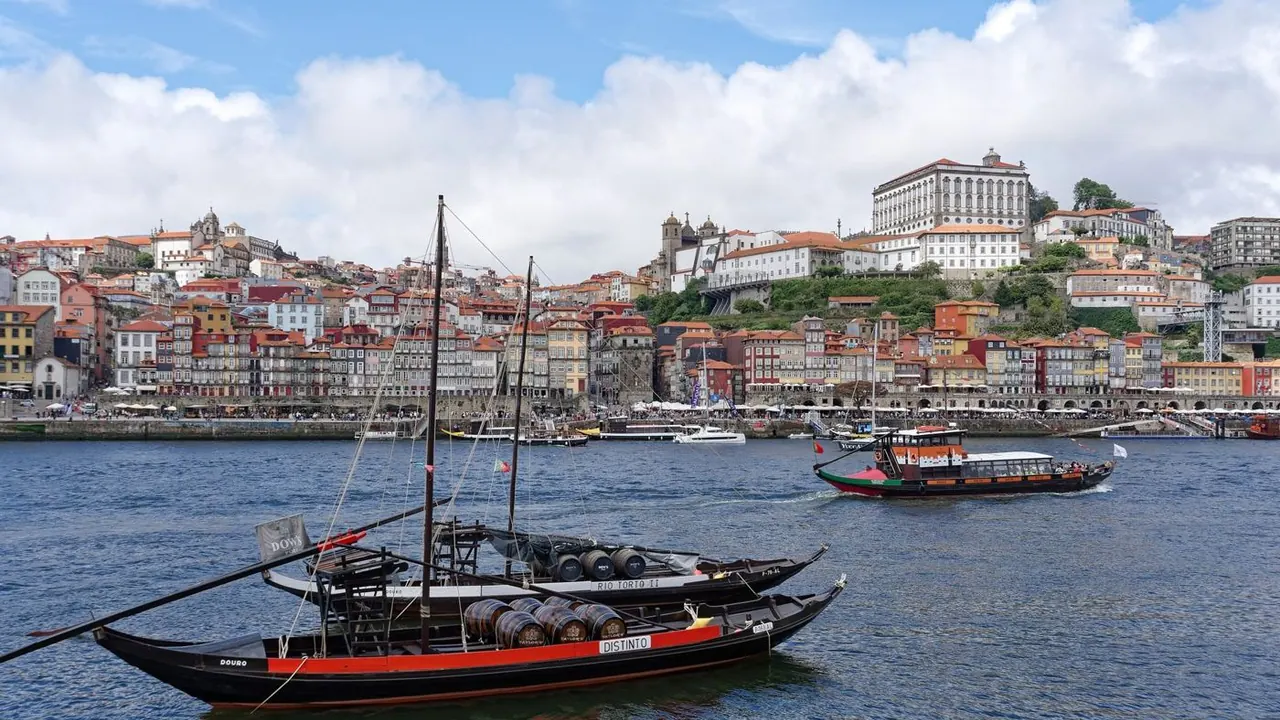
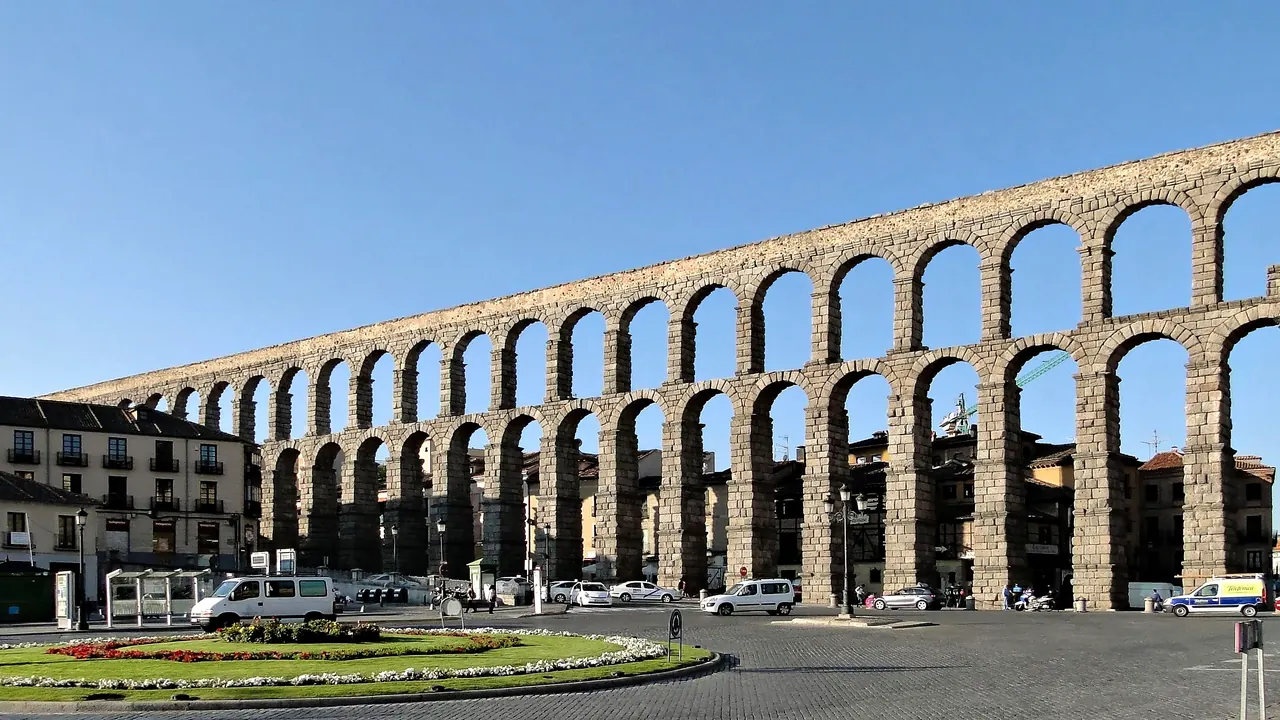
Photos: Porto by Jakub Hałun, CC BY 4.0, cropped; Segovia by Bernard Gagnon, CC BY-SA 3.0, cropped.
Porto or Segovia?
Our verdict in twelve categories, each scored against the same fixed benchmark cities, and the climate month by month, so you can choose for your trip.
Choose Porto for
- nightlife
- beaches
- shopping
Porto suits travellers who want a city with a bit of everything around it: a river gorge, an Atlantic shoreline within a metro ride, port cellars across the water and streets full of drinkers on a weekend night. It is the better choice for a stay of several days where eating, drinking and evenings matter as much as sightseeing, and where you would rather not need a car.
Choose Segovia for
- nature and the outdoors
- culture and sights
- day trips
Segovia is for a quieter trip built around a few remarkable monuments and the mountains behind them. The Roman aqueduct, the Alcázar and the Romanesque churches sit on one ridge, the Sierra de Guadarrama starts half an hour away, and Madrid is close enough by fast train to add city life if you want it. Choose it for walking, history and a long roast lunch rather than for nightlife or shopping.
Scoreboard
Twelve categories on one fixed scale from 0 to 100. The shaded stretch is the gap between the two.
Your match
Pick a travel style or drag the sliders, and both match scores follow your weighting.
Wins on nightlife and beaches with your weighting.
Wins on nature and the outdoors and culture and sights with your weighting.
What matters to you?
Category by category
What the scores mean for a trip.
Beaches & swimming
Porto at least has a coast to offer: sandy beaches run from Foz to the wide strand at Matosinhos, reached by metro, with quieter boardwalk beaches south along the Gaia shore. The cold Atlantic, fog and surf keep it a pleasant afternoon out rather than a beach vacation.
Segovia has no coast at all. Up on the Castilian plateau, a swim means a town pool or a chilly reservoir in the Guadarrama foothills.
Food & drink
Porto eats more widely and more cheaply. There are grilled sardines and octopus on the pavements of Matosinhos, tripe and bacalhau in the tascas, the city's own francesinha, and port and vinho verde poured at everyday prices.
Segovia is built around one great meal: wood-roasted cochinillo or lechazo, with La Granja's judiones beans and a slice of ponche to finish. It is a memorable lunch, but beyond the roasts the choice narrows quickly, and Porto keeps you better fed over several days.
Culture & sights
Both have UNESCO-listed old towns and are broadly matched, but the experience differs. Segovia is ancient and concentrated: a Roman aqueduct, a cliff-top Alcázar, a late Gothic cathedral and a run of Romanesque churches, all seen in a full day on one ridge.
Porto is baroque and tiled, with the gilded interior of São Francisco, the azulejos of São Bento station and the Palácio da Bolsa. It also adds modern architecture at Serralves and Casa da Música, which fills two or three days.
Nightlife
Porto has a real night out. On weekends the bar streets around Rua da Galeria de Paris fill with students and visitors drinking in the street, and a few clubs carry on until dawn.
Segovia's evening is a tapas round on Plaza Mayor with a glass of Ribera, and the old town quietens early, especially in winter. For anything later, Madrid is half an hour away by high-speed train.
Nature & outdoors
Segovia has the mountains on its doorstep. The Sierra de Guadarrama fills the view from the Alcázar, and Valsaín's pine forests and the passes leading up to Peñalara and its glacial lakes are about half an hour away, with snow in winter.
Porto's landscape is the Douro gorge and the Atlantic edge: a flat promenade and cycle path from the river past lighthouses to Matosinhos, and the large Parque da Cidade running to the sea. True hill walking in Peneda-Gerês means a long drive.
Day trips
Both make excellent bases, so the difference is in what lies around them. From Porto, the train does most of the work: Guimarães, Braga, Coimbra and Aveiro are each about an hour away, and a scenic line climbs the Douro valley to the terraced quintas at Pinhão.
Segovia puts royal Spain within reach, with the palace gardens of La Granja, Madrid and walled Ávila. Its walled villages, El Escorial and Ribera del Duero wine country are much easier with a car.
Good for families
Porto gives children more to do. The aquarium at Foz, the cable car over the Gaia waterfront, river cruises, the peacocks in the Crystal Palace gardens and zoos just outside town add up to several easy days.
Segovia has one big hit in the turreted Alcázar, and the aqueduct impresses, but there is little else made for children, so a day or two is enough. Both cities have steep cobbles that make a pushchair hard work.
Getting around
Porto is a little easier to get around. The light-rail metro runs from the airport to the centre, Matosinhos and Gaia, and heritage trams and the Guindais funicular help on the river slopes, though the climbs back up from Ribeira are tiring.
Segovia is smaller: you can walk from the aqueduct to the Alcázar in a morning. Arriving by high-speed train means a bus in from a station outside town, though, and the villages and trailheads really need a car.
Shopping & style
Porto is a genuinely pleasant place to browse. Independent shops around Rua das Flores and Miguel Bombarda sell Portuguese ceramics, cork, linen and design pieces, and the Bolhão market and Gaia lodges supply tinned fish and port to carry home.
Segovia's shopping runs to souvenirs on Calle Real, a little local embroidery and pottery, and boxed ponche or La Granja beans. Anything more serious means Madrid.
Affordability
The two cost about the same, but the costs fall differently. In Porto the everyday spending is low, from tasca lunches to wine and metro rides, and the bill swells mainly with central rooms in summer and on festival weekends.
In Segovia, small family-run guesthouses keep rooms modest, and the splurge is the famous roast by the aqueduct. Weekends fill with visitors from Madrid, so a midweek stay is the cheapest way to do it.
Live music & performing arts
Porto has a stage all year. Casa da Música hosts the city's symphony orchestra alongside jazz and electronic programmes, the Rivoli and Coliseu bring dance and touring shows, and São João fills the streets with music in June.
Segovia's live arts depend on its festivals: Titirimundi puppets in spring and concerts in churches and palace gardens in summer. Outside those, Teatro Juan Bravo is about all there is.
Wellness & relaxation
Neither city is a spa destination, and in both the restful part is the pace rather than any treatment. In Porto that means wine on a terrace above the Douro, the seafront at Foz and Serralves' gardens, with old thermal towns such as Caldas do Gerês a day trip away.
Segovia's calm comes later in the day, once the coach groups leave. Then the walk along the walls and the pine-scented air from the sierra have the old town largely to themselves.
When should you go?
Pick your month. The climate figures are measured averages, not a forecast.
Porto in July
Segovia in July
Daytime high, °C
Rainfall in the month, mm
Temperature and rainfall are climate normals, averaged over the years shown. Porto: 1991-2020 normals, Porto / Serra Do Pilar (2.1 km from centre). Segovia: 1991-2020 normals, Segovia (0.3 km from centre).
Porto is at its best from June to September, when the rain largely stops and daytime highs settle around 25°C, mild enough for walking the steep streets all afternoon. The Atlantic stays cold all year, never much above 17°C, so beach days are for sunbathing and a short dip. From October the weather turns wet, and November is the rainiest month at 181mm, so winter visits mean grey skies and umbrellas, though it rarely gets truly cold.
Segovia is drier throughout but far more extreme. July and August reach 30°C on the high plateau, with long hours of sunshine and little shade on the ridge, while winter highs drop to around 8°C with sharp, cold evenings. May, June, September and early October are the comfortable months for sightseeing and mountain walks. The contrast is simple: Porto is mild but wet in winter, Segovia is dry but hot in summer and cold in winter.
Which traveller are you?
On a food and nightlife trip, Porto keeps you going for days: long seafood lunches, good wine at everyday prices, and weekend nights that spill into the streets and run on until dawn. Segovia gives you one superb roast lunch and an early tapas evening.
For an outdoors trip, Segovia is the better base. Porto's open air mostly means river cruises and flat seaside rides. From Segovia you can walk mountain ridges such as La Mujer Muerta from spring to autumn, or watch griffon vultures over the Duratón gorge.
On a family trip with children, Porto keeps them busy for longer. There are sandy afternoons at Matosinhos, a short metro ride away, and room to run in the Parque da Cidade by the sea. In Segovia the cliff-top castle thrills them for a day, and after that there is little else for them.
Before you go
| Measure | Porto | Segovia |
|---|---|---|
| Official language | Portuguese | Spanish |
| Currency | Euro (EUR) | Euro (EUR) |
| Sockets | CF230 V, 50 Hz | CF230 V, 50 Hz |
| Driving side | Right | Right |
| Time zone | UTC, UTC+1 in summer | UTC+1, UTC+2 in summer |
| Emergency number | 112 | 112 |
| Elevation | 104 m | 1,002 m |
| Main airport | Francisco de Sá Carneiro Airport (OPO)12 km from centre133 non-stop destinations | Adolfo Suárez Madrid–Barajas Airport (MAD)68 km from centre241 non-stop destinations |
| Public holidays this year | 14 days | 12 days |
By the numbers
| Measure | Porto | Segovia |
|---|---|---|
| City population | 273,476 | 52,375 |
| People per km² | 6,606 | 320 |
| Museums within 10 km | 42 | 11 |
| UNESCO World Heritage sites within 50 km | 3 | 2 |
| Swim season, months above 21 °C | None | - |
Where else could you go?
Every comparison below shares a destination with this one, so you can follow Porto or Segovia somewhere new.
- Madridvs Segovia
- Coimbravs Porto
- Toledovs Segovia
- Salamancavs Segovia
- Santiago de Compostelavs Porto
- Salamancavs Porto