Algarve or Costa del Sol?
Our verdict in twelve categories, each scored against the same fixed benchmark cities, and the climate month by month, so you can choose for your trip.
Choose Algarve for
- beaches
- nature and the outdoors
- prices
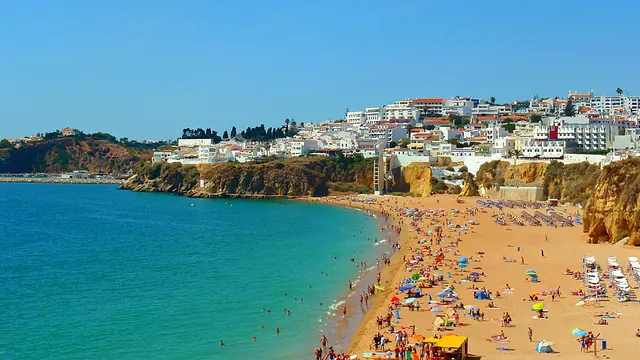
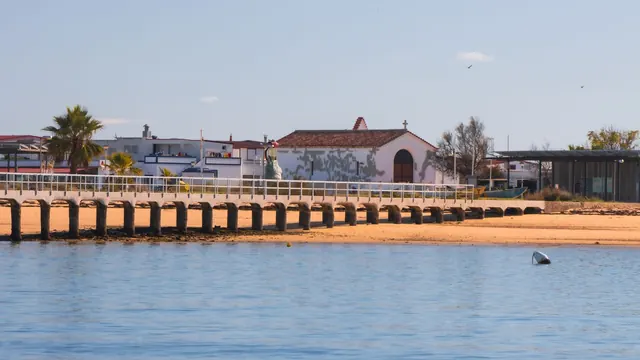
Pick the Algarve if the beach is the point of the trip. Its coast has more character: ochre cliffs and sea stacks around small coves in the centre, long empty sand on the lagoon islands near Tavira, and surf on the wild west coast. The landscape you walk, kayak and swim in is that same shoreline. Bring a car, base yourself in a town such as Tavira or Lagos, and let the old towns fill the gaps between beach days.
Choose Costa del Sol for
- day trips
- shopping
- live music and the arts
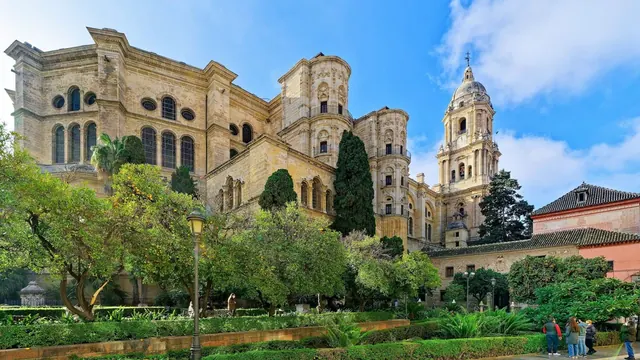
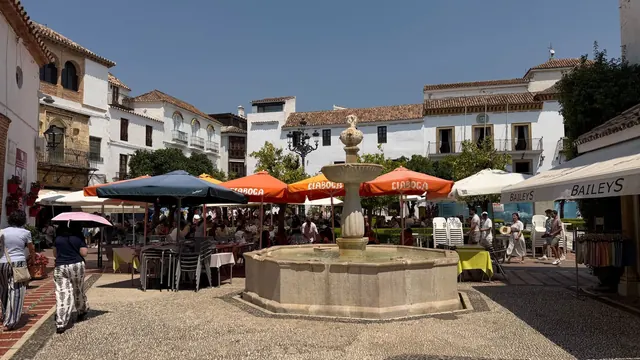
The Costa del Sol suits travellers who want a city as well as the sea. Málaga gives it museums, a Moorish fortress, proper tapas taverns and a night out all year. The fast train puts Córdoba and Seville within easy reach, and Granada is close by road. Its beaches are plainer, but the trip around them is fuller, with more to see, eat, buy and do after dark.
Scoreboard
Twelve categories on one fixed scale from 0 to 100. The shaded stretch is the gap between the two.
Your match
Pick a travel style or drag the sliders, and both match scores follow your weighting.
Wins on beaches and nature and the outdoors with your weighting.
Wins on day trips and shopping with your weighting.
What matters to you?
Category by category
What the scores mean for a trip.
Beaches & swimming
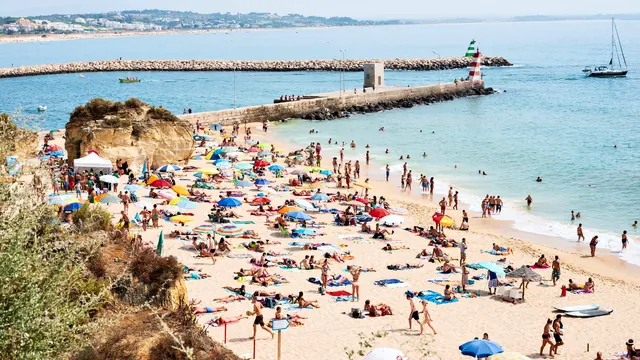
The Algarve has the more memorable shoreline. Between Lagos and Albufeira you swim in small coves framed by ochre cliffs and rock stacks. East of Faro, the Ria Formosa islands offer long, quiet beaches with calm water. The catch is that many coves need a steep stairway down and get crowded in summer.
The Costa del Sol's beaches are long, continuous and practical, with coarse grey-gold sand, chiringuitos and rows of sunbeds from Nerja to Estepona. Its water is a few degrees warmer in late summer, and the clearest swimming is in the coves around Maro.
Food & drink
Both coasts are built on grilled fish, but the Costa del Sol eats better overall because it has Málaga. The city's tiled taverns pour wine from the barrel, the Atarazanas market is worth a morning, and El Palo and Pedregalejo grill espetos on the sand. Marbella adds a fine-dining tier.
In the Algarve, the cataplanas, clams and goose barnacles are excellent, but you have to go looking for them in Olhão's market halls and the harbour restaurants of Tavira and Portimão. The resort strips around them serve much plainer food.
Culture & sights
The Costa del Sol is clearly stronger here, almost entirely thanks to Málaga. In one walkable centre you get a Moorish Alcazaba above a Roman theatre, an unfinished cathedral, and museums from Picasso to a Pompidou outpost. Nerja's cave paintings and Marbella's old town add a little more along the coast.
The Algarve offers pleasant old towns rather than major sights. Silves's red castle, Tavira's spires, Faro's bone chapel and the headland at Sagres are all worth a morning, but none is a reason to choose the region over Andalucía.
Nightlife
The Costa del Sol has more nights out and more kinds of them. You can choose between yacht-crowd clubs at Puerto Banús, the long-running gay scene in Torremolinos, cheap bar strips in Fuengirola, and Málaga's late tapas terraces around Calle Larios, which keep going outside summer too.
The Algarve offers a narrower range: Albufeira's Strip for package groups, a backpacker crowd in old Lagos and a smarter marina at Vilamoura. Most of it goes quiet after September.
Nature & outdoors
These are evenly matched, but the scenery sits in different places. In the Algarve the drama is the coast itself: the Seven Hanging Valleys cliff path, kayaking into the Benagil grottoes, surf and long footpaths in the Costa Vicentina, and flamingos on the Ria Formosa.
On the Costa del Sol you head uphill. The Río Chíllar gorge, the climb up La Concha, the Caminito del Rey walkways and El Torcal's eroded rocks are all within an hour of the beach. Choose the Algarve for sea-level outdoors and the Costa del Sol for mountain walking.
Day trips
The Costa del Sol is far better placed for day trips. From Málaga the fast train reaches the Mezquita in Córdoba in about an hour and Seville in about two, and Granada's Alhambra is an easy drive. Ronda, Antequera, Gibraltar and white villages such as Frigiliana and Casares fill the rest of a fortnight.
The Algarve's best outing is also Seville, but it means about two hours at the wheel from the eastern end. After Mértola, the border villages and the lagoon islands, the choice thins out within a week.
Good for families
Both coasts work equally well for children, in slightly different ways. The Algarve's strengths are the shallow lagoon beaches around the Ria Formosa and Alvor, villa stays with private pools, and Zoomarine and the water parks inland. Its central coves are awkward, with steep stairs and tides that cover the sand.
The Costa del Sol packs its attractions into one easy stretch between Torremolinos and Fuengirola: a zoo, an aquarium, water parks and the Calamorro cable car. The commuter train links them, so you can manage without a car.
Getting around
The Costa del Sol is easier without a car, at least between Málaga and Fuengirola. A commuter train runs from the airport along the busiest resorts, and Málaga's flat, pedestrian centre connects to the high-speed line inland. Beyond Fuengirola you rely on slow coastal buses or a hire car.
In the Algarve a car is close to essential. The A22 makes the coast quick to drive, but the railway is slow and its stations are often far from town, so going car-free means choosing a base such as Lagos or Tavira and accepting fewer beaches.
Shopping & style
Shopping in the Algarve means produce and crafts more than clothes. Loulé's Moorish-style market hall is the best stop, with cork goods, almonds and copper cataplanas. The roads near Porches sell hand-painted ceramics, and Castro Marim makes flor de sal. Beyond that you get malls near Faro and souvenir shops along the resort strips.
For fashion, the Costa del Sol is the stronger choice by a distance. Málaga's marble-paved Calle Larios has the Spanish chains and a branch of the national department store. Puerto Banús lines up luxury labels along its harbour, and Marbella's old town has smaller boutiques. For things to take home, the Atarazanas market sells olive oil, almonds and sweet wine.
Affordability
The cost of a trip is much the same on both coasts, and on both, eating out is fair value while summer accommodation drives the bill up. The difference is where the money goes. In the Algarve the expensive end is the golf enclaves around Almancil, and staying in Tavira or Olhão keeps things moderate.
On the Costa del Sol, Marbella and Puerto Banús are the costly addresses. Fierce competition among the package resorts of Torremolinos and Fuengirola holds their prices down, and cheap trains and buses help too.
Live music & performing arts
Neither coast is a place to go for performance, but only one of them has a proper season. In the Algarve, live culture mostly comes in short summer bursts: an open-air world music festival in the lanes of Loulé's old town, and costumed medieval fairs below the castles of Silves and Castro Marim. For the rest of the year, the theatres in Faro and Loulé put on only the odd concert or touring show. Here a night of music is something you come across by chance, not something to plan a week around.
Málaga gives the Costa del Sol a programme that runs all year. Its grand old city theatre hosts orchestral evenings, opera and dance, and smaller stages put on plays and musicals in Spanish. For most visitors flamenco is the bigger draw. In the city's peñas, local singers and guitarists perform at weekends for audiences who know the art well, and these nights have little in common with a resort dinner show. In summer, Marbella's large outdoor concerts add international headliners.
Wellness & relaxation
The two are close here, and on both coasts the spa offer is mostly resort hotels. The Algarve's distinctive pieces are the old spring waters of Caldas de Monchique, used since Roman times, and the surf and yoga retreats around Aljezur.
The Costa del Sol has residential detox clinics in the hills behind Marbella and Arab-style baths in Málaga. Its mild winters also draw long-stay visitors who come simply to slow down. Tavira and Nerja are the quietest corners on each coast.
When should you go?
Pick your month. The climate figures are measured averages, not a forecast.
Algarve in July
Costa del Sol in July
Daytime high, °C
Rainfall in the month, mm
Where the figures come from
Algarve's temperatures are measured 26 km from the centre, at Faro / Aeroporto.
Algarve has no rain gauge within 25 km of the centre, so its rainfall comes from a gridded climate dataset read at the destination rather than from a gauge further away.
Temperature and rainfall are climate normals, averaged over the years shown. Algarve: 1991-2020 normals, Faro / Aeroporto (26.4 km from centre). Costa del Sol: 1991-2020 normals, Malaga / Aeropuerto (5.4 km from centre).
The two coasts follow almost the same year. Both are dry from June to August, warm enough for the beach from June to October, and turn wet again in October, with December the rainiest month (about 95mm in the Algarve). The Costa del Sol runs a couple of degrees hotter in high summer, reaching 32°C in August, so midday walks in Málaga or on the inland trails are tiring. The Algarve peaks a little lower and has slightly more sunshine through the year.
The sea is where the two differ most. Off the Costa del Sol it reaches about 23°C in August, while at the Algarve's measuring point it stays near 20°C from June to October, so the swim is fresher. The warmest Algarve water is in the east around the lagoon. April, May and late September to October are the best months on both coasts for walking, sightseeing and day trips, and winter on the Costa del Sol is a touch milder.
Which traveller are you?
On a beach and sun trip, the Algarve is the better choice. Its cliff-backed coves and empty barrier-island beaches beat the Costa del Sol's long, sunbed-lined grey sand for scenery and variety, even if the Atlantic water there is a little cooler.
For a culture and arts trip, choose the Costa del Sol. Málaga has the Alcazaba, the Picasso Museum and the Teatro Cervantes, and the fast train reaches Córdoba and Seville. The Algarve's pleasant old towns and staged fado nights cannot compete with that.
On a food and nightlife trip, the Costa del Sol wins too. Málaga's barrel-wine taverns and old-town tapas crawls keep going all year, and Puerto Banús and Torremolinos add very different late nights. The Algarve's scene is a summer resort affair.
Before you go
| Measure | Algarve | Costa del Sol |
|---|---|---|
| Official language | Portuguese | Spanish |
| Currency | Euro (EUR) | Euro (EUR) |
| Sockets | CF230 V, 50 Hz | CF230 V, 50 Hz |
| Driving side | Right | Right |
| Time zone | UTC, UTC+1 in summer | UTC+1, UTC+2 in summer |
| Emergency number | 112 | 112 |
| Main airport | Faro - Gago Coutinho International Airport (FAO)91 non-stop destinations | Málaga-Costa del Sol Airport (AGP)165 non-stop destinations |
| Public holidays this year | 14 days | 12 days |
By the numbers
| Measure | Algarve | Costa del Sol |
|---|---|---|
| Population | 438,864 | 1,364,837 |
| People per km² | 88 | - |
| Swim season, months above 21 °C | None | 3 months |
Where else could you go?
Every comparison below shares a destination with this one, so you can follow Algarve or Costa del Sol somewhere new.
- Lisbonvs Algarve
- Andalusiavs Algarve
- Costa Blancavs Costa del Sol
- Formenteravs Costa del Sol
- Ibizavs Costa del Sol
- Mallorcavs Costa del Sol