Algarve or Andalusia?
Our verdict in twelve categories, each scored against the same fixed benchmark cities, and the climate month by month, so you can choose for your trip.
Choose Algarve for
- families
- beaches
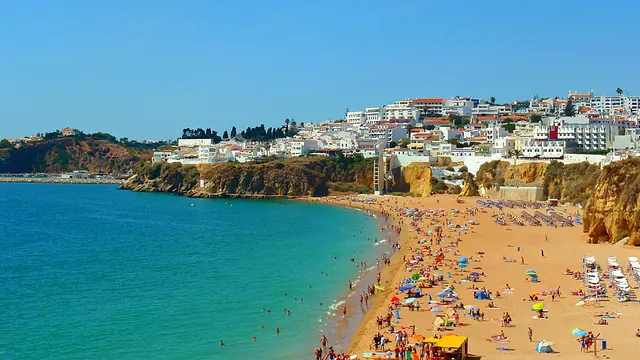
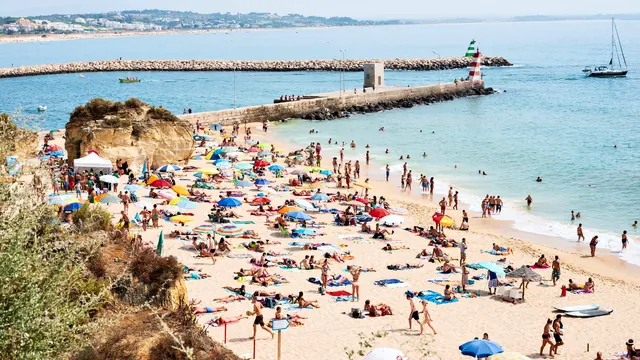
The Algarve suits a vacation built around the sea, with one base, a beach most days and a slower rhythm. Its cliff coves and lagoon islands are the main event, summer heat on the coast stays manageable, and the region is easy to handle with children and a hire car. Choose it if you want sand, boat trips and grilled fish more than sightseeing, and accept that the old towns fill only a few afternoons.
Choose Andalusia for
- live music and the arts
- culture and sights
- day trips
Andalusia is the richer trip for travellers who want to move. The Alhambra, the Mezquita and Seville's cathedral and Alcázar are among Europe's great sights, and the high-speed trains between the cities make touring them straightforward. Add flamenco, tapas bars, sherry country and a long list of days out, and it rewards a curious traveller far more, with beaches waiting on two coasts at the end.
Scoreboard
Twelve categories on one fixed scale from 0 to 100. The shaded stretch is the gap between the two.
Your match
Pick a travel style or drag the sliders, and both match scores follow your weighting.
Wins on families and beaches with your weighting.
Wins on live music and the arts and culture and sights with your weighting.
What matters to you?
Category by category
What the scores mean for a trip.
Beaches & swimming
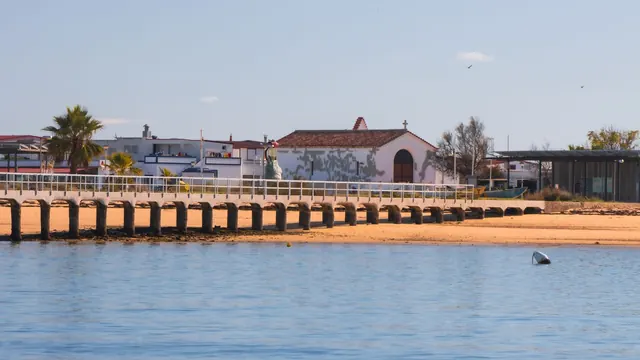
Both regions are first-rate for beaches, but they offer different kinds. The Algarve gives you ochre cliff coves and sea stacks between Lagos and Albufeira, often reached by long stairways, and long empty sand on the Ria Formosa barrier islands near Tavira, all in cool Atlantic water.
Andalusia has two coasts. The Mediterranean side is calmer and warmer, from the built-up, often grey-sand Costa del Sol to the clear volcanic coves of Cabo de Gata, while the Costa de la Luz has wide golden dune beaches at Bolonia and Zahara de los Atunes, with water as cool as the Algarve's and the levante wind to deal with.
Food & drink
Andalusia is the better place to eat. Its tapas bar culture, moving from counter to counter in Triana or Granada, gives every evening a shape, and the sherry triangle around Jerez, salmorejo, oxtail and jamón ibérico make the cooking feel distinct from town to town.
The Algarve's strength is narrower: charcoal-grilled sardines, cataplana clams and goose barnacles, best eaten in Olhão, Tavira or the old part of Lagos. In the main resort strips the menus turn generic, so where you stay matters more here.
Culture & sights
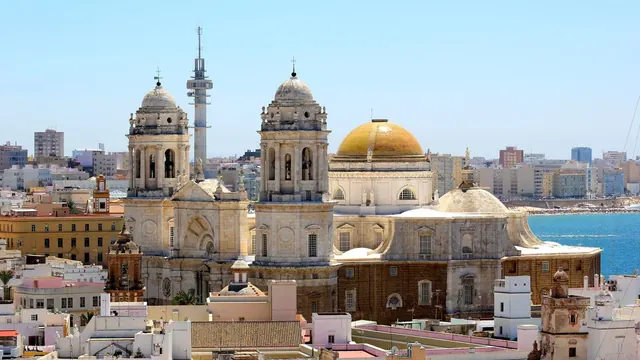
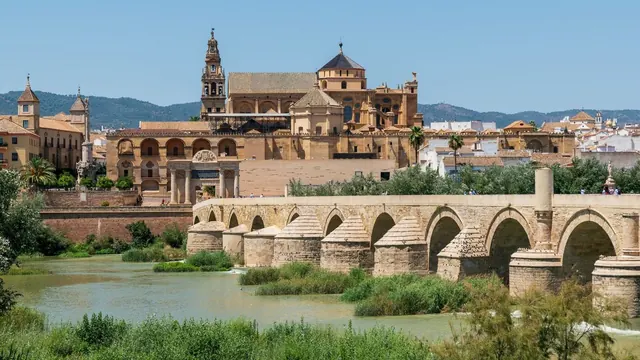
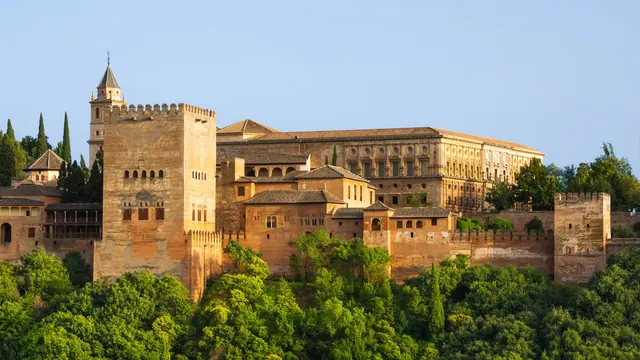
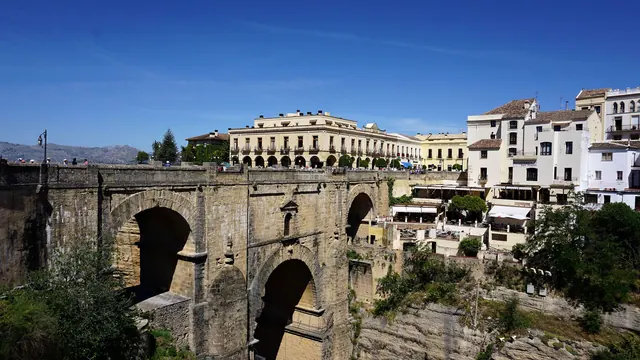
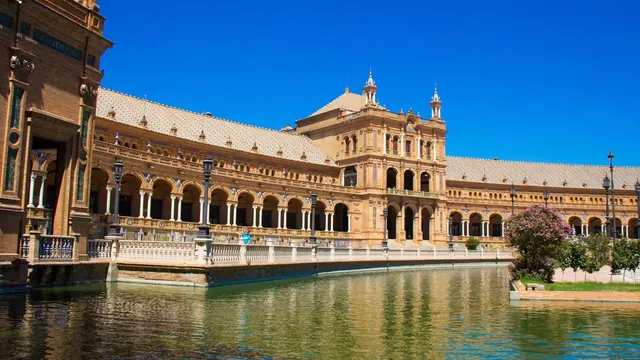
There is a wide gap here. Andalusia holds the Alhambra above the Albaicín, the striped arches of Córdoba's Mezquita and Seville's vast Gothic cathedral, with Ronda, Úbeda, Baeza and Cádiz behind them, enough for a whole trip of sightseeing.
The Algarve's heritage is pleasant rather than grand: the red castle at Silves, Tavira's spires and bridge, Faro's walled old town and the headland fortress at Sagres. They make good half-day outings between beach days.
Nightlife
Andalusia's nights are livelier and last all year in the cities, with late terraces around Seville's Alameda de Hércules, cheap student bars below Granada's Albaicín and Málaga's old town, plus glossy beach clubs at Puerto Banús in summer.
In the Algarve, going out is a summer resort affair: the neon bars and karaoke of Albufeira's Strip, a younger crowd in Lagos and beach clubs at Praia da Rocha. Outside the warm months, and in Tavira at any time, a drink on the square is about it.
Nature & outdoors
The Algarve's outdoors is almost all coast, but that coast is very good. You can walk the Seven Hanging Valleys trail above sea caves, take a kayak into the grottoes at Benagil, find surf and the Rota Vicentina paths in the wild west, and see flamingos on the Ria Formosa.
Andalusia ranges much further. The Sierra Nevada climbs to nearly 3,500m above Granada, with skiing in winter and the Alpujarras villages on its slopes. West of Málaga are the Caminito del Rey gorge walkway and the limestone towers of El Torcal. Further afield, Doñana is one of Europe's great wetlands and Tarifa is a centre for kitesurfing.
Day trips
Andalusia is far better for days out. Every base has a long list: Itálica and Carmona from Seville, Ronda and Antequera from Málaga, the white villages of the Cádiz hills by car, and even a ferry from Tarifa to Tangier.
The Algarve's best day trip is in fact into Andalusia, with Seville about two hours' drive from the eastern end. Beyond that come Mértola, the Guadiana villages, the car-free islands of Culatra and Armona and the region's own towns, and the choice runs out after about a week.
Good for families
Both regions work well with children, in different ways. The Algarve is the simpler beach week, with shallow water on the lagoon islands and at Alvor, water parks inland and villas with pools everywhere, though the cliff coves with steep stairs are awkward with small children.
Andalusia mixes the family beaches of the Costa del Sol, with an aquarium at Benalmádena and a zoo in Fuengirola, with city outings such as Granada's Parque de las Ciencias and the Western film sets near Almería. Its inland summer heat is the bigger obstacle, so city days with children belong in spring or autumn.
Getting around
The Algarve depends on a hire car far more than Andalusia does. Almost everyone drives the A22, which puts Lagos about an hour from Tavira, because the coastal railway is slow, its stations often lie well outside town and buses rarely reach the beaches. Without a car you are tied to one walkable old centre such as Lagos, Tavira or Faro, and to fewer beaches.
Andalusia is easier to get around, because its high-speed trains link Seville, Córdoba, Málaga and Granada, with Córdoba under an hour from Seville. A tour of the great cities can be done without a car, and Seville and Málaga add trams and metro lines on arrival. In the countryside both regions call for a car: in Andalusia that means the white villages, the mountains and the Costa de la Luz, and in the Algarve the hill villages and quieter coves.
Shopping & style
Andalusia offers more to buy and more places to buy it. There are Triana's tile workshops, flamenco dresses and fans sold for real use, leather from Ubrique, luxury boutiques in Marbella and good shopping streets in Seville and Málaga.
The Algarve's best shopping is its produce and crafts: cork, copper cataplanas, figs and honey at Loulé's market, painted ceramics near Porches and flor de sal from Castro Marim and Olhão. Most of the rest is malls and beachwear.
Affordability
Grilled fish and house wine cost little in the Algarve, but villas and beach hotels push the cost up in July and August, with Almancil's golf enclaves at the top. Basing yourself in Tavira or Olhão, or coming in June or late September, keeps it moderate.
Money goes further in Andalusia. Tapas, lunchtime set menus and regional trains are cheap, Granada and Jaén add a free tapa with each drink, and rooms stay cheap in inland towns and on the Almería coast.
Live music & performing arts
Andalusia is the home of flamenco, and that alone settles it. You can find nightly shows in Seville's Santa Cruz and Triana, peñas in Jerez, zambra in Granada's Sacromonte caves and the Bienal in Seville, with opera at the Maestranza and summer concerts in the Alhambra's gardens as well.
The Algarve has municipal theatres in Faro and Loulé, a world music festival and medieval fairs in summer, and fado mostly staged for tourists in restaurants.
Wellness & relaxation
For rest and pampering the two are evenly matched, but the settings differ. The Algarve has Caldas de Monchique, whose warm springs have been used since Roman times, resort spas around Quinta do Lago and yoga and surf retreats near Aljezur.
Andalusia offers Moorish-style bathhouses in Granada, Córdoba, Seville and Málaga, old spa towns such as Lanjarón in the Alpujarras and resort spas around Marbella. The long lunches and afternoon rest make slowing down part of the day.
When should you go?
Pick your month. The climate figures are measured averages, not a forecast.
Algarve in July
Andalusia in July
Daytime high, °C
Rainfall in the month, mm
Where the figures come from
Algarve's temperatures are measured 26 km from the centre, at Faro / Aeroporto.
Algarve has no rain gauge within 25 km of the centre, so its rainfall comes from a gridded climate dataset read at the destination rather than from a gauge further away.
Temperature and rainfall are climate normals, averaged over the years shown. Algarve: 1991-2020 normals, Faro / Aeroporto (26.4 km from centre). Andalusia: 1991-2020 (sunshine 1981-2010, rainfall 1981-2010) normals, Sevilla / San Pablo (8.1 km from centre).
Along the Algarve coast, summer is hot without being punishing, with highs around 29°C in July and August, almost no rain from June to August and long sunny days. The Atlantic is cool, reaching about 20°C from June to October, so that is the swimming season. Spring and autumn are good for walking, and the rain arrives in October and builds through the winter, which stays mild but grey at times.
Andalusia's inland cities, such as Seville and Córdoba, are a different matter in summer. Highs near 36°C in July and August make midday sightseeing hard work, and June and September are only a little cooler. The coasts run noticeably cooler than the interior, so a beach stay is easier then than a city tour. For touring the cities, March to May and October are the best months, while November is the wettest month at about 122mm. Winter daytime highs are much the same in both regions, though the Algarve sees a little more sun in most months.
Which traveller are you?
On a culture and arts trip, Andalusia wins easily. The Alhambra, Córdoba's Mezquita and Seville's Alcázar are of the first rank, flamenco fills its evenings in Seville, Jerez and Granada, and fast trains link the great cities.
For a food and nightlife trip, Andalusia is again the stronger choice. Tapas crawls through Triana, free tapas in Granada, cold fino in the sherry towns and late terraces in Seville and Málaga outdo the Algarve's summer-only resort strips.
On a family trip with young children, the Algarve has a slight edge. Shallow lagoon beaches, villas with pools and water parks sit close together on one coast, and its summer heat is far gentler than Andalusia's inland cities.
Before you go
| Measure | Algarve | Andalusia |
|---|---|---|
| Official language | Portuguese | Spanish |
| Currency | Euro (EUR) | Euro (EUR) |
| Sockets | CF230 V, 50 Hz | CF230 V, 50 Hz |
| Driving side | Right | Right |
| Time zone | UTC, UTC+1 in summer | UTC+1, UTC+2 in summer |
| Emergency number | 112 | 112 |
| Main airport | Faro - Gago Coutinho International Airport (FAO)91 non-stop destinations | Seville Airport (SVQ)96 non-stop destinations |
| Public holidays this year | 14 days | 12 days |
By the numbers
| Measure | Algarve | Andalusia |
|---|---|---|
| Population | 438,864 | 8,619,616 |
| People per km² | 88 | - |
| Swim season, months above 21 °C | None | - |
Where else could you go?
Every comparison below shares a destination with this one, so you can follow Algarve or Andalusia somewhere new.
- Lisbonvs Algarve
- Costa del Solvs Algarve
- Costa Blancavs Andalusia
- Formenteravs Andalusia
- Ibizavs Andalusia
- Mallorcavs Andalusia