Andalusia or Formentera?
Our verdict in twelve categories, each scored against the same fixed benchmark cities, and the climate month by month, so you can choose for your trip.
Choose Andalusia for
- culture and sights
- live music and the arts
- day trips
Andalusia suits a trip with variety and movement. You get the Alhambra, the Mezquita and Seville's cathedral, flamenco in Triana and Jerez, tapas bars and sherry bodegas, and mountains and two coasts at the end. It works best for travellers who are happy to change base a few times, ideally with a car, and it costs far less to eat and drink well.
Choose Formentera for
- beaches
Formentera is for those who want to stay in one place and do very little, beautifully. Its white sand and clear turquoise water beat anything on the mainland coasts, and the island is small enough to cross by bicycle. In return there is almost no culture or nightlife, very few day trips, and summer is expensive.
Scoreboard
Twelve categories on one fixed scale from 0 to 100. The shaded stretch is the gap between the two.
Your match
Pick a travel style or drag the sliders, and both match scores follow your weighting.
Wins on culture and sights and live music and the arts with your weighting.
Wins on beaches with your weighting.
What matters to you?
Category by category
What the scores mean for a trip.
Beaches & swimming
Formentera wins this outright. Ses Illetes, with shallow turquoise water on both sides of a white spit, and the long dune-backed curve of Migjorn are finer than anything on the Costa del Sol. The island's sea also runs several degrees warmer than the Costa de la Luz.
Andalusia's strength is choice rather than quality: golden Atlantic beaches at Bolonia and Zahara de los Atunes, volcanic coves at Cabo de Gata and the resort promenades of Málaga and Marbella. It suits a trip that mixes beach days with cities. On Formentera the beach is the whole point.
Food & drink
Andalusia is one of Spain's great regions for eating as you move from bar to bar. There are tapas in Triana, a free tapa with every drink in Granada, oxtail in Córdoba, jamón from Huelva, and cold fino or manzanilla in the bodegas of Jerez and Sanlúcar.
Formentera does one thing well: a long lunch of grilled fish or lobster stew above Ses Illetes or Migjorn, along with island dishes such as peix sec salad and flaó. Beyond the beach restaurants the choice is thin, and many kitchens close once summer ends.
Culture & sights
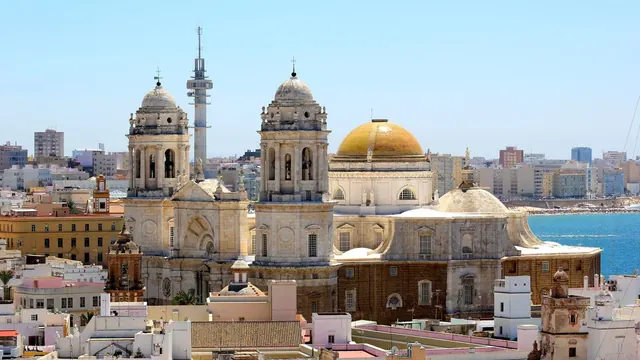
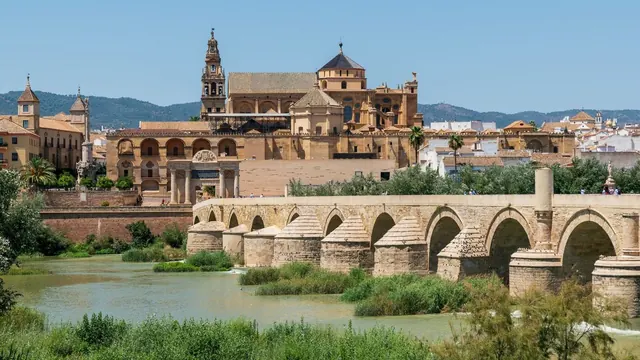
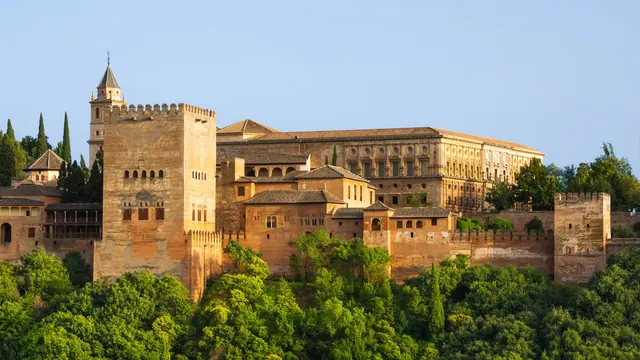
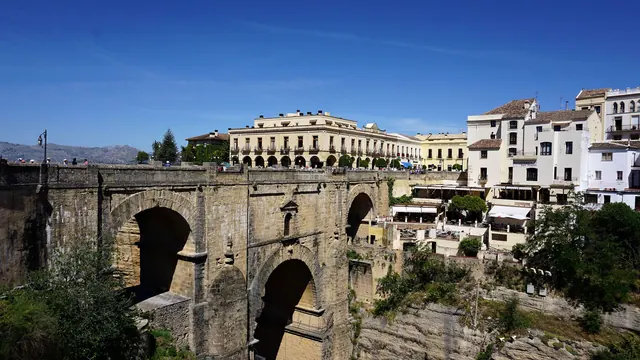
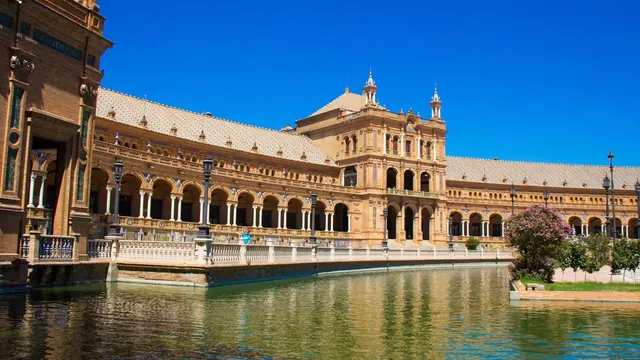
There is no contest here. Andalusia has the Alhambra, Córdoba's Mezquita and Seville's cathedral and Real Alcázar. Add Ronda, Cádiz and the Renaissance towns of Úbeda and Baeza, and there is enough for two weeks of sightseeing.
Formentera's heritage is a fortified church in Sant Francesc, coastal watchtowers, two lighthouses and a small Bronze Age tomb at Ca na Costa. You can see all of it in passing between beaches.
Nightlife
Andalusia has long nights in several styles: late terraces around Seville's Alameda de Hércules and in Triana, cheap student bars in Granada, and summer beach clubs at Marbella and Puerto Banús.
On Formentera an evening means a sunset drink on the west coast and perhaps a few bars in Es Pujols, and most people are asleep early. Anyone who wants proper clubs has to cross to Ibiza and keep an eye on the last ferry back.
Nature & outdoors
Andalusia's landscapes cover far more ground. There is the Sierra Nevada, rising to nearly 3,500m with skiing in winter, the gorge walkway of the Caminito del Rey, El Torcal's limestone towers, the Doñana wetlands and kitesurfing at Tarifa.
Formentera is low and gentle, with salt pans, juniper scrub, flamingos at Ses Salines, the cliffs of La Mola and quiet cycle routes. Its best outdoor days are on the water: snorkelling, kayaking and paddleboarding over the protected seagrass meadows.
Day trips
From any Andalusian base there are plenty of days out: Itálica and Carmona from Seville, Ronda and Antequera from Málaga, the white villages of the Cádiz hills, Gibraltar, and even a ferry from Tarifa to Tangier. Many of them are easiest by car.
Formentera's one full day out is Ibiza, half an hour away by fast ferry. Go for the walled old town of Dalt Vila, and with a hired car you can reach the villages and the north coast too. For something shorter, a boat from the island's northern tip goes to the empty islet of Espalmador for half a day.
Good for families
Andalusia is the easier choice for families. The Costa del Sol has water parks, a zoo in Fuengirola and an aquarium at Benalmádena, Granada has its hands-on science museum, and the Western film sets near Almería are a novelty. Inland summer heat does rule out city days with small children.
Formentera works for families who want nothing but sand and shallow water at Ses Illetes and Es Pujols, and older children enjoy cycling the flat lanes. There is nothing built for children, there is little shade, and getting there means a flight and then a ferry.
Getting around
Andalusia's main cities are joined by high-speed trains, so Seville, Córdoba and Málaga link up easily, and Seville and Málaga have metro and tram lines. The white villages, the mountains and the Costa de la Luz really need a car.
Formentera is about 20km long and can only be reached by ferry from Ibiza. Once you are there, a bike or scooter gets you everywhere. With just one bus line and the ferry crossing, though, it is the less connected of the two.
Shopping & style
Andalusia has real shopping streets, such as Calle Sierpes in Seville and Calle Larios in Málaga. It also has crafts that are still made locally: Triana ceramics, flamenco dresses and fans, and Ubrique leather, plus luxury boutiques in Marbella.
Formentera's shopping takes an evening: linen and sandals in Sant Francesc, the craft stalls along the seafront at Es Pujols, and the summer artisans' market at El Pilar de La Mola, the island's most characterful place to shop.
Affordability
Andalusia is much the cheaper trip. Tapas and drinks cost little, lunchtime set menus are good value and inland towns are inexpensive. Only Holy Week in Seville and the Costa del Sol in high summer push room rates up.
There is no budget version of a summer on Formentera. Rooms are scarce, beach restaurants charge resort prices, and the ferry and bike or car hire come on top. Self-catering in May, June or late September is the only real way to save.
Live music & performing arts
Andalusia is the home of flamenco. There are nightly shows in Seville's Santa Cruz and Triana, peñas in Jerez, the zambra in Granada's Sacromonte caves and the Bienal in Seville every other autumn. On top of that come opera at the Maestranza and summer concerts in the Alhambra.
Formentera has musicians at the La Mola market and the occasional sunset set at a beach bar, and nothing more formal.
Wellness & relaxation
Neither place is built around spas, and they help you relax in different ways. Andalusia has bathhouses in the Moorish style in Granada, Córdoba, Seville and Málaga, old-fashioned thermal towns such as Lanjarón, and large resort spas around Marbella.
Formentera has no bathing tradition, only small hotel spas, yoga and massage. Its pace does the work instead: low-rise and quiet, with days that go from sea to long lunch to early bed. It is calmest in May, June and September.
When should you go?
Pick your month. The climate figures are measured averages, not a forecast.
Andalusia in July
Formentera in July
Daytime high, °C
Rainfall in the month, mm
Temperature and rainfall are climate normals, averaged over the years shown. Andalusia: 1991-2020 (sunshine 1981-2010, rainfall 1981-2010) normals, Sevilla / San Pablo (8.1 km from centre). Formentera: 1991-2020 normals, Ibiza / Es Codola (17.7 km from centre).
Andalusia is at its best in spring and autumn. From March to May highs climb into the twenties and May is almost dry, which is ideal for walking round Seville or Granada. By July and August the measured highs reach 36°C, too hot for sightseeing in the middle of the day. October is pleasant again, but the rain arrives properly in November, the wettest month at 122mm. Winter stays mild and sunny enough for city days.
On Formentera the sea sets the season. The water is warm enough to swim from June, peaks at 26°C in August and stays warm through September. Island highs top out around 30°C, a softer summer than the Andalusian interior. Autumn showers begin in September, and from November to April the island is mild but too cool for the beach.
Which traveller are you?
On a beach and sun trip, Andalusia suits kitesurfers chasing the wind at Tarifa and anyone who wants resort comforts along the Costa del Sol. Swimmers and snorkellers should choose Formentera, whose calm, warm shallows over the seagrass beat both mainland coasts.
For a culture and arts trip, Andalusia is the only real option. Plan to move between Granada, Córdoba and Seville by high-speed train, with a night or two in each, and keep your evenings for flamenco. Formentera's sights would fill one afternoon.
On a tight budget, Andalusia lets you eat well standing at tapas counters and sleep cheaply in inland towns or on the Almería coast. You only need to avoid Seville's Holy Week. On Formentera a budget traveller has to give up high summer altogether.
Before you go
| Measure | Andalusia | Formentera |
|---|---|---|
| Official language | Spanish | Spanish |
| Currency | Euro (EUR) | Euro (EUR) |
| Sockets | CF230 V, 50 Hz | CF230 V, 50 Hz |
| Driving side | Right | Right |
| Time zone | UTC+1, UTC+2 in summer | UTC+1, UTC+2 in summer |
| Emergency number | 112 | 112 |
| Main airport | Seville Airport (SVQ)96 non-stop destinations | Ibiza Airport (IBZ)89 non-stop destinations |
| Public holidays this year | 12 days | 13 days |
By the numbers
| Measure | Andalusia | Formentera |
|---|---|---|
| Population | 8,619,616 | 11,661 |
| People per km² | - | 140 |
| Swim season, months above 21 °C | - | 5 months |
Where else could you go?
Every comparison below shares a destination with this one, so you can follow Andalusia or Formentera somewhere new.
- Ibizavs Formentera
- Costa Blancavs Formentera
- Mallorcavs Formentera
- Algarvevs Andalusia
- Menorcavs Formentera
- Costa Bravavs Formentera