Spain
Granada
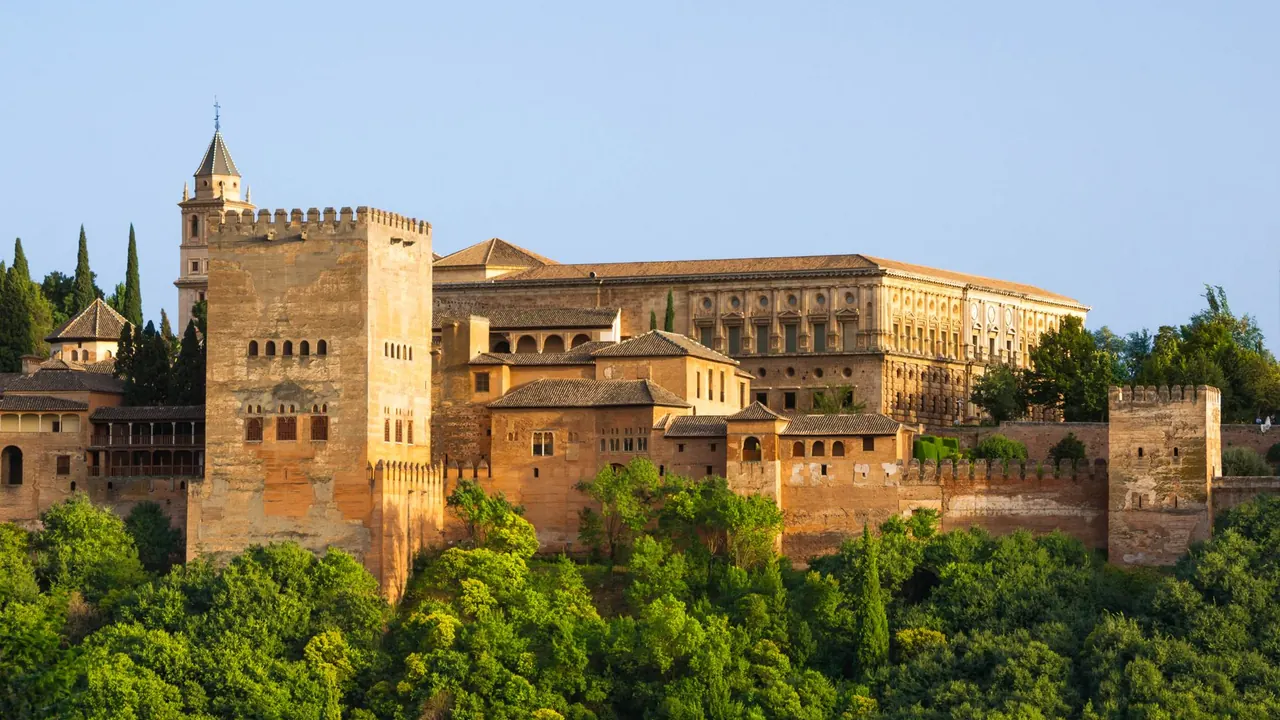
Comares Tower and the Palace of Charles V, Alhambra
- Culture & sights80
- Nature & outdoors80
- Day trips76
Match
60
Every category weighted equally
- Beach & sun57
- Culture & arts64
- Food & nightlife60
- Family trip60
- Outdoors64
- Relax & unwind59
- Shopping & style59
- On a budget61
Granada in twelve categories
Our verdict on each, scored 0 to 100 against the same fixed benchmark cities, so a score means the same thing on every page.
Beaches & swimming. Scores 38 out of 100.
Food & drink. Scores 62 out of 100.
Culture & sights. Scores 80 out of 100.
Nightlife. Scores 58 out of 100.
Nature & outdoors. Scores 80 out of 100.
Day trips. Scores 76 out of 100.
Good for families. Scores 52 out of 100.
Getting around. Scores 68 out of 100.
Shopping & style. Scores 40 out of 100.
Affordability. Scores 63 out of 100.
Live music & performing arts. Scores 58 out of 100.
Wellness & relaxation. Scores 48 out of 100.
Granada category by category
Beaches & swimming
38Granada is an inland city, and the beach is a separate outing rather than part of daily life. The nearest coast is the Costa Tropical, about an hour south by car or bus over the mountains, where Salobreña, Almuñécar and La Herradura sit on coves and bays of pebble and dark sand. The Mediterranean there reaches about 23°C in late summer and is calm and clear, especially in the small coves around La Herradura that suit snorkelling.
In the city itself, swimming means a hotel pool or a municipal pool, and in the July and August heat that matters. A visitor who wants sea every day should stay on the coast and treat Granada as the day trip.
Food & drink
62Eating in Granada is built around the tapas round. The city keeps the old custom of serving a small plate with every drink, so an evening means moving from bar to bar in the streets around Calle Navas, the Realejo and the lower Albaicín, eating as you go. Expect cured ham from the Alpujarras, habas con jamón, fried aubergine with cane honey, remojón salad of orange and salt cod, and the hearty tortilla del Sacromonte.
The Moorish past shows in the Moroccan teterías along Calderería Nueva, with mint tea and sweet pastries, and in the convent sweets such as piononos from nearby Santa Fe. The San Agustín market covers fresh produce. What the city lacks is depth at the top end and much international range.
Culture & sights
80The Alhambra is the reason most people come, and it deserves it: Nasrid palaces of carved stucco, tiled courts and still pools, the Alcazaba fortress and the Generalife gardens above, all on a ridge facing the Sierra Nevada. Across the valley the Albaicín, the old Moorish quarter, is a maze of whitewashed lanes and walled garden houses, with viewpoints such as San Nicolás looking straight at the palace.
Below lies a Renaissance and Baroque city: the cathedral, the Royal Chapel where Ferdinand and Isabella are buried, the Carthusian monastery with its extravagant sacristy, the Arab bathhouse of El Bañuelo and the cave houses of Sacromonte. Museums are a smaller part of the picture, and a visitor sees the core in a few unhurried days.
Nightlife
58A large university keeps Granada out late. The night starts with tapas and drifts on to the bars of Calle Elvira and the Plaza Nueva area, the student pubs and clubs around Pedro Antonio de Alarcón, and the terraces of the Realejo. On weekends the bars fill after midnight and the clubs run towards dawn, in the usual Spanish rhythm.
It is a cheerful, informal scene rather than a destination one: few big clubs, little in the way of serious cocktail bars, and a quieter city in the summer months when the students leave.
Nature & outdoors
80The Sierra Nevada fills the skyline, snow-capped for much of the year, and it is close: the ski slopes above Pradollano are about 45 minutes by road, with a winter season and views to the sea on clear days. In summer the high ground opens for hiking, including routes towards Mulhacén, the highest summit in mainland Spain, and the Veleta.
On the southern flank the Alpujarras offer terraced valleys, chestnut woods and old mule paths between villages, while the Genil river walks and the Dílar valley start near the city edge. Spring and autumn are the best seasons for walking and cycling; in July and August the valley floor bakes and activity moves up into the mountains.
Day trips
76Córdoba is the stand-out, about an hour and a half by fast train, with the Mezquita and its old Jewish quarter. Málaga is a little over an hour by train, and Antequera, with its UNESCO-listed dolmens and the El Torcal karst nearby, is closer still. To the north, the Renaissance towns of Úbeda and Baeza, also UNESCO-listed, make a fine day by car or bus.
Closer in, the white villages of the Alpujarras, such as Pampaneira and Capileira, cling to the Sierra Nevada's slopes, and Guadix has its cave neighbourhood and cathedral. Nerja and Frigiliana on the coast round out the list. Seville is just too far for a comfortable return trip.
Good for families
52Granada is compact, safe and relaxed, and children are welcome late into the evening in the Spanish way. The Parque de las Ciencias is the main attraction aimed at them, a large hands-on science museum with a planetarium and a butterfly house, worth most of a day. The Alhambra's gardens and fountains hold younger children's attention better than most monuments.
The hard part is the terrain: the Albaicín and the Alhambra hill are steep, cobbled and stepped, a challenge with a pushchair, and summer afternoons are very hot. Spring and autumn suit families best, and a snow day in the Sierra Nevada is an easy winter addition.
Getting around
68The centre is small enough to walk, and most visitors never need more than their feet and the occasional minibus. Small red buses climb the narrow lanes to the Alhambra, the Albaicín and Sacromonte, which saves real effort, since these hills are steep and the paving is cobbled. The flat lower town, from the cathedral to the Realejo and the shopping streets, is easy going.
The light rail line serves the suburbs and the station more than the sights. A car is a burden in the old centre, where access is restricted, but useful for the Alpujarras and mountain villages.
Shopping & style
40The Alcaicería, a rebuilt version of the old Moorish silk market beside the cathedral, is the most atmospheric place to browse, though much of what it sells is souvenirs, lamps and slippers. The local crafts are the real finds: taracea, inlaid woodwork in the Moorish tradition, and the blue and green Fajalauza ceramics, along with leather and guitars from the city's workshops.
For everyday shopping, Calle Recogidas, Puerta Real and the streets around them hold the Spanish chains and a big department store. There is little luxury or independent design.
Affordability
63Granada is one of the more affordable cities in Spain. The custom of a free tapa with each drink makes eating out unusually cheap, local buses are inexpensive, and rooms in the lower town and the Realejo cost less than in the large coastal and capital cities.
The costs gather around the Alhambra: boutique stays in the Albaicín, terrace restaurants with palace views and peak spring weekends ask noticeably more, and flamenco shows aimed at visitors are not cheap either.
Live music & performing arts
58Flamenco is the live art here. The cave houses of Sacromonte host the zambra, a local style danced in close quarters, and while many shows are aimed at visitors, small peñas and bars in the Albaicín and Realejo offer rawer evenings. The city is also the home of Federico García Lorca and Manuel de Falla, and that heritage runs through its cultural life.
Each summer the International Festival of Music and Dance, held since 1952, stages concerts and ballet in the Alhambra's palaces and the Generalife's open-air theatre, an unforgettable setting. Through the rest of the year the City of Granada Orchestra plays at the Auditorio Manuel de Falla, and an autumn jazz festival and a modest theatre programme fill out the calendar.
Wellness & relaxation
48Granada's bathing culture is a revival of its Moorish past. Several hammams in the lower Albaicín recreate the warm, tepid and cold pools of the old Arab baths under vaulted ceilings, with massage to follow, and they suit an evening after a long day on the hills. The original medieval baths survive as monuments to see rather than use.
Within an hour lie two real spa towns: Lanjarón in the Alpujarras, known for its springs, and Alhama de Granada, with thermal waters used since Roman and Moorish times. The city's pace helps too, with long lunches, siesta hours, tea houses and the shaded gardens of the carmenes.
When should you go?
Pick a month to see what it is like. The climate figures are measured averages, not a forecast.
Granada in July
Daytime high, °C
Rainfall in the month, mm
The whole year
Shaded against this city’s own year: the deepest cell is its best month for that figure and the palest its weakest.
Temperature and rainfall are climate normals, averaged over the years shown. Granada: 1991-2020 normals, Granada / Caserío Hospicio (5 km from centre).
Before you go
| Measure | Granada |
|---|---|
| Official language | Spanish |
| Currency | Euro (EUR) |
| Sockets | CF230 V, 50 Hz |
| Driving side | Right |
| Time zone | UTC+1, UTC+2 in summer |
| Emergency number | 112 |
| Elevation | 693 m |
| Main airport | F.G.L. Airport Granada-Jaén Airport (GRX)16 km from centre13 non-stop destinations |
| Public holidays this year | 12 days |
By the numbers
| Measure | Granada |
|---|---|
| City population | 233,975 |
| People per km² | 2,659 |
| Museums within 10 km | 20 |
| UNESCO World Heritage sites within 50 km | 1 |
Compare Granada with
Every comparison with a written verdict behind it.