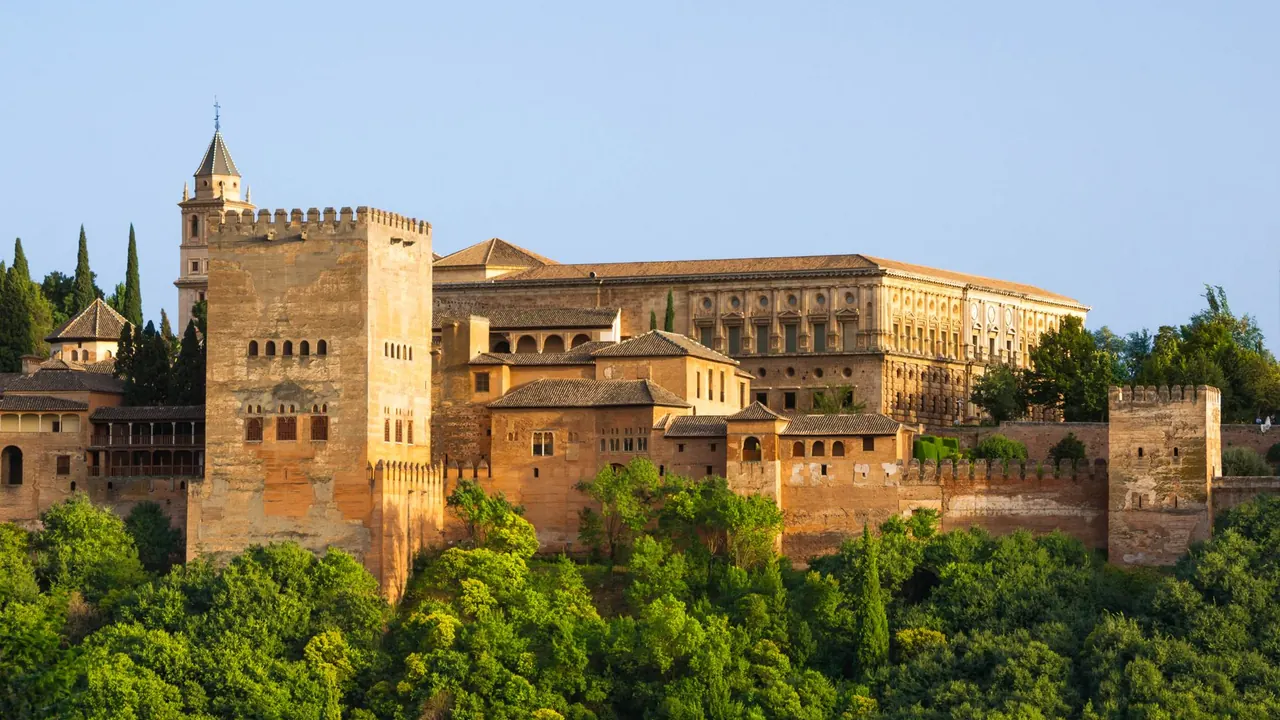
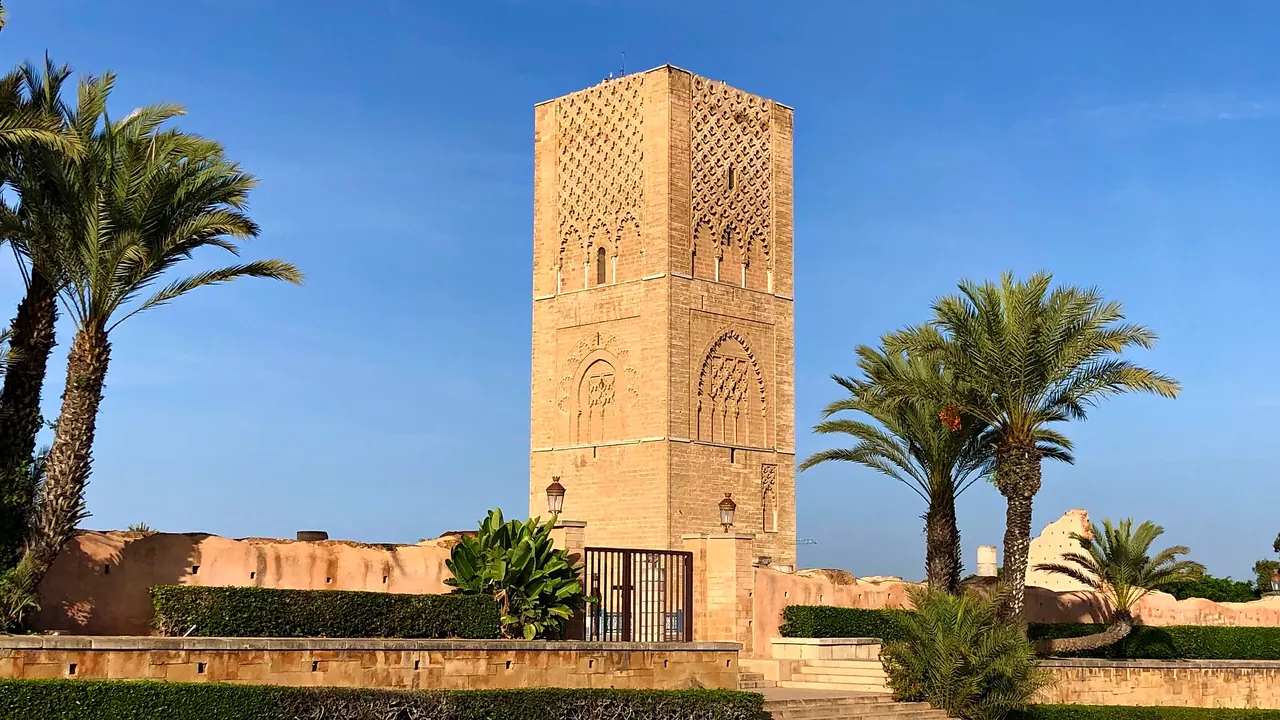
Photos: Granada by Jebulon, CC0; Rabat by Aemazy, CC BY-SA 4.0, cropped.
Granada or Rabat?
Our verdict in twelve categories, each scored against the same fixed benchmark cities, and the climate month by month, so you can choose for your trip.
Choose Granada for
- nature and the outdoors
- nightlife
- live music and the arts
Granada is the stronger choice for most city trips. The Alhambra and the Albaicín give it the bigger set of sights, the Sierra Nevada puts real mountains, and snow in winter, within reach of a day out, and the tapas bars and student nightlife fill the evenings. It suits travellers who want plenty to see, walk and eat, and who don't mind steep cobbled hills.
Choose Rabat for
- prices
- beaches
- wellness
Rabat is for a calmer, cheaper trip with the sea on the doorstep. Morocco's capital is easy and unhurried, has hammams that are part of local life, and offers Atlantic beaches and a good rail line to Casablanca, Tangier and Meknes. Choose it if you want an easy first taste of Morocco rather than a full itinerary or late nights.
Scoreboard
Twelve categories on one fixed scale from 0 to 100. The shaded stretch is the gap between the two.
Your match
Pick a travel style or drag the sliders, and both match scores follow your weighting.
Wins on nature and the outdoors and nightlife with your weighting.
Wins on prices and beaches with your weighting.
What matters to you?
Category by category
What the scores mean for a trip.
Beaches & swimming
Rabat has the edge, simply because the sea is part of the city. Its Atlantic beach lies right below the Kasbah of the Udayas, and the calmer sands at Temara, Harhoura and Skhirat are a short taxi ride south. Expect swell and currents, surfers and local families rather than lazy sunbathing.
From Granada the beach is a full day's outing, about an hour over the mountains to the pebble and dark-sand coves of the Costa Tropical. The calm, clear water around La Herradura is better for snorkelling than anything near Rabat, but it is not somewhere you can pop down to for an afternoon.
Food & drink
Granada is the better place to eat, mostly because of how people eat there. Drinks come with a small plate, so dinner becomes a slow round of bars through the Realejo and the lower Albaicín, with Alpujarras ham, aubergine with cane honey and remojón salad. Mint tea in the teterías of Calderería Nueva links it to the Moorish past.
Rabat offers honest Moroccan cooking without the show of the tourist medinas: Friday couscous, harira, snail broth from street stalls and plain grilled Atlantic fish near the port. Agdal adds French and Lebanese restaurants, but alcohol is discreet and the overall range is narrower. Neither city is strong at the top end.
Culture & sights
Granada has the greater sights. The Alhambra's Nasrid palaces and the Generalife gardens are among the masterpieces of Islamic architecture, and the city adds the whitewashed Albaicín, the Royal Chapel of Ferdinand and Isabella, and the cave houses of Sacromonte.
Rabat's heritage is quieter but older and broader, and the city is listed by UNESCO as a whole. It takes in the Almohad gate and Andalusian garden of the Kasbah of the Udayas, the unfinished Hassan Tower, and the stork-filled Roman and Marinid ruins of the Chellah, along with an art deco Ville Nouvelle and a modern art museum. The two cities are closely linked: Muslims expelled from Spain settled on the Bou Regreg after Granada fell.
Nightlife
Granada is well ahead after dark. A large university keeps the bars around Plaza Nueva and Calle Elvira full past midnight at weekends, and the student clubs off Pedro Antonio de Alarcón run late. It is a casual scene rather than a glamorous one, and it thins out in summer once term ends.
Rabat is a quiet capital at night. Evenings mean a café terrace or a stroll along the Bou Regreg promenade or through the medina, which stays busy late in summer and on Ramadan nights. A drink usually means a hotel bar or one of the few lounges in Agdal. People who want to go clubbing take the train to Casablanca.
Nature & outdoors
Granada lies at the foot of the Sierra Nevada. The ski slopes are about 45 minutes away, summer trails lead up towards mainland Spain's highest summit, and the terraced Alpujarras valleys have chestnut woods and old mule paths. Summer heat pushes activity up into the mountains.
Rabat's outdoors is flat and coastal: surf at the river mouth, paddling on the estuary, easy cycling in the Maamora cork forest and birdwatching at Sidi Boughaba. Its mild weather lets you get outside all year, but the Atlas and the Rif are too far away for a day's hiking.
Day trips
Granada has the stronger list. Córdoba's Mezquita is an easy train ride away, and Antequera's dolmens, the Renaissance towns of Úbeda and Baeza, Guadix's cave quarter and the white villages of the Alpujarras are all within a day. The mountain villages are easiest by car.
Rabat makes up some of the gap with its excellent rail line. Casablanca's Hassan II Mosque, Tangier and Asilah, and imperial Meknes are all straightforward trips without a car, and the old medina and madrasa of Salé are just across the river by tram. Fez and Volubilis are better kept for an overnight stay.
Good for families
There is little between them for children. Granada has the stronger single attraction in the Parque de las Ciencias, and the Alhambra's fountains hold young children's attention. The catch is its steep cobbled hills, hard going with a pushchair, and very hot summer afternoons.
Rabat is flatter, calm and welcoming to families, with a large modern zoo, the Jardin d'Essais and the tram to save tired legs. Its rough city beaches need close watching, though, and beyond those few places there is little aimed at children.
Getting around
Granada is the easier city for sightseeing on foot. Its sights are packed tightly together, and the small red minibuses do the hard climbs to the Alhambra, the Albaicín and Sacromonte. Leave the car behind unless you are heading for the mountain villages.
Rabat's central streets are broad and flat, but the sights are more spread out: the Chellah, Agdal and the coast need the tram or one of the many blue petit taxis. Its central station is a real advantage for day trips without a car.
Shopping & style
Neither city is a shopping destination, but the shopping is different in kind. Granada's best buys are its crafts: taracea inlaid woodwork, blue and green Fajalauza ceramics and handmade guitars, with the Alcaicería mostly selling souvenirs. Its chain stores are on Calle Recogidas.
Rabat offers the souk experience in a gentler form. Rue des Consuls is lined with dense local carpets, leather and brass, haggling is relaxed, and Salé sells pottery. Agdal and the riverside mall cover everyday needs.
Affordability
Rabat is the cheaper city overall, but the gap depends on what you spend your money on. Daily spending goes further there, and seeing its great monuments costs very little. In Granada the Alhambra is a paid ticket that needs planning. Rabat loses some of that lead on the hotel bill. As a capital it has more business hotels than budget riads, so accommodation narrows the difference.
Granada wins back ground in the evening. Every drink comes with a plate of food, so a night of tapas and wine can cost less than one round in a Rabat hotel bar, where alcohol is the expensive item. Granada's high prices are concentrated around the Alhambra hill, so staying in the lower town or the Realejo keeps the trip cheap.
Live music & performing arts
Granada offers far more live performance. You can see flamenco most nights, from the zambra in the Sacromonte caves to rawer evenings in Albaicín peñas. The summer Festival of Music and Dance stages concerts and ballet inside the Alhambra, and the city orchestra plays all year.
Rabat's big draw is Mawazine, when international stars and Gnawa musicians perform on open-air stages across the city. The rest of the year the national theatres run irregular programmes, mostly in Arabic and French, and Andalusian or chaabi music has to be sought out.
Wellness & relaxation
Rabat is the more restful city, and its hammams are the real thing: neighbourhood bathhouses in the medina and Salé where locals go for steam and a black-soap scrub, plus more comfortable versions in hotels and riads. It is also the calmest of Morocco's large cities.
Granada's hammams are recreations of Moorish baths for visitors, though pleasant after a day on the hills. For proper thermal waters, the spa towns of Lanjarón and Alhama de Granada are within an hour, and siestas and the shady carmen gardens slow the pace.
When should you go?
Pick your month. The climate figures are measured averages, not a forecast.
Granada in July
Rabat in July
Daytime high, °C
Rainfall in the month, mm
Temperature and rainfall are climate normals, averaged over the years shown. Granada: 1991-2020 normals, Granada / Caserío Hospicio (5 km from centre). Rabat: 1991-2020 normals, Rabat-Sale (7.6 km from centre).
Granada has an inland climate with big swings between seasons. July and August reach about 35°C and are almost rainless, too hot for the hills in the afternoon, so city walking is best in April, May, late September and October. Winter days drop to around 13°C, with steady rain from October to December. In the colder months the reward is snow on the Sierra Nevada.
Rabat is mild all year because the Atlantic keeps it moderate. Summer highs stay around 28°C, so July and August are still comfortable for sightseeing, and the sea warms to about 23°C in August, the best time for a swim. Winter is gentler than in Granada but wetter, with November and December the rainiest months at up to 97mm. Spring and summer are the sunniest and most settled seasons.
Which traveller are you?
On an outdoors trip, Granada wins clearly. The Sierra Nevada offers skiing in winter and summer hikes towards Mulhacén, and the Alpujarras have village-to-village paths. Rabat has surfing, gentle walks in a cork forest and birdwatching, but no mountains within a day.
For a food and nightlife trip, choose Granada. Its tradition of a free tapa with every drink turns an evening into a bar crawl through the Realejo and Calle Elvira, with clubs open towards dawn. Rabat's evenings mostly mean cafés and promenades, with drinking confined to hotels.
On a trip on a tight budget, Rabat makes your money go further. Medina meals, café terraces, the tram and petit taxis are all cheap, and the main monuments charge little. Granada is good value by Spanish standards, but less so around the Alhambra.
Before you go
| Measure | Granada | Rabat |
|---|---|---|
| Official language | Spanish | Arabic, Standard Moroccan Tamazight |
| Currency | Euro (EUR) | Moroccan Dirham (MAD) |
| Sockets | CF230 V, 50 Hz | CE50 Hz |
| Driving side | Right | Right |
| Time zone | UTC+1, UTC+2 in summer | UTC+1 |
| Emergency number | 112 | Police 19/112, ambulance 15, fire 15 |
| Elevation | 693 m | 87 m |
| Main airport | F.G.L. Airport Granada-Jaén Airport (GRX)16 km from centre13 non-stop destinations | Rabat-Salé Airport (RBA)9 km from centre45 non-stop destinations |
| Public holidays this year | 12 days | 11 days |
By the numbers
| Measure | Granada | Rabat |
|---|---|---|
| City population | 233,975 | 515,619 |
| People per km² | 2,659 | 4,370 |
| Museums within 10 km | 20 | 7 |
| UNESCO World Heritage sites within 50 km | 1 | 1 |
| Swim season, months above 21 °C | - | 4 months |
Where else could you go?
Every comparison below shares a destination with this one, so you can follow Granada or Rabat somewhere new.