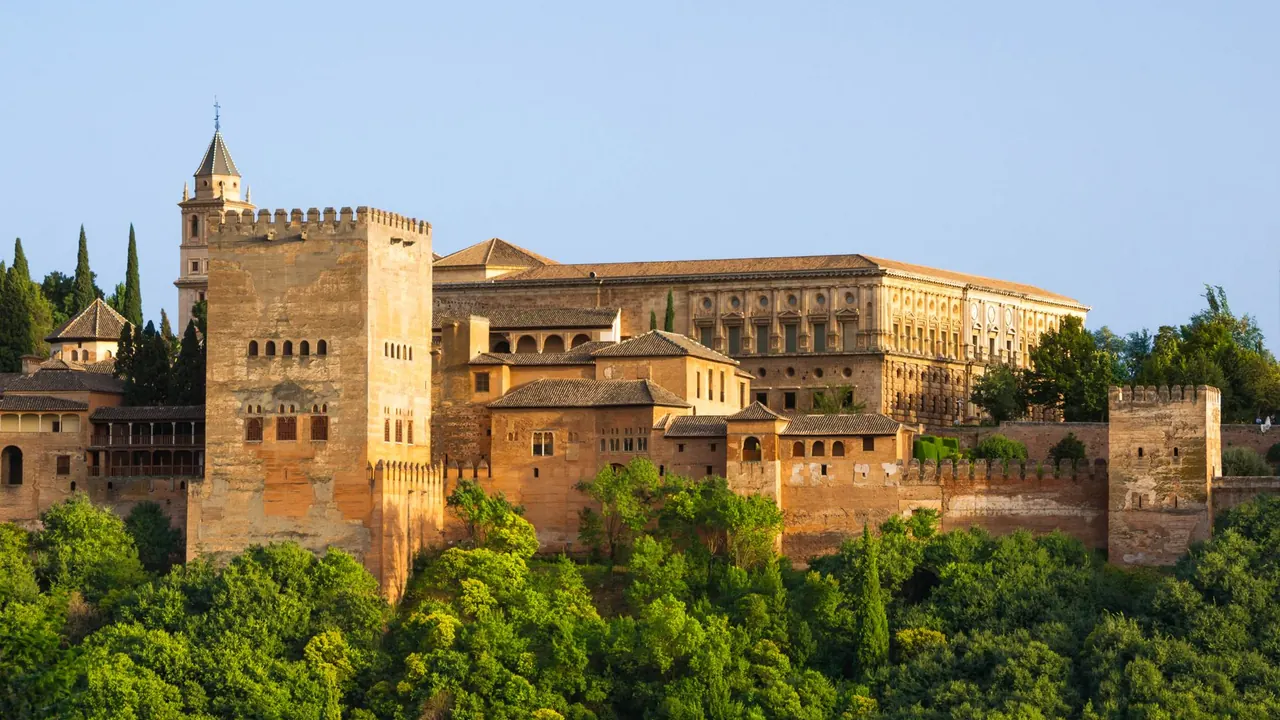
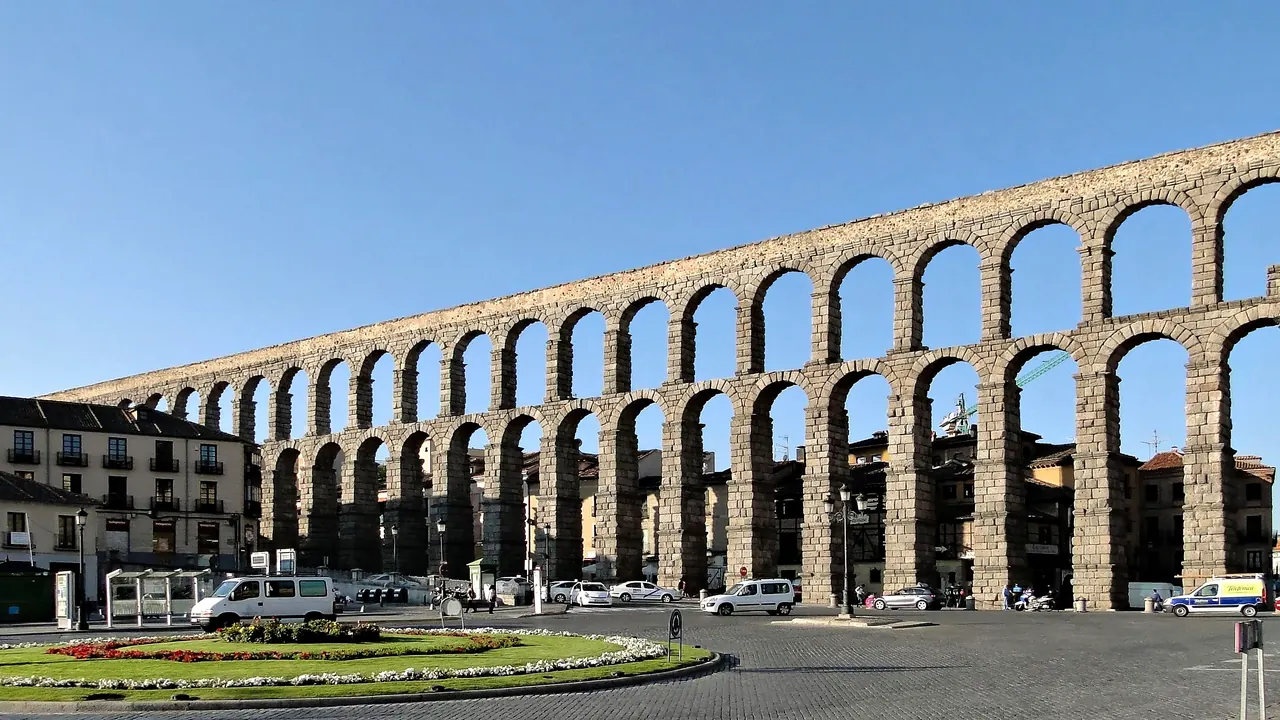
Photos: Granada by Jebulon, CC0; Segovia by Bernard Gagnon, CC BY-SA 3.0, cropped.
Granada or Segovia?
Our verdict in twelve categories, each scored against the same fixed benchmark cities, and the climate month by month, so you can choose for your trip.
Choose Granada for
- beaches
- nightlife
- live music and the arts
Granada suits the traveller who wants several things from one trip. The Alhambra and the Albaicín can fill a few unhurried days. A tapas round can run on into a late night, and there is flamenco in Sacromonte and a hammam after a day on the hills. The Sierra Nevada and the Costa Tropical are both within reach. It rewards a stay of four or five days, and the height of summer is best avoided.
Choose Segovia for
- day trips
Choose Segovia for a shorter, quieter stay in the heart of Castile. The aqueduct, the cathedral and the Alcázar lie along one ridge and fit into a day or two. Roast suckling pig is the meal people travel for, and Madrid, La Granja and Ávila are all close enough for easy outings. Evenings end early and calmly, which is the point for some travellers and a drawback for others.
Scoreboard
Twelve categories on one fixed scale from 0 to 100. The shaded stretch is the gap between the two.
Your match
Pick a travel style or drag the sliders, and both match scores follow your weighting.
Wins on beaches and nightlife with your weighting.
Wins on day trips with your weighting.
What matters to you?
Category by category
What the scores mean for a trip.
Beaches & swimming
Neither city is a beach destination, but Granada at least has the sea within reach. The Costa Tropical lies about an hour south over the mountains, and the pebble and dark-sand coves at Salobreña, Almuñécar and La Herradura make a good day out, with snorkelling included.
Segovia is a long day's drive from any coast. Summer swimming there means a pool or a cold reservoir in the Guadarrama foothills, so anyone who needs the sea should plan that part of the trip elsewhere.
Food & drink
Granada wins on how you eat. With a free tapa served with every drink, a round of bars through the Realejo and the lower Albaicín is both a meal and an evening out. Alpujarras ham, aubergine with cane honey and the Moroccan tea houses of Calderería Nueva add a strand that Segovia has no equivalent for.
Segovia is the place for one great meal rather than a whole eating scene: crisp-skinned cochinillo and roast lamb from wood-fired ovens, judiones beans from La Granja and Ribera del Duero wine. Away from the roasts the choice narrows quickly, and neither city goes far into fine dining or international cooking.
Culture & sights
Both are UNESCO-listed old towns crowned by a fortress, but the Alhambra puts Granada ahead. The Nasrid palaces, the Generalife gardens and the Albaicín facing them across the valley fill a few unhurried days, with the Royal Chapel, the cathedral and the Sacromonte caves below.
Segovia has less, packed more tightly. The Roman aqueduct, the Gothic cathedral and the Alcázar on its cliff, with Romanesque churches such as San Martín in between, make a superb full day, but there is less to fill a third. In neither city are museums the main draw.
Nightlife
Granada stays out much later. A large university fills the bars around Calle Elvira and Plaza Nueva, and at weekends the student clubs off Pedro Antonio de Alarcón stay open until dawn, though the city quietens in summer when the students leave.
In Segovia an evening means a tapas round on Plaza Mayor, with a few later bars at weekends and very little after that, especially in winter. Night owls staying there usually take the train to Madrid.
Nature & outdoors
Both cities sit below a mountain range, but the Sierra Nevada is the bigger and more varied one. From Granada you can ski above Pradollano in winter and climb towards Mulhacén, mainland Spain's highest summit, in summer. You can also walk the terraced valleys and chestnut woods of the Alpujarras.
Segovia's Sierra de Guadarrama is gentler and closer. The pine forests of Valsaín and the trails up Peñalara are within half an hour, and the Hoces del Duratón gorge, with its vultures, lies further out. Its cooler climate also makes summer walking easier than on Granada's baking valley floor.
Day trips
Both make excellent bases, and the difference is in what lies around them. Granada's outings take you across Andalusia: the Mezquita in Córdoba by fast train, Málaga, the dolmens of Antequera, the Renaissance towns of Úbeda and Baeza, and the white villages of the Alpujarras.
Segovia's trips are shorter and more Castilian. There are royal palaces at La Granja and Riofrío, walled Ávila, and the medieval villages of Pedraza and Sepúlveda. Madrid is less than half an hour away by high-speed train, so a capital's museums are an easy day out.
Good for families
Granada has more to keep children busy over several days. The Parque de las Ciencias, with its planetarium and butterfly house, fills most of a day, the Alhambra's fountains keep younger ones interested, and the Sierra Nevada adds snow in winter.
Segovia has a storybook castle in the Alcázar and the giant arches of the aqueduct, but little else aimed at children, so a day or two is enough. Both old towns are steep and cobbled for pushchairs, and Granada's summer heat is its bigger drawback.
Getting around
Granada's small red minibuses are its main advantage. They climb the lanes to the Alhambra, the Albaicín and Sacromonte so you don't have to, and the flat lower town is easy on foot.
Segovia's sights line up along one ridge and can all be walked in a morning, but nothing similar helps on the steep cobbles, and the high-speed station is about fifteen minutes out by bus. In both cities a car is only worth having for villages and mountain trailheads.
Shopping & style
Granada is clearly the better of the two for shopping, though neither is a reason to make the trip. It has a living craft tradition, so you can come home with inlaid taracea woodwork, a piece of Fajalauza pottery or a guitar made in a local workshop. The streets around Puerta Real also give it a proper high-street centre, with the Spanish chains and a department store.
Segovia has far less to offer. The best things to take home are edible, such as a boxed ponche segoviano or a bag of La Granja beans. Beyond some local pottery and embroidery, the old town sells mostly souvenirs. For clothes or design, people staying in Segovia go to Madrid.
Affordability
Costs are close, and the difference lies in where the money goes. In Granada the free tapa makes everyday eating unusually cheap, while the expense gathers around the Alhambra: boutique stays in the Albaicín, terraces with palace views and flamenco shows for visitors.
In Segovia the splurge is roast suckling pig by the aqueduct. Rooms cost more at weekends and in summer, when visitors arrive from Madrid, but midweek and in winter it is an easy place to stay cheaply.
Live music & performing arts
Granada has a living performance culture that Segovia lacks. Zambra flamenco in the Sacromonte caves and rawer peña evenings run through the year, and the city orchestra plays at the Auditorio Manuel de Falla. The summer festival of music and dance, held since 1952, stages concerts and ballet inside the Alhambra itself.
Segovia's arts come in seasonal bursts: the Titirimundi puppet festival in spring, summer concerts in churches and gardens, and touring shows at Teatro Juan Bravo. Between festivals there is little on.
Wellness & relaxation
Granada has a bathing tradition to draw on. Hammams in the lower Albaicín revive the Moorish sequence of warm, tepid and cold pools. The spa towns of Lanjarón and Alhama de Granada, whose waters have been used since Roman times, are within an hour.
Segovia has no baths of its own and only a few hotel spas. What it offers instead is quiet: the old town empties once the coaches leave, and evenings along the walls with pine air from the Guadarrama are restful in a simpler way.
When should you go?
Pick your month. The climate figures are measured averages, not a forecast.
Granada in July
Segovia in July
Daytime high, °C
Rainfall in the month, mm
Temperature and rainfall are climate normals, averaged over the years shown. Granada: 1991-2020 normals, Granada / Caserío Hospicio (5 km from centre). Segovia: 1991-2020 normals, Segovia (0.3 km from centre).
Granada is at its best in spring and autumn. April and May bring warm, sunny days in the low to mid twenties, and late September and October are much the same, ideal for the hills of the Albaicín and walking in the Alpujarras. July and August are fiercely hot, around 35°C on the valley floor and almost without rain, so sightseeing moves to early morning and evening. This is also when a day on the Costa Tropical makes most sense. Winters are mild and bright by day, and most of the rain falls between October and April.
Segovia, high on the Castilian plateau, is several degrees cooler all year. Its summer peaks at around 30°C, which keeps July and August comfortable for walking the ridge when Granada is too hot, and June and September are its best months. Winter is properly cold, with January highs near 8°C and clearly fewer hours of sun than Granada. May and October are its wettest months, though neither city is truly rainy.
Which traveller are you?
For a food and nightlife trip, Granada is the clear choice. The free tapa with every drink turns an evening around Calle Navas or the Realejo into a meal, and students keep the bars of Calle Elvira busy long after Segovia's Plaza Mayor has gone quiet.
On a relaxing and wellness trip, Granada again offers more. Its hammams recreate the old Arab baths with warm and cold pools, and the spa towns of Lanjarón and Alhama de Granada are within an hour. Segovia relies on quiet streets and mountain air.
For a short city break, Segovia fits neatly. High-speed trains from Madrid take under half an hour, every major sight lies along one walkable ridge, and a long lunch of cochinillo rounds off the day. Granada needs more time to do it justice.
Before you go
| Measure | Granada | Segovia |
|---|---|---|
| Official language | Spanish | Spanish |
| Currency | Euro (EUR) | Euro (EUR) |
| Sockets | CF230 V, 50 Hz | CF230 V, 50 Hz |
| Driving side | Right | Right |
| Time zone | UTC+1, UTC+2 in summer | UTC+1, UTC+2 in summer |
| Emergency number | 112 | 112 |
| Elevation | 693 m | 1,002 m |
| Main airport | F.G.L. Airport Granada-Jaén Airport (GRX)16 km from centre14 non-stop destinations | Adolfo Suárez Madrid–Barajas Airport (MAD)68 km from centre241 non-stop destinations |
| Public holidays this year | 12 days | 12 days |
By the numbers
| Measure | Granada | Segovia |
|---|---|---|
| City population | 233,975 | 52,375 |
| People per km² | 2,659 | 320 |
| Museums within 10 km | 20 | 11 |
| UNESCO World Heritage sites within 50 km | 1 | 2 |
Where else could you go?
Every comparison below shares a destination with this one, so you can follow Granada or Segovia somewhere new.
- Madridvs Segovia
- Malagavs Granada
- Toledovs Segovia
- Salamancavs Segovia
- Cordobavs Granada
- Marbellavs Granada