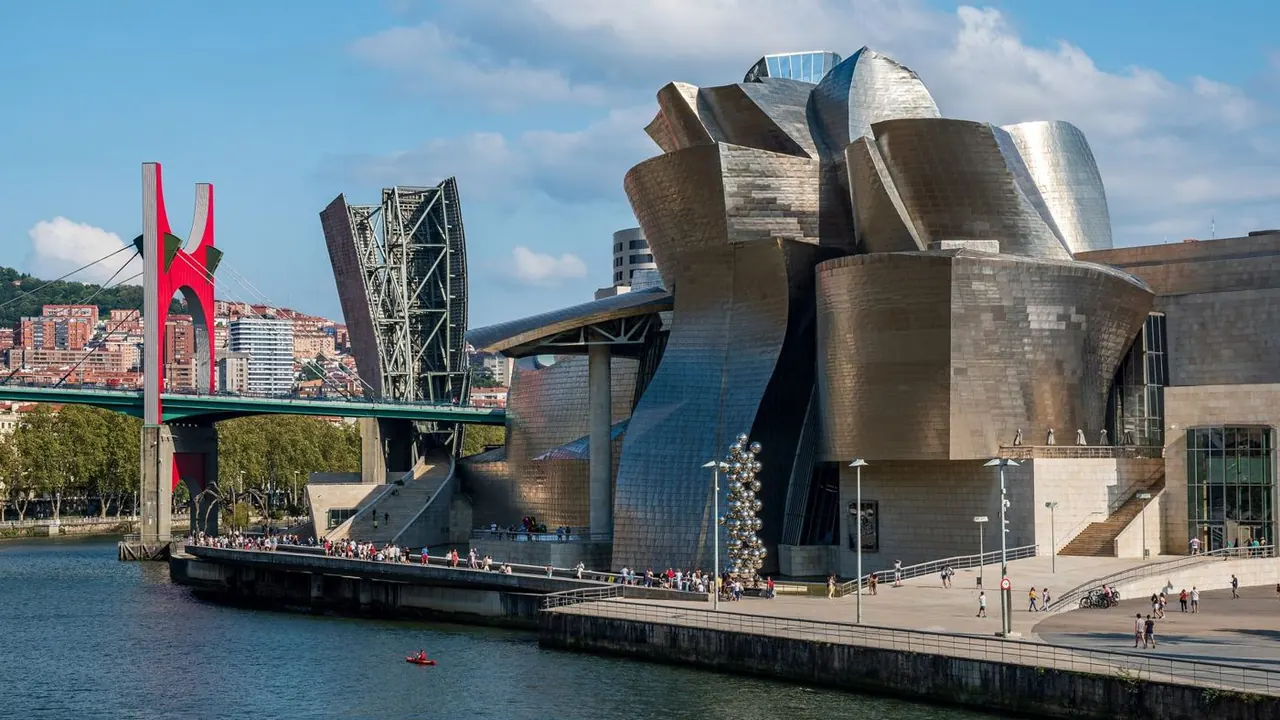
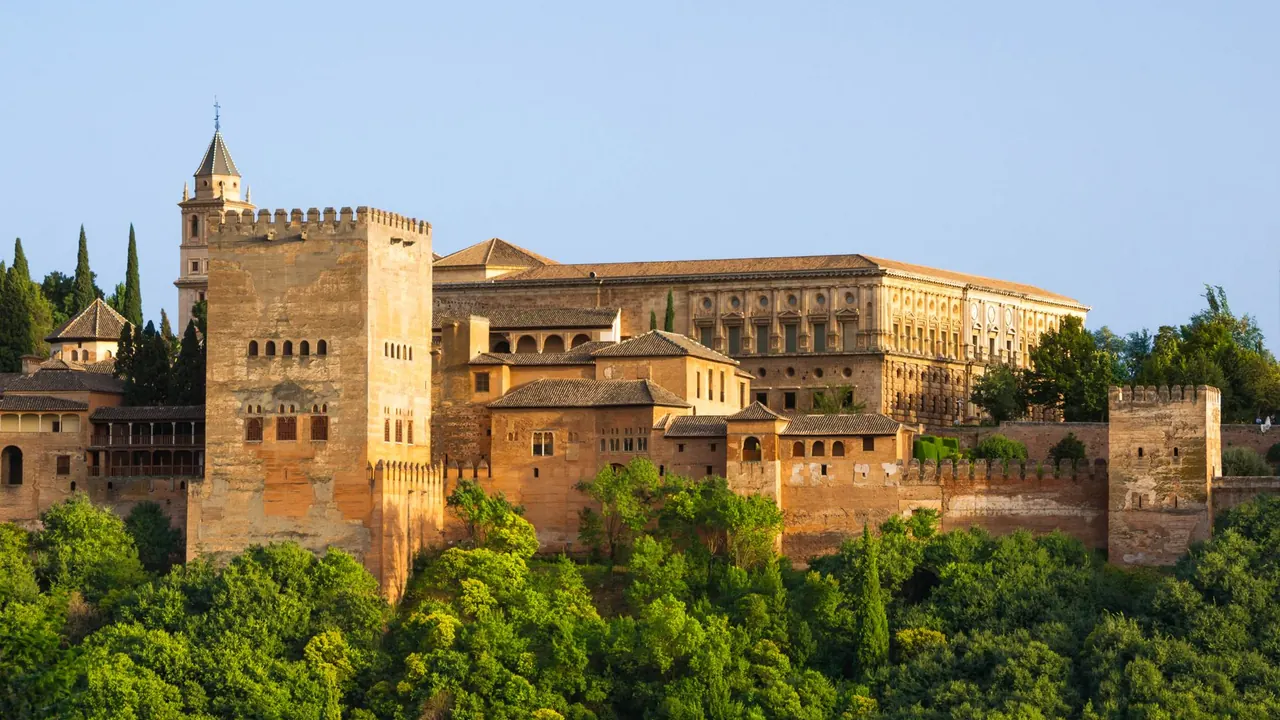
Photos: Bilbao by José Ligero Loarte, CC BY-SA 4.0, cropped; Granada by Jebulon, CC0.
Bilbao or Granada?
Our verdict in twelve categories, each scored against the same fixed benchmark cities, and the climate month by month, so you can choose for your trip.
Choose Bilbao for
- food and drink
- getting around
- beaches
Bilbao is the pick for travellers who plan their days around the table. Its pintxo bars in the Casco Viejo and the Ensanche, its asadores and its starred kitchens give it much the stronger food scene. A tram and metro make it easy to get around, and the Getxo and Sopelana beaches are a short ride away. It suits a mild summer trip, or anyone happy to accept some rain in return for green hills and coast.
Choose Granada for
- prices
- culture and sights
- wellness
Travellers who come for history and atmosphere will get more from Granada. The Alhambra, the Albaicín and the Royal Chapel make a far richer set of sights, and the city costs noticeably less, with a tapa arriving with every drink. Add flamenco in Sacromonte, hammams in the lower town and the Sierra Nevada on the skyline, and it suits a slower, sunnier trip in spring or autumn, as long as steep cobbled hills are no obstacle.
Scoreboard
Twelve categories on one fixed scale from 0 to 100. The shaded stretch is the gap between the two.
Your match
Pick a travel style or drag the sliders, and both match scores follow your weighting.
Too close to call, 1 point apart
Wins on food and drink and getting around with your weighting.
Wins on prices and culture and sights with your weighting.
What matters to you?
Category by category
What the scores mean for a trip.
Beaches & swimming
Neither city has a beach of its own, but Bilbao's coast is easier to reach. The metro runs out to Ereaga, Arrigunaga and Sopelana and on to the bay at Plentzia, so an afternoon on the sand fits easily around a city stay. The Bay of Biscay is cool outside late summer, though, and Sopelana's swell suits surfers more than small children.
From Granada, the Costa Tropical is about an hour away over the mountains, which makes the coves of pebble and dark sand at Salobreña, Almuñécar and La Herradura a full day out. The Mediterranean there is warmer and calmer, and good for snorkelling, but on most days the only swim in the city is in a pool.
Food & drink
In both cities you eat by moving from bar to bar, but Bilbao does it at a higher level. Its pintxo counters in the Casco Viejo and around Ledesma and Diputación are reliably good, and the Ribera market shows off the fish and produce the cooking depends on. Above the bars are the asadores for txuleta and several Michelin-starred kitchens.
Granada's tapas round is generous rather than refined: a free plate with each drink, Alpujarras ham, fried aubergine with cane honey and remojón salad, plus Moroccan teterías on Calderería Nueva. It is good fun and cheap, but has little to match Bilbao's top end.
Culture & sights
Bilbao's sights are modern and built around museums: Gehry's Guggenheim with Puppy outside, a strong Museo de Bellas Artes and the Basque Museum, set around a compact old town, with the Vizcaya Bridge a metro ride down the estuary. They make a very good two or three days.
Granada has far more to see. The Alhambra's Nasrid palaces, Alcazaba and Generalife are among the great monuments of Europe. Below them are the whitewashed lanes of the Albaicín, the cathedral and Royal Chapel, the Carthusian monastery and the cave houses of Sacromonte. In Granada the whole city is the sight, not just a few buildings in it.
Nightlife
The two are about even for nights out, but they feel different. In Bilbao the evening grows out of the pintxo crawl in the Casco Viejo and Plaza Nueva, with a younger crowd on Licenciado Poza and little club life outside the Great Week in August.
Granada's large student population supports more clubs running towards dawn around Pedro Antonio de Alarcón and Calle Elvira, though the city goes quiet in summer once the students leave.
Nature & outdoors
Both cities have serious outdoors within an hour, but of very different kinds. Bilbao's is green and coastal: Artxanda and the Pagasarri on the doorstep, beech forest on Gorbea, cliff paths, the Urdaibai reserve, Gaztelugatxe and the surf at Mundaka, all at the cost of frequent rain.
Granada's is higher and drier. The Sierra Nevada offers skiing above Pradollano in winter and walks towards Mulhacén in summer, and the Alpujarras add terraced valleys and old mule paths, though the valley floor is too hot for much in midsummer.
Day trips
Both cities make excellent bases; the difference is in where the trips lead. From Bilbao they are Basque and Cantabrian: San Sebastián's pintxo bars, Gernika, fishing ports such as Lekeitio, Vitoria-Gasteiz, and Rioja wine villages like Laguardia.
From Granada they cross Andalucía, to the Mezquita in Córdoba, Málaga by train, Antequera's dolmens and the Renaissance towns of Úbeda and Baeza, with the Alpujarras villages and Guadix closer in. Bilbao's outings lean towards food and wine, Granada's towards monuments.
Good for families
Neither city is built around children, but each works in its own way. Bilbao is flat along the river, which suits pushchairs and scooters. The Artxanda funicular, Doña Casilda Park and metro rides to the beaches at Getxo fill the days, though rainy days need a plan.
Granada has the better single attraction for children in the Parque de las Ciencias, but its steep, cobbled hills are hard work with small children, and summer afternoons are very hot.
Getting around
Bilbao is the easier city to get around. Its sights lie along a flat few kilometres of river, and a tram and Norman Foster's metro cover the length of the estuary out to the beaches and the Vizcaya Bridge, with regional trains and buses on to the coast and Gernika.
Granada's centre can be walked too, but the Alhambra and the Albaicín sit on steep cobbled hills, so the small red minibuses do much of the work. The light rail serves the suburbs rather than the sights.
Shopping & style
Neither city is a shopping destination, but Bilbao has a little more choice. The Gran Vía has the chains and a department store, the Casco Viejo keeps old family shops for berets, linen and espadrilles, and the best buys are txakoli, Idiazabal cheese and tinned anchovies.
Granada's interest lies in crafts: taracea inlay, Fajalauza ceramics, leather and guitars. The Alcaicería sells mostly souvenirs, and beyond it there is little apart from the chains on Calle Recogidas.
Affordability
Bilbao is on the expensive side for Spain. Central hotels cost more than in most Spanish cities and the asadores and starred restaurants charge accordingly, though a pintxo crawl and the metro are good value.
Granada is clearly cheaper. The free tapa with each drink turns an evening out into a cheap meal, and rooms in the lower town and the Realejo cost less. Only the terraces with Alhambra views, boutique stays in the Albaicín and flamenco shows aimed at visitors push the bill up.
Live music & performing arts
Bilbao's stage life is opera and orchestral music, while Granada's is flamenco. In Bilbao the ABAO opera season and the Bilbao Symphony Orchestra play the Euskalduna, a ship-shaped hall on the old shipyards. The Arriaga stages theatre and dance, mostly in Spanish, and BBK Live brings international bands to the slopes of Mount Cobetas each July.
In Granada an evening might be zambra danced at close quarters in the cave houses of Sacromonte, or a rougher night in a small peña in the Albaicín or the Realejo. Each summer the International Festival of Music and Dance puts concerts and ballet in the Alhambra's palaces and the Generalife's open-air theatre, a setting few cities can match. The legacy of Lorca and Falla runs through the rest of the year.
Wellness & relaxation
Bilbao has no bathing tradition, so relaxing there means a hotel spa or simply the slow rhythm of long lunches and riverside walks.
Granada offers much more. Its hammams in the lower Albaicín revive the Moorish baths, with warm and cold pools and massage, and the spa towns of Lanjarón and Alhama de Granada are within an hour. The shaded gardens of the carmenes and the tea houses keep the pace gentle.
When should you go?
Pick your month. The climate figures are measured averages, not a forecast.
Bilbao in July
Granada in July
Daytime high, °C
Rainfall in the month, mm
Temperature and rainfall are climate normals, averaged over the years shown. Bilbao: 1991-2020 normals, Bilbao / Sondica (4.1 km from centre). Granada: 1991-2020 normals, Granada / Caserío Hospicio (5 km from centre).
Bilbao has a mild, green climate. Summer days peak at around 26°C in August, comfortable for walking all day, and the sea reaches about 22°C, so July to September is the time for the beach, though grey and showery days still turn up. Rain builds from October and peaks in November at around 170mm. Winter is wet and cool and has little sunshine. May, June and September balance dry spells with pleasant warmth.
Granada works almost the other way round. July and August are hot and almost rainless, with highs around 35°C that make afternoons on the Alhambra hill hard going. Winters are cool but much drier and sunnier than in Bilbao. April, May, late September and October are the best months, warm enough for long days outdoors without the summer heat. In midsummer Bilbao is the more comfortable city. From late autumn to early spring, Granada has the brighter, drier days.
Which traveller are you?
For a food and nightlife trip, Bilbao is the better choice. The poteo through the Casco Viejo and Plaza Nueva brings a higher standard of cooking, from pintxos to grilled turbot and txuleta, and the evenings run straight from the bar counter into late weekend nights.
On a culture and arts trip, Granada wins clearly. The Alhambra's palaces and gardens, the Moorish lanes of the Albaicín and the Royal Chapel outweigh Bilbao's Guggenheim-centred visit, and flamenco in Sacromonte and the summer festival in the Generalife fill the evenings.
For a trip on a tight budget, Granada makes money go further. The free tapa with every drink keeps eating out cheap and rooms in the lower town cost less, while Bilbao is on the pricier side for Spain, especially near the Guggenheim.
Before you go
| Measure | Bilbao | Granada |
|---|---|---|
| Official language | Spanish | Spanish |
| Currency | Euro (EUR) | Euro (EUR) |
| Sockets | CF230 V, 50 Hz | CF230 V, 50 Hz |
| Driving side | Right | Right |
| Time zone | UTC+1, UTC+2 in summer | UTC+1, UTC+2 in summer |
| Emergency number | 112 | 112 |
| Elevation | 19 m | 693 m |
| Main airport | Bilbao Airport (BIO)5 km from centre73 non-stop destinations | F.G.L. Airport Granada-Jaén Airport (GRX)16 km from centre13 non-stop destinations |
| Public holidays this year | 13 days | 12 days |
By the numbers
| Measure | Bilbao | Granada |
|---|---|---|
| City population | 351,124 | 233,975 |
| People per km² | 8,440 | 2,659 |
| Museums within 10 km | 17 | 20 |
| UNESCO World Heritage sites within 50 km | 2 | 1 |
| Swim season, months above 21 °C | 1 month | - |
Where else could you go?
Every comparison below shares a destination with this one, so you can follow Bilbao or Granada somewhere new.