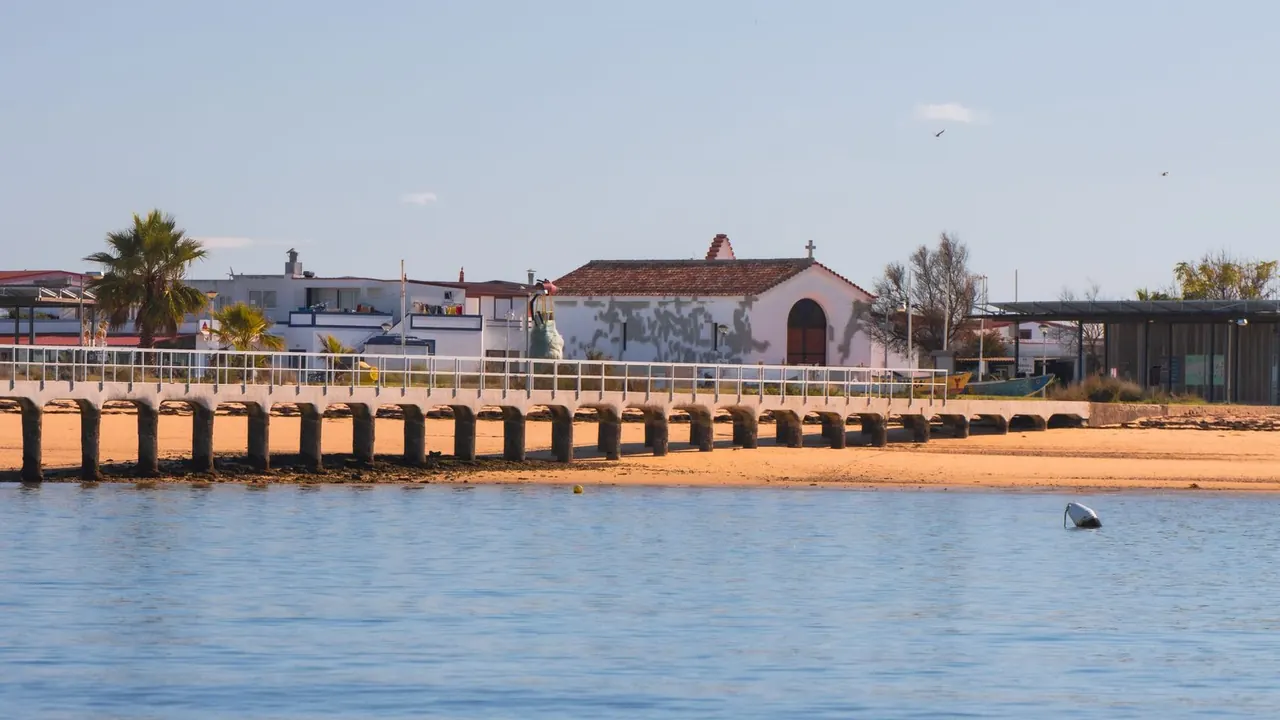
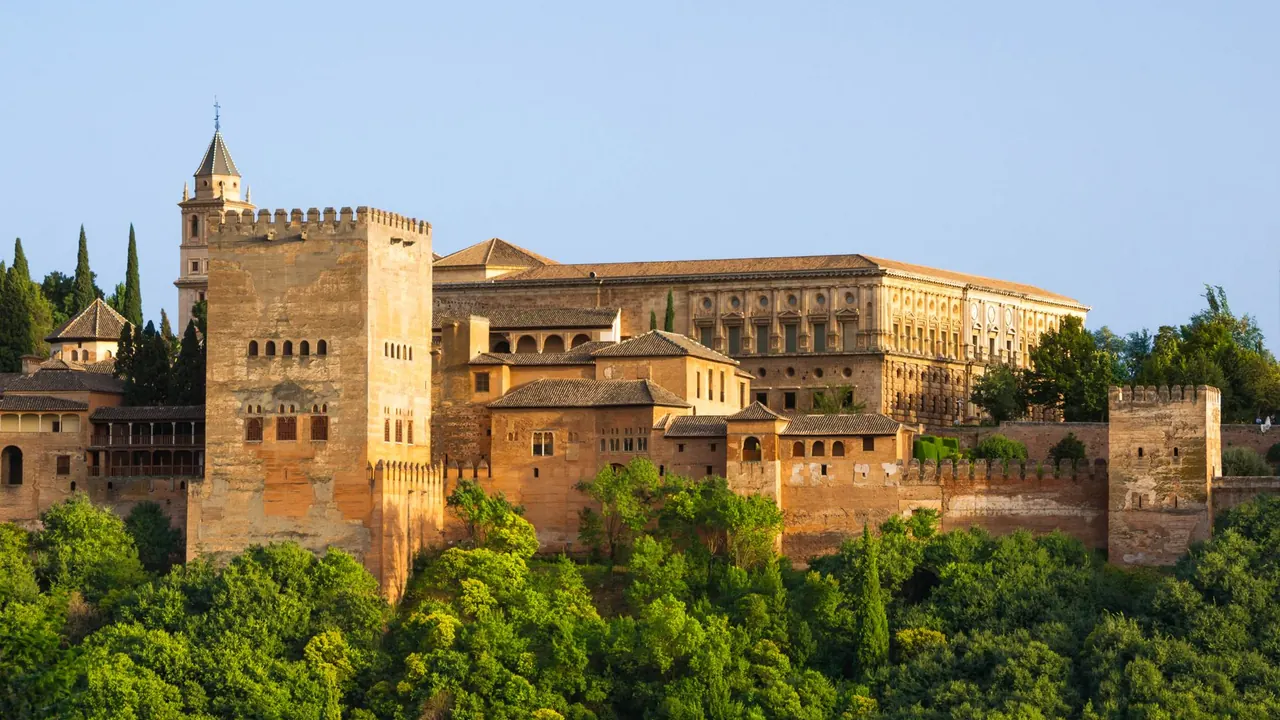
Photos: Faro by Efrem Efre, Pexels License; Granada by Jebulon, CC0.
Faro or Granada?
Our verdict in twelve categories, each scored against the same fixed benchmark cities, and the climate month by month, so you can choose for your trip.
Choose Faro for
- beaches
- families
Faro suits a slower trip built around the sea. Sandy barrier islands lie across the Ria Formosa lagoon, with boat rides out to them, birds in the salt pans and grilled fish in a small walled old town. It works well for families who want gentle water and an easy base, and for anyone happy to give up sights and late nights in return for sand.
Choose Granada for
- culture and sights
- live music and the arts
- nightlife
If you want the Alhambra, the Moorish lanes of the Albaicín and a city that eats and drinks late from bar to bar, choose Granada. It has far more to see and much more going on in the evenings. The Sierra Nevada is close by for hiking or skiing, and Córdoba is a train ride away. The price is the sea, which is an hour away over the mountains.
Scoreboard
Twelve categories on one fixed scale from 0 to 100. The shaded stretch is the gap between the two.
Your match
Pick a travel style or drag the sliders, and both match scores follow your weighting.
Wins on beaches and families with your weighting.
Wins on culture and sights and live music and the arts with your weighting.
What matters to you?
Category by category
What the scores mean for a trip.
Beaches & swimming
Faro has real beaches within easy reach. They are on the Ria Formosa's barrier islands: Praia de Faro is a short bus ride over the bridge, and ferries run to Culatra and Ilha Deserta, where the sand stretches for kilometres in front of the dunes. You still have to travel to them, but it is an easy daily trip rather than an expedition.
From Granada the sea is an hour south over the mountains, on the Costa Tropical. Its coves of pebble and dark sand around La Herradura are better for snorkelling than for lying on the sand all day, and in the city summer swimming means a pool.
Food & drink
Granada is the better place to eat out, mainly because of the tapas round. A small plate comes free with each drink as you move between bars around Calle Navas, the Realejo and the lower Albaicín, and the teterías of Calderería Nueva serve mint tea and Moorish sweets.
Faro's strengths are narrower: clams and oysters from the lagoon, grilled sardines and cataplana in simple grill houses, with Olhão's fish markets close by. Neither city has much to offer at the top end.
Culture & sights
This is the biggest difference between the two. Granada has the Alhambra, with its Nasrid palaces, the Alcazaba and the Generalife gardens. It also has the Moorish lanes of the Albaicín, the Royal Chapel where Ferdinand and Isabella are buried and the cave houses of Sacromonte, enough for several unhurried days.
Faro's walled Cidade Velha, its cathedral tower looking over the lagoon and the bone-lined chapel at the Igreja do Carmo are pleasant, but they fill a relaxed day at most.
Nightlife
Faro's evenings are small in scale: a handful of bar terraces and a few late clubs in the centre, which fill mainly at weekends and during university term. Summer is when the town is busiest after dark, with people drinking on the squares on warm nights. Anyone who wants the Algarve's big clubs has to drive along the coast to Albufeira.
Granada has far more going on, and it goes on much later, keeping Spanish hours with clubs open until close to dawn. The crowd is mostly local people and students rather than visitors, so the seasons run the opposite way from Faro: Granada is liveliest through the academic year and noticeably quieter in July and August. Expect an informal night of bars and student clubs, with few big venues and little in the way of serious cocktail bars.
Nature & outdoors
Granada has the more dramatic setting. The Sierra Nevada rises over the city, with skiing above Pradollano in winter, summer hikes towards Mulhacén and the terraced valleys and chestnut woods of the Alpujarras.
Faro's outdoors is flat and watery. You can kayak or paddleboard through the channels of the Ria Formosa, watch flamingos and spoonbills in the salt pans at Ludo or cycle easily along the lagoon. It is gentler, and best suited to birdwatchers and paddlers.
Day trips
Granada has the stronger list. Córdoba and its Mezquita are a fast train ride away, and within reach are the dolmens of Antequera, the Renaissance towns of Úbeda and Baeza, and the white villages of the Alpujarras.
Faro's outings are smaller but easy: Tavira and Olhão by train, the Roman villa at Milreu, the castle at Silves and Loulé's market hall. Seville, about two hours away by road, is a long day out from Faro but just too far for a return trip from Granada.
Good for families
Faro has the edge for children, largely because of the sea. The island beaches are sandy and gentle, the boat crossings feel like an adventure, and the old town is flat and quiet. The water parks and marine park near Albufeira need a car.
Granada has the Parque de las Ciencias, with its planetarium and butterfly house. But the steep cobbled hills of the Albaicín and the Alhambra are hard going with a pushchair, and its summer afternoons are hotter.
Getting around
Both centres are easy to walk, but Granada is easier for a visitor without a car. The lower town is flat, small red buses climb to the Alhambra, the Albaicín and Sacromonte, and trains and buses reach many of the day trips.
Faro's centre is small and flat, with buses to the airport and the beach and ferries from the quay. Beyond the slow coastal railway, though, touring the Algarve usually means hiring a car.
Shopping & style
Neither city is a shopping destination, and the difference is in the crafts. Granada's are Moorish in spirit: taracea inlaid woodwork, blue and green Fajalauza ceramics and handmade guitars, along with the souvenirs of the Alcaicería beside the cathedral. Faro's best buys are mostly things to eat or practical goods: cork, tinned fish, almonds, fig sweets and salt flower from the lagoon salt pans, sold along Rua de Santo António.
Affordability
Day to day the two cost about the same, but you save in different places. In Granada, the free tapa with each drink makes evenings out cheap, while prices rise around the Alhambra, in Albaicín stays with palace views and at flamenco shows. In Faro, fish lunches and coffee cost little, but rooms get dearer in July and August, and a hire car adds to the bill.
Live music & performing arts
Granada has a living tradition to hear. There is zambra flamenco in the Sacromonte caves and rawer evenings in the peñas of the Albaicín. Each summer the International Festival of Music and Dance stages concerts and ballet in the Alhambra's palaces and the Generalife's open-air theatre.
Faro's programme is modest: chamber music in the ornate Teatro Lethes, touring shows at the Teatro das Figuras, and only the odd fado evening, since fado is not native to the Algarve. On many nights there is nothing on.
Wellness & relaxation
Granada offers more to someone who wants to unwind. Hammams in the lower Albaicín revive the old Moorish baths, and the spa towns of Lanjarón and Alhama de Granada are within an hour.
Faro relies on its slow pace rather than on baths, with sunset walks by the lagoon and quiet winters. Its resort spas are out along the golf coast, and the springs of Caldas de Monchique are more than an hour's drive away.
When should you go?
Pick your month. The climate figures are measured averages, not a forecast.
Faro in July
Granada in July
Daytime high, °C
Rainfall in the month, mm
Temperature and rainfall are climate normals, averaged over the years shown. Faro: 1991-2020 normals, Faro / Aeroporto (2.8 km from centre). Granada: 1991-2020 normals, Granada / Caserío Hospicio (5 km from centre).
Faro has the milder and steadier climate of the two. From June to September the days are hot but rarely fierce, peaking around 29°C. The sea warms to about 22°C by August and stays fine for swimming into October. Rain arrives in autumn and is heaviest in December, at around 102mm, but winter stays mild and sunny enough for walks along the lagoon.
Granada goes to greater extremes. Its inland valley reaches 35°C in July, too hot for climbing the Alhambra hill in the afternoon, and winter days drop to about 13°C, with snow on the Sierra Nevada. April, May, late September and October are the best months for walking its streets. Both cities are almost dry from June to August and get long hours of summer sunshine.
Which traveller are you?
On a beach and sun trip, Faro is the clear choice. The sandy barrier islands of the Ria Formosa are a short bus or ferry ride away and the summer sea is calm and warm, while Granada's nearest coast is an hour over the mountains.
For a culture and arts trip, Granada wins easily. The Alhambra and the Albaicín can fill several days, and evenings bring zambra flamenco in Sacromonte and summer concerts in the palaces. Faro's walled old town takes a single relaxed day.
On a food and nightlife trip, Granada again comes out ahead. A free tapa with each drink turns the evening into a round of bars through the Realejo and lower Albaicín, with students out past midnight. In Faro, most nights end after a grilled fish dinner.
Before you go
| Measure | Faro | Granada |
|---|---|---|
| Official language | Portuguese | Spanish |
| Currency | Euro (EUR) | Euro (EUR) |
| Sockets | CF230 V, 50 Hz | CF230 V, 50 Hz |
| Driving side | Right | Right |
| Time zone | UTC, UTC+1 in summer | UTC+1, UTC+2 in summer |
| Emergency number | 112 | 112 |
| Elevation | 10 m | 693 m |
| Main airport | Faro - Gago Coutinho International Airport (FAO)3 km from centre91 non-stop destinations | F.G.L. Airport Granada-Jaén Airport (GRX)16 km from centre13 non-stop destinations |
| Public holidays this year | 14 days | 12 days |
By the numbers
| Measure | Faro | Granada |
|---|---|---|
| City population | 64,560 | 233,975 |
| People per km² | 319 | 2,659 |
| Museums within 10 km | 2 | 20 |
| UNESCO World Heritage sites within 50 km | 0 | 1 |
| Swim season, months above 21 °C | 3 months | - |
Where else could you go?
Every comparison below shares a destination with this one, so you can follow Faro or Granada somewhere new.