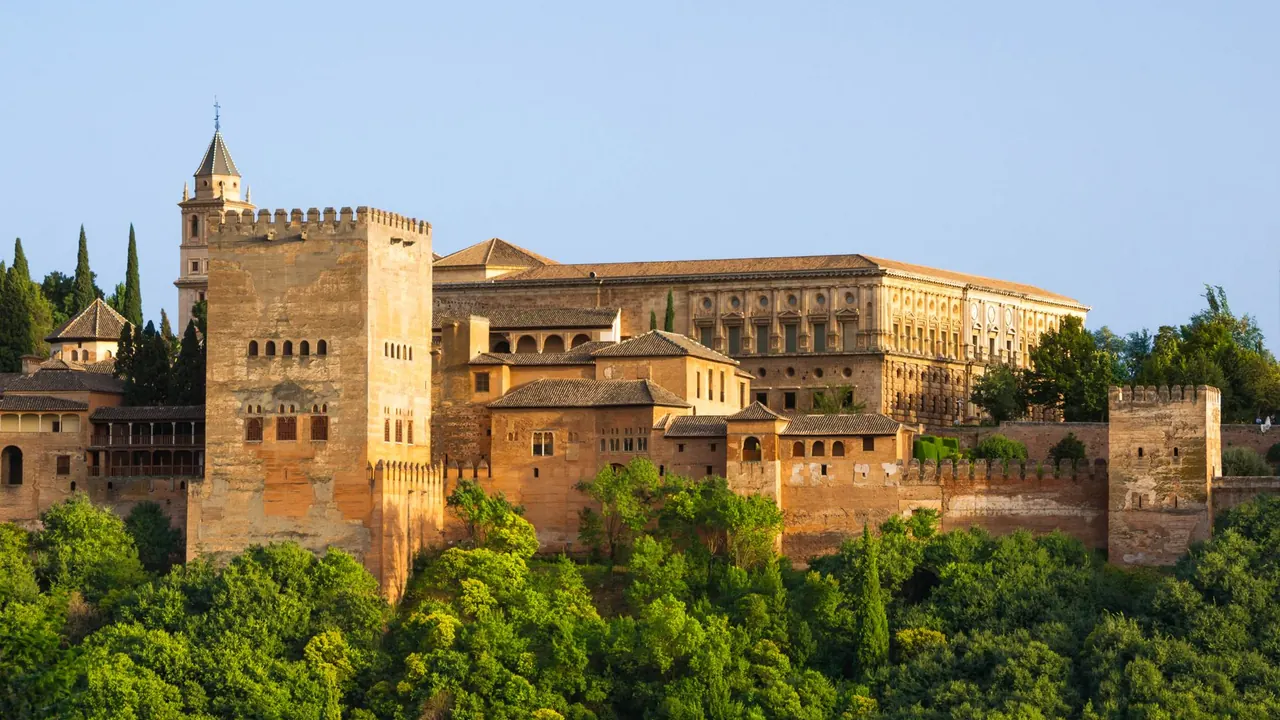
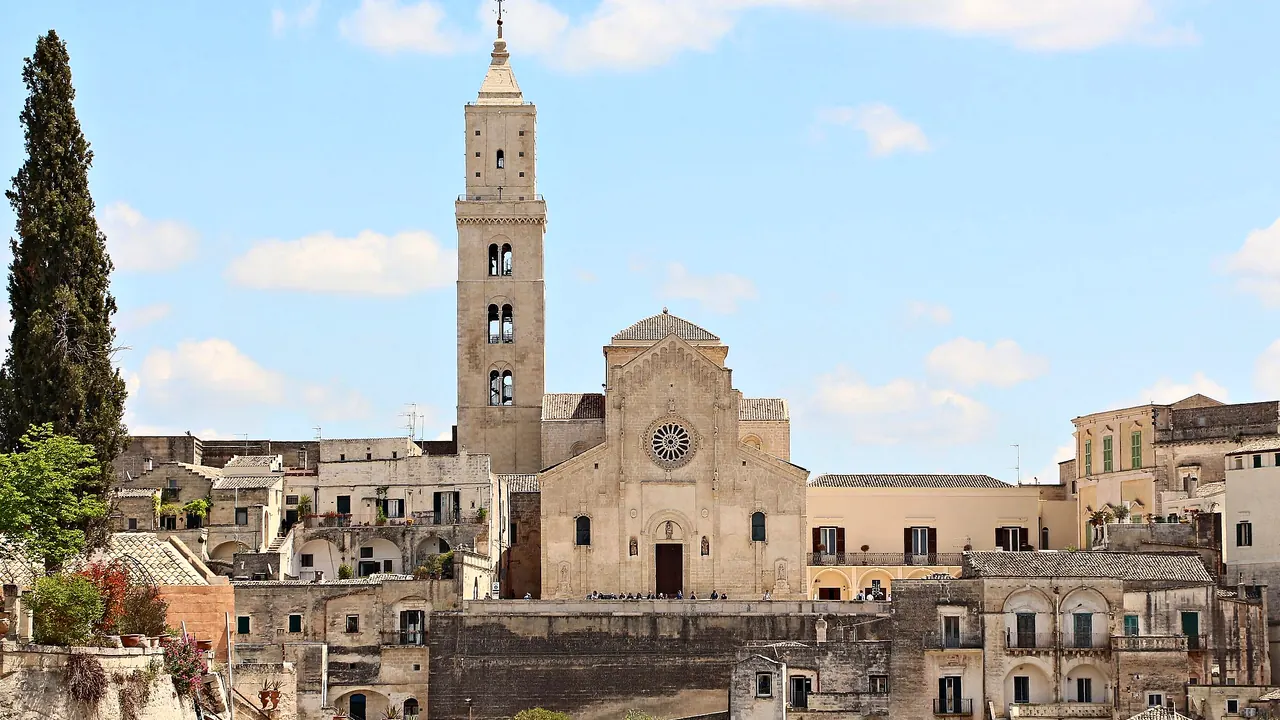
Photos: Granada by Jebulon, CC0; Matera by Bernard Gagnon, CC BY 4.0, cropped.
Granada or Matera?
Our verdict in twelve categories, each scored against the same fixed benchmark cities, and the climate month by month, so you can choose for your trip.
Choose Granada for
- live music and the arts
- nightlife
- getting around
Granada is the fuller trip. The Alhambra and the Albaicín give it a richer set of sights. The tapas round and a university crowd keep its evenings lively, and flamenco in the Sacromonte caves adds live performance that Matera can't match. The Sierra Nevada is close enough for a ski day in winter or a mountain hike in summer. It also works better with children and without a car, so choose it for a longer stay with plenty to do from morning to late at night.
Choose Matera for
- beaches
- day trips
Matera rewards a different traveller: a couple or a photographer who wants one extraordinary place and is happy with quiet evenings. The cave districts of the Sassi, lit up above the gorge at dusk, are unlike anything else in Europe. With a hire car, the town is also a good base for the trulli and white towns of Puglia. Go for two or three slow days, not for nightlife or a busy itinerary.
Scoreboard
Twelve categories on one fixed scale from 0 to 100. The shaded stretch is the gap between the two.
Your match
Pick a travel style or drag the sliders, and both match scores follow your weighting.
Wins on live music and the arts and nightlife with your weighting.
Wins on beaches and day trips with your weighting.
What matters to you?
Category by category
What the scores mean for a trip.
Beaches & swimming
Neither city is on the sea, and both make the beach a separate outing. What differs is the kind of beach. From Granada, the Costa Tropical is about an hour south over the mountains and can be reached by bus. The beaches there are coves of pebble and dark sand, and the clear water around La Herradura is good for snorkelling.
From Matera, the Ionian coast is closer in time, but you need a car. The beaches around Metaponto and Policoro are long and sandy, backed by pine woods, with shallow water that young children will find easier than Granada's pebbles.
Food & drink
Granada eats better and more sociably. The custom of a free plate with every drink turns an evening into a tapas round between bars, with Alpujarras ham, aubergine with cane honey and remojón along the way. The Moroccan tea houses of Calderería Nueva and the San Agustín market add variety.
Matera's cooking is honest Basilicata peasant food: crusty pane di Matera, crapiata, cavatelli and crackling peperoni cruschi. It is often served in cave rooms in the Sassi. It is satisfying, but there is no street food or market life, and both cities have little to offer beyond their own regional cooking.
Culture & sights
Granada has the greater set of sights. The Nasrid palaces and Generalife gardens of the Alhambra face the Moorish lanes of the Albaicín. Below them, the cathedral, the Royal Chapel and the Carthusian monastery are enough for several unhurried days.
Matera's heritage is smaller but stranger. Its sights are cave dwellings stacked up the Gravina gorge, rock churches such as Santa Maria de Idris with faded Byzantine frescoes, and the vast Palombaro Lungo cistern under the main square. Most visitors see it in a day or two, and it is best at dusk.
Nightlife
This is where the two cities differ most. Granada's university fills the bars of Calle Elvira and the clubs around Pedro Antonio de Alarcón well past midnight at weekends, though the city quietens in summer when the students leave.
Matera offers the passeggiata along Via del Corso, a long dinner and a drink on a terrace above the lit-up Sassi. There are no clubs, and outside summer the town goes quiet soon after dinner.
Nature & outdoors
Granada has real mountains on its doorstep. The Sierra Nevada's ski slopes are about 45 minutes away, summer trails lead towards mainland Spain's highest summit, and the Alpujarras have terraced valleys and chestnut woods.
Matera's best walk starts right in town: down into the Gravina gorge and up across the Murgia plateau, past abandoned rock churches and Neolithic sites, to the classic view back at the Sassi. The Lucanian Dolomites and the Pollino forests need a long drive.
Day trips
Both cities make excellent bases, but they work differently. From Granada, the big outings run by train, with Córdoba's Mezquita and Málaga each about an hour or so away. By bus or car you can also reach Antequera's dolmens and the Renaissance towns of Úbeda and Baeza.
From Matera, the rewards are a string of smaller places just over the border in Puglia: the trulli of Alberobello, the white towns of the Valle d'Itria, Castel del Monte and Polignano a Mare on its cliffs. Nearly all of them need a car.
Good for families
Granada is the easier city with children. The Parque de las Ciencias, with its planetarium and butterfly house, fills most of a day, the Alhambra's fountains keep younger ones interested, and a snow day in the Sierra Nevada is easy to add in winter.
Matera has nothing aimed at children. Older ones may love the caves and the underground cistern, but the Sassi's stone steps defeat a pushchair. Both old towns are steep, so the difference lies in what there is for children to do.
Getting around
Granada is easier to get around. Small red minibuses climb to the Alhambra, the Albaicín and Sacromonte, the lower town is flat, and trains link it to Córdoba and Málaga.
Matera is fine on foot once you are there, though the stairways into the Sassi are tiring. Beyond the town, it is off the national rail network, and the slow narrow-gauge line to Bari and the sparse buses make a hire car close to essential.
Shopping & style
Neither city is a shopping destination, but Granada gives you more to browse. The Alcaicería, the old Moorish silk market, sells mainly souvenirs, and the real finds are taracea inlaid woodwork, blue and green Fajalauza pottery, and guitars from the city's workshops. Calle Recogidas adds the Spanish chains and a department store.
Matera's shopping is small and aimed at visitors: painted cuccù whistles and tufa carvings, plus dried peppers and local pasta to take home.
Affordability
Granada goes a little further for the money. The free tapa with each drink keeps eating out cheap, local buses cost little, and rooms in the lower town and the Realejo are good value. The expense gathers around the Alhambra, in terrace restaurants with palace views and boutique stays in the Albaicín.
Matera's simple trattorias are cheaper than in the big Italian cities, and walking the Sassi and the Murgia costs nothing. Its cave hotels are the town's speciality and are priced to match. Staying in the upper town is the way to save.
Live music & performing arts
Granada has a real performing culture. Zambra flamenco is danced in the Sacromonte caves, and rawer evenings can be found in small peñas. The International Festival of Music and Dance, held every summer since 1952, stages concerts in the Alhambra's palaces and the Generalife's open-air theatre, and the city orchestra plays at the Auditorio Manuel de Falla through the year.
Matera has conservatory concerts, a summer jazz festival and the Festa della Bruna, its patron saint's feast, but little in between.
Wellness & relaxation
Granada has a bathing tradition to draw on. Hammams in the lower Albaicín recreate the Moorish sequence of warm, tepid and cold pools, and the spa towns of Lanjarón and Alhama de Granada are within an hour.
Matera has no baths of its own. You unwind in hotel spas, some with candlelit pools cut into the rock, or simply in the stillness of the Sassi early in the morning.
When should you go?
Pick your month. The climate figures are measured averages, not a forecast.
Granada in July
Matera in July
Daytime high, °C
Rainfall in the month, mm
Where the figures come from
Matera has no rain gauge within 25 km of the centre, so its rainfall comes from a gridded climate dataset read at the city rather than from a gauge further away.
Temperature and rainfall are climate normals, averaged over the years shown. Granada: 1991-2020 normals, Granada / Caserío Hospicio (5 km from centre). Matera: 2005-2025, 10 years observed (rainfall 1991-2020) normals, Matera / Martella (4.8 km from centre).
Granada is a city of hot, dry summers and mild, sunny winters. July reaches about 35°C with almost no rain. That is fine for a trip down to the coast, but it is draining on the Alhambra hill in the afternoon. April, May, late September and October are the best months for walking the streets. The rain comes mainly from October to April and is never heavy, and even midwinter has plenty of sunshine. Winter days are cool but clear, and that is also when snow covers the Sierra Nevada.
Matera is cooler and wetter through the year. Summer peaks a few degrees below Granada's, and on the bare plateau it still feels hot. Rain builds through the autumn to around 89mm in November, and winters are chilly and grey. The best months for the Sassi are May, June and September. For swimming, the Ionian Sea is warmest from July to September, reaching about 26°C in August.
Which traveller are you?
On a food and nightlife trip, pick Granada. Dinner can be eaten standing at the counters of three or four bars, a plate arriving with each drink, before you follow the students on to clubs that close near dawn. In Matera, the night ends at the dinner table.
On a family trip with children, Granada makes the days easier to plan. On a scorching afternoon there is an indoor fallback, there are fountains to run between, and children are welcome at late dinners. In Matera, much of the day means carrying them up stone steps.
For a short city break, Matera fits a long weekend neatly. Arrive in the afternoon, watch the lights come on across the Sassi, and spend the next day in the cave churches and on the gorge path. Granada has more to see than a weekend allows.
Before you go
| Measure | Granada | Matera |
|---|---|---|
| Official language | Spanish | Italian |
| Currency | Euro (EUR) | Euro (EUR) |
| Sockets | CF230 V, 50 Hz | CFL230 V, 50 Hz |
| Driving side | Right | Right |
| Time zone | UTC+1, UTC+2 in summer | UTC+1, UTC+2 in summer |
| Emergency number | 112 | 112 |
| Elevation | 693 m | 401 m |
| Main airport | F.G.L. Airport Granada-Jaén Airport (GRX)16 km from centre13 non-stop destinations | Bari Karol Wojtyła International Airport (BRI)54 km from centre104 non-stop destinations |
| Public holidays this year | 12 days | 13 days |
By the numbers
| Measure | Granada | Matera |
|---|---|---|
| City population | 233,975 | 59,685 |
| People per km² | 2,659 | 152 |
| Museums within 10 km | 20 | 8 |
| UNESCO World Heritage sites within 50 km | 1 | 1 |
| Swim season, months above 21 °C | - | 5 months |
Where else could you go?
Every comparison below shares a destination with this one, so you can follow Granada or Matera somewhere new.