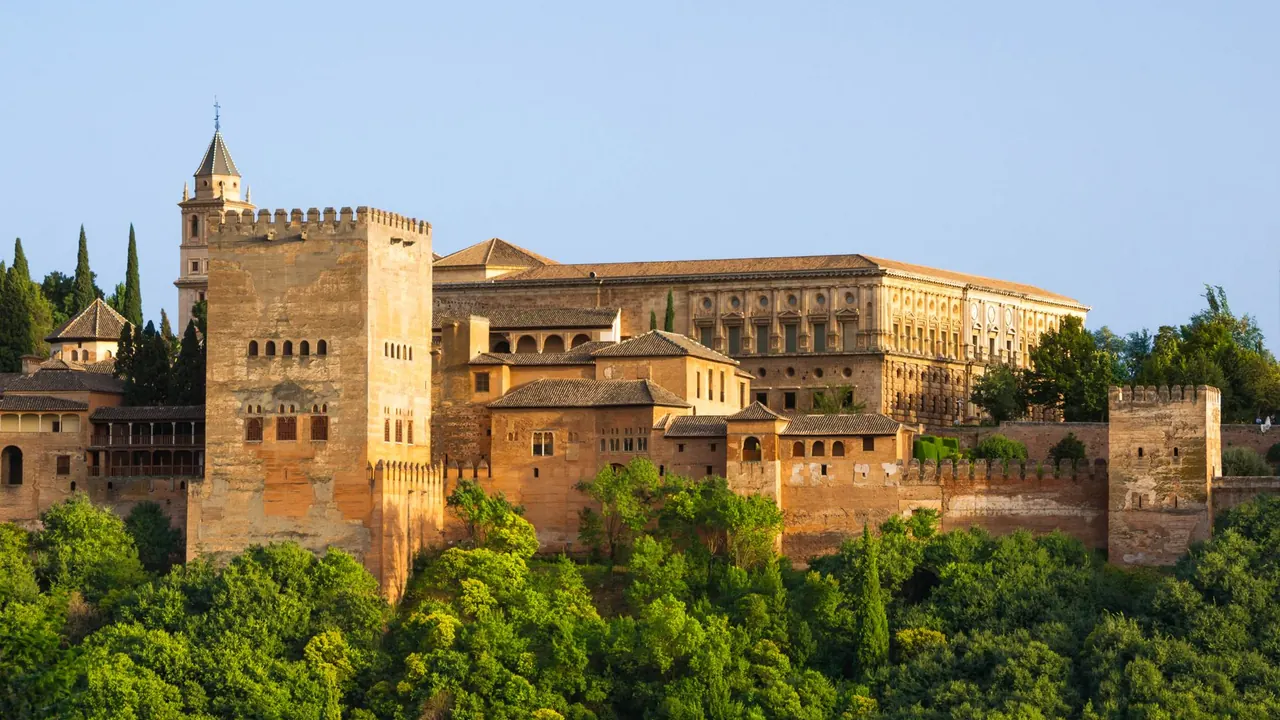
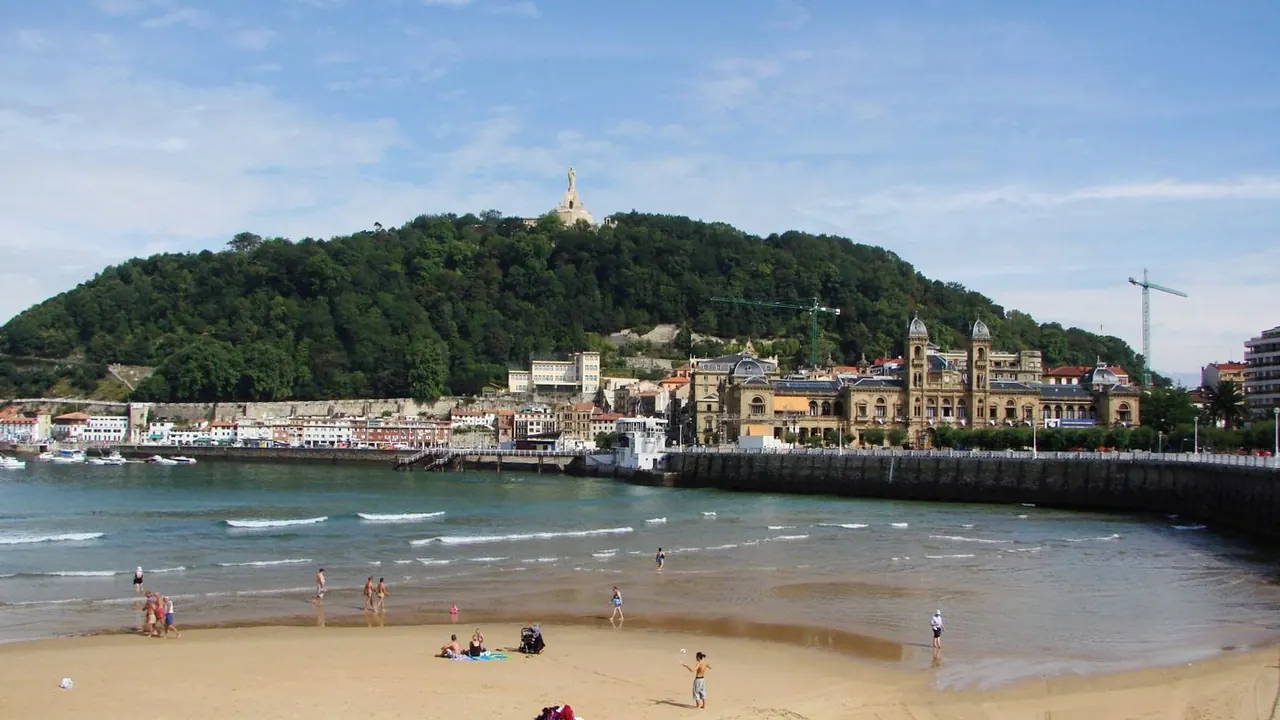
Photos: Granada by Jebulon, CC0; San Sebastian by Guérin Nicolas, CC BY-SA 3.0, cropped.
Granada or San Sebastian?
Our verdict in twelve categories, each scored against the same fixed benchmark cities, and the climate month by month, so you can choose for your trip.
Choose Granada for
- prices
- culture and sights
- nightlife
Granada is the pick for travellers who want history, landscape and a lively evening without paying much for any of it. The Alhambra and the Albaicín give it a depth of sights the Basque city cannot match, the Sierra Nevada brings real mountains and even skiing within easy reach, and the free tapa with every drink keeps the cost of eating low. It suits a few unhurried days of monuments and mountain air, ideally in spring or autumn.
Choose San Sebastian for
- beaches
- food and drink
- families
San Sebastian rewards those who travel to eat and to be by the sea. Its pintxo bars and celebrated restaurants make it one of Europe's great food cities, and La Concha puts a calm, sheltered town beach a few minutes' walk from the old town. It is flat, easy with children and well placed for the French Basque coast, but it is far more expensive to stay in and its weather is greener and wetter.
Scoreboard
Twelve categories on one fixed scale from 0 to 100. The shaded stretch is the gap between the two.
Your match
Pick a travel style or drag the sliders, and both match scores follow your weighting.
Too close to call, level with your weighting
Wins on prices and culture and sights with your weighting.
Wins on beaches and food and drink with your weighting.
What matters to you?
Category by category
What the scores mean for a trip.
Beaches & swimming
San Sebastian has the beach Granada lacks. La Concha is a bay of pale sand in the middle of town, sheltered by Santa Clara island, with Ondarreta beside it for families and Zurriola across the river for surfers. The catch is the Bay of Biscay: a short season and grey days even in summer.
Granada is inland, and the sea is a day out to Salobreña, Almuñécar or La Herradura on the Costa Tropical, an hour south over the mountains. Those coves of pebble and dark sand have warmer, clearer Mediterranean water that suits snorkelling, but in the city itself swimming means a pool.
Food & drink
Both cities eat in small plates on the move from bar to bar, but San Sebastian takes it much further. Its pintxo counters in the Parte Vieja and Gros, each bar with its own speciality, sit beneath a fine-dining tier of national renown, and the cider houses of Astigarraga add a winter and spring ritual.
Granada's appeal is generosity and character rather than refinement: the free tapa with each drink around Calle Navas and the Realejo, Alpujarras ham, aubergine with cane honey, and Moroccan tea houses on Calderería Nueva. It has little at the top end, though neither city offers much beyond its own regional cooking.
Culture & sights
Granada holds one of Europe's great monuments in the Alhambra, with its Nasrid palaces, Alcazaba and Generalife gardens, and the Albaicín facing it across the valley. Add the cathedral, the Royal Chapel with the tombs of Ferdinand and Isabella, the Carthusian monastery and the caves of Sacromonte, and there is far more to see.
San Sebastian is enjoyed as a townscape: the Belle Époque streets, the rebuilt grid of the Parte Vieja, Monte Urgull's castle and the Miramar Palace. The San Telmo Museum and Chillida's Peine del Viento are the highlights, and two or three days cover it.
Nightlife
Granada's large student population gives it the longer nights. Tapas lead on to Calle Elvira and Plaza Nueva, then to the pubs and clubs around Pedro Antonio de Alarcón that run towards dawn at weekends, though it quietens when the students leave in summer.
San Sebastian's best hours are early: the pintxo bars of the old town are full and sociable, but after that there are only a few late bars and clubs. Its season runs the other way, with summer and the fireworks of Semana Grande in August keeping the city out latest.
Nature & outdoors
Granada has the bigger landscape. The Sierra Nevada rises behind it, with ski slopes at Pradollano under an hour away in winter and summer routes towards Mulhacén, mainland Spain's highest summit, while the Alpujarras offer terraced valleys and old mule paths.
San Sebastian's outdoors is greener, gentler and tied to the sea. The cliff path from Monte Ulia to Pasaia and over Jaizkibel to Hondarribia is superb, Zurriola suits surfers and the bay suits paddleboarding, but the inland hills are for walking rather than high peaks, and the rain is a constant companion.
Day trips
From Granada the day trips go deeper into Andalusia's past: Córdoba's Mezquita by fast train, the dolmens at Antequera, the Renaissance towns of Úbeda and Baeza, and the white villages of the Alpujarras, where a car makes the mountain roads easier.
San Sebastian sits a short ride from France, so one stay can take in Biarritz and Bayonne as well as Bilbao's Guggenheim, walled Hondarribia and the Rioja Alavesa vineyards, most of them by bus or train. That gives a mix of two countries and wine country, where Granada's list follows a single history.
Good for families
San Sebastian is the easier choice with children. Calm town beaches, a flat car-free promenade, the aquarium's walk-through tunnel, the Eureka science museum and the funicular up to the little funfair on Monte Igueldo fill several days, weather permitting.
Granada has one strong draw in the Parque de las Ciencias and gardens at the Alhambra that hold young attention, but the steep cobbled lanes are hard work with a pushchair and summer afternoons are very hot. A snow day in the Sierra Nevada is its winter bonus.
Getting around
San Sebastian is flat and compact, with the old town, La Concha, Gros and Zurriola strung along the river and promenade, bike lanes on the waterfront, and Euskotren trains running to the French border and towards Bilbao.
Granada is also walkable, but its best parts sit on hills. The lower town is easy, while the Alhambra, Albaicín and Sacromonte mean steep cobbles or the small red minibuses, and its light rail serves the suburbs more than the sights.
Shopping & style
Neither city is a shopping destination, and what to take home differs. Granada's finds are crafts: taracea inlaid woodwork, blue and green Fajalauza ceramics, leather and guitars, with the Alcaicería for atmospheric browsing.
San Sebastian's best buys are edible, from Idiazabal cheese and txakoli to tinned anchovies from La Bretxa, plus espadrilles, berets and a few independent boutiques in the Centro and surf shops in Gros.
Affordability
Granada is far easier on the wallet. The free tapa makes eating out cheap, rooms in the lower town and the Realejo are reasonable, and the costs only climb around the Alhambra, in Albaicín boutique stays and view terraces.
San Sebastian is among the dearest places to stay in Spain, with scarce rooms that soar in summer and festival weeks, and its famous restaurants are a real splurge. Free beaches and walks help, and visiting outside the summer peak helps most.
Live music & performing arts
Granada has the stronger year-round live culture, rooted in flamenco: the zambra in the Sacromonte caves and rawer evenings in Albaicín peñas, with the legacy of Lorca and Falla behind it. Its summer festival puts music and ballet inside the Alhambra and the Generalife.
San Sebastian's reputation rests on two summer festivals, Jazzaldia in July and the Quincena Musical in August. Outside them the Kursaal and the Teatro Victoria Eugenia keep a quieter programme.
Wellness & relaxation
The two are about level, with different traditions. Granada recreates Moorish bathing in hammams in the lower Albaicín, and real spa towns at Lanjarón and Alhama de Granada lie within an hour.
San Sebastian's heritage is the seaside cure, kept alive in the thalassotherapy spa on the La Concha promenade with seawater pools facing the bay. Beyond that it relies on hotel spas and the calm of an evening stroll.
When should you go?
Pick your month. The climate figures are measured averages, not a forecast.
Granada in July
San Sebastian in July
Daytime high, °C
Rainfall in the month, mm
Where the figures come from
San Sebastian's station stands 252 m above the city centre, so the centre is likely a little warmer than the figures say.
Temperature and rainfall are climate normals, averaged over the years shown. Granada: 1991-2020 normals, Granada / Caserío Hospicio (5 km from centre). San Sebastian: 1991-2020 normals, San Sebastian / Igueldo (6.1 km from centre).
Granada is a place of dry, sunny summers and short, mild winters, with most of the year good for sightseeing. The best months for walking the streets are April, May, late September and October, when days are warm and bright. July and August are fierce, around 35°C with almost no rain, so the old town is for mornings and evenings and the shade of the mountains. Winter days are cool but often sunny, and November is the wettest month, though even then rain is modest.
San Sebastian has the reverse pattern: mild summers, never really hot, and rain in every month. July and August are the beach months, with highs in the low twenties and the sea at about 22°C. From October the rain builds, peaking at around 203mm in November, and winter is grey and damp. Granada has close to twice the summer sunshine, so for heat and blue sky the south wins, while anyone who wilts in the heat will find the Basque coast the more comfortable summer escape.
Which traveller are you?
On a culture and arts trip, Granada gives three or four days, with a morning set aside for the palaces, afternoons on the old Moorish hill and a flamenco evening after dark. San Sebastian's sights fit comfortably into a weekend.
On a trip on a tight budget, Granada allows a longer stay and nights out without counting every drink. Sleep below the Alhambra rather than facing it. In San Sebastian the bed alone takes most of the money, above all in summer.
For a beach and sun trip, San Sebastian wins if you go in July or August: stay near the bay and a swim fits between lunch and evening stroll. From Granada, every beach day means a drive over the mountains.
Before you go
| Measure | Granada | San Sebastian |
|---|---|---|
| Official language | Spanish | Spanish |
| Currency | Euro (EUR) | Euro (EUR) |
| Sockets | CF230 V, 50 Hz | CF230 V, 50 Hz |
| Driving side | Right | Right |
| Time zone | UTC+1, UTC+2 in summer | UTC+1, UTC+2 in summer |
| Emergency number | 112 | 112 |
| Elevation | 693 m | 6 m |
| Main airport | F.G.L. Airport Granada-Jaén Airport (GRX)16 km from centre13 non-stop destinations | San Sebastián Airport (EAS)16 km from centre11 non-stop destinations |
| Public holidays this year | 12 days | 13 days |
By the numbers
| Measure | Granada | San Sebastian |
|---|---|---|
| City population | 233,975 | 189,866 |
| People per km² | 2,659 | 3,118 |
| Museums within 10 km | 20 | 14 |
| UNESCO World Heritage sites within 50 km | 1 | 3 |
| Swim season, months above 21 °C | - | 2 months |
Where else could you go?
Every comparison below shares a destination with this one, so you can follow Granada or San Sebastian somewhere new.