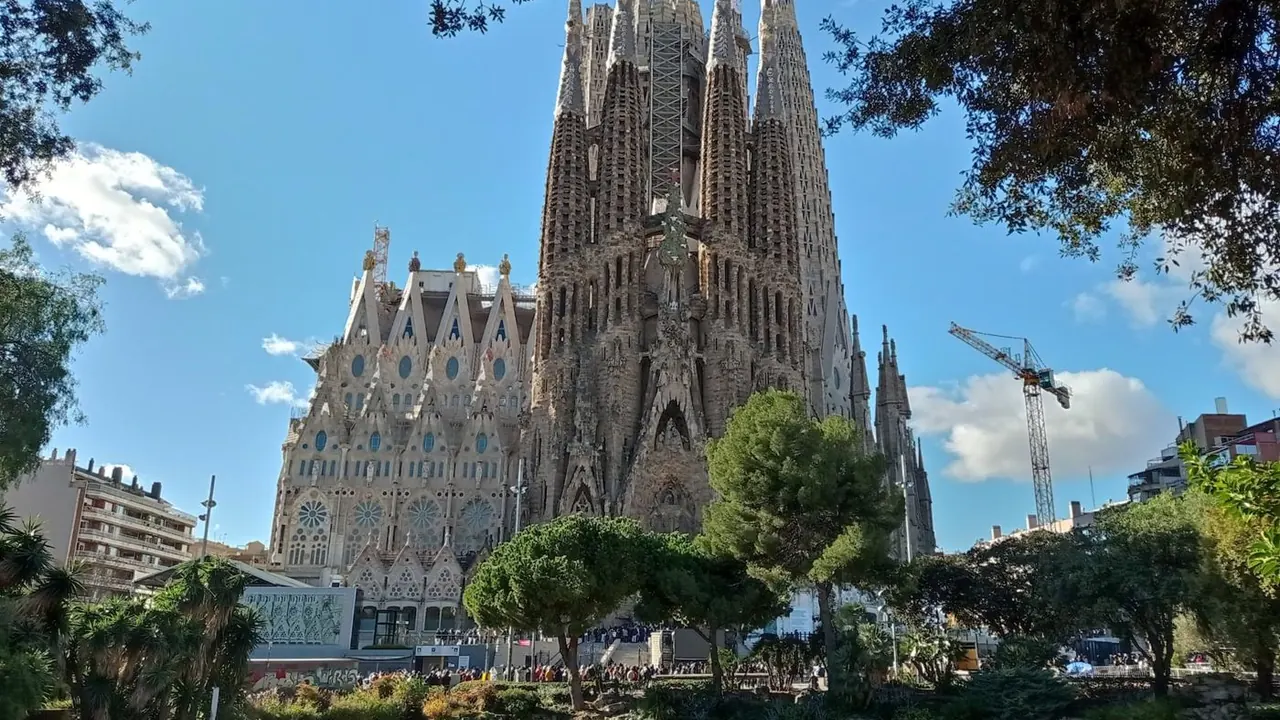
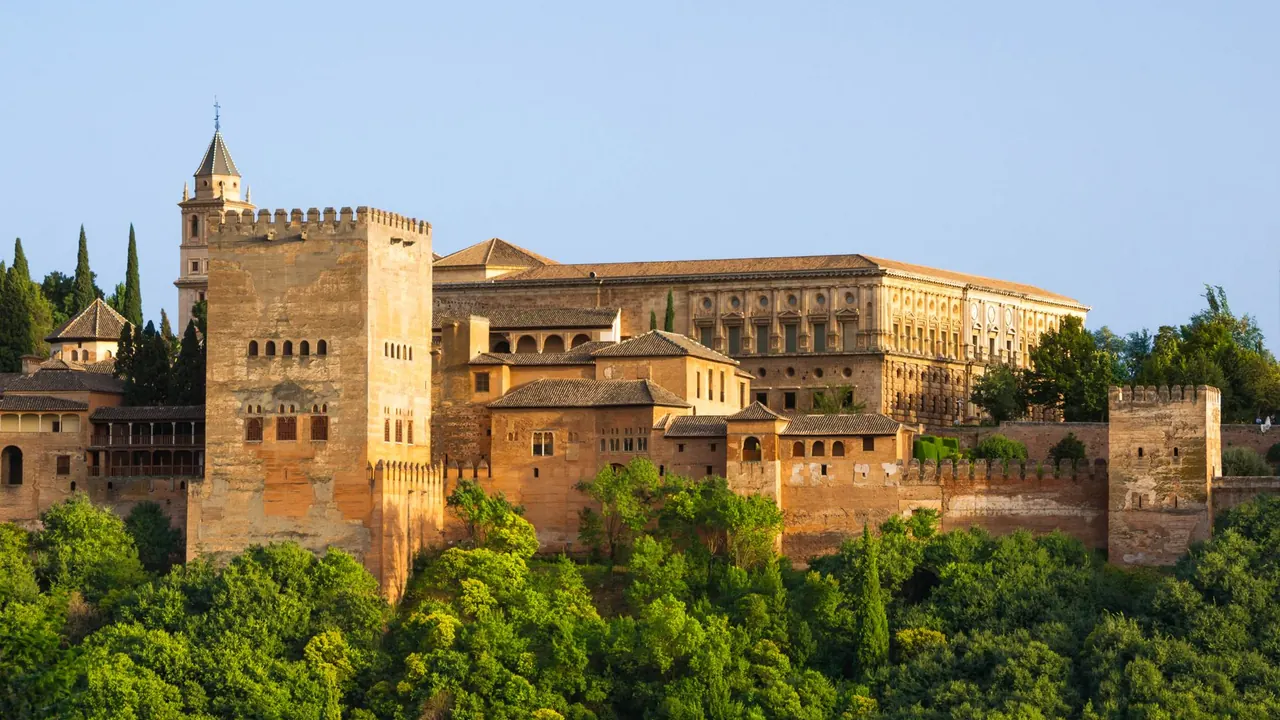
Photos: Barcelona by Canaan, CC BY-SA 4.0, cropped; Granada by Jebulon, CC0.
Barcelona or Granada?
Our verdict in twelve categories, each scored against the same fixed benchmark cities, and the climate month by month, so you can choose for your trip.
Choose Barcelona for
- beaches
- shopping
- nightlife
Barcelona suits the traveller who wants a big city with a beach attached. You get Gaudí's Modernista buildings and a Gothic old town, sandy beaches a metro ride from the centre, Catalan cooking from market counters to tasting menus, and nights that run until dawn. It also does best for shopping, for families and for anyone who would rather not plan transport. The cost is a higher bill, a crowded old town and little real rest.
Choose Granada for
- prices
- wellness
- nature and the outdoors
Granada is the better pick for a slower, cheaper trip built around one great monument and the mountains behind it. The Alhambra and the lanes of the Albaicín are the heart of it, the free tapa with each drink keeps evenings cheap, and the Sierra Nevada brings skiing in winter and high walking in summer. Hammams and nearby spa towns help you unwind. It has no beach of its own and a smaller, student-led night scene, so come for atmosphere and landscape rather than city buzz.
Scoreboard
Twelve categories on one fixed scale from 0 to 100. The shaded stretch is the gap between the two.
Your match
Pick a travel style or drag the sliders, and both match scores follow your weighting.
Wins on beaches and shopping with your weighting.
Wins on prices and wellness with your weighting.
What matters to you?
Category by category
What the scores mean for a trip.
Beaches & swimming
Barcelona has a real city beach. Sand runs from Barceloneta past Bogatell to Mar Bella, so a swim fits around sightseeing, though the man-made beaches are packed and watched by pickpockets in high summer. Cleaner, roomier sand is a short train ride away at Castelldefels, Sitges or along the Maresme.
Granada has no shore of its own. The Costa Tropical is about an hour south, with pebble and dark-sand coves at Salobreña, Almuñécar and La Herradura, where calm, clear water suits snorkelling. In the city a summer swim means a pool, and anyone who wants the sea every day should stay on the coast.
Food & drink
Barcelona has more range and more depth. Catalan cooking is a cuisine of its own, from suquet and botifarra to calçots in late winter, and it comes with vermouth late in the morning, seafood rice by the sea and cava. Markets such as Santa Caterina and Sant Antoni are as much a reason to eat as the restaurants, and the top end is among Europe's most serious.
Granada's pleasure is simpler and cheaper: the tapas round, moving between bars around Calle Navas and the Realejo, with a plate arriving with each drink. Alpujarras ham, fried aubergine with cane honey and the Moroccan tea houses of Calderería Nueva give it character. Expect little fine dining and few cuisines from beyond Spain and North Africa.
Culture & sights
Both cities have world-class architecture, but Barcelona has more of it, in two layers. Gaudí's Sagrada Família, Casa Batlló and Park Güell sit above a Gothic Quarter of Roman walls and Santa Maria del Mar, and the Picasso Museum, the MNAC and the Fundació Miró add strong collections. A week passes without running out of things to see.
Granada is more concentrated. The Alhambra's Nasrid palaces and Generalife gardens are arguably the single most moving sight in either city, and the Albaicín, the Royal Chapel, the Carthusian monastery and the Sacromonte caves fill out the picture. Museums matter less, and a few unhurried days cover the core.
Nightlife
Barcelona's nights are bigger and more varied. Cocktail cellars in the Born, scruffy Raval bars, outdoor drinking in Gràcia's squares, the Eixample's gay scene and serious electronic club nights all run until dawn. Summer is its peak, with open-air parties and weekends that barely end.
Granada's nights are cheerful and informal, carried by a large university: tapas first, then the bars of Calle Elvira and the student clubs around Pedro Antonio de Alarcón. There are few big clubs or polished cocktail bars, and the city goes quiet in summer, just when Barcelona is at its loudest.
Nature & outdoors
Granada has the bigger landscape. The Sierra Nevada rises straight behind the Alhambra, with ski slopes about 45 minutes away, summer routes towards Mulhacén, mainland Spain's highest peak, and the terraced Alpujarras valleys with chestnut woods and mule paths. When the valley bakes in July, you can still escape upwards.
Barcelona's outdoors is gentler and has the sea. The Collserola hills and the Carretera de les Aigües start at the city edge, and paddleboarding and windsurfing go out from Mar Bella. Montserrat's pinnacles and the Costa Brava's coastal paths make good longer outings, but summer heat rules out serious hiking.
Day trips
Both are well placed for day trips, but the trips differ. From Barcelona, fast trains reach Catalonia's medieval and Roman towns: Girona's walls and Jewish quarter, the Dalí Theatre-Museum at Figueres and Tarragona's amphitheatre. Add seaside Sitges, the cava cellars of the Penedès and PortAventura for children, and the choice is broad.
Granada's trips are about Andalusia's history and its mountains. Córdoba's Mezquita is the highlight, with the Renaissance towns of Úbeda and Baeza, the dolmens of Antequera and El Torcal, and the cave quarter of Guadix close behind. The white villages of the Alpujarras, such as Pampaneira and Capileira, make a mountain day out that has no equivalent near Barcelona.
Good for families
Barcelona keeps children busier. The aquarium, CosmoCaixa, the zoo and the funicular up to the Tibidabo funfair fill several days, and the beach and PortAventura are easy extras. The old town's narrow, crowded streets are the main nuisance.
Granada is calm and safe, and both cities welcome children at dinner late in the evening. Its main draw for children is the Parque de las Ciencias, with a planetarium and butterfly house, and the Alhambra's fountains keep younger ones interested. But the steep, cobbled hills are hard with a pushchair and summer afternoons are fierce, so spring, autumn or a snow day in winter work better.
Getting around
Barcelona is the easier city to cover. The flat centre walks well from the Gothic Quarter up through the Eixample to Gràcia, and the metro, trams and local trains share one ticket system, with bike lanes for longer stretches. Only the hilltops, such as Park Güell, Montjuïc and Tibidabo, need a funicular, a cable car or a steep climb.
Granada is smaller and mostly walkable, but it is steeper. The little red minibuses up to the Alhambra, the Albaicín and Sacromonte save tired legs on cobbles, while the light rail serves the suburbs rather than the sights. A car is no use in the restricted centre but handy for the Alpujarras.
Shopping & style
Barcelona is a real shopping city. The Passeig de Gràcia combines fashion houses with Modernista façades, the Born and Gràcia have independent designers and craft shops, and the Raval does vintage and records. Espadrilles, conserves and cava make good things to take home, and Els Encants is a proper flea market.
Granada's shopping is mostly about craft. Taracea inlaid woodwork, blue and green Fajalauza ceramics and guitars from local workshops are the finds worth having. The Alcaicería looks the part but sells mostly souvenirs, and beyond the chains on Calle Recogidas there is little design or luxury.
Affordability
Granada is noticeably kinder to the wallet. The free tapa with each drink makes eating out cheap, and rooms in the lower town and the Realejo cost less than in the big coastal cities. Prices rise only around the Alhambra, in Albaicín boutique stays, view terraces and flamenco shows for visitors.
Barcelona is the dearer city, and it costs more than most of Spain. Hotels are the main expense, and the tourist tax and Gaudí entry fees push up a sightseeing trip. Set lunches, market counters and transport passes keep the rest under control.
Live music & performing arts
Barcelona has the fuller calendar. The Liceu stages a full season of opera and ballet, the Palau de la Música makes any concert feel like an occasion, and Sónar, Primavera Sound and the Grec festival on Montjuïc fill the early summer. Jazz cellars, rock rooms and serious theatre fill the rest of the year, though plays are mostly in Catalan or Spanish.
Granada's stage is smaller but has deep local roots. Zambra flamenco in the Sacromonte caves and rawer nights in Albaicín peñas carry a tradition tied to Lorca and Falla. Its International Festival of Music and Dance, held in the Alhambra's palaces since 1952, has a setting that nothing in Barcelona can match.
Wellness & relaxation
Granada is the more restful choice. Its hammams in the lower Albaicín revive the Moorish ritual of warm, tepid and cold pools under vaulted ceilings, and the spa towns of Lanjarón and Alhama de Granada, with waters used since Roman times, are within an hour. Siesta hours, tea houses and garden carmenes set a slow pace.
Barcelona has a few Arab-style bath houses and hotel spas, but its old town is noisy and its nights are late. To rest there, you look for calm on the Collserola paths or a Gràcia terrace, or stay in a seaside town instead.
When should you go?
Pick your month. The climate figures are measured averages, not a forecast.
Barcelona in July
Granada in July
Daytime high, °C
Rainfall in the month, mm
Temperature and rainfall are climate normals, averaged over the years shown. Barcelona: 1991-2020 normals, Barcelona / Aeropuerto (14.4 km from centre). Granada: 1991-2020 normals, Granada / Caserío Hospicio (5 km from centre).
Barcelona's beach season runs from June to late September, and the sea stays at about 24°C from July into September, so swimming is easy well after the summer peak. July and August are hot but rarely harsh by the coast. For walking the city, spring and early autumn are the best times, with mild, bright days. Rain gathers in September and October, at around 83mm a month, so a late-season trip can bring a few stormy days. Winters are mild but greyer, with the shortest days of sun.
Granada swings much further. July and August reach about 35°C with almost no rain, too hot for climbing to the Alhambra in the afternoon, so sightseeing moves to early morning and evening, or up into the mountains. From late spring to the end of summer it is also sunnier than Barcelona. May, early June and late September are the sweet spots, warm, dry and bright, and October stays mild, though the rain returns. Winter days are about as cool as Barcelona's, with snow on the Sierra Nevada, and November is the wettest month at around 51mm.
Which traveller are you?
On a beach and sun trip, Barcelona is the clear choice. Its sandy beaches start a short walk from the Born, and Sitges or the Maresme are close by train. From Granada the sea is an hour away over the mountains, a separate outing.
For a trip on a tight budget, Granada goes further. A free tapa with every drink turns an evening of bar-hopping into dinner, and rooms in the lower town cost less. In Barcelona, hotels, tourist tax and Gaudí entry fees add up quickly.
For skiers, Granada has something Barcelona cannot match: the Sierra Nevada slopes above Pradollano are about 45 minutes by road. You can ski in the morning and see the Alhambra lit up at night. Barcelona's mountains are for walking, with the Pyrenees too far for an easy day.
Before you go
| Measure | Barcelona | Granada |
|---|---|---|
| Official language | Spanish | Spanish |
| Currency | Euro (EUR) | Euro (EUR) |
| Sockets | CF230 V, 50 Hz | CF230 V, 50 Hz |
| Driving side | Right | Right |
| Time zone | UTC+1, UTC+2 in summer | UTC+1, UTC+2 in summer |
| Emergency number | 112 | 112 |
| Elevation | 9 m | 693 m |
| Main airport | Josep Tarradellas Barcelona-El Prat Airport (BCN)13 km from centre235 non-stop destinations | F.G.L. Airport Granada-Jaén Airport (GRX)16 km from centre13 non-stop destinations |
| Public holidays this year | 14 days | 12 days |
By the numbers
| Measure | Barcelona | Granada |
|---|---|---|
| City population | 1,731,649 | 233,975 |
| People per km² | 17,094 | 2,659 |
| Museums within 10 km | 95 | 20 |
| UNESCO World Heritage sites within 50 km | 3 | 1 |
| Swim season, months above 21 °C | 3 months | - |
Where else could you go?
Every comparison below shares a destination with this one, so you can follow Barcelona or Granada somewhere new.