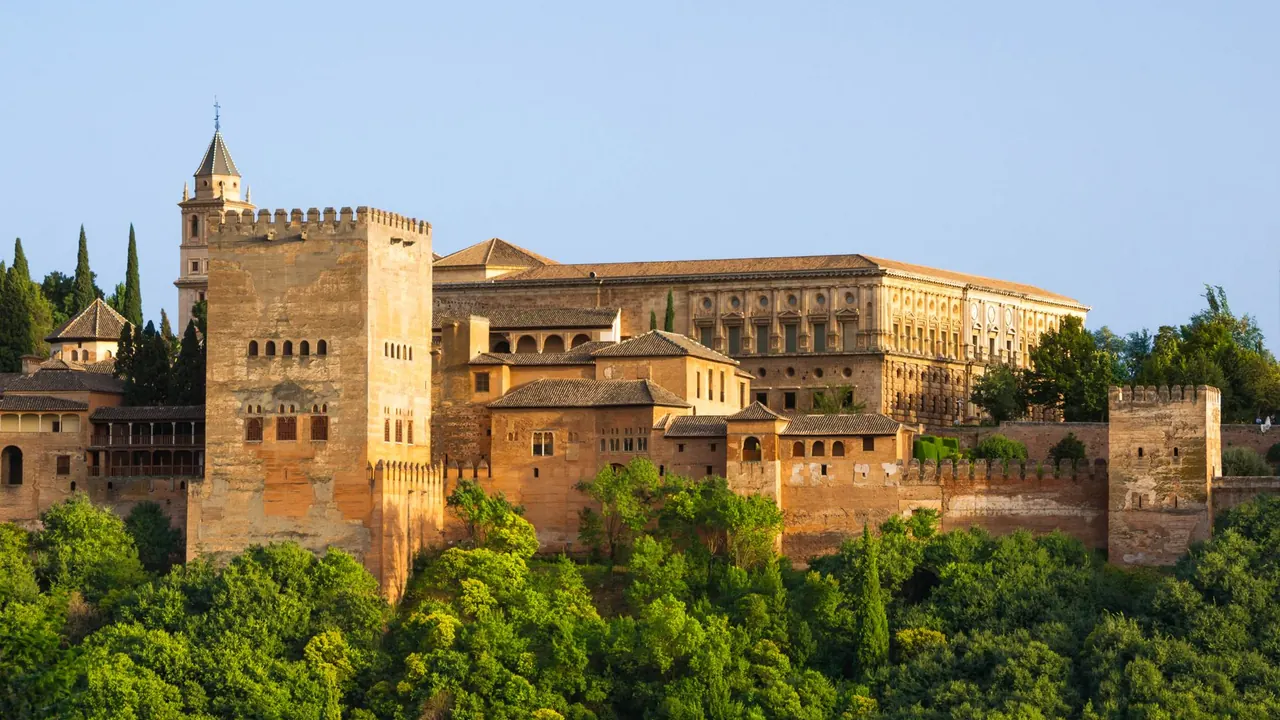
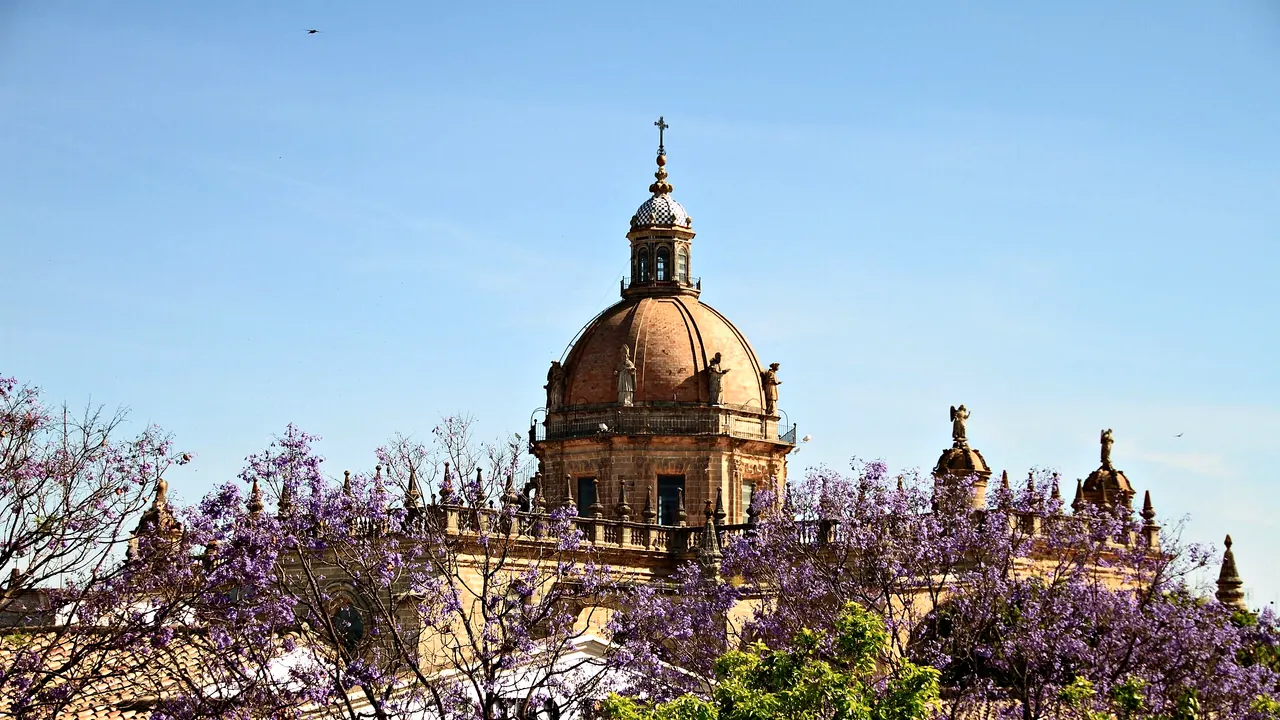
Photos: Granada by Jebulon, CC0; Jerez de la Frontera by PEPE GADEIRAS, CC BY 4.0, cropped.
Granada or Jerez de la Frontera?
Our verdict in twelve categories, each scored against the same fixed benchmark cities, and the climate month by month, so you can choose for your trip.
Choose Granada for
- culture and sights
- nightlife
- nature and the outdoors
Granada suits the traveller who wants one of Europe's great monuments and mountains on the doorstep. The Alhambra and the Albaicín give it far more to see than Jerez. The Sierra Nevada adds skiing in winter and high walking in summer, and a large student population keeps the bars busy late. Choose it for a sightseeing trip with a stronger nightlife and more spa options. The sea is an hour away over the mountains, so the beach is an outing rather than part of the trip.
Choose Jerez de la Frontera for
- beaches
- live music and the arts
- day trips
Jerez is the better pick for a slower trip built around sherry, flamenco and the Atlantic coast. The bodegas, the tabancos and the peñas of Santiago and San Miguel are the heart of a stay. Wide sandy beaches are within half an hour, and the city makes a natural base for Seville, Cádiz and the white towns. It has fewer major sights and a quieter night scene, but you get more coast and more sherry country.
Scoreboard
Twelve categories on one fixed scale from 0 to 100. The shaded stretch is the gap between the two.
Your match
Pick a travel style or drag the sliders, and both match scores follow your weighting.
Wins on culture and sights and nightlife with your weighting.
Wins on beaches and live music and the arts with your weighting.
What matters to you?
Category by category
What the scores mean for a trip.
Beaches & swimming
Neither city has a beach of its own, but Jerez is much better placed. Valdelagrana, El Puerto and the beaches of Cádiz are a short train ride away, and the wide sands at Sanlúcar, Chipiona and La Barrosa are within an hour. These are long, open Atlantic beaches of fine sand, though the Levante wind can make some days rough.
From Granada, the Costa Tropical means about an hour by road over the mountains, to pebble and dark-sand coves at Salobreña, Almuñécar and La Herradura. The calm, clear Mediterranean there suits snorkelling more than lazy beach days. In town, you are left with the hotel pool.
Food & drink
The two are level, but each is built on a different habit. Granada's custom of a free tapa with every drink turns an evening around Calle Navas or the Realejo into a cheap, roaming meal of Alpujarras ham and aubergine with cane honey. The Moroccan tea houses of Calderería Nueva add a Moorish note that Jerez lacks.
In Jerez, sherry leads. You taste fino and oloroso in the bodegas or from the barrel in old tabancos, and the cooking adds sherry-braised oxtail and fried fish from the nearby coast. Neither city has much range at the top end.
Culture & sights
This is where the two differ most. Granada has the Alhambra, with its Nasrid palaces, the Alcazaba and the Generalife gardens. Across the valley is the Albaicín, and below lie the cathedral, the Royal Chapel with the tombs of Ferdinand and Isabella, and the Cartuja's sacristy. That fills a few full days.
Jerez has a smaller Almohad Alcázar, Gothic-Mudéjar parish churches and the old flamenco quarters. Its unique attractions are the sherry bodegas and the dancing horses of the Royal Andalusian School of Equestrian Art. These are rewarding, but the list is modest beside Granada's.
Nightlife
Granada's university gives it the livelier nights. The evening moves from tapas to the bars of Calle Elvira and Plaza Nueva, and on to student pubs and clubs around Pedro Antonio de Alarcón that run towards dawn at weekends. It does quieten in summer when the students leave.
Jerez is sociable but provincial, with late tabancos and copa bars around Plaza del Arenal and Calle Larga and only a few clubs. The exception is the week of the Feria del Caballo in May, when the casetas dance until morning.
Nature & outdoors
Granada has the mountains right above it. The Sierra Nevada's ski slopes are about 45 minutes away, summer trails climb towards Mulhacén, and the terraced Alpujarras valleys and the Dílar valley give plenty of walking close to town.
Jerez's own setting is gentle, rolling vineyards of white albariza soil that are nice to cycle through. For more, you head out to the gorges of Grazalema, the cork forests of Los Alcornocales or the edge of Doñana for birds. The kitesurfing coast towards Tarifa is something Granada cannot match.
Day trips
Both make strong bases, but they open onto different parts of Andalusia. From Granada, the fast train reaches Córdoba's Mezquita, and Antequera's dolmens, the Renaissance towns of Úbeda and Baeza and the Alpujarras villages are all close. Seville, though, is just too far.
Jerez has Seville about an hour away by train and Cádiz half an hour away. It also has the sherry towns of El Puerto and Sanlúcar nearby, and the white towns of Arcos, Vejer and Ronda by car. That gives it the edge if Seville is on your list.
Good for families
The two are level for families, with different strengths. Granada has the one big attraction built for children, the hands-on Parque de las Ciencias with its planetarium, and a snow day in the Sierra Nevada is easy in winter. Its steep, cobbled hills are hard work with a pushchair, though.
Jerez is flat and easy to walk around. It offers a good zoo and botanical garden and the dancing-horse show, and its gently sloping sandy beaches make summer far easier with small children.
Getting around
Both centres are walkable, and Granada is a little easier to manage without a car. Its small red minibuses climb to the Alhambra, the Albaicín and Sacromonte, which takes care of the steepest part of any visit. You only need a car for the mountain villages.
Jerez is flat and compact, and its central station has direct trains to Seville, Cádiz and the airport. But the white towns, Grazalema and many of the better beaches really call for a hired car, because the buses are slow and infrequent.
Shopping & style
Neither is a shopping destination, though Granada offers a bit more. The Alcaicería beside the cathedral is fun to browse, and its real local crafts are taracea inlaid woodwork and Fajalauza ceramics. Calle Recogidas also has a department store and the main chains.
Jerez's Calle Larga is smaller and more provincial. The things worth taking home are sherry and brandy from the bodegas, leather riding boots and saddlery from its horse trade, and flamenco dresses and shawls.
Affordability
Both are inexpensive by Spanish standards. Granada's free tapa with every drink makes eating out especially cheap, but stays and terrace meals near the Alhambra cost noticeably more. In Jerez, tabancos and bodega tours cost little, and rooms only get dear and scarce during the Feria, the flamenco festival and the motorcycle race weekends at the nearby circuit.
Live music & performing arts
Flamenco leads in both, and Jerez has the slight edge as one of its birthplaces. Its own bulería rhythm lives on in the peñas of Santiago and San Miguel and in close-up sessions in the tabancos. The late-winter festival at the Teatro Villamarta brings major dancers to town.
Granada's flamenco is the zambra, danced in the caves of Sacromonte. The city has a broader classical life, with the summer festival of music and dance staged in the Alhambra's palaces and the Generalife, and the Lorca and Falla heritage.
Wellness & relaxation
Granada is the better choice for a restful trip. Several hammams in the lower Albaicín recreate the Moorish sequence of warm, tepid and cold pools, and the spa towns of Lanjarón and Alhama de Granada are within an hour.
Jerez has one Arab-style bathhouse and a few hotel spas. What it offers instead is a slow pace of shaded patios, long lunches and evening strolls.
When should you go?
Pick your month. The climate figures are measured averages, not a forecast.
Granada in July
Jerez de la Frontera in July
Daytime high, °C
Rainfall in the month, mm
Temperature and rainfall are climate normals, averaged over the years shown. Granada: 1991-2020 normals, Granada / Caserío Hospicio (5 km from centre). Jerez de la Frontera: 1991-2020 normals, Jerez De La Fronteraaeropuerto (9.9 km from centre).
Granada is at its best in spring and autumn, from April to May and again from late September through October. The days are then warm enough to enjoy the Albaicín's hills without the summer glare. July and August are hard going on foot, with highs around 35°C, and almost no rain falls from June to August. Winter is cool, at about 13°C in January, and the rain is moderate, much the same as in spring and autumn. It is also the season for snow in the Sierra Nevada.
Jerez is a few degrees milder in winter, with January days near 17°C, so sightseeing in the cold months is more comfortable than in Granada. Its summer heat is much the same. The real difference is rain. From October to December Jerez gets around 85mm a month, nearly twice as much as Granada, so late autumn is its least reliable time, and spring and late September suit it better. The beach season on the nearby Atlantic coast runs from June to September, and the sea is warmest in July and August at about 23°C.
Which traveller are you?
On a beach and sun trip, Jerez is the clear choice. Long golden Atlantic beaches at El Puerto, Cádiz and Sanlúcar are a short train ride or drive away. From Granada, the coves of the Costa Tropical mean an hour over the mountains.
For a culture and arts trip, Granada wins easily. The Alhambra, the Albaicín, the Royal Chapel and the Carthusian monastery go far beyond Jerez's Alcázar and bodegas. Its summer music festival in the palaces adds to the sightseeing.
On an outdoors trip, Granada has the bigger landscapes. The Sierra Nevada offers skiing in winter and hikes towards Mulhacén in summer, and the Alpujarras valleys are close by. Jerez's vineyards are gentle, and Grazalema is over an hour away.
Before you go
| Measure | Granada | Jerez de la Frontera |
|---|---|---|
| Official language | Spanish | Spanish |
| Currency | Euro (EUR) | Euro (EUR) |
| Sockets | CF230 V, 50 Hz | CF230 V, 50 Hz |
| Driving side | Right | Right |
| Time zone | UTC+1, UTC+2 in summer | UTC+1, UTC+2 in summer |
| Emergency number | 112 | 112 |
| Elevation | 693 m | 58 m |
| Main airport | F.G.L. Airport Granada-Jaén Airport (GRX)16 km from centre14 non-stop destinations | Jerez Airport (XRY)10 km from centre26 non-stop destinations |
| Public holidays this year | 12 days | 12 days |
By the numbers
| Measure | Granada | Jerez de la Frontera |
|---|---|---|
| City population | 233,975 | 213,634 |
| People per km² | 2,659 | 180 |
| Museums within 10 km | 20 | 14 |
| UNESCO World Heritage sites within 50 km | 1 | 1 |
| Swim season, months above 21 °C | - | 3 months |
Where else could you go?
Every comparison below shares a destination with this one, so you can follow Granada or Jerez de la Frontera somewhere new.
- Cadizvs Jerez de la Frontera
- Sevillevs Jerez de la Frontera
- Rondavs Jerez de la Frontera
- Malagavs Granada
- Marbellavs Jerez de la Frontera
- Cordobavs Granada