Spain
Cordoba
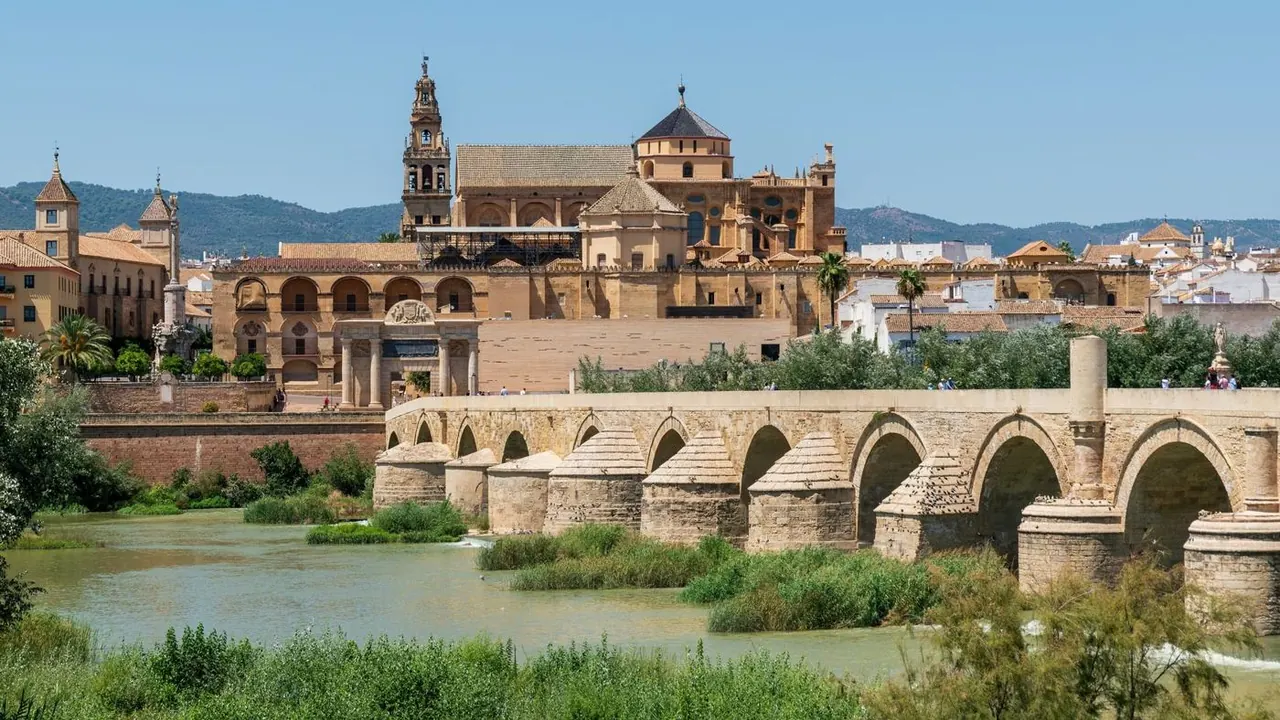
The Mezquita and the Roman bridge
- Day trips86
- Culture & sights81
- Getting around68
Photo: Jose María Ligero Loarte, CC BY-SA 4.0, cropped
Match
52
Every category weighted equally
- Beach & sun47
- Culture & arts60
- Food & nightlife54
- Family trip52
- Outdoors55
- Relax & unwind49
- Shopping & style53
- On a budget53
Cordoba in twelve categories
Our verdict on each, scored 0 to 100 against the same fixed benchmark cities, so a score means the same thing on every page.
Beaches & swimming. Scores 14 out of 100.
Food & drink. Scores 62 out of 100.
Culture & sights. Scores 81 out of 100.
Nightlife. Scores 40 out of 100.
Nature & outdoors. Scores 45 out of 100.
Day trips. Scores 86 out of 100.
Good for families. Scores 40 out of 100.
Getting around. Scores 68 out of 100.
Shopping & style. Scores 38 out of 100.
Affordability. Scores 63 out of 100.
Live music & performing arts. Scores 47 out of 100.
Wellness & relaxation. Scores 40 out of 100.
Cordoba category by category
Beaches & swimming
14Cordoba sits deep in the Guadalquivir valley, well inland, and beach life plays no part in a stay here. The nearest sea is the Costa del Sol around Malaga, roughly 160km away. The fast train makes it a possible day out, with about an hour on the train and then a walk or short bus ride to the city beaches, but it is a long day for a swim.
In the heat of summer, locals cool off in hotel and municipal pools, or drive to reservoirs in the Sierra Morena. If swimming in the sea matters to you, plan a few nights on the coast.
Food & drink
62Cordoba eats in tabernas, many of them old houses with tiled patios and casks behind the bar. The dishes to look for are local ones: salmorejo, the thick cold tomato cream that started here, flamenquin, a fried roll of ham and pork, rabo de toro, and aubergine fried crisp and served with cane honey. To drink, there are the dry, sherry-like wines of Montilla-Moriles from just south of the city, poured chilled in small glasses.
Tapas rounds in the Santa Marina, San Agustin and Corredera areas give you more than the restaurants around the Mezquita do. The Mercado Victoria market hall adds grazing counters. Fine dining and international food are limited, and lunch is the main meal, eaten late.
Culture & sights
81The Mezquita-Cathedral is the reason most people come. It is a great mosque of the Umayyad caliphate, with a forest of red-and-white striped arches, and a Renaissance cathedral was built into the middle of it after the Christian conquest. Around it lies the Juderia, a maze of whitewashed lanes with a small medieval synagogue. The Roman bridge crosses the Guadalquivir to the Calahorra tower, and the Alcazar de los Reyes Cristianos has terraced gardens and water channels.
Further out, the Palacio de Viana has a dozen patios, and the San Basilio quarter is known for its flower-filled courtyards. The ruined caliphal palace city of Medina Azahara lies just west of the city. The whole set is compact and can be seen properly in two or three days.
Nightlife
40In Cordoba, going out is about late tapas and drinks rather than clubbing. In the warm months people don't head out until after ten, and the terraces and squares around the Corredera, Las Tendillas and the riverside fill up. University students keep a group of bars busy at weekends. In summer, open-air terrace bars and seasonal clubs stay open late, and during the May fair the whole city stays up, with music and dancing in the casetas until dawn.
At other times there isn't much on offer. There are a few late bars and small clubs, and the streets near the Mezquita go quiet early. The city suits people who like a long evening at the table, moving between squares. If dancing until morning is the point of your trip, you will find the club scene small, and outside summer and the fair there is little to plan a night around.
Nature & outdoors
45The low, wooded hills of the Sierra Morena rise just north of the city, with holm oak and cork forest, walking trails and viewpoints back over the Guadalquivir plain. To the west, the Sierra de Hornachuelos natural park has quiet tracks and large birds of prey. To the south, the limestone Sierras Subbeticas offer the most interesting hiking, among olive groves, gorges and karst, about an hour's drive away.
The climate decides everything. Spring and autumn are lovely for walking and cycling, but summer regularly passes 40°C, and then outdoor activity is only possible at dawn. There are no high mountains or coast within easy reach, and a car is needed for most of it.
Day trips
86Cordoba is one of the best bases in Andalusia. Seville is under an hour away by high-speed train, Granada and the Alhambra about an hour and a half, and Malaga around an hour. That puts the region's three other great cities within easy reach without changing hotel.
With a car you can go further. The Renaissance towns of Ubeda and Baeza lie to the east, and Antequera has its prehistoric dolmens. Closer to home are the hilltop towns of Carmona and Ecija, baroque Priego de Cordoba in the Subbetica, and the Almodovar del Rio castle above the river. The wine towns of Montilla and Moriles, with their bodegas, are an easy half-day.
Good for families
40Spanish culture welcomes children everywhere, and Cordoba's centre is small, safe and mostly free of traffic, so children can roam the lanes and squares. Children usually enjoy the Alcazar gardens with their fountains, the horse show at the royal stables and the castle at Almodovar del Rio. The city also has a modest zoo.
Apart from those, the sights are made for adults. The summer heat is hard on small children, so spring or autumn work far better. Family days tend to follow the local rhythm: sights in the morning, a long rest indoors, and squares full of children playing late into the evening.
Getting around
68Almost everything a visitor comes for lies in a compact historic centre. It is easy to explore on foot, and the Mezquita, Juderia, Alcazar, Roman bridge and the patio quarters are all within a short walk of one another. The railway station, with its fast trains to Seville, Madrid and Malaga, is a walk or short taxi ride from the old town.
The lanes are narrow and cobbled, often too tight for cars, which makes walking pleasant but cases harder to wheel. Local buses are simple but basic. Medina Azahara needs a tourist bus or taxi, and the countryside and smaller towns need a car. In summer, plan walking around the shady hours.
Shopping & style
38Cordoba's shopping is about traditional crafts, not fashion. The city has a long tradition of silver filigree jewellery, and the embossed and painted leather called guadameci and cordobán is still made here. Ceramics and guitars from local workshops are also worth a look. The best pieces come from workshops and specialist shops, not the souvenir stalls that line the Juderia lanes.
For everyday and high-street shopping, the streets around Cruz Conde and Las Tendillas have Spanish chains and a big department store. Luxury and designer boutiques are scarce, so this is a place for a few well-chosen crafts, not a shopping trip.
Affordability
63Cordoba is a fairly cheap place to visit by Western European standards. In the tabernas a small glass of Montilla and a tapa cost very little, and lunch menus are generous. Hotel rooms are good value for most of the year, and the compact centre means you rarely pay for transport.
The exceptions are predictable. Rooms in the streets around the Mezquita cost more. In May, during the patio festival, the crosses and the fair, prices climb steeply and the best places book out. The main monuments charge admission, but the Mezquita offers a free early-morning visit on some days.
Live music & performing arts
47Flamenco is the live art to seek out. There are small tablaos in the old town, and less polished evenings in local peñas, the clubs where aficionados gather to hear singers and guitarists. The city has a long and serious flamenco history, and its guitar festival is a fixture of the calendar. The Noche Blanca del Flamenco is one summer night when free performances run until dawn in squares across the city.
Outside flamenco, the nineteenth-century Gran Teatro hosts the city orchestra, theatre and touring productions, and the summer brings open-air concerts. It is a respectable programme for a city of this size, but Cordoba is not a place to plan a trip around opera or theatre.
Wellness & relaxation
40There is no real bathing culture today, though the caliphal city was once full of baths. The ruins of the Caliphal Baths near the Alcazar are a reminder of them. You can still get a version of that experience in a few Arab-style bath houses in the old town, with warm and hot pools under horseshoe arches and massages, plus the spas of the better hotels.
The pace does much of the rest. Outside the busy hours at the Mezquita, the old quarters are quiet. Courtyards with fountains and orange trees invite a long pause, and the midday shutdown in summer forces a rest. Here, relaxing means a slow afternoon in the shade, not a spa vacation.
When should you go?
Pick a month to see what it is like. The climate figures are measured averages, not a forecast.
Cordoba in July
Daytime high, °C
Rainfall in the month, mm
The whole year
Shaded against this city’s own year: the deepest cell is its best month for that figure and the palest its weakest.
Temperature and rainfall are climate normals, averaged over the years shown. Cordoba: 1991-2020 normals, Cordoba / Aeropuerto (7.6 km from centre).
Before you go
| Measure | Cordoba |
|---|---|
| Official language | Spanish |
| Currency | Euro (EUR) |
| Sockets | CF230 V, 50 Hz |
| Driving side | Right |
| Time zone | UTC+1, UTC+2 in summer |
| Emergency number | 112 |
| Elevation | 120 m |
| Main airport | Córdoba Airport (ODB)8 km from centre3 non-stop destinations |
| Public holidays this year | 12 days |
By the numbers
| Measure | Cordoba |
|---|---|
| City population | 323,262 |
| People per km² | 258 |
| Museums within 10 km | 16 |
| UNESCO World Heritage sites within 50 km | 2 |
Compare Cordoba with
Every comparison with a written verdict behind it.