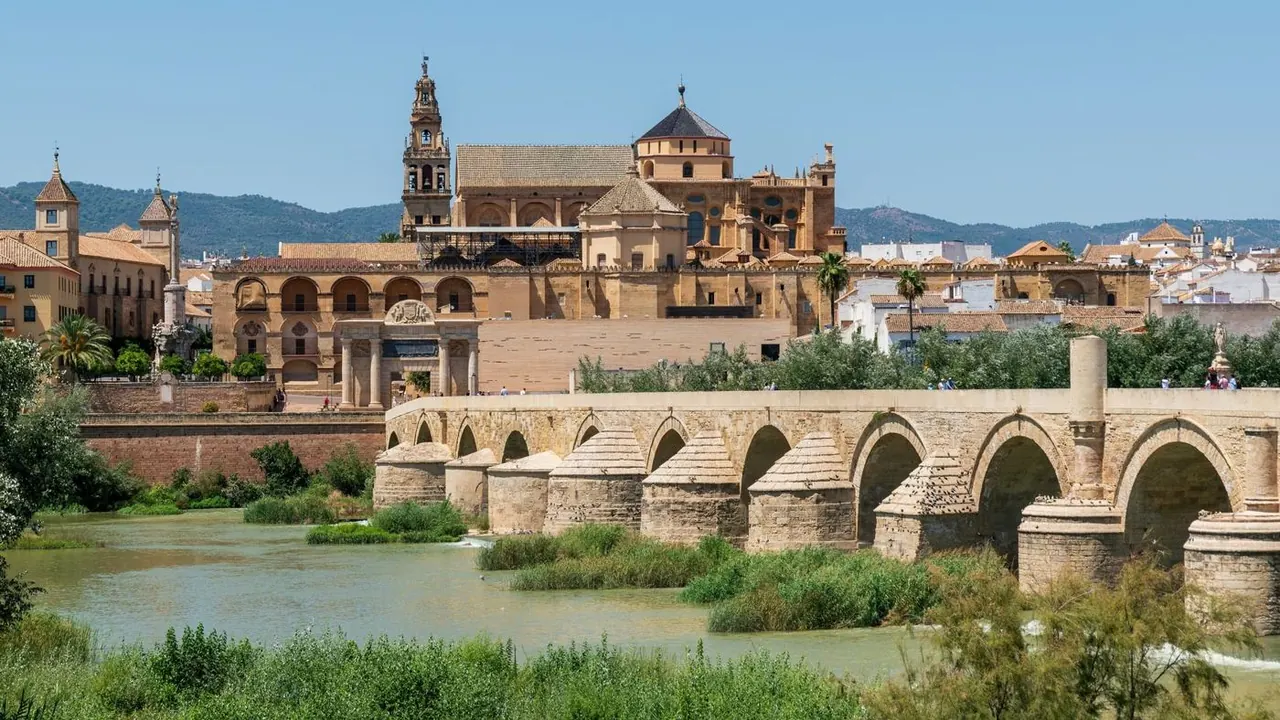
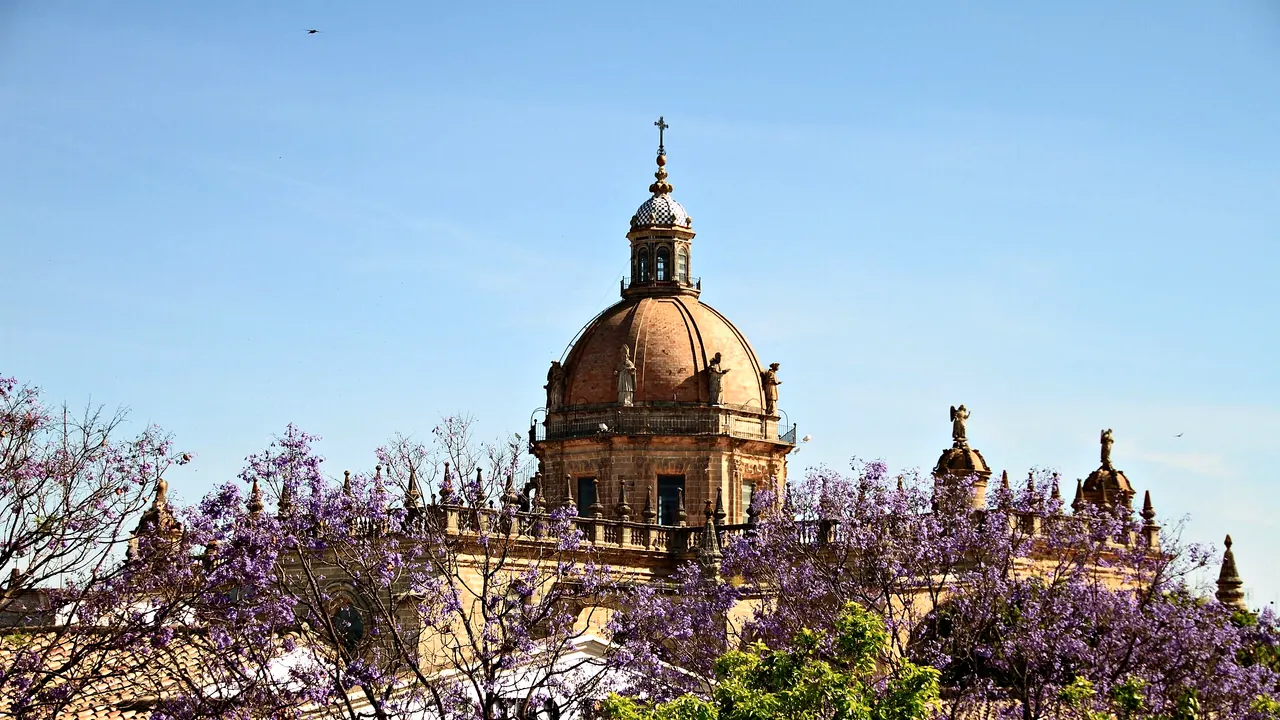
Photos: Cordoba by Jose María Ligero Loarte, CC BY-SA 4.0, cropped; Jerez de la Frontera by PEPE GADEIRAS, CC BY 4.0, cropped.
Cordoba or Jerez de la Frontera?
Our verdict in twelve categories, each scored against the same fixed benchmark cities, and the climate month by month, so you can choose for your trip.
Choose Cordoba for
- culture and sights
- day trips
- getting around
Cordoba suits travellers who come mainly for history and great monuments. The Mezquita-Cathedral, the Juderia and the caliphal ruins of Medina Azahara are a stronger set of sights than Jerez has. Fast trains bring Seville, Granada and Malaga within easy reach, so it also makes a natural base for a first look at Andalusia.
Choose Jerez de la Frontera for
- beaches
- nature and the outdoors
- live music and the arts
Jerez is the better pick if you want sherry, flamenco and the sea in one trip. Its peñas and tabancos keep flamenco a local art, and the Atlantic beaches of the Costa de la Luz are a short train ride away. Grazalema and Doñana offer more outdoors, so it is the easier fit for a mixed vacation, including one with children.
Scoreboard
Twelve categories on one fixed scale from 0 to 100. The shaded stretch is the gap between the two.
Your match
Pick a travel style or drag the sliders, and both match scores follow your weighting.
Wins on culture and sights and day trips with your weighting.
Wins on beaches and nature and the outdoors with your weighting.
What matters to you?
Category by category
What the scores mean for a trip.
Beaches & swimming
From Cordoba, the nearest sea is the Costa del Sol near Malaga, about 160km away, so a swim means a long day of train and bus. In summer the realistic options are a hotel pool or a reservoir in the Sierra Morena.
Jerez is a different matter. The beaches at Valdelagrana and El Puerto de Santa María are a short ride away, Cádiz is about half an hour by train, and the wide golden sands of Sanlúcar, Chipiona and La Barrosa are all within an hour. The Atlantic water is cooler and the Levante wind can be strong on some days, but afternoons on the beach fit easily around a city stay.
Food & drink
Both cities eat late and well in old taverns and tapas bars, so the difference lies in what fills the plate and the glass. Cordoba's table is built on its own dishes: salmorejo, flamenquin and fried aubergine with cane honey, with chilled Montilla-Moriles to drink. The best way to try them is a tapas round in Santa Marina and San Agustin.
In Jerez the drink comes first. Fino, amontillado and oloroso are poured from the barrel in the tabancos, and the bodegas themselves offer tastings. Sherry also goes into the oxtail and kidneys, and the nearby coast brings more fried fish and prawns to the table.
Culture & sights
Cordoba has far more heritage to see. The Mezquita-Cathedral, with its striped arches and a cathedral built into the middle, is a monument of European importance. Around it, the Juderia, the Alcazar gardens, the Palacio de Viana and the caliphal ruins of Medina Azahara fill two or three full days.
Jerez's list is shorter and more particular. The Almohad Alcázar and the Baroque cathedral are worth an afternoon. What sets the city apart is the cathedral-like sherry bodegas, the dressage horses of the Royal Andalusian School of Equestrian Art, and Santiago and San Miguel, the old quarters where flamenco took shape.
Nightlife
Neither city is a clubbing destination. In both, a night out means tapas and drinks that run past midnight, and both stay up until dawn during their May fairs.
The differences are small. Cordoba has students filling bars at weekends, plus open-air terrace bars and seasonal clubs in summer, but it goes quiet in the cooler months. Evenings in Jerez centre on the tabancos and copa bars around Plaza del Arenal, and in summer El Puerto de Santa María adds nights out on the coast.
Nature & outdoors
Jerez has more variety outdoors. The gorges and marked trails of the Sierra de Grazalema are a little over an hour away, the edge of Doñana is a boat ride from Sanlúcar, and the salt marshes of the Bay of Cádiz are close by for birdwatching. Horse riding and the kitesurfing coast towards Tarifa add more than walking alone.
Cordoba's countryside is gentler and drier: the wooded Sierra Morena just north of the city, the birds of prey of Hornachuelos, and the Subbetica limestone an hour to the south. It is lovely in spring and autumn, but with no coast nearby and fiercer summer heat, it offers less.
Day trips
Both are fine bases, but Cordoba has the edge for the famous names. Seville, Granada with the Alhambra, and Malaga are all within about an hour and a half by fast train, and with a car you can add Ubeda, Baeza and Antequera.
Jerez's day trips lean towards the coast and the countryside. Seville and Cádiz are easy by train, and the sherry towns of El Puerto and Sanlúcar are close. With a car, the white towns from Arcos to Ronda open up.
Good for families
Jerez is the easier choice with children, mainly because of the beaches. They are wide and sandy with gentle slopes, which gives summer days a shape that inland Cordoba cannot offer. Its zoo and botanical garden is one of the better ones in Spain, and the dancing horses usually win children over.
Cordoba has a safe, mostly car-free centre, plus the Alcazar fountains, the horse show at the royal stables and the castle at Almodovar del Rio. Beyond those, most of the sights are made for adults, and the summer heat is harder on small children.
Getting around
Cordoba is a little easier without a car. Almost everything it is known for, from the Mezquita and the Juderia to the Alcazar and the patio quarters, lies within the compact historic centre, and the station for the fast trains is a walk or short taxi ride away. The narrow cobbled lanes are pleasant on foot but hard work with a suitcase, and Medina Azahara needs a tourist bus or a taxi.
Jerez has a flat centre, with the bodegas, the Alcázar and the tapas streets close together, and the airport is a few minutes away by train. The catch comes once you leave town. The beaches, the white towns and the Grazalema hills are much easier to reach with a hired car than on the slow, infrequent buses.
Shopping & style
Neither city is worth a trip for shopping, and in both the things to buy are local crafts rather than fashion. In Cordoba that means silver filigree, embossed guadameci and cordobán leather, and ceramics and guitars from local workshops, with Spanish chains and a department store around Cruz Conde. In Jerez it means sherry and brandy straight from the bodegas, saddles and riding boots made for the horse world, and flamenco dresses and shawls, with Calle Larga for everyday shopping.
Affordability
Both cost about the same and are cheap by Western European standards, with inexpensive tapas and walkable centres that save on transport. The difference is when prices jump. In Cordoba it is May, with the patio festival, the crosses and the fair, and rooms near the Mezquita cost more all year. In Jerez the peaks are spread out: the Feria del Caballo, the winter flamenco festival and the motorcycle race weekends.
Live music & performing arts
Jerez is the stronger flamenco city. Flamenco still belongs to its old quarters, with peña evenings in Santiago and San Miguel and close-up singing in some tabancos. The late-winter festival brings major dancers to the Teatro Villamarta, which also stages opera and zarzuela.
Cordoba has a serious flamenco history of its own, with tablaos, peñas, a guitar festival and the free all-night Noche Blanca del Flamenco in summer. Beyond that, the Gran Teatro and the city orchestra offer a respectable programme, but not a reason to travel.
Wellness & relaxation
The two are evenly matched here. Each has an Arab-style bath house in the old town and a few hotel spas, and neither suits a spa vacation. Cordoba has the deeper link to bathing, with the ruins of the Caliphal Baths and quiet courtyards of fountains and orange trees. In Jerez, relaxing means long lunches, shaded patios and evening strolls, and it is at its gentlest in spring and autumn.
When should you go?
Pick your month. The climate figures are measured averages, not a forecast.
Cordoba in July
Jerez de la Frontera in July
Daytime high, °C
Rainfall in the month, mm
Temperature and rainfall are climate normals, averaged over the years shown. Cordoba: 1991-2020 normals, Cordoba / Aeropuerto (7.6 km from centre). Jerez de la Frontera: 1991-2020 normals, Jerez De La Fronteraaeropuerto (9.9 km from centre).
The best months for walking in either city are April to early June and late September into October, when it is warm without being punishing. Cordoba's summer is the harsher of the two. July and August reach 37°C with almost no rain and very long sunny days, so sightseeing gets squeezed into the mornings and evenings. Jerez stays a few degrees cooler at about 34°C. Its nearby coast makes June to September the beach season, and the sea reaches 23°C in July and August.
Rain returns to both cities in October, and the wettest weather lasts through December. Winters are mild in both, but Jerez is slightly warmer, with daytime highs around 17°C in January against 15°C in Cordoba.
Which traveller are you?
On a beach and sun trip, Jerez is the clear choice. Cádiz is about half an hour away by train, and the golden Atlantic sands of El Puerto, Sanlúcar and La Barrosa are all within an hour. From Cordoba, the nearest sea takes a long day there and back.
For a culture and arts trip built around monuments, choose Cordoba. Nothing in Jerez matches the Mezquita-Cathedral, the Juderia and Medina Azahara, and Seville and Granada are easy train trips. If flamenco is the main reason you travel, though, Jerez is closer to its roots.
On an outdoors trip, Jerez offers more variety. You can hike in the Sierra de Grazalema, watch birds in Doñana and the Bay of Cádiz marshes, ride in horse country or kitesurf towards Tarifa. Cordoba's Sierra Morena is gentler and its summer heat harsher.
Before you go
| Measure | Cordoba | Jerez de la Frontera |
|---|---|---|
| Official language | Spanish | Spanish |
| Currency | Euro (EUR) | Euro (EUR) |
| Sockets | CF230 V, 50 Hz | CF230 V, 50 Hz |
| Driving side | Right | Right |
| Time zone | UTC+1, UTC+2 in summer | UTC+1, UTC+2 in summer |
| Emergency number | 112 | 112 |
| Elevation | 120 m | 58 m |
| Main airport | Córdoba Airport (ODB)8 km from centre3 non-stop destinations | Jerez Airport (XRY)10 km from centre26 non-stop destinations |
| Public holidays this year | 12 days | 12 days |
By the numbers
| Measure | Cordoba | Jerez de la Frontera |
|---|---|---|
| City population | 323,262 | 213,634 |
| People per km² | 258 | 180 |
| Museums within 10 km | 16 | 14 |
| UNESCO World Heritage sites within 50 km | 2 | 1 |
| Swim season, months above 21 °C | - | 3 months |
Where else could you go?
Every comparison below shares a destination with this one, so you can follow Cordoba or Jerez de la Frontera somewhere new.
- Cadizvs Jerez de la Frontera
- Sevillevs Jerez de la Frontera
- Rondavs Jerez de la Frontera
- Marbellavs Jerez de la Frontera
- Sevillevs Cordoba
- Granadavs Cordoba