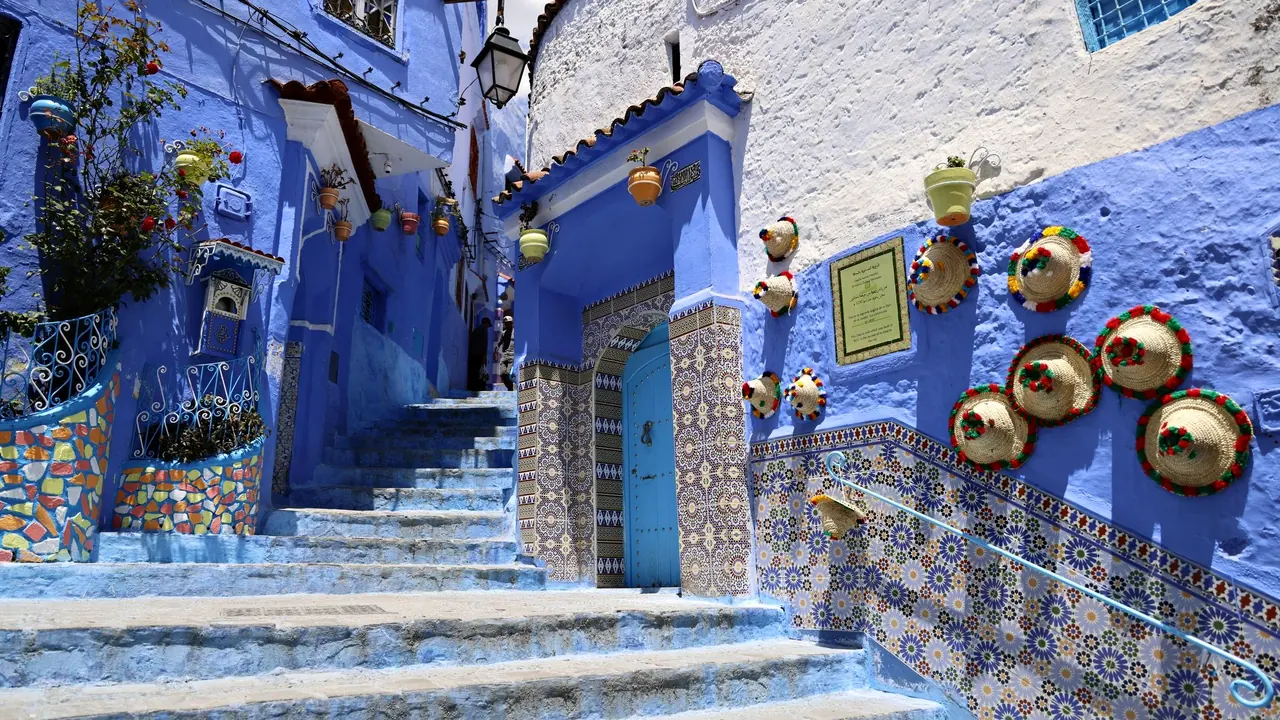
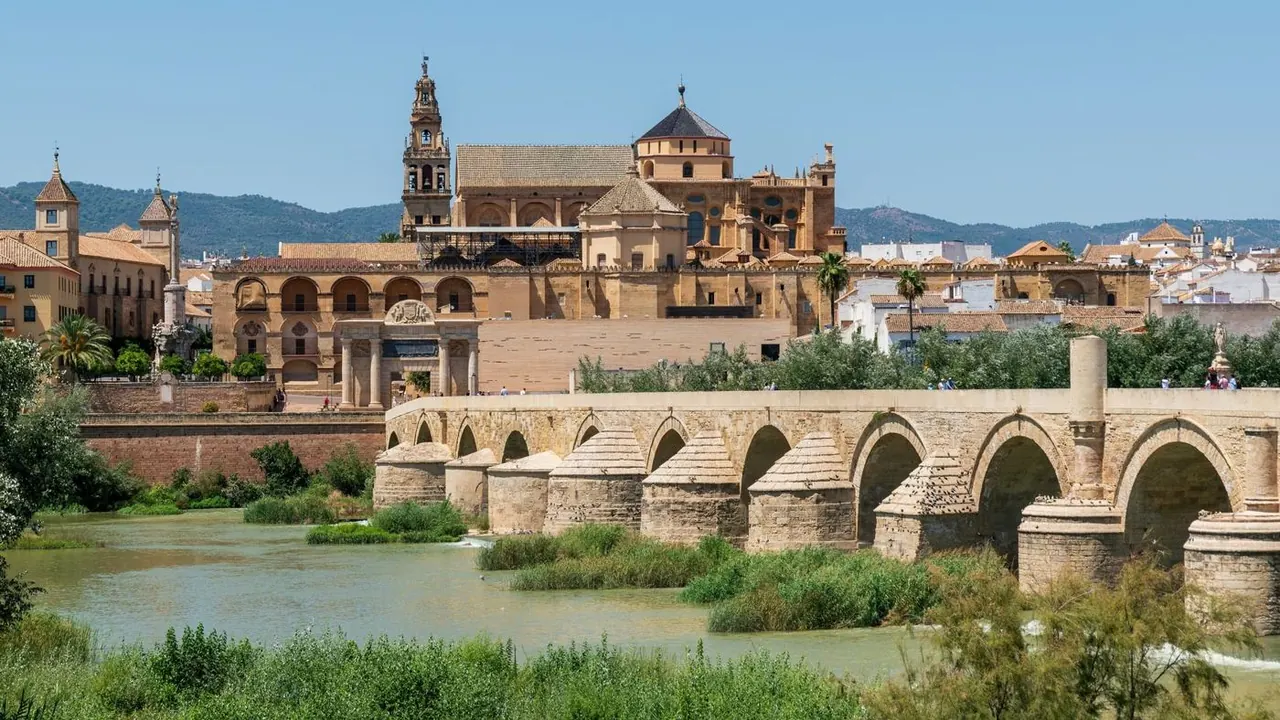
Photos: Chefchaouen by Christophe RASCLE, Pexels License; Cordoba by Jose María Ligero Loarte, CC BY-SA 4.0, cropped.
Chefchaouen or Cordoba?
Our verdict in twelve categories, each scored against the same fixed benchmark cities, and the climate month by month, so you can choose for your trip.
Choose Chefchaouen for
- nature and the outdoors
- prices
- wellness
Chefchaouen suits a slow, inexpensive stay of a few days for travellers who want mountain walking, quiet evenings and a blue-washed medina to photograph. The Rif begins at the edge of town and the gorges and forests of Talassemtane are close by. Money goes a long way here, but the food is repetitive and there is almost nothing to do after dark.
Choose Cordoba for
- day trips
- culture and sights
- live music and the arts
For a fuller trip with great monuments, proper tapas and evenings out, Cordoba is the stronger choice. The Mezquita-Cathedral and the Juderia offer far more sightseeing than the Moroccan town, flamenco and late terraces fill the nights, and fast trains bring Seville, Granada and Malaga within a day's reach.
Scoreboard
Twelve categories on one fixed scale from 0 to 100. The shaded stretch is the gap between the two.
Your match
Pick a travel style or drag the sliders, and both match scores follow your weighting.
Wins on nature and the outdoors and prices with your weighting.
Wins on day trips and culture and sights with your weighting.
What matters to you?
Category by category
What the scores mean for a trip.
Beaches & swimming
Neither town is a place for swimming, though Chefchaouen has the sea a little nearer. Oued Laou's long grey-sand beach is about an hour and a quarter away by grand taxi down a gorge road, and in summer the river pools at Akchour give a cold dip. Cordoba's nearest beaches are on the Costa del Sol around Malaga, 160km away, which makes a long day by fast train, so in summer locals use pools and the Sierra Morena reservoirs instead.
Food & drink
Cordoba is much the better place to eat. Its tabernas, often old houses with tiled patios and casks behind the bar, serve local dishes such as salmorejo, flamenquin and fried aubergine with cane honey, along with chilled Montilla-Moriles wine. A tapas round in Santa Marina or San Agustin makes a whole evening.
The restaurants around Outa el-Hammam in Chefchaouen mostly serve the same tagines and couscous, and alcohol is hard to find. The good things are small and local: Rif goat cheese wrapped in palm leaf, bissara soup for breakfast and bread from the communal ovens.
Culture & sights
Here Cordoba is in another league. The Mezquita-Cathedral is a caliphal mosque of striped arches with a Renaissance cathedral built inside it, a world-class monument. Add the Juderia, the Roman bridge, the Alcazar gardens and Medina Azahara, and you have two or three full days.
In Chefchaouen the blue medina itself is the sight. It was founded in 1471 and settled by refugees from Andalusia, which gives it a link to Cordoba's own past. Beyond the kasbah with its small museum and the walk up to the Spanish Mosque, there is little to visit, and a day or two covers it.
Nightlife
Chefchaouen has almost no nightlife: a couple of hotel bars, mint tea in the square and silent lanes by late evening. Cordoba is no clubbing city either, but in the warm months its terraces around the Corredera and Las Tendillas fill up after ten, students keep the bars busy at weekends, and the May fair goes on until dawn. Anyone who wants a drink and a late night should choose the Spanish city.
Nature & outdoors
Chefchaouen is the walker's choice. Paths start at the edge of the medina and climb into the Rif. Talassemtane National Park, forty minutes away at Akchour, has a river gorge leading to God's Bridge, cedar and fir forests with Barbary macaques, and multi-day treks through Rif villages, usually with a local guide.
Cordoba's countryside is gentler: the holm oak hills of the Sierra Morena, birds of prey in Hornachuelos and limestone gorges in the Subbetica, an hour's drive south. It is lovely in spring and autumn, but most of it needs a car, and in summer the heat leaves only the early morning for walking.
Day trips
Cordoba is a far better base. High-speed trains reach Seville in under an hour and Granada and the Alhambra in about an hour and a half. With a car you can add Ubeda and Baeza, the dolmens at Antequera and the bodegas of Montilla.
From Chefchaouen the one strong outing is Tetouan, an hour and a quarter away, with a larger UNESCO-listed medina and the coast at Martil just beyond. Tangier and Fes are too far for a return trip in a day and work better as the next stop on a route.
Good for families
Neither city is built around children, but Cordoba copes better. Its small, safe centre is mostly free of traffic, so children can roam. The Alcazar fountains, the horse show at the royal stables, Almodovar castle and a modest zoo give them things of their own, as long as you avoid the summer heat.
Chefchaouen is calm and locals welcome children, but pushchairs are useless on its stepped lanes, the river pools at Akchour are the main treat, and the offers of hashish in the lanes are awkward with children in tow.
Getting around
Both centres are best explored on foot, but Cordoba's is easier. The Mezquita, Juderia, Alcazar and Roman bridge are all a short walk apart along cobbled lanes, and the railway station, with fast trains to Seville, Madrid and Malaga, is close to the old town.
You can cross Chefchaouen's medina in fifteen minutes, yet almost every route involves steep stairs and slippery polished steps. There is no railway, so you arrive by long-distance bus or by road, and grand taxis handle everything outside the walls.
Shopping & style
Both are places for crafts rather than shopping trips, and the difference is in what they make. Chefchaouen sells Rif woollen blankets, djellabas, leather slippers and blue pigment, often from weavers working at looms in their shopfronts, and the bargaining is gentle. Cordoba offers silver filigree, embossed guadameci leather, ceramics and guitars from local workshops, plus Spanish chains and a department store around Cruz Conde for everyday shopping.
Affordability
Chefchaouen is clearly the cheaper of the two. Guesthouses, tagines in the square and shared grand taxis all cost little, and the main attraction is free to wander. Cordoba is good value for Western Europe, with cheap glasses of Montilla and tapas in the tabernas and a centre you can walk, but the monuments charge admission and the May festivals push room prices up sharply.
Live music & performing arts
Cordoba has a real live scene and Chefchaouen almost none. Flamenco is the reason to go out in Cordoba, either in the old-town tablaos or in the rougher, less polished peñas. In summer there is the Noche Blanca del Flamenco, the city also holds a guitar festival, and the Gran Teatro hosts the city orchestra and touring theatre.
In Chefchaouen, live music means occasional Andalusian performances around festivals. Otherwise you will mostly hear the call to prayer and sufi chant drifting over the rooftops.
Wellness & relaxation
Chefchaouen is the more restful of the two, mostly because there is so little to do. Roof terraces, mint tea, cool mountain air and the sound of water at Ras el-Maa slow the days down. Its neighbourhood hammams give a genuine scrub, though polished spa treatments are limited to a few riads.
Cordoba has the more comfortable bathing, with Arab-style bath houses offering pools under horseshoe arches, plus the spas of the better hotels. There, though, rest means a shaded patio or the summer midday break between busy days of sightseeing.
When should you go?
Pick your month. The climate figures are measured averages, not a forecast.
Chefchaouen in July
Cordoba in July
Daytime high, °C
Rainfall in the month, mm
Where the figures come from
Chefchaouen has no weather station within reach, so its figures come from a gridded climate model rather than a measured record, and read a broad area rather than the city itself.
Temperature and rainfall are climate normals, averaged over the years shown. Chefchaouen: 2001-2020 normals, NASA POWER reanalysis grid, no weather station within 90 km. Cordoba: 1991-2020 normals, Cordoba / Aeropuerto (7.6 km from centre).
Chefchaouen is at its best in May and September, when days are warm and mostly dry and the mountain paths are pleasant. April is mild but still rainy, and from October the rain returns in earnest, building to around 141mm in November, with cold, wet winters and snow on the high ground. July and August reach 35°C, too hot for the steep lanes or valley walks by midday. The sea at Oued Laou is warm enough for a swim from July to September, when it reaches about 23°C.
Cordoba warms earlier and stays mild for longer. March to May and October suit sightseeing on foot, though autumn brings some rain, and winter days stay mild with moderate rain, so it works for a winter city break in a way Chefchaouen does not. Summer is hotter still, with highs of 37°C and long, sunny days, so walking is best left to the early morning.
Which traveller are you?
On an outdoors trip, Chefchaouen is the clear pick. Trails climb into the Rif straight from the Ras el-Maa spring, and Talassemtane National Park has gorges, waterfalls, God's Bridge and cedar forest with Barbary macaques. Most of Cordoba's hills need a car.
For a culture and arts trip, Cordoba wins easily. The Mezquita-Cathedral, the Juderia, the Alcazar and Medina Azahara fill two or three days, flamenco plays in tablaos and peñas, and Seville and Granada are a short train ride away.
On a trip on a tight budget, Chefchaouen makes money go further. Guesthouses and riads are cheap, the town itself is the free main sight and shared grand taxis reach the valleys for little. In Cordoba the monuments charge admission and room prices climb in May.
Before you go
| Measure | Chefchaouen | Cordoba |
|---|---|---|
| Official language | Arabic, Standard Moroccan Tamazight | Spanish |
| Currency | Moroccan Dirham (MAD) | Euro (EUR) |
| Sockets | CE50 Hz | CF230 V, 50 Hz |
| Driving side | Right | Right |
| Time zone | UTC+1 | UTC+1, UTC+2 in summer |
| Emergency number | Police 19/112, ambulance 15, fire 15 | 112 |
| Elevation | 564 m | 120 m |
| Main airport | Tangier Ibn Battuta Airport (TNG)86 km from centre50 non-stop destinations | Córdoba Airport (ODB)8 km from centre3 non-stop destinations |
| Public holidays this year | 11 days | 12 days |
By the numbers
| Measure | Chefchaouen | Cordoba |
|---|---|---|
| City population | 46,168 | 323,262 |
| People per km² | 2,998 | 258 |
| Museums within 10 km | 1 | 16 |
| UNESCO World Heritage sites within 50 km | 1 | 2 |
| Swim season, months above 21 °C | 3 months | - |
Where else could you go?
Every comparison below shares a destination with this one, so you can follow Chefchaouen or Cordoba somewhere new.
- Tangiervs Chefchaouen
- Sevillevs Cordoba
- Fesvs Chefchaouen
- Granadavs Cordoba
- Rondavs Cordoba
- Malagavs Cordoba