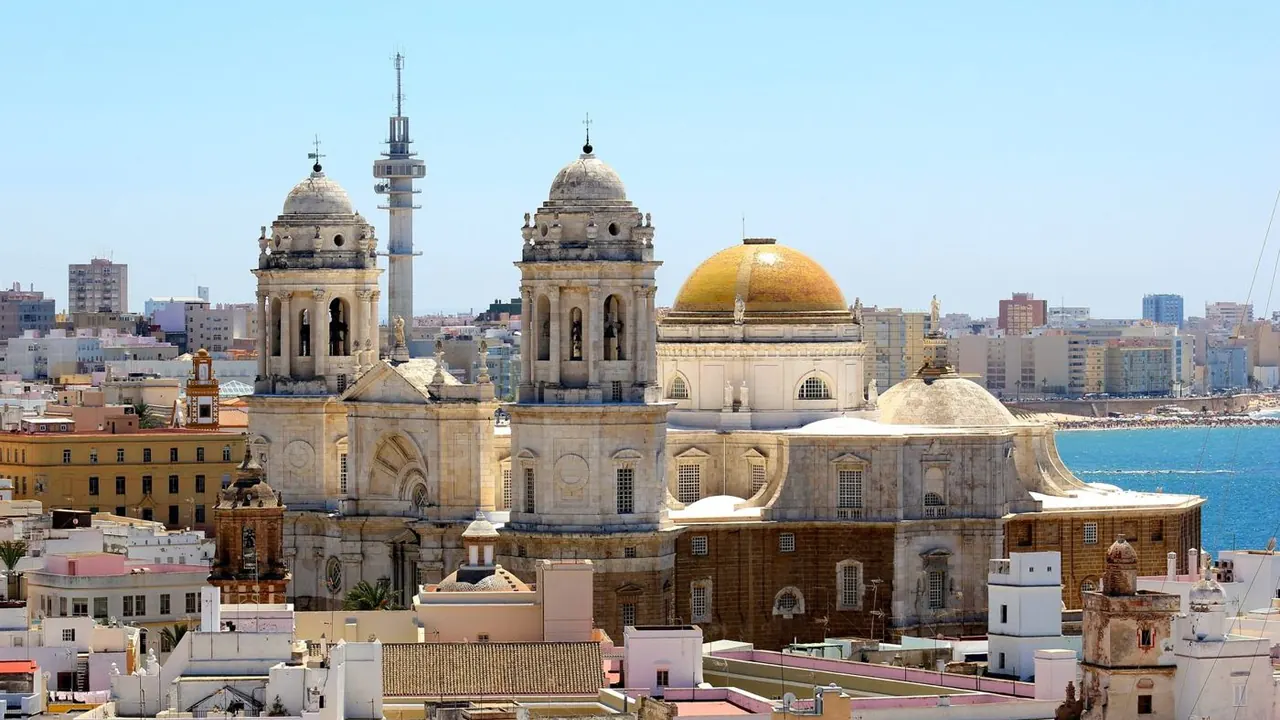
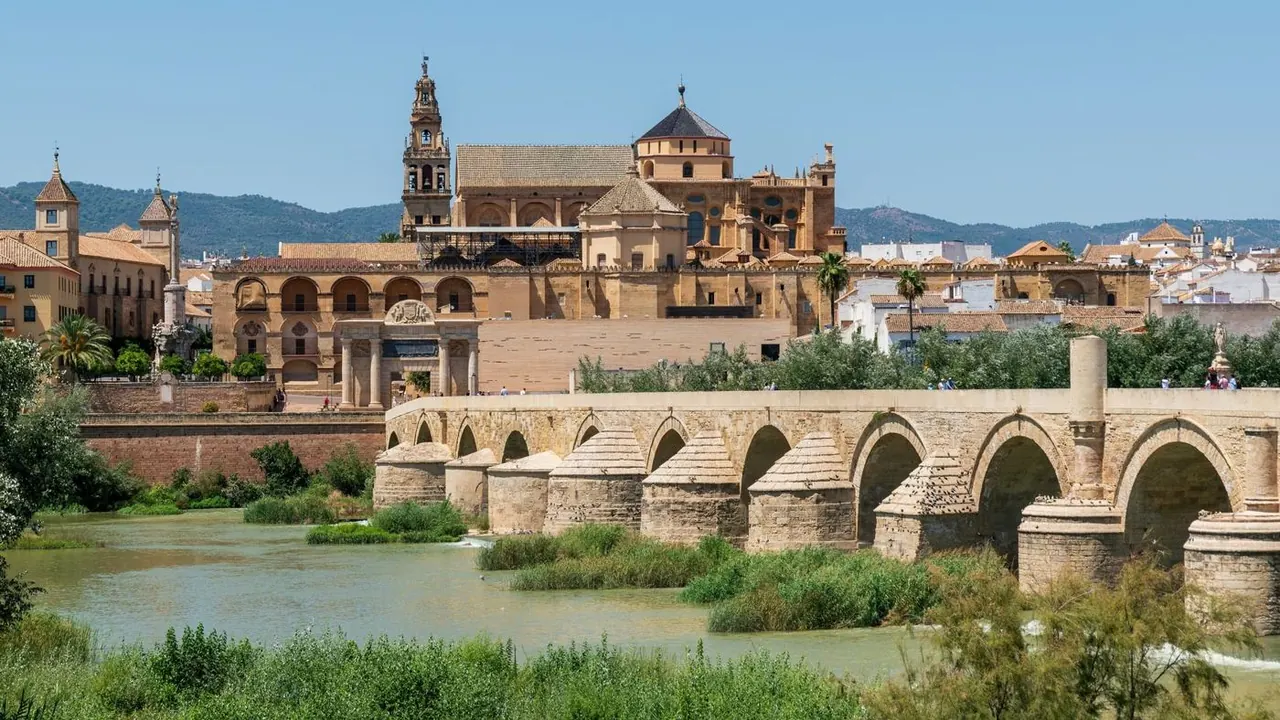
Photos: Cadiz by Bronch, CC BY-SA 3.0 ES, cropped; Cordoba by Jose María Ligero Loarte, CC BY-SA 4.0, cropped.
Cadiz or Cordoba?
Our verdict in twelve categories, each scored against the same fixed benchmark cities, and the climate month by month, so you can choose for your trip.
Choose Cadiz for
- beaches
- nature and the outdoors
- families
Pick Cadiz if the sea is part of the plan. The old town sits on a peninsula with a swimming cove at one end and a long city beach beyond, and the empty strands of the Costa de la Luz are within an hour. Days can be split between swimming, fried fish and walks along the sea walls. It suits families and anyone who wants a summer stay with salt marsh, cliffs and the kitesurfing beaches of Tarifa close by.
Choose Cordoba for
- culture and sights
- day trips
- prices
Cordoba is the better choice for travellers who come to look rather than to swim. The Mezquita-Cathedral, the Juderia and Medina Azahara make it one of the great historic stops in Spain. Fast trains put Seville, Granada and Malaga within easy reach, so it works well as a base for touring the monuments of Andalusia, ideally in spring or autumn.
Scoreboard
Twelve categories on one fixed scale from 0 to 100. The shaded stretch is the gap between the two.
Your match
Pick a travel style or drag the sliders, and both match scores follow your weighting.
Wins on beaches and nature and the outdoors with your weighting.
Wins on culture and sights and day trips with your weighting.
What matters to you?
Category by category
What the scores mean for a trip.
Beaches & swimming
On the beach the two cities could hardly be further apart. Cadiz is a beach city. You can swim at La Caleta between its two castles or walk kilometres of fine sand at Playa Victoria, and the dunes of Bolonia and the long strands of El Palmar and Zahara are within an hour. The main drawback is the levante wind, which can blow sand across the beaches for days.
Cordoba lies inland in the Guadalquivir valley, so swimming there means a hotel or municipal pool or a reservoir in the Sierra Morena. The Costa del Sol can be reached by train for the day, but that is a long trip just for a swim.
Food & drink
In both cities people eat late, go from bar to bar for tapas and drink a chilled sherry-style wine from nearby, but the dishes are different. Cadiz has the edge for seafood lovers, with fried fish in paper cones, shrimp tortillitas and almadraba bluefin tuna, served with manzanilla or fino.
Cordoba's cooking comes from the land instead. In old tabernas with tiled patios you eat salmorejo, flamenquin, oxtail and crisp aubergine with cane honey, and drink Montilla-Moriles. Neither city has much fine dining or international food.
Culture & sights
Cordoba is far ahead for sightseeing. The Mezquita-Cathedral, with its forest of striped arches and a cathedral built into its centre, is one of the great buildings of Europe. The Juderia, the Alcazar gardens, the patios of San Basilio and the caliphal ruins of Medina Azahara add two or three days of first-rate sights.
Cadiz has less to see: Phoenician sarcophagi in the Museo de Cádiz, the half-hidden Roman theatre, the gold-domed cathedral and the camera obscura in the Torre Tavira. Much of its appeal is the old trading port itself, with its tall pale houses and rooftop watchtowers.
Nightlife
Neither city is a clubbing destination. In both, a night out means late tapas and drinks, moving from square to square. The difference is where and when. In summer Cadiz moves its evenings to the terraces along Playa Victoria, and its February Carnival turns the whole city into a street party that runs all night.
Cordoba's evenings centre on the Corredera, Las Tendillas and the riverside. Its big event is the May fair, when people dance in the casetas until dawn. Outside summer and these festivals, both cities are quiet at night.
Nature & outdoors
Cadiz has more variety outdoors. The salt pans and marshes of the Bahía de Cádiz are full of flamingos and spoonbills, and the pine forest of La Breña runs along cliffs above the sea. Tarifa has kitesurfing and boat trips into the Strait to see dolphins and whales, and the Sierra de Grazalema offers real mountain walking within two hours.
Cordoba's countryside is gentler: holm oak hills in the Sierra Morena, birds of prey at Hornachuelos and the gorges of the Sierras Subbeticas. In summer the heat limits walking to the early morning, and you need a car for almost all of it.
Day trips
Both are good bases, but Cordoba's place on the high-speed line gives it the edge. Seville, Granada with the Alhambra, and Malaga are all easy return trips by train. With a car you can add Ubeda, Baeza and the dolmens of Antequera.
From Cadiz the trips are more local but still rich. There are the sherry towns of Jerez, El Puerto and Sanlúcar, the white hill towns of Vejer and Arcos, and the Roman ruins of Baelo Claudia beside the beach at Bolonia. Seville is a longer ride, just under two hours by train.
Good for families
Cadiz has the edge with children, because the sea gives each summer day an easy shape. La Caleta, the small cove between two castles, is calm enough for young swimmers. When the children have had enough sand, there are the Alameda and Genovés parks, the camera obscura in the Torre Tavira and the ferry across the bay. Summer highs stay around 28°C, which is warm enough for the beach without making an afternoon in the old town hard going.
Cordoba has a few good draws for children: the fountains of the Alcazar gardens, the horse show at the royal stables, a modest zoo and the castle at Almodovar del Rio. What it lacks is a sea to fall back on once the monuments stop holding their interest. In July and August the heat goes far beyond anything Cadiz reaches, so a summer stay with children means hotel pools and long hours indoors, and spring or autumn suit a family visit much better.
Getting around
Both cities have old towns that are easy to walk and mostly free of cars, and both have good rail links, so getting around feels much the same. Cadiz is flat and stretches along an isthmus, with buses out to Playa Victoria and a catamaran across the bay. Cordoba's centre is more compact but cobbled and narrow, with nearly every sight a few minutes' walk from the next.
Both fall short beyond the city. From Cadiz, the Costa de la Luz and the white villages need a car or a tour. From Cordoba, Medina Azahara needs a bus or taxi, and the hill towns need a car.
Shopping & style
In Cadiz the pleasure is browsing the Mercado Central and the flower stalls beside it, then taking home a hand-painted fan, ceramics, flamenco fashion or a bottle of sherry. Calle Ancha and Columela add Spanish chains and older family-run shops.
Cordoba's shopping rests on crafts still made in the city: silver filigree jewellery, embossed guadameci leather and guitars from local workshops. These are best bought from the workshops themselves, not the souvenir stalls in the Juderia. The streets around Las Tendillas have a big department store, but for designer labels both cities send you to Seville.
Affordability
The two cost about the same, with Cordoba slightly cheaper. In both, eating out is the bargain: freidurías and market counters in Cadiz, and in Cordoba generous lunch menus or a glass of Montilla with a tapa.
Rooms are where they differ. Cadiz has few hotels in the old town, and they fill up in July, August and Carnival week, so staying near Playa Victoria saves money. Cordoba's rooms are good value for most of the year, except in May, when the festivals push prices up.
Live music & performing arts
Flamenco has deep roots in both cities, and both have peñas where people who know the music go to hear it. Cadiz is the home of alegrías, with peñas in the old Santa María quarter. Its Gran Teatro Falla stages the satirical Carnival choirs and an autumn festival of Ibero-American theatre.
Cordoba has its guitar festival and the Noche Blanca del Flamenco, a summer night of free performances in squares across the city until dawn. Its Gran Teatro is home to the city orchestra. Opera is thin in both.
Wellness & relaxation
For treatments, Cadiz sends you out of town, to the resort spas with sea-water treatments at Novo Sancti Petri or the Arab-style baths in Jerez, half an hour away. What the city itself offers is a slow day: a walk on the sea walls, a long lunch, a siesta and sunset over La Caleta.
Cordoba has Arab-style bath houses in the old town itself, with warm and hot pools under horseshoe arches and massage, not far from the ruined Caliphal Baths that recall the city's past. Beyond them, the quietest pleasure is a courtyard with a fountain and orange trees on a long afternoon in the shade.
When should you go?
Pick your month. The climate figures are measured averages, not a forecast.
Cadiz in July
Cordoba in July
Daytime high, °C
Rainfall in the month, mm
Temperature and rainfall are climate normals, averaged over the years shown. Cadiz: 1991-2020 normals, Cadiz Bay / Puntales (5.2 km from centre). Cordoba: 1991-2020 normals, Cordoba / Aeropuerto (7.6 km from centre).
Cadiz has the gentler climate. Summer highs level off around 28°C, and the Atlantic warms to 23°C in July and August. June to September are almost dry and very sunny, so those are the beach months. The rain comes in October and is heaviest in November. Winter is mild but damp, and still pleasant for walking the old town.
Cordoba gets much hotter in summer. July and August reach 37°C, which is too hot for sightseeing outside the early morning. The months for walking the lanes and patios are March to May and October. Winter is the wet season there, and December is the rainiest month, with 91mm.
Which traveller are you?
For a beach and sun trip, Cadiz is the only real option of the two. It has La Caleta and Playa Victoria inside the city and the long Costa de la Luz strands nearby, while inland Cordoba offers little more than pools.
On a culture and arts trip, Cordoba wins clearly. The Mezquita-Cathedral, the Juderia, the Alcazar gardens and the ruins of Medina Azahara are a richer set of monuments, and Seville and Granada are a short fast-train ride away.
On a family trip with children, Cadiz is easier. Playa Victoria is wide and has lifeguards, and the flat old town has shady parks. Cordoba's summers pass 40°C and most of its sights are made for adults, which makes it hard work with children.
Before you go
| Measure | Cadiz | Cordoba |
|---|---|---|
| Official language | Spanish | Spanish |
| Currency | Euro (EUR) | Euro (EUR) |
| Sockets | CF230 V, 50 Hz | CF230 V, 50 Hz |
| Driving side | Right | Right |
| Time zone | UTC+1, UTC+2 in summer | UTC+1, UTC+2 in summer |
| Emergency number | 112 | 112 |
| Elevation | 11 m | 120 m |
| Main airport | Jerez Airport (XRY)31 km from centre25 non-stop destinations | Córdoba Airport (ODB)8 km from centre3 non-stop destinations |
| Public holidays this year | 12 days | 12 days |
By the numbers
| Measure | Cadiz | Cordoba |
|---|---|---|
| City population | 109,950 | 323,262 |
| People per km² | 9,087 | 258 |
| Museums within 10 km | 11 | 16 |
| UNESCO World Heritage sites within 50 km | 0 | 2 |
| Swim season, months above 21 °C | 3 months | - |
Where else could you go?
Every comparison below shares a destination with this one, so you can follow Cadiz or Cordoba somewhere new.