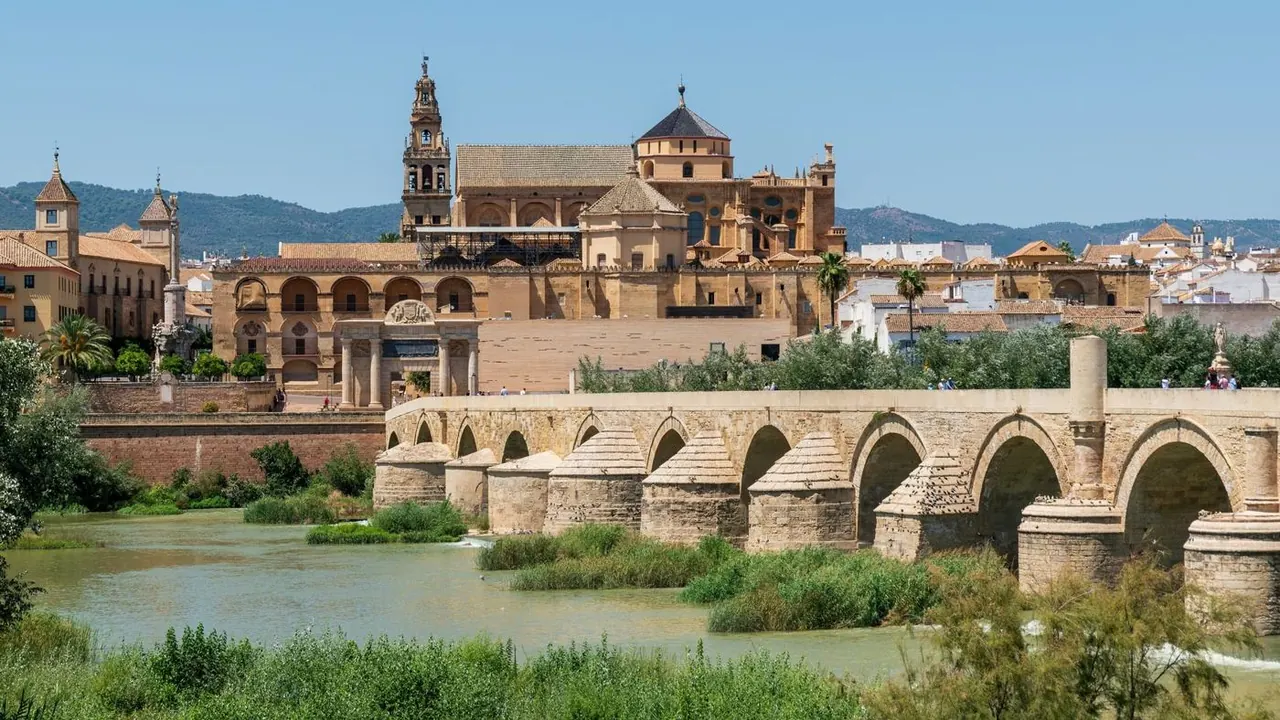
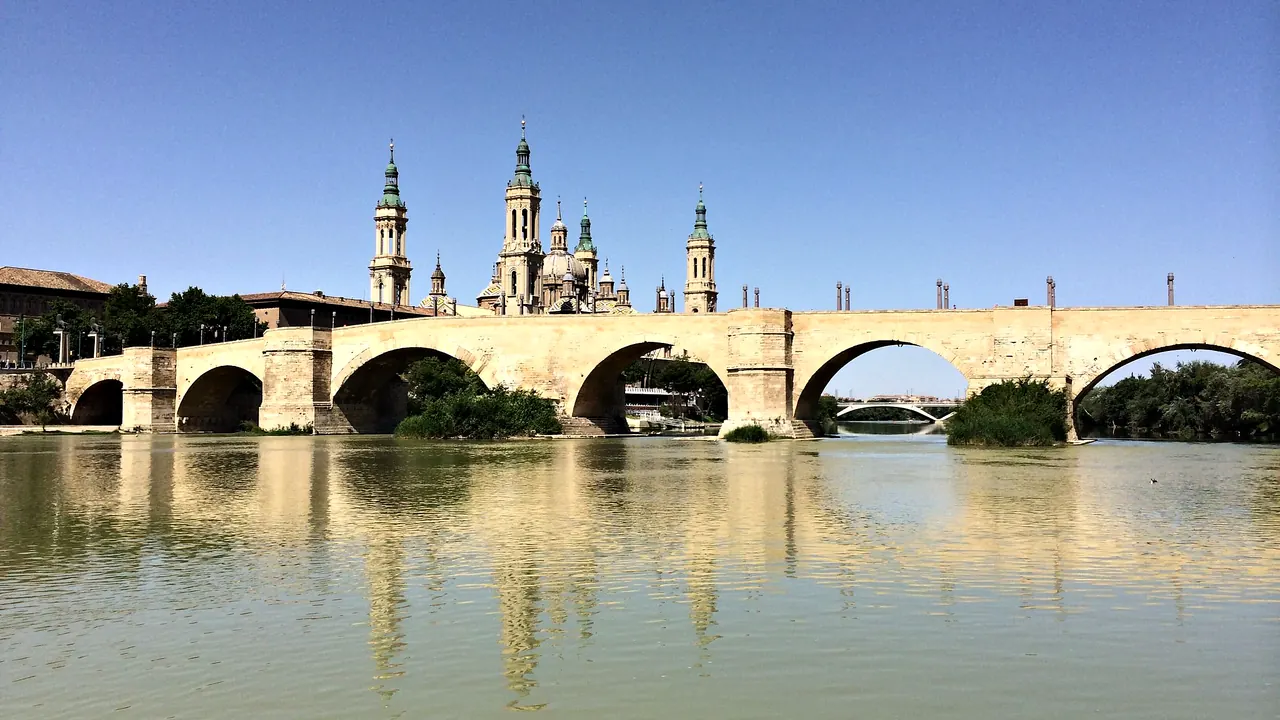
Photos: Cordoba by Jose María Ligero Loarte, CC BY-SA 4.0, cropped; Zaragoza by Pablo Alejandro Araujo Granda, CC BY-SA 2.0, cropped.
Cordoba or Zaragoza?
Our verdict in twelve categories, each scored against the same fixed benchmark cities, and the climate month by month, so you can choose for your trip.
Choose Cordoba for
- culture and sights
- day trips
- beaches
Cordoba is the choice for a trip built around history. The Mezquita-Cathedral, the Juderia lanes and the ruins of Medina Azahara add up to one of Spain's great sets of monuments. Fast trains reach Seville, Granada and Malaga, so you can see the rest of Andalusia without changing hotel. It suits couples and culture-minded travellers who would rather spend a long evening at a taberna table than stay out late.
Choose Zaragoza for
- families
- nightlife
- nature and the outdoors
Families and travellers who want a livelier, easier city to live in for a few days will do better in Zaragoza. The river aquarium and big parks keep children busy, El Tubo and the old Casco make for a better night out, and the Moncayo, the Mallos de Riglos and the Pyrenees offer stronger landscapes within a drive. There are fewer great sights, so it rewards a slower stay or a stop between Madrid and Barcelona.
Scoreboard
Twelve categories on one fixed scale from 0 to 100. The shaded stretch is the gap between the two.
Your match
Pick a travel style or drag the sliders, and both match scores follow your weighting.
Too close to call, 1 point apart
Wins on culture and sights and day trips with your weighting.
Wins on families and nightlife with your weighting.
What matters to you?
Category by category
What the scores mean for a trip.
Beaches & swimming
Neither city is a beach destination, but Cordoba is a little better placed for a swim in the sea. The fast train to Malaga takes about an hour, and from there the city beaches are a short walk or bus ride away. It makes a long day, but a possible one.
From Zaragoza the Mediterranean is more than 200km off, too far for a casual trip, and the Ebro is not used for swimming. In both cities summer means municipal or hotel pools, though around Cordoba you can also drive to reservoirs in the Sierra Morena.
Food & drink
The two eat equally well, but the food is quite different. Cordoba's cooking is built for heat: cold salmorejo, fried aubergine with cane honey, flamenquin and rabo de toro, eaten in tiled taberna patios with a chilled glass of pale, dry Montilla-Moriles.
Zaragoza is heartier and more on the move. In El Tubo you go from one counter to the next, each known for a single dish, and the table fills with ternasco lamb, migas and borage with clams, along with cheap, generous reds from Cariñena and Somontano. Neither city offers much fine dining or international food.
Culture & sights
Cordoba is far stronger. The Mezquita-Cathedral, with its forest of striped arches and a cathedral built into its middle, is one of the great buildings of Europe. Around it lie the Juderia and its synagogue, the Roman bridge, the Alcazar and the patios of San Basilio and the Palacio de Viana, with the caliphal palace city of Medina Azahara just outside town.
Zaragoza has solid sights of its own: the Basílica del Pilar with its Goya ceilings, the Mudéjar walls of La Seo, the Aljafería palace and Roman remains shown underground. They are worth two or three days, but the Aljafería is a smaller echo of what Cordoba has, and beyond the old core the city is largely modern.
Nightlife
Zaragoza gives you more of a night out. After tapas in El Tubo, students fill the bars around Plaza San Felipe, Plaza Santa Marta and the Casco on Thursdays and at weekends, and there are cocktail bars, music bars and a handful of clubs that run into the early morning.
Cordoba's evenings are about late tapas on the terraces of the Corredera, Las Tendillas and the riverside. Outside summer and the May fair there is little to plan a night around. Each city has one festival when it stays up till dawn: Cordoba's fair in May and Zaragoza's Fiestas del Pilar in October.
Nature & outdoors
Zaragoza's surroundings are more dramatic. Within a drive there are the beech forests and summit trails of the Moncayo, the red towers of the Mallos de Riglos, the badlands of the Bardenas Reales and the waterfalls of the Monasterio de Piedra, and the Pyrenees valleys are about two hours away. In town, the Ebro riverside path and the big parks are good for cycling.
Cordoba offers gentler country: the low cork and holm oak hills of the Sierra Morena, birds of prey in Hornachuelos and the karst of the Subbeticas. There are no high mountains, and summer heat above 40°C rules out most outdoor activity except at dawn. Both need a car.
Day trips
Cordoba is the better base. Seville is under an hour away by high-speed train, Malaga about an hour and Granada with the Alhambra about an hour and a half, so three major cities are easy day trips. With a car you can add Ubeda and Baeza, the dolmens of Antequera and the bodegas of Montilla.
Zaragoza's trains reach Madrid and Barcelona in about an hour and a half, which is useful, but its best outings are rural Aragon: the castle of Loarre, Tarazona, ruined Belchite, Alquézar and, at a stretch, Albarracín and Teruel. These are rewarding but mostly need a hired car.
Good for families
Zaragoza is the easier city with children. The riverside aquarium devoted to the world's great rivers, the playgrounds of the Parque del Agua and the small amusement park at Parque Grande fill whole days, and the October fiestas bring parades of giants and big-heads.
Cordoba has a small, mostly car-free centre where children can roam, plus the Alcazar fountains, the horse show at the royal stables and the castle at Almodovar del Rio. After that the sights are mostly for adults, and its harsher summer heat means families should come in spring or autumn.
Getting around
Both are easy to get around, but in different ways. Cordoba is a city for walking: the Mezquita, the Juderia, the Alcazar and the patio quarters are all a few minutes apart along narrow cobbled lanes, and the station is within walking distance. Buses are basic, and Medina Azahara needs a tourist bus or taxi.
Zaragoza's centre is flat and walkable, and it also has a tram, a dense bus network and bike-share stations, though the high-speed station is a short ride out.
Shopping & style
Zaragoza is somewhat better for ordinary shopping. Paseo de la Independencia and Plaza de Aragón have the main chains and a department store, and a very large shopping complex lies on the edge of town. Candied fruit, local wine and ceramics from Muel make good souvenirs.
Cordoba's strength is craft rather than shops: silver filigree, embossed guadameci leather and guitars from local workshops, best bought away from the stalls in the Juderia. Neither city has much luxury shopping.
Affordability
Both are cheap by Western European standards. Tapas, generous lunch menus and good-value central hotels make either easy on a modest budget. Zaragoza's tram and cheap local reds help, and the Pilar basilica is free to enter. In Cordoba the main monuments charge admission, though the Mezquita has a free early-morning visit on some days.
The expensive weeks fall at different times. Cordoba's prices jump in May with the patios, the crosses and the fair, and Zaragoza's during the October fiestas.
Live music & performing arts
The two are on a par, but each has its own tradition. Cordoba's is flamenco, in small tablaos and less polished peña evenings, with a long-running guitar festival and a summer night of free performances in its squares.
Zaragoza leans towards the concert hall: the Auditorio for touring orchestras, chamber music and jazz, and the Teatro Principal for plays and dance. Its folk tradition is the leaping jota, seen at its best during the Pilar fiestas.
Wellness & relaxation
Neither city is a place for a spa vacation, and both offer hotel spas and Arab-style bathhouses. Cordoba's baths, with warm pools under horseshoe arches, feel more at home in a city that once had caliphal baths. Its quiet patios and the summer midday shutdown also make slowing down easy.
Zaragoza's relaxation is outdoors: strolls along the Ebro and shady afternoons in Parque Grande, with the thermal waters of Alhama de Aragón a little over an hour away for a dedicated day out.
When should you go?
Pick your month. The climate figures are measured averages, not a forecast.
Cordoba in July
Zaragoza in July
Daytime high, °C
Rainfall in the month, mm
Temperature and rainfall are climate normals, averaged over the years shown. Cordoba: 1991-2020 normals, Cordoba / Aeropuerto (7.6 km from centre). Zaragoza: 1991-2020 normals, Zaragoza / Aeropuerto (11.2 km from centre).
Both cities are at their best in spring and autumn, roughly April to early June and late September to October, when the streets are comfortable for walking all day. Summer is hot in both but harder in Cordoba, where July and August reach 37°C under almost constant sun with hardly any rain, and sightseeing shrinks to the early morning and late evening. Zaragoza peaks around 33°C. It is still hot and gets the odd summer shower, but the heat is easier to bear when you are out and about.
Winter goes in opposite directions. Cordoba stays milder, near 15°C by day, but from October it enters its wet season, and December is the wettest month at about 91mm. Zaragoza is much drier through autumn and winter, but it is also colder, with highs of around 11°C in December and January and the cierzo wind on top. Neither city has a beach season, though both have pool weather from June to September.
Which traveller are you?
On a culture and arts trip, Cordoba is the clear pick. The Mezquita-Cathedral alone justifies the journey, and with the Juderia, the Alcazar gardens, Medina Azahara and the flamenco peñas it gives two or three days of sights that Zaragoza cannot match.
On a family trip with children, Zaragoza works better. The river aquarium, the playgrounds of the Parque del Agua and the funfair at Parque Grande give children their own days out, and its milder summers are kinder to small children than Cordoba's fierce heat.
For a food and nightlife trip, Zaragoza edges ahead. Both cities eat well, but a crawl through El Tubo's counters leads on to student bars and a few late clubs around Plaza San Felipe. Cordoba's evenings mostly end at the taberna table.
Before you go
| Measure | Cordoba | Zaragoza |
|---|---|---|
| Official language | Spanish | Spanish |
| Currency | Euro (EUR) | Euro (EUR) |
| Sockets | CF230 V, 50 Hz | CF230 V, 50 Hz |
| Driving side | Right | Right |
| Time zone | UTC+1, UTC+2 in summer | UTC+1, UTC+2 in summer |
| Emergency number | 112 | 112 |
| Elevation | 120 m | 200 m |
| Main airport | Córdoba Airport (ODB)8 km from centre3 non-stop destinations | Zaragoza Airport (ZAZ)13 km from centre12 non-stop destinations |
| Public holidays this year | 12 days | 12 days |
By the numbers
| Measure | Cordoba | Zaragoza |
|---|---|---|
| City population | 323,262 | 693,091 |
| People per km² | 258 | 712 |
| Museums within 10 km | 16 | 22 |
| UNESCO World Heritage sites within 50 km | 2 | 1 |
Where else could you go?
Every comparison below shares a destination with this one, so you can follow Cordoba or Zaragoza somewhere new.