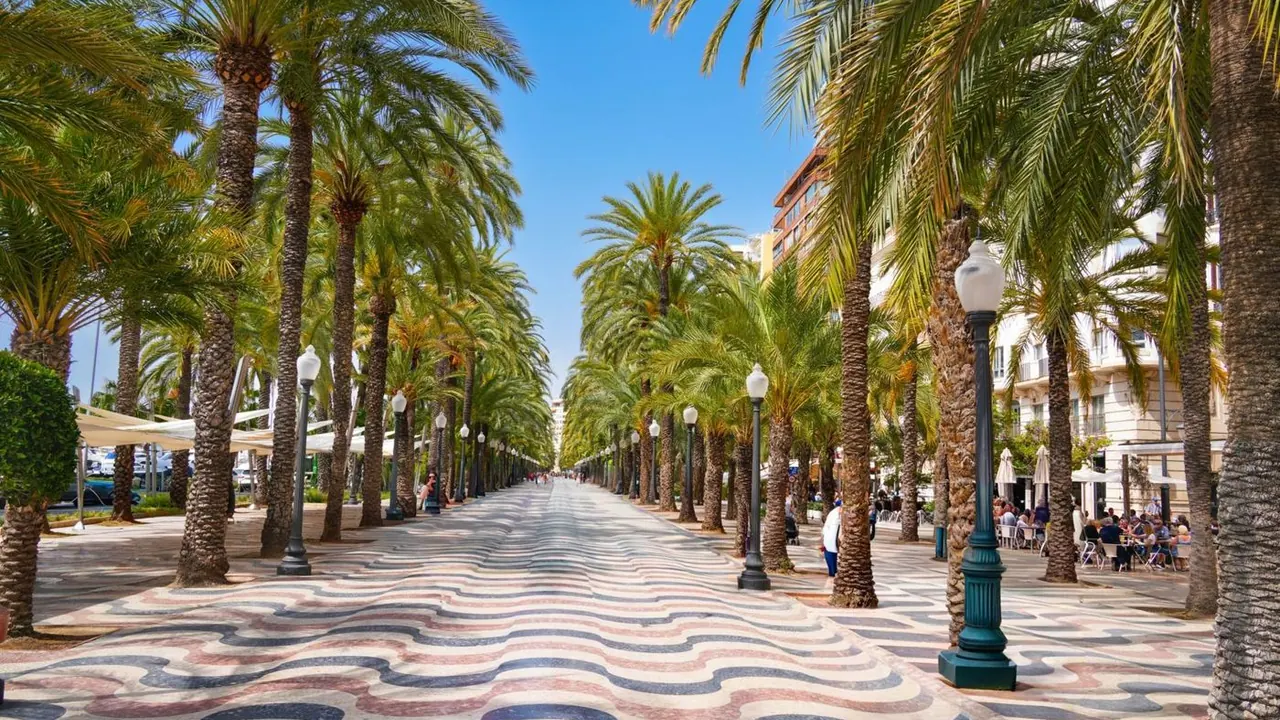
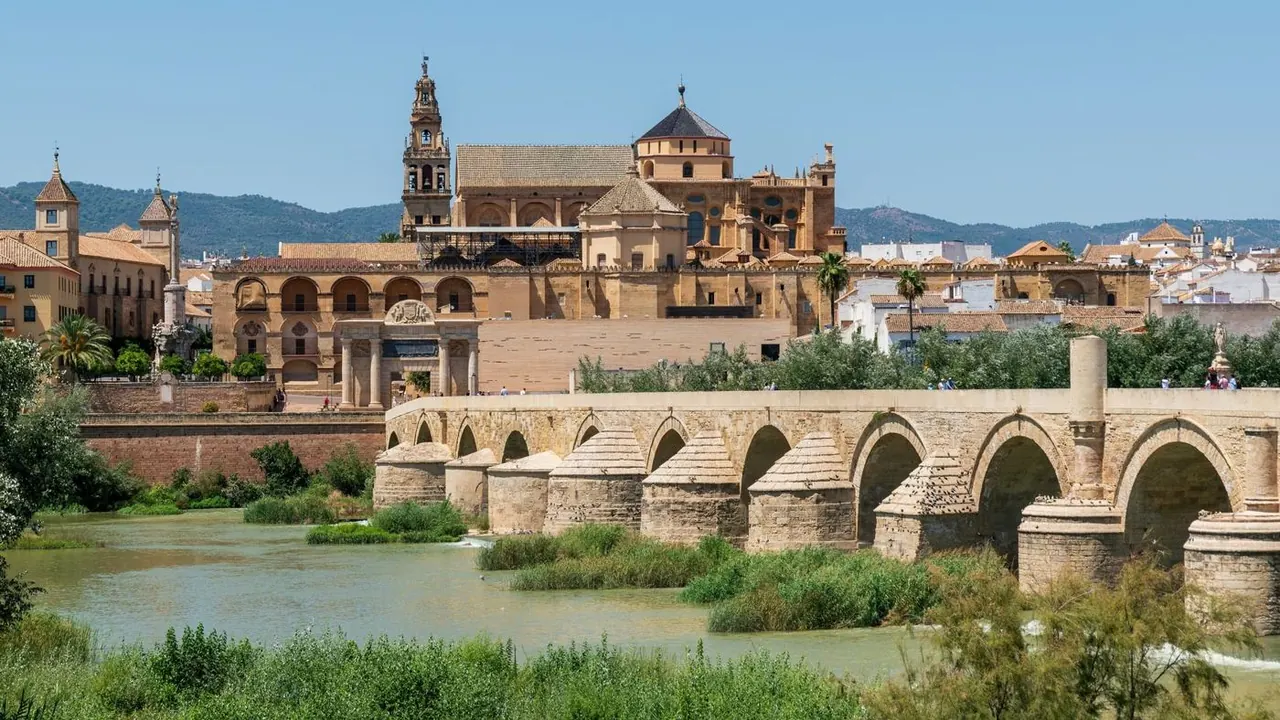
Photos: Alicante by Emilio Sánchez Hernández, Pexels License; Cordoba by Jose María Ligero Loarte, CC BY-SA 4.0, cropped.
Alicante or Cordoba?
Our verdict in twelve categories, each scored against the same fixed benchmark cities, and the climate month by month, so you can choose for your trip.
Choose Alicante for
- beaches
- families
- nightlife
Alicante suits a trip built around the sea. You get a city beach under the castle, a long sandy bay a tram ride away and swimming water from early summer well into autumn. Add easy evenings in El Barrio, rice lunches and mountains close behind the coast, and it works well for families and for anyone who wants sun with a bit of city life around it.
Choose Cordoba for
- culture and sights
- day trips
- live music and the arts
Cordoba is the better pick if you are going for history and architecture. The Mezquita-Cathedral, the Juderia and Medina Azahara are reason enough, and fast trains put Seville, Granada and Malaga within easy reach, so one hotel can serve a whole tour of Andalusia. It rewards curious adults who travel in spring or autumn, and it has nothing to offer anyone who wants a beach.
Scoreboard
Twelve categories on one fixed scale from 0 to 100. The shaded stretch is the gap between the two.
Your match
Pick a travel style or drag the sliders, and both match scores follow your weighting.
Wins on beaches and families with your weighting.
Wins on culture and sights and day trips with your weighting.
What matters to you?
Category by category
What the scores mean for a trip.
Beaches & swimming
The two cities could hardly be further apart here. In Alicante the beach is part of daily life: a swim at Postiguet between lunch and a walk along the Explanada, the long, shallow sweep of Playa de San Juan by tram, rocky coves on Tabarca, and more bays up the Costa Blanca. The only real drawback is crowding in high summer.
Cordoba has no coast at all. Reaching the sand near Malaga takes a train and a transfer, which makes for a long day, and in summer locals cool off in pools or at reservoirs in the Sierra Morena.
Food & drink
Both cities eat well, and in a similarly Spanish way, with lunch as the main meal. Alicante is the rice city: arroz a banda, black rice and arroz con costra shared at a long lunch, red prawns at the modernist Mercado Central, and turrón from Jijona for dessert.
Cordoba cooks inland food in old tiled tabernas. Look for salmorejo, flamenquin, rabo de toro and fried aubergine with cane honey, served with chilled Montilla-Moriles wine. Its best tapas rounds are in Santa Marina and San Agustin, not beside the Mezquita.
Culture & sights
Cordoba is well ahead. The Mezquita-Cathedral, with its striped arches and a Renaissance cathedral built inside it, is one of Europe's great buildings. Around it are the Juderia, the Roman bridge, the Alcazar gardens, the patios of the Palacio de Viana and San Basilio, and the caliphal ruins of Medina Azahara. Two or three days are needed to do it justice.
Alicante's highlights are the Castillo de Santa Bárbara with its view over the bay, the flowerpot-lined steps of Santa Cruz and the well-presented MARQ. They are pleasant, but they work more as a break from the beach than as the main reason for the trip.
Nightlife
Alicante gives more to do after dark. Small bars pack the steps of El Barrio until the early hours, the port has bigger bars and clubs for a dressier crowd, and the beach terraces at San Juan stay busy on summer nights. Students and international residents keep the scene going through the year.
Cordoba's evenings are about long tapas rounds between the Corredera, Las Tendillas and the riverside. The city really stays up all night only during the May fair, and outside summer there is little to plan a late night around.
Nature & outdoors
Alicante has more variety outdoors. You can snorkel in the Tabarca marine reserve, kayak or paddleboard in the bay, walk the coastal path at Cabo de las Huertas and watch flamingos on the Santa Pola salt lagoons. Within an hour inland are real mountain hikes on Puig Campana and climbing crags at Sella.
Cordoba offers gentler country: the cork and holm oak hills of the Sierra Morena, birds of prey around Hornachuelos and the karst gorges of the Subbeticas. It is good walking in spring and autumn, but summer limits outdoor activity to dawn.
Day trips
Cordoba is the stronger base. Seville, Granada with the Alhambra, and Malaga are all an easy train ride away, so you can see the great cities of Andalusia without changing hotel. With a car you can add Ubeda and Baeza, the dolmens of Antequera and the Montilla bodegas.
Alicante's trips are good, but most are closer and on a smaller scale. Its standouts are Elche's UNESCO palm grove, the painted houses of Villajoyosa, Altea and the rock-top castle village of Guadalest, with Valencia about two hours away by train.
Good for families
Alicante is much the easier choice with children. Playa de San Juan has shallow, calm water, the palm-lined promenade suits pushchairs, and the castle lift and the Tabarca boat make good outings. The theme park and water parks near Benidorm are within reach.
In Cordoba, children can roam the traffic-free lanes, splash by the Alcazar fountains and watch the horse show at the royal stables, but most of the sights are made for adults. Its summer heat is much harder on young children than Alicante's sea breeze.
Getting around
Both cities are easy on foot, but in different ways. Alicante's old quarter, port, market and beach are all within about fifteen minutes' walk of each other, with a lift up to the castle and a coastal tram running to San Juan and on to Benidorm.
Cordoba's sights cluster in a compact web of narrow cobbled lanes, which are lovely to walk but awkward with luggage. Its strength is the railway station, with fast trains to Seville, Madrid and Malaga.
Shopping & style
Neither is a shopping destination, though Alicante has a slight edge for everyday shopping. Avenida Maisonnave has chains and department stores, the Mercado Central is good for food gifts, and the Elche shoe outlets are half an hour away.
Cordoba is better for one or two lasting crafts: silver filigree, embossed cordobán leather, ceramics and guitars from local workshops.
Affordability
Both are good value by Western European standards, and what matters most is timing. In Alicante, beach rooms cost far more in July, August and during the Hogueras, while October to May brings much cheaper rooms in mild weather.
Cordoba's expensive month is May, when the patio festival, the crosses and the fair fill the hotels. For the rest of the year its rooms and taberna lunches are cheap, though the main monuments charge admission.
Live music & performing arts
Cordoba has more worth going out for. Flamenco has deep roots here, from the small tablaos in the old town to the peñas where aficionados gather, and the city also has a guitar festival, the Noche Blanca del Flamenco and the Gran Teatro.
Alicante's programme is smaller and mostly in Spanish: drama and touring musicals at the Teatro Principal, and concerts by the provincial orchestra at the ADDA. There is no local art form that visitors travel for.
Wellness & relaxation
Neither city has a bathing culture that survives today, so for rest they are broadly level, and in both the slow southern day of shade, long meals and a quiet afternoon does most of the work. Where they part is warm water. In Alicante that means a hotel spa or one of a few day spas, and real thermal pools mean a drive of roughly an hour into Murcia, to the old spa towns of Archena and Fortuna.
Cordoba has kept something of its caliphal past within walking distance. A handful of Arab-style bath houses in the old town let you move between pools of different heat and add a massage, a short stroll from the ruined Caliphal Baths near the Alcazar. Afterwards, a courtyard with a fountain and orange trees is the natural place to sit for an hour.
When should you go?
Pick your month. The climate figures are measured averages, not a forecast.
Alicante in July
Cordoba in July
Daytime high, °C
Rainfall in the month, mm
Temperature and rainfall are climate normals, averaged over the years shown. Alicante: 1991-2020 normals, Alicante (2.8 km from centre). Cordoba: 1991-2020 normals, Cordoba / Aeropuerto (7.6 km from centre).
Alicante has a long, easy season. The sea is warm enough to swim from June into October and peaks at about 26°C in August. Summer days are hot but tempered by the coast, and they are almost completely dry. The heaviest rain usually comes in September as short bursts. Winters stay mild and sunny, so a walking visit works in any month.
Cordoba runs to the opposite rhythm. July and August reach about 37°C, too hot for sightseeing beyond early morning and late evening. The best months are April, May and early October, when days of around 24°C to 28°C make the lanes a pleasure to walk. Late autumn and winter are cool and much wetter, with December the rainiest month at about 91mm, so from November to March Alicante is the brighter and drier choice.
Which traveller are you?
On a beach and sun trip, Alicante wins easily. Postiguet sits at the edge of the old town, Playa de San Juan is a short tram ride away and the boat to Tabarca adds clear water. Cordoba is about 160km inland.
For a culture and arts trip, Cordoba is the clear choice. It has the Mezquita-Cathedral, the Juderia's synagogue, the Alcazar gardens and the ruins of Medina Azahara, flamenco in the peñas, and Seville and Granada are close by train. Alicante's castle and the MARQ fill only a day or two.
On a family trip with children, Alicante is easier. Shallow, calm beaches, a promenade for scooters and the theme parks near Benidorm keep children busy. Cordoba's sights are mostly for adults, and its summer heat is hard on small children.
Before you go
| Measure | Alicante | Cordoba |
|---|---|---|
| Official language | Spanish | Spanish |
| Currency | Euro (EUR) | Euro (EUR) |
| Sockets | CF230 V, 50 Hz | CF230 V, 50 Hz |
| Driving side | Right | Right |
| Time zone | UTC+1, UTC+2 in summer | UTC+1, UTC+2 in summer |
| Emergency number | 112 | 112 |
| Elevation | 3 m | 120 m |
| Main airport | Alicante-Elche Miguel Hernández Airport (ALC)10 km from centre126 non-stop destinations | Córdoba Airport (ODB)8 km from centre3 non-stop destinations |
| Public holidays this year | 13 days | 12 days |
By the numbers
| Measure | Alicante | Cordoba |
|---|---|---|
| City population | 366,221 | 323,262 |
| People per km² | 1,819 | 258 |
| Museums within 10 km | 8 | 16 |
| UNESCO World Heritage sites within 50 km | 2 | 2 |
| Swim season, months above 21 °C | 5 months | - |
Where else could you go?
Every comparison below shares a destination with this one, so you can follow Alicante or Cordoba somewhere new.