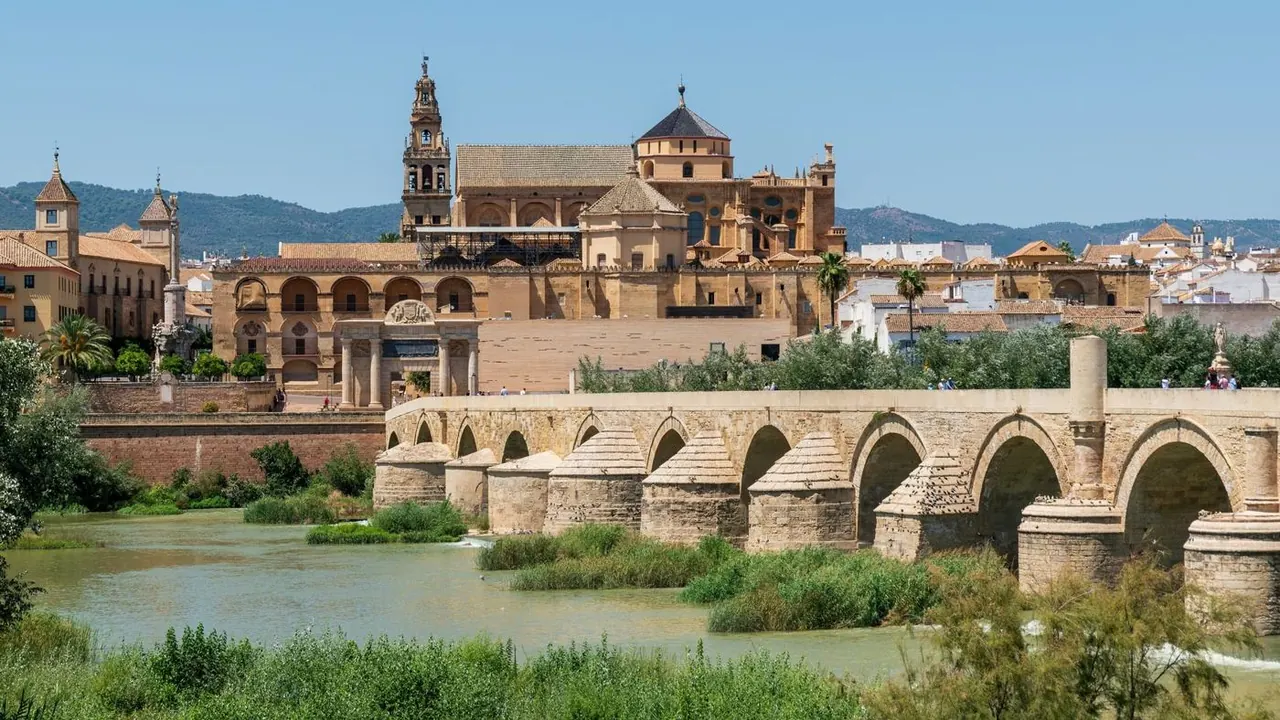
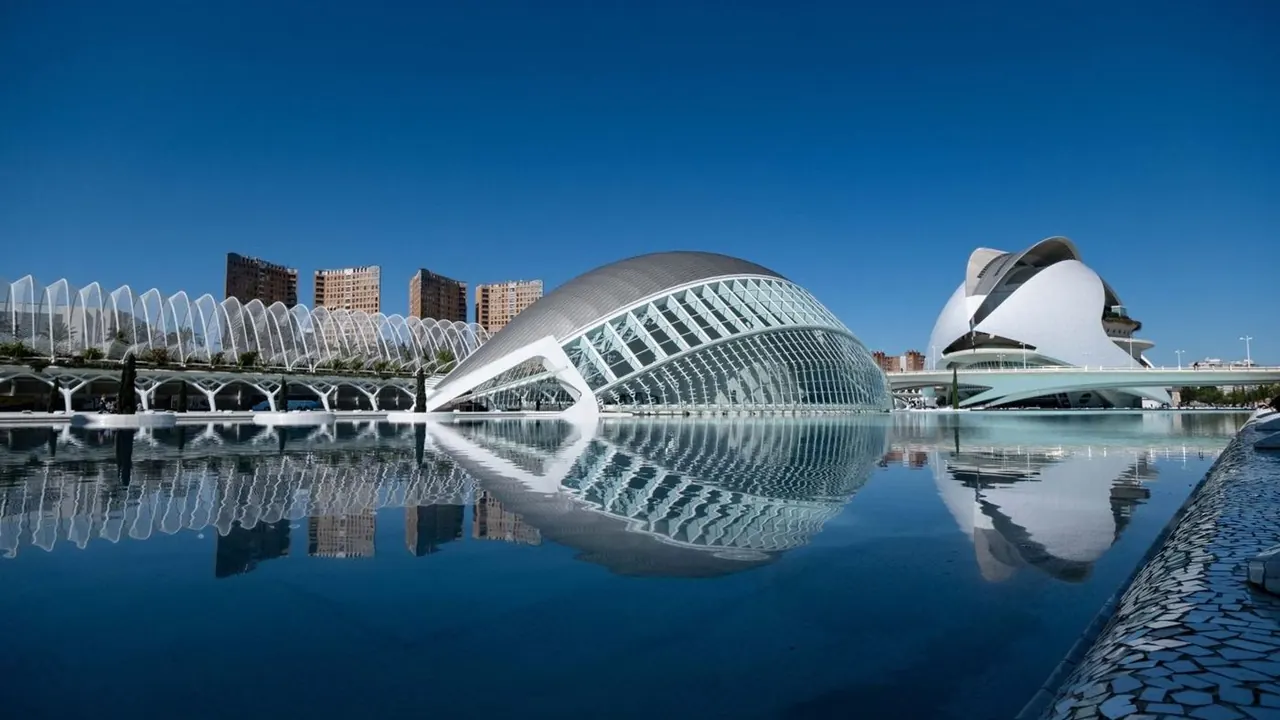
Photos: Cordoba by Jose María Ligero Loarte, CC BY-SA 4.0, cropped; Valencia by Francesco Ungaro, Pexels License.
Cordoba or Valencia?
Our verdict in twelve categories, each scored against the same fixed benchmark cities, and the climate month by month, so you can choose for your trip.
Choose Cordoba for
- day trips
- culture and sights
- prices
Cordoba suits a traveller who comes for history at close range and is happy to spend the evening at a taberna table rather than on a dance floor. The Mezquita-Cathedral, the Juderia and Medina Azahara reward two or three unhurried days, and the fast trains make the city a base for Seville, Granada and Malaga without changing hotel. Go in spring or autumn, and don't expect any sea.
Choose Valencia for
- beaches
- families
- nightlife
Valencia is the better all-rounder, especially for anyone who wants sand, attractions for children and more choice of evenings out. It pairs a real Gothic old town with wide city beaches, the City of Arts and Sciences, rice eaten by the sea and the bars of Ruzafa. A flat centre that is easy to cycle links all of it.
Scoreboard
Twelve categories on one fixed scale from 0 to 100. The shaded stretch is the gap between the two.
Your match
Pick a travel style or drag the sliders, and both match scores follow your weighting.
Wins on day trips and culture and sights with your weighting.
Wins on beaches and families with your weighting.
What matters to you?
Category by category
What the scores mean for a trip.
Beaches & swimming
For beach time, there is no contest. Cordoba lies deep in the Guadalquivir valley, and a swim in the sea means a long day out to the Costa del Sol by train. In summer, locals make do with pools and reservoirs.
Valencia has kilometres of wide golden sand on its doorstep: Las Arenas and Malvarrosa with their promenade, Patacona to the north, and the pine-backed dunes of El Saler and La Devesa to the south. The water is shallow and calm, and a morning on the beach fits easily round a day of sightseeing.
Food & drink
Both cities eat late and well, but Valencia has more depth and range. Its table is built on rice, from paella valenciana and arroz negro on the beachfront at Las Arenas to all i pebre in the Albufera villages. Add the Mercado Central, horchata in Alboraya and a creative restaurant scene in Ruzafa.
Cordoba is narrower but very much its own. You eat salmorejo, flamenquin and fried aubergine with cane honey in old tiled tabernas, with chilled Montilla-Moriles in small glasses, and the best rounds are in Santa Marina and San Agustin rather than by the Mezquita.
Culture & sights
Cordoba has the stronger draw for sightseeing. The Mezquita-Cathedral, with its striped arches and a cathedral set inside the mosque, has no equal in Valencia. Around it are the Juderia's synagogue, the Roman bridge, the Alcazar gardens, the patios of San Basilio and Viana, and the caliphal ruins of Medina Azahara.
Valencia gives a wider span of eras rather than one overwhelming monument. There is the Gothic Lonja de la Seda, the cathedral with its Grail chalice, the medieval gates, then the white futuristic City of Arts and Sciences, the Museo de Bellas Artes and IVAM for modern art.
Nightlife
Valencia gives you far more choice after dark. Ruzafa's cocktail and wine bars stay full past midnight, El Carmen has older bars and a student crowd, and in summer open-air clubs near the port and Malvarrosa run until dawn. In March, Fallas turns whole neighbourhoods into street parties.
In Cordoba, a night out means late tapas on the terraces around the Corredera and Las Tendillas. The city only really stays up in summer and during the May fair, and the club scene is small.
Nature & outdoors
Valencia has more countryside within easy reach. The Albufera lagoon, with its rice fields, herons and sunset boat trips, starts about 10km from the centre, the Devesa's pine woods and dunes are beside it, and the Turia gardens give 9km of green space for running and cycling. Chulilla's gorge and the Sierra Calderona are around an hour's drive.
Cordoba's landscapes are drier and harder to reach without a car: the holm oak and cork hills of the Sierra Morena, the birds of prey of Hornachuelos and the limestone Subbeticas. Its summer heat rules out most outdoor activity except at dawn.
Day trips
Cordoba is the stronger base. Seville, Granada with the Alhambra and Malaga are all within about an hour and a half by fast train, so Andalusia's great cities come within reach from one hotel. With a car you can add Ubeda and Baeza, Carmona, Priego de Cordoba and the Montilla bodegas.
Valencia's outings are good but less famous. You can reach Roman Sagunto and Xàtiva's castle in about half an hour, Cuenca's hanging houses in about an hour by fast train, and the sea-girt castle town of Peñíscola in about an hour and a half.
Good for families
Cordoba has a few things children enjoy, while Valencia has a whole district built for them. In Cordoba the fountains of the Alcazar gardens, the horse show at the royal stables and the castle at Almodovar del Rio make good outings. The traffic-free lanes are a safe place to let children run ahead, but the Mezquita and the patios are pleasures for adults, so a family soon runs out of plans.\n\nValencia can keep children busy for several days without repeating itself.
The City of Arts and Sciences puts sharks and belugas, a hands-on science museum and the domed Hemisfèric screen side by side, and the Turia gardens let children scoot and cycle across the city away from cars. The catch is distance: those attractions are a ride or a long walk from the old town, whereas Cordoba's small centre keeps every walk short.
Getting around
Both have historic centres you can walk, but Valencia is easier to get around. It is flat, one of Spain's best cities for cycling along the Turia, and metro and tram lines reach the airport, port and beaches.
Cordoba's sights sit within a few minutes' walk of each other on narrow cobbled lanes. Buses are basic, though, Medina Azahara needs a tourist bus or taxi, and the surrounding countryside needs a car.
Shopping & style
Valencia offers the fuller shopping trip. Calle Colón and Poeta Querol have chains, international labels and luxury boutiques, and Ruzafa and El Carmen have independent and vintage shops. The Mercado Central is good for saffron, rice and turrón to take home.
Cordoba is for a few well-chosen crafts: silver filigree, the embossed guadameci leather, ceramics and guitars from local workshops. There is little fashion beyond the chains around Cruz Conde.
Affordability
Both are easy on the budget, and Cordoba is slightly cheaper. Its tapas and Montilla cost very little, and the small centre means you rarely pay for transport. In Valencia, set lunch menus and cheap trams and bike hire keep costs down, but a rice lunch on the beachfront and the City of Arts and Sciences add up.
The two cities get expensive at different times. In Cordoba it is May, with the patio festival and the fair. In Valencia it is Fallas in March and high summer by the beach.
Live music & performing arts
Valencia has the bigger programme. The Palau de les Arts stages a serious opera and ballet season with its own orchestra, and the Palau de la Música, the Teatro Principal and a small jazz circuit in Ruzafa add to it.
Cordoba's strength is narrower but more personal. You hear flamenco in small tablaos and in the peñas where aficionados gather, and the city has its guitar festival and the free all-night Noche Blanca del Flamenco. The Gran Teatro covers orchestra and theatre.
Wellness & relaxation
Neither is a spa destination. Both offer Arab-style bath houses and hotel spas, and both keep the ruins of a Moorish bath, Cordoba's Caliphal Baths and Valencia's Baños del Almirante. The difference is where you go to unwind: in Cordoba, a shaded patio with a fountain and orange trees and the enforced summer siesta; in Valencia, a slow walk along the seafront promenade or under the trees of the Turia gardens.
When should you go?
Pick your month. The climate figures are measured averages, not a forecast.
Cordoba in July
Valencia in July
Daytime high, °C
Rainfall in the month, mm
Temperature and rainfall are climate normals, averaged over the years shown. Cordoba: 1991-2020 normals, Cordoba / Aeropuerto (7.6 km from centre). Valencia: 1991-2020 normals, Valencia (1.6 km from centre).
Cordoba has the harsher inland climate. Spring is its finest season, warm from March to May and ideal for the lanes and patios, and October is nearly as good. July and August reach 37°C under almost constant sun, which pushes sightseeing into the early morning and late evening. Summer is close to bone dry, while the rain comes from October to December and peaks at 91mm in December.
Valencia stays milder all year, with summer highs only around 31°C thanks to the sea. The water is warm enough to swim from June into October and reaches 26°C in August, so for a beach trip it is the only choice of the two. Winter days are a little milder than in Cordoba, though the two are much alike then. September and October bring the coast's heaviest showers, around 70mm, so late spring is the safest time to see both cities in comfort.
Which traveller are you?
On a beach and sun trip, Valencia is the clear choice. Malvarrosa and Las Arenas are a short tram ride from the centre, and the dunes of El Saler lie further south. Cordoba is about 160km from the sea, and in summer you cool off in a pool.
For a culture and arts trip, choose Cordoba. The Mezquita-Cathedral is one of Europe's great monuments, with the Juderia, the Alcazar and Medina Azahara close by, and Seville and Granada are easy day trips by fast train. Valencia's Lonja and opera house are fine, but they come second here.
On a family trip with children, Valencia is much easier. The Oceanogràfic, the science museum, Bioparc and the Gulliver playground in the Turia gardens fill days, and the shallow beaches suit small swimmers. Cordoba's sights are made for adults, and its summer heat is hard on children.
Before you go
| Measure | Cordoba | Valencia |
|---|---|---|
| Official language | Spanish | Spanish |
| Currency | Euro (EUR) | Euro (EUR) |
| Sockets | CF230 V, 50 Hz | CF230 V, 50 Hz |
| Driving side | Right | Right |
| Time zone | UTC+1, UTC+2 in summer | UTC+1, UTC+2 in summer |
| Emergency number | 112 | 112 |
| Elevation | 120 m | 15 m |
| Main airport | Córdoba Airport (ODB)8 km from centre3 non-stop destinations | Valencia Airport (VLC)9 km from centre109 non-stop destinations |
| Public holidays this year | 12 days | 13 days |
By the numbers
| Measure | Cordoba | Valencia |
|---|---|---|
| City population | 323,262 | 840,792 |
| People per km² | 258 | 6,242 |
| Museums within 10 km | 16 | 45 |
| UNESCO World Heritage sites within 50 km | 2 | 2 |
| Swim season, months above 21 °C | - | 5 months |
Where else could you go?
Every comparison below shares a destination with this one, so you can follow Cordoba or Valencia somewhere new.