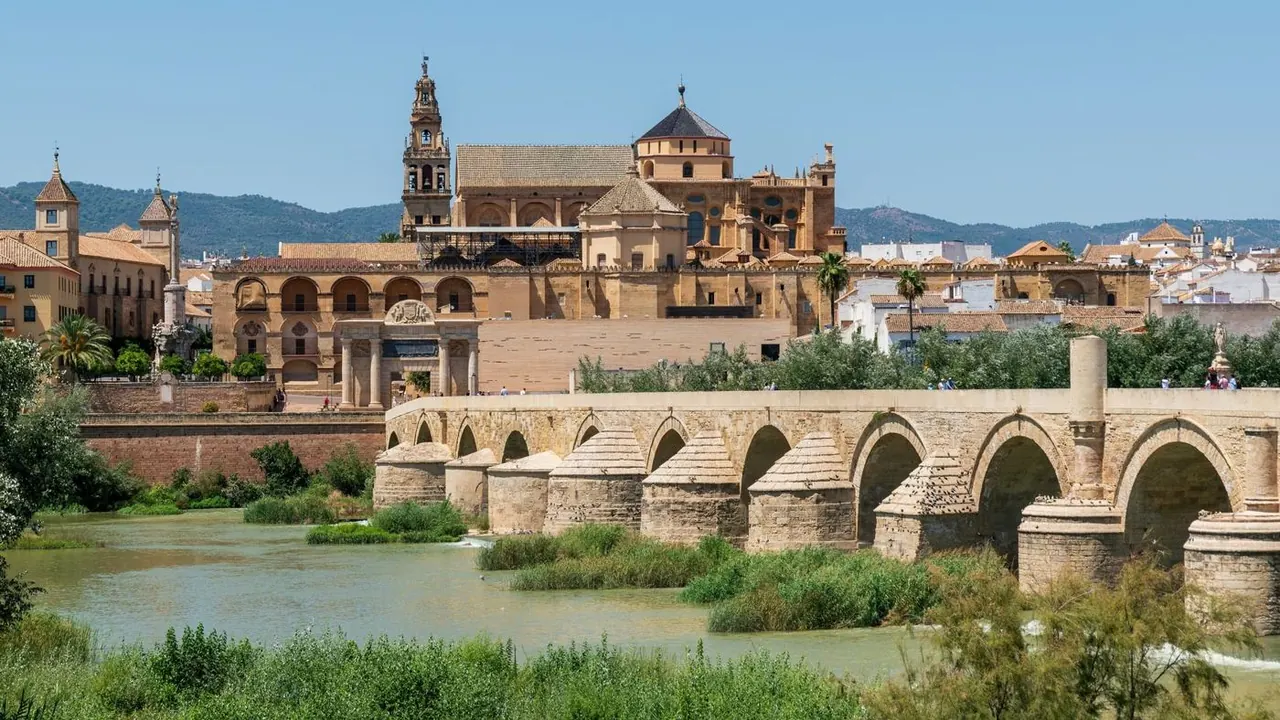
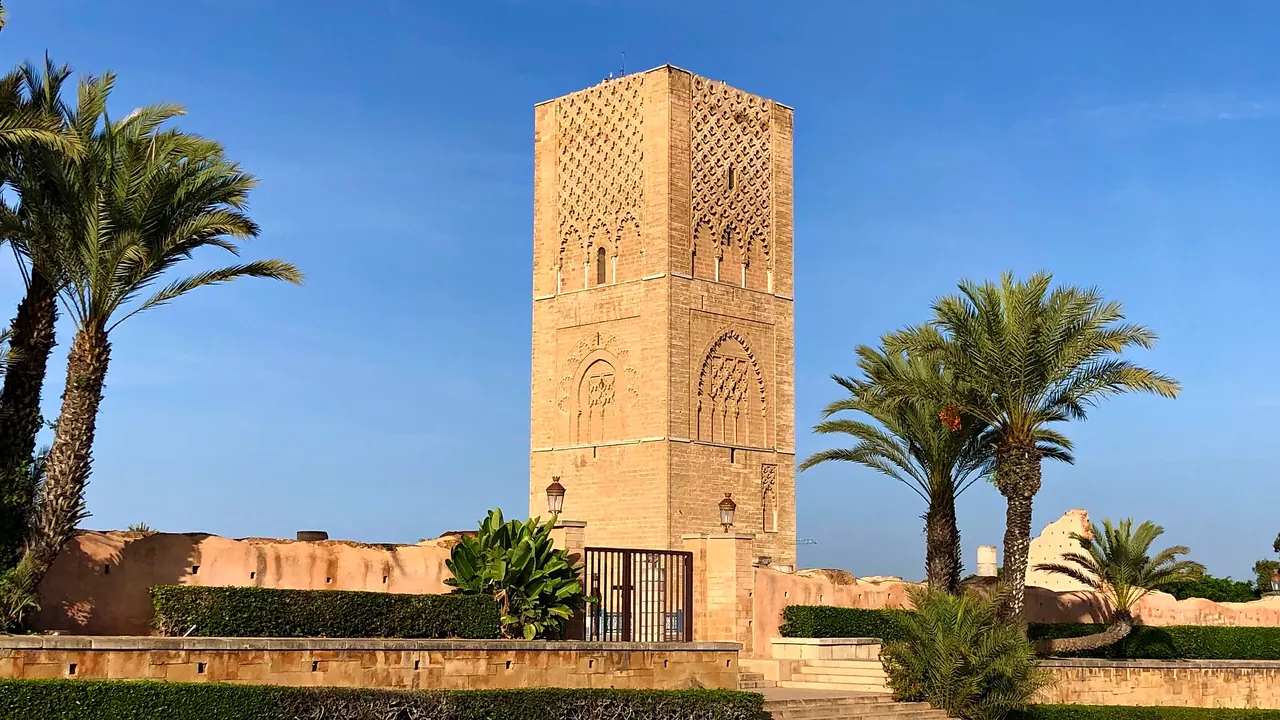
Photos: Cordoba by Jose María Ligero Loarte, CC BY-SA 4.0, cropped; Rabat by Aemazy, CC BY-SA 4.0, cropped.
Cordoba or Rabat?
Our verdict in twelve categories, each scored against the same fixed benchmark cities, and the climate month by month, so you can choose for your trip.
Choose Cordoba for
- day trips
- nightlife
- culture and sights
Cordoba is the choice for a traveller who wants great monuments and plenty of them within reach. The Mezquita-Cathedral, the Juderia and Medina Azahara reward two or three days, and fast trains put Seville, Granada and Malaga close enough for day trips without moving hotel. Add taberna food with Montilla wine and late evenings in the squares, and it suits a culture-led trip in spring or autumn.
Choose Rabat for
- beaches
- wellness
- prices
Rabat works better as a calm, inexpensive introduction to Morocco, with the Atlantic at the foot of the Kasbah of the Udayas. Its pace is slower, the hammam is part of everyday life and the medina asks little effort of visitors, which makes it easier with children and better for a restful stay. It is also milder in high summer, when Cordoba becomes hard work.
Scoreboard
Twelve categories on one fixed scale from 0 to 100. The shaded stretch is the gap between the two.
Your match
Pick a travel style or drag the sliders, and both match scores follow your weighting.
Too close to call, 1 point apart
Wins on day trips and nightlife with your weighting.
Wins on beaches and wellness with your weighting.
What matters to you?
Category by category
What the scores mean for a trip.
Beaches & swimming
Cordoba has no beach life at all. The nearest sea is the Costa del Sol, about 160km away, and in summer locals swim in pools and Sierra Morena reservoirs instead.
Rabat sits on the Atlantic, with a local beach right below the Kasbah of the Udayas and quieter sand a short taxi ride south at Harhoura and Skhirat. The swell and cool water make it better for surfing and an afternoon by the sea than for lazy swimming, but it is still the sea on your doorstep, which Cordoba cannot offer.
Food & drink
Cordoba has the edge for eating. It has a clear local repertoire of salmorejo, flamenquin, rabo de toro and fried aubergine with cane honey, eaten in patio tabernas around Santa Marina and San Agustin with chilled Montilla-Moriles wine.
Rabat offers honest Moroccan home cooking, such as tagines, Friday couscous, harira and grilled Atlantic sardines, plus evening snail broth from street stalls and a strong mint-tea café culture. Its embassy districts add Lebanese and French cooking, but alcohol is discreet and the range is narrower, so wine with dinner comes far more naturally in Cordoba.
Culture & sights
Both cities have compact, historic centres that can be seen in two or three days, but Cordoba's are on a grander scale. The Mezquita-Cathedral, with its striped arches and a cathedral built into the middle of it, is a world-class monument, and the Juderia, the Alcazar, the Roman bridge and Medina Azahara add depth around it.
Rabat's sights span Roman Sala at the Chellah, the Almohad gate of the Kasbah of the Udayas, the unfinished Hassan Tower and an art deco Ville Nouvelle. It is calm, varied and well kept, but no single sight carries the weight of the Mezquita.
Nightlife
Cordoba gives you more to do after dark, though it is a city of late tapas rather than clubs. In the warm months the terraces around the Corredera and Las Tendillas fill after ten, students keep bars busy at weekends, and the May fair runs until dawn.
Rabat is quieter still. Evenings mean cafés, family walks along the Bou Regreg and a few hotel bars and lounges in Agdal, and anyone wanting a big night out is pointed towards Casablanca.
Nature & outdoors
The two are broadly level, but the outdoors differs in kind. Cordoba has the wooded Sierra Morena just north, birds of prey in Hornachuelos and limestone gorges in the Sierras Subbeticas, though summer heat confines walking to the early morning and a car is needed.
Rabat's setting is coastal: the Bou Regreg estuary for paddling, surf schools at the river mouth and the Maamora cork oak forest for easy cycling. It is mild enough to be outdoors all year, but real mountains are hours away, as they are from Cordoba.
Day trips
Cordoba is the stronger base by some distance. High-speed trains reach Seville in under an hour and Granada and Malaga soon after, so Andalusia's great cities become easy day trips. With a car, Ubeda, Baeza, the Antequera dolmens and the Montilla bodegas are all within reach.
Rabat's rail line is good too, with Casablanca an hour away and Tangier, Asilah and Meknes within comfortable reach, and Salé is just across the river by tram. Fez and Volubilis, though, really need an overnight stay.
Good for families
Rabat is slightly the easier of the two with children. Hassle in the medina is rare, the tram keeps distances short, the national zoo has open enclosures, and the Jardin d'Essais and Bouknadel gardens give space to run. The beach waves call for close watching, however.
Cordoba's car-free lanes are safe for roaming, and the Alcazar fountains and the royal stables horse show go down well, but most sights are made for adults and the summer heat is hard on small children.
Getting around
Cordoba is easier on foot. The Mezquita, Juderia, Alcazar, Roman bridge and patio quarters lie within a short walk of each other, and the station is close to the old town. Narrow cobbled lanes make wheeling luggage awkward, though, and Medina Azahara and the countryside need a tourist bus, a taxi or a car.
Rabat spreads further, but the main sights sit on broad, flat streets by the river, and the tram and cheap petit taxis cover the Chellah, Agdal and Salé. Because the rail network handles the main day trips, a car is never really needed there.
Shopping & style
Neither city is made for a shopping trip, though Rabat has a little more to browse. Rue des Consuls in the medina is a long covered street of carpets, brass, leather and embroidery, the haggling is gentle, and Salé's potteries are across the river.
Cordoba's strength is a few fine crafts from specialist workshops: silver filigree, embossed cordobán leather and locally made guitars. For everyday shopping it offers Spanish chains around Cruz Conde.
Affordability
Rabat is the cheaper of the two day to day. Medina meals, café terraces, the tram and taxis cost little, and many sights are free or nearly so. Rooms and the Agdal restaurants are the costly part, and so is alcohol.
Cordoba is good value for Western Europe, with tapas and Montilla wine in the tabernas costing little and a centre you can walk. The May festivals push room rates up sharply, and the main monuments charge admission.
Live music & performing arts
Cordoba offers more for an evening of live performance, thanks to flamenco. You can hear it in tablaos and in the peñas where aficionados gather, and also at the guitar festival and the Noche Blanca del Flamenco. The Gran Teatro adds orchestra and theatre.
Rabat holds the national theatres and the large Mawazine festival, but programmes run irregularly and are mostly in Arabic and French. Outside the festival, Andalusian and chaabi music has to be sought out.
Wellness & relaxation
Rabat has a living bathing culture that Cordoba lost centuries ago. Neighbourhood hammams in the medina and Salé offer steam and a black-soap scrub, hotel spas add argan oil massages, and the city's unhurried pace and riverside walks do the rest.
Cordoba's version is the Arab-style bath houses in the old town and its hotel spas. Its real calm comes from fountain courtyards with orange trees and the enforced midday rest in summer.
When should you go?
Pick your month. The climate figures are measured averages, not a forecast.
Cordoba in July
Rabat in July
Daytime high, °C
Rainfall in the month, mm
Temperature and rainfall are climate normals, averaged over the years shown. Cordoba: 1991-2020 normals, Cordoba / Aeropuerto (7.6 km from centre). Rabat: 1991-2020 normals, Rabat-Sale (7.6 km from centre).
Cordoba is at its best from March to May, when days are warm, the rain is easing off and long walks through the old town are a pleasure. From June to September the heat builds to around 37°C, so sightseeing shrinks to the mornings and evenings, though the sun shines almost without a break and rain all but stops. October is still warm enough for walking, but it is also when the rain returns. Wet weather stays through November and peaks in December at about 91mm. Winter days are cool but often bright.
Rabat's year is far gentler. Summer highs stay close to 28°C and the sea is warmest in August at about 23°C, so July to September is the time for the beach, though the water is never truly warm. Spring and early autumn are pleasant for walking, and winter days are a little milder than Cordoba's. November and December are the wettest months, wetter even than in Cordoba. Choose Rabat for a summer trip and Cordoba for spring.
Which traveller are you?
On a culture and arts trip, Cordoba is the clear pick. The Mezquita-Cathedral, the Juderia, the Alcazar gardens and Medina Azahara form a denser set than Rabat's, and flamenco peñas add evenings that Rabat's irregular theatre programme cannot match.
For a beach and sun trip, Rabat wins easily because the Atlantic is right there. The city beach sits below the kasbah and calmer sand lies south towards Skhirat, while Cordoba is well inland and the sea means a long day out to Malaga.
On a relaxing and wellness trip, Rabat suits better. Neighbourhood hammams and hotel spas offer a proper scrub and massage, the city moves slowly, and its mild summers allow evening walks by the river without Cordoba's punishing heat.
Before you go
| Measure | Cordoba | Rabat |
|---|---|---|
| Official language | Spanish | Arabic, Standard Moroccan Tamazight |
| Currency | Euro (EUR) | Moroccan Dirham (MAD) |
| Sockets | CF230 V, 50 Hz | CE50 Hz |
| Driving side | Right | Right |
| Time zone | UTC+1, UTC+2 in summer | UTC+1 |
| Emergency number | 112 | Police 19/112, ambulance 15, fire 15 |
| Elevation | 120 m | 87 m |
| Main airport | Córdoba Airport (ODB)8 km from centre3 non-stop destinations | Rabat-Salé Airport (RBA)9 km from centre45 non-stop destinations |
| Public holidays this year | 12 days | 11 days |
By the numbers
| Measure | Cordoba | Rabat |
|---|---|---|
| City population | 323,262 | 515,619 |
| People per km² | 258 | 4,370 |
| Museums within 10 km | 16 | 7 |
| UNESCO World Heritage sites within 50 km | 2 | 1 |
| Swim season, months above 21 °C | - | 4 months |
Where else could you go?
Every comparison below shares a destination with this one, so you can follow Cordoba or Rabat somewhere new.
- Casablancavs Rabat
- Sevillevs Cordoba
- Granadavs Cordoba
- Rondavs Cordoba
- Malagavs Cordoba
- Marbellavs Cordoba