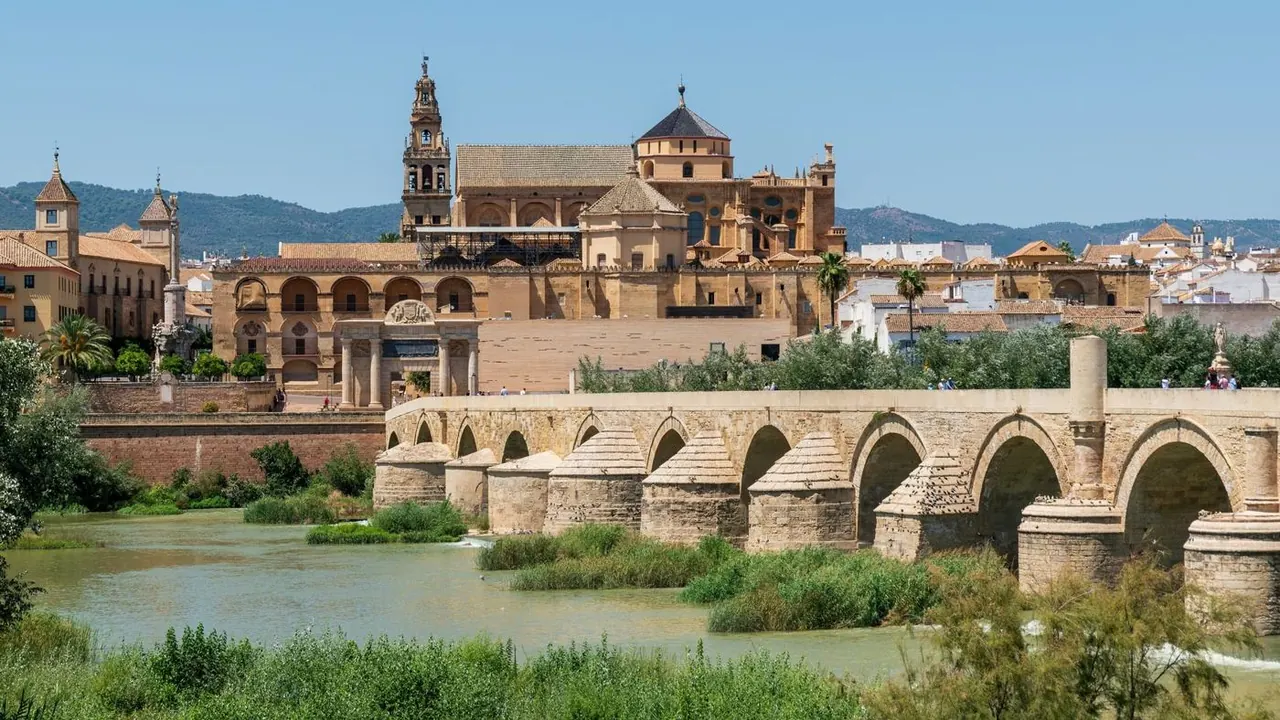
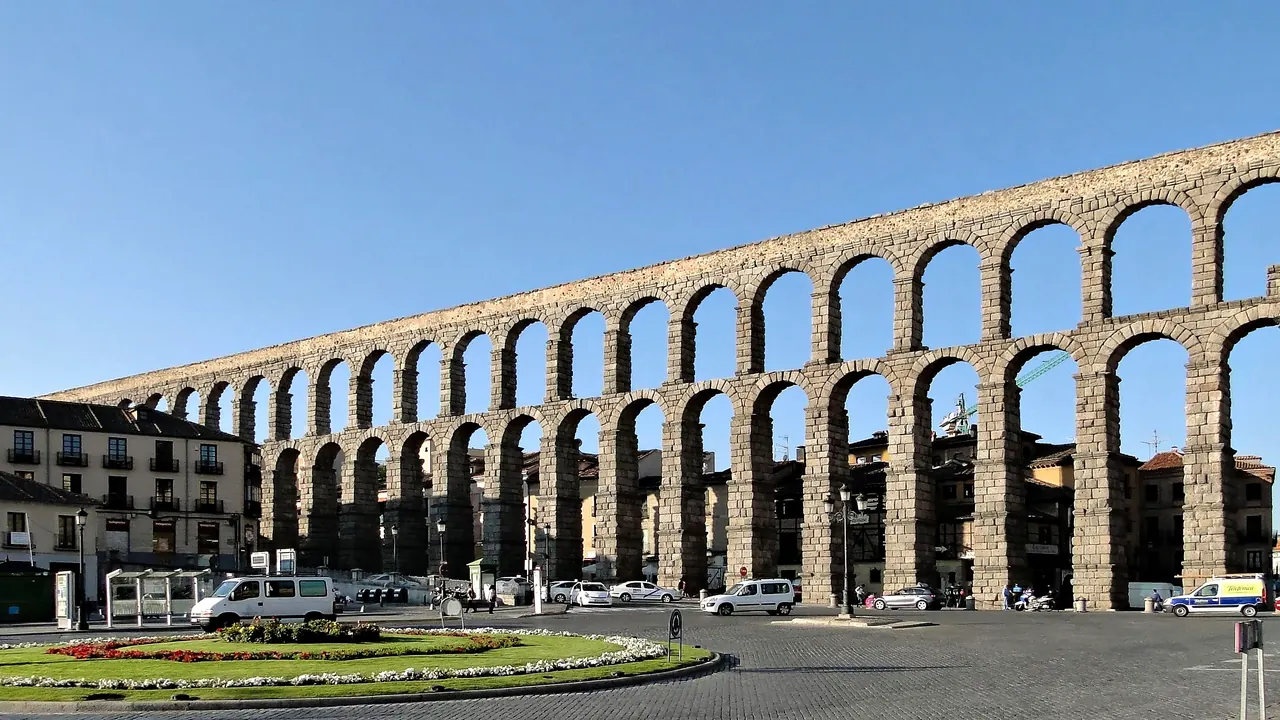
Photos: Cordoba by Jose María Ligero Loarte, CC BY-SA 4.0, cropped; Segovia by Bernard Gagnon, CC BY-SA 3.0, cropped.
Cordoba or Segovia?
Our verdict in twelve categories, each scored against the same fixed benchmark cities, and the climate month by month, so you can choose for your trip.
Choose Cordoba for
- live music and the arts
- shopping
- nightlife
Cordoba suits travellers who want one of Europe's great monuments and a southern way of spending the evening. The Mezquita, the Juderia and Medina Azahara give it more to see. Late tapas rounds in tiled tabernas, Montilla wine and flamenco in the peñas fill the nights, and fast trains to Seville, Granada and Malaga let you see much of Andalusia from one hotel. Go in spring or autumn, because the summer heat takes over everything.
Choose Segovia for
- nature and the outdoors
- families
Segovia is the better pick if you want mountains as well as monuments. Its aqueduct, cathedral and cliff-top Alcázar take a day or two, and then the Sierra de Guadarrama starts almost at the edge of town, with pine forest, high passes and snow in winter. Meals centre on roast suckling pig and lamb, and evenings end early. With Madrid so close, it also fits neatly into a longer trip through central Spain.
Scoreboard
Twelve categories on one fixed scale from 0 to 100. The shaded stretch is the gap between the two.
Your match
Pick a travel style or drag the sliders, and both match scores follow your weighting.
Wins on live music and the arts and shopping with your weighting.
Wins on nature and the outdoors and families with your weighting.
What matters to you?
Category by category
What the scores mean for a trip.
Beaches & swimming
Neither city is a place for the sea, but Cordoba is a little better placed. The fast train to Malaga takes about an hour, so a long day on the Costa del Sol beaches is possible.
From Segovia the coast is a long day's drive away. Swimming means hotel or municipal pools, or the chilly river pools and reservoirs of the Guadarrama foothills, which are colder than the reservoirs Cordobans head to in the Sierra Morena.
Food & drink
Cordoba has the broader table. Its tabernas, many set around tiled patios, serve salmorejo where it began, along with flamenquin, rabo de toro and aubergine with cane honey. Tapas rounds in Santa Marina and San Agustin, and the counters of the Mercado Victoria, make grazing easy.
Segovia's cooking centres on the wood-fired oven: cochinillo, lechazo and the big judiones beans from La Granja. It is a memorable lunch, but the range beyond the roasts is narrow. Both cities are thin on fine dining, and Segovia's Ribera and Rueda wines are a good contrast to Cordoba's dry Montilla.
Culture & sights
Both are UNESCO-listed old towns, but Cordoba's heritage goes deeper. The Mezquita, with its striped arches and a cathedral built into its heart, is the centrepiece. Around it are the lanes and synagogue of the Juderia, the Alcazar gardens, the patios of the Palacio de Viana and the caliphal ruins of Medina Azahara, which easily fill two or three days.
Segovia's sights run along one ridge, from the mortarless granite arches of the Roman aqueduct to the late Gothic cathedral and the Alcázar. Romanesque porches and the twelve-sided Vera Cruz add depth, but the museums are modest and a full day covers the essentials.
Nightlife
Cordoba stays out later. On warm nights the Corredera, Las Tendillas and the riverside terraces fill after ten, summer brings open-air bars, and the May fair keeps the casetas dancing until dawn. Outside those seasons it is mostly a city of long evenings at the table rather than clubs.
Segovia's evening is a tapas crawl around Plaza Mayor, with a few student bars at weekends. On weeknights and through the cold months the old town goes quiet early, and anyone wanting a real late night takes the train to Madrid.
Nature & outdoors
Here Segovia leads clearly. The Sierra de Guadarrama fills the view from the Alcázar, and within half an hour you reach the Valsaín pines and the passes of Navacerrada and Cotos. From there trails climb to Peñalara, at 2,428m, and its glacial lakes, with snow in winter. Closer in, the Eresma valley path circles below the old town, and the Hoces del Duratón gorge has griffon vultures.
Cordoba's countryside is gentler: the wooded Sierra Morena, Hornachuelos with its birds of prey, and the Subbeticas karst about an hour away. A car is needed, and summer heat limits walking to dawn.
Day trips
Both are excellent bases, and Cordoba has a slight edge because of the size of its neighbours. Seville, Granada with the Alhambra and Malaga are all an hour or so by fast train. By car you can reach Ubeda, Baeza, Antequera's dolmens and the Montilla bodegas.
Segovia's trips are different in kind. You get royal palaces at La Granja and Riofrío, walled villages such as Pedraza and Sepúlveda, Ávila and El Escorial, and Madrid less than half an hour away by train.
Good for families
There is little between them, and neither has much built for children, but the days feel different. Cordoba's centre is flat and largely free of traffic, with the Alcazar fountains, a horse show at the royal stables and a modest zoo, though the summer heat is hard on small children.
Segovia offers a proper storybook castle with a tower to climb and the giant arches of the aqueduct, plus La Granja's gardens for running about. Its steep cobbles are tough going with a pushchair, and it has no zoo.
Getting around
Both centres are walked rather than ridden, but Cordoba is easier to arrive in and get around. Its railway station is a walk or short taxi ride from the old town, and the Mezquita, Juderia, Alcazar and Roman bridge sit close together on fairly level ground. Only Medina Azahara needs a tourist bus or taxi.
Segovia's high-speed station lies several kilometres out, a bus ride of about fifteen minutes. The ridge from the aqueduct to the Alcázar is short but steep in places, and the villages and trailheads really need a car.
Shopping & style
Cordoba gives you more reason to buy. Its workshops still make silver filigree, embossed guadameci leather and guitars, and the streets around Cruz Conde and Las Tendillas have Spanish chains and a department store.
Segovia's shopping runs to souvenirs along Calle Real, some ceramics and embroidery, and boxed ponche or La Granja beans to take home. For anything more you go to Madrid.
Affordability
Costs are much the same in both, so the difference lies in when prices climb. In Cordoba, rooms near the Mezquita cost more and May brings steep prices around the patios and the fair. Otherwise its tabernas and lunch menus are very cheap.
Segovia gets pricier at weekends and in summer, when visitors arrive from Madrid, and its famous roasts are a splurge. Midweek in winter it is an inexpensive stay.
Live music & performing arts
Cordoba has the stronger live scene, and flamenco is its heart. There are tablaos in the old town, rougher evenings in the peñas, a guitar festival and the Noche Blanca, when the squares play until dawn. The Gran Teatro adds the city orchestra and touring theatre.
Segovia's arts come in seasonal bursts. Titirimundi brings puppets to its squares in spring, and summer concerts fill churches and palace gardens. Outside those dates Teatro Juan Bravo has occasional touring shows and little else.
Wellness & relaxation
In a few Arab-style bath houses in Cordoba's old town, you move between warm and hot pools under horseshoe arches, an echo of the ruined Caliphal Baths near the Alcazar. That gives it the edge, and its patios with fountains and orange trees, plus the forced midday rest in summer, slow the day down too.
Segovia has no bathing tradition and only a few hotel spas. Its calm comes once the coaches leave: an evening walk along the walls and pine-scented air from the sierra.
When should you go?
Pick your month. The climate figures are measured averages, not a forecast.
Cordoba in July
Segovia in July
Daytime high, °C
Rainfall in the month, mm
Temperature and rainfall are climate normals, averaged over the years shown. Cordoba: 1991-2020 normals, Cordoba / Aeropuerto (7.6 km from centre). Segovia: 1991-2020 normals, Segovia (0.3 km from centre).
Cordoba is at its best from March to May and again in October, when days are warm and the streets are pleasant to walk. From June to September it gets fiercely hot, reaching 37°C in July and August, and sightseeing shrinks to the early morning and late evening. Its winters are mild, with highs around 15°C, but late autumn and December are the wettest stretch, up to 91mm in December.
Segovia sits high on the Castilian plateau and runs cooler all year. Its summers peak at about 30°C under long sunny days, so June to September are good for walking both the town and the sierra, just when Cordoba is too hot. Winters are cold, with highs near 8°C, and cloud closes in. May and October bring the most rain. For a summer trip Segovia is the more comfortable of the two. In winter, Cordoba is the milder choice.
Which traveller are you?
For an outdoors trip, Segovia is the clear choice. The Guadarrama passes, the Valsaín pine forest and the trails up Peñalara are within half an hour, and its summers stay walkable. Cordoba's hills are lower, need a car and bake from June onwards.
On a food and nightlife trip, Cordoba gives you more. Its tabernas serve salmorejo, flamenquin and chilled Montilla, the squares fill after ten, and the May fair runs until dawn. Segovia is more about one great roast lunch and a quiet evening after it.
For a culture and arts trip, Cordoba has the deeper set. Allow two or three days for the Mezquita, the Juderia, the Alcazar and Medina Azahara, then flamenco at night. Segovia's aqueduct and Romanesque churches are superb, but you can see them in a day or so.
Before you go
| Measure | Cordoba | Segovia |
|---|---|---|
| Official language | Spanish | Spanish |
| Currency | Euro (EUR) | Euro (EUR) |
| Sockets | CF230 V, 50 Hz | CF230 V, 50 Hz |
| Driving side | Right | Right |
| Time zone | UTC+1, UTC+2 in summer | UTC+1, UTC+2 in summer |
| Emergency number | 112 | 112 |
| Elevation | 120 m | 1,002 m |
| Main airport | Córdoba Airport (ODB)8 km from centre3 non-stop destinations | Adolfo Suárez Madrid–Barajas Airport (MAD)68 km from centre241 non-stop destinations |
| Public holidays this year | 12 days | 12 days |
By the numbers
| Measure | Cordoba | Segovia |
|---|---|---|
| City population | 323,262 | 52,375 |
| People per km² | 258 | 320 |
| Museums within 10 km | 16 | 11 |
| UNESCO World Heritage sites within 50 km | 2 | 2 |
Where else could you go?
Every comparison below shares a destination with this one, so you can follow Cordoba or Segovia somewhere new.
- Madridvs Segovia
- Sevillevs Cordoba
- Toledovs Segovia
- Salamancavs Segovia
- Granadavs Cordoba
- Rondavs Cordoba