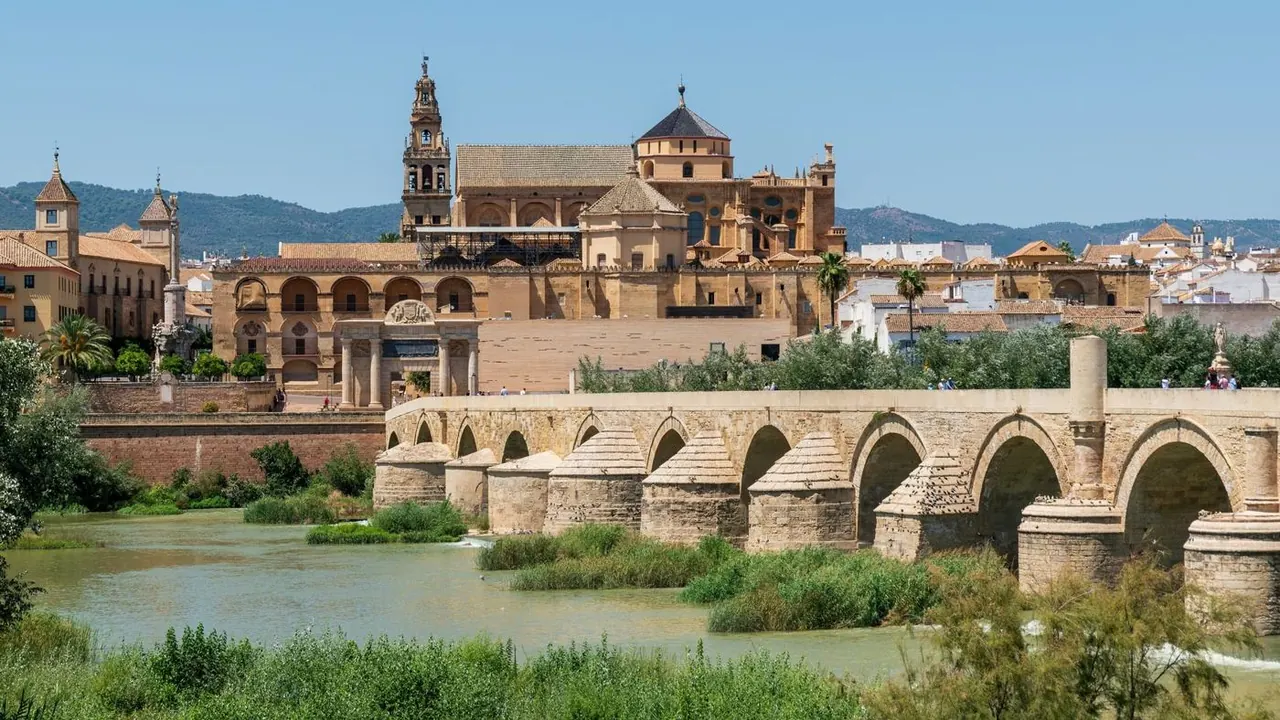
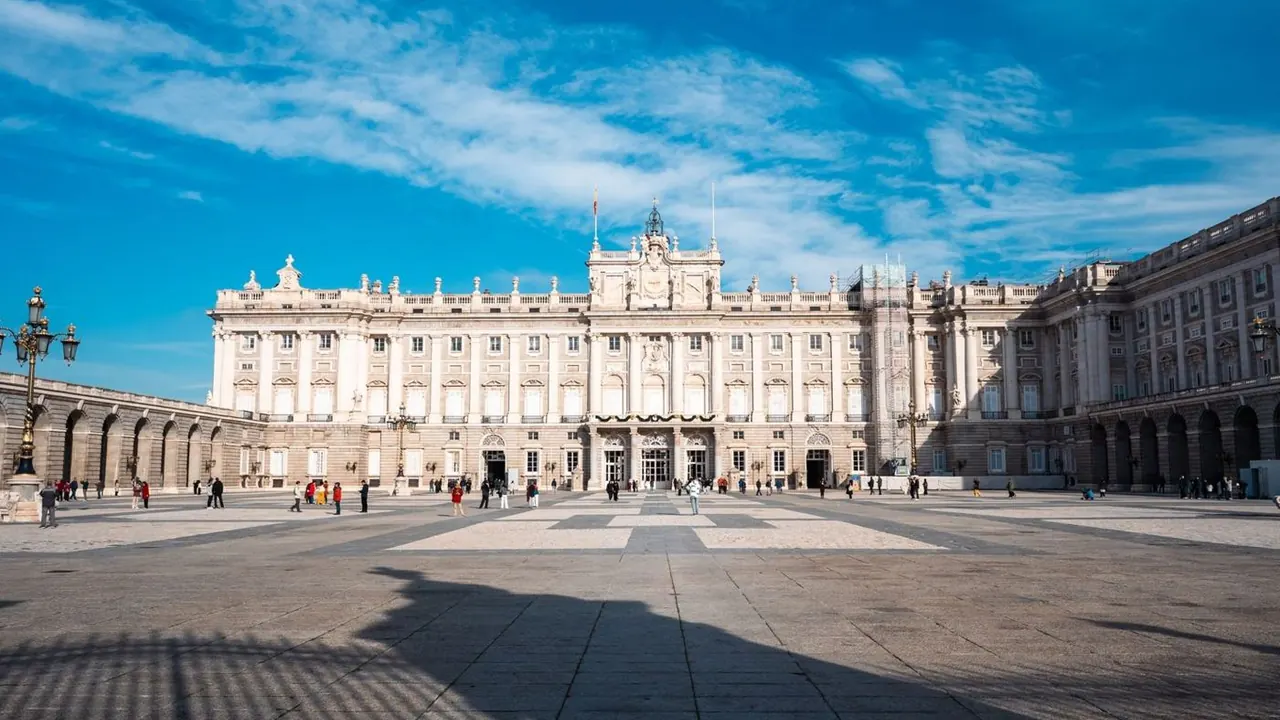
Photos: Cordoba by Jose María Ligero Loarte, CC BY-SA 4.0, cropped; Madrid by Mert Ocak, Pexels License.
Cordoba or Madrid?
Our verdict in twelve categories, each scored against the same fixed benchmark cities, and the climate month by month, so you can choose for your trip.
Choose Cordoba for
- prices
- beaches
- wellness
Cordoba suits travellers who want one extraordinary monument and a slow southern pace around it. The Mezquita, the whitewashed Juderia and the patio quarters can be seen properly in two or three days, the evenings are long and spent at the table in a taberna, and a stay costs noticeably less. It also works well as a base for Seville, Granada and Malaga without changing hotel.
Choose Madrid for
- nightlife
- shopping
- live music and the arts
Madrid is the better choice for a fuller, busier trip. The Prado and its neighbours give art lovers days of painting, and the city adds much more food, late nights, shopping, stage life and things for children to do. The metro makes all of it easy, and fast trains reach Toledo, Segovia and the cities of Castile in about half an hour to ninety minutes.
Scoreboard
Twelve categories on one fixed scale from 0 to 100. The shaded stretch is the gap between the two.
Your match
Pick a travel style or drag the sliders, and both match scores follow your weighting.
Wins on prices and beaches with your weighting.
Wins on nightlife and shopping with your weighting.
What matters to you?
Category by category
What the scores mean for a trip.
Beaches & swimming
Neither city is a beach destination, but Cordoba at least makes the sea possible for a day. The fast train reaches Malaga in about an hour, and the city beaches are a walk or short bus ride from the station, though it is a long day for a swim.
From Madrid the coast is simply too far for a day out. In both cities summer swimming means municipal pools or the reservoirs, in the Sierra Morena for Cordoba and below the Guadarrama for Madrid.
Food & drink
Madrid eats on a bigger scale. Alongside its own Castilian dishes, cocido, callos and calamari sandwiches near Plaza Mayor, the capital gathers Galician seafood, Basque grills and serious tasting menus, and the tapas crawl through La Latina, Santa Ana and Lavapiés keeps going late, ending with churros in the small hours.
Cordoba's table is narrower but very local: salmorejo, flamenquin, rabo de toro and fried aubergine with cane honey, eaten in tiled-patio tabernas in Santa Marina or San Agustin with chilled Montilla-Moriles wine. It is a fine place to eat, but you will find little fine dining or international food.
Culture & sights
Both are first-rate for culture, but in very different ways. Cordoba's draw is a single astonishing building, the Umayyad mosque with a cathedral set inside it, surrounded by the medieval Juderia, the Roman bridge and the Alcazar gardens, all within a short walk of one another. History here is old and Islamic, and it continues just west of the city at the caliphal ruins of Medina Azahara, a bus or taxi ride out.
Madrid offers painting instead. The Prado, Reina Sofía and Thyssen along one boulevard hold Velázquez, Goya and Guernica, and the city around them is the grand Habsburg and Bourbon capital of Plaza Mayor and the Royal Palace, with little medieval fabric. Pick Cordoba for architecture and atmosphere, Madrid for galleries.
Nightlife
Madrid is one of Europe's great late-night cities, and Cordoba is not trying to compete. In the capital each district has its own scene, rock bars in Malasaña, the gay scene in Chueca, terraces in La Latina, big clubs near Gran Vía, and the night runs past dawn every weekend of the year.
Cordoba's evenings are about late tapas on the squares of the Corredera and Las Tendillas. It livens up in summer and during the May fair, when the casetas dance until morning, but at other times the club scene is small and the streets near the Mezquita go quiet early.
Nature & outdoors
Madrid has the stronger outdoors, thanks to the Sierra de Guadarrama an hour north, with granite peaks above 2,400m, the boulders of La Pedriza, glacial lakes and modest winter skiing. In town, Casa de Campo and Madrid Río suit runners and cyclists.
Cordoba's countryside is gentler: the wooded holm-oak hills of the Sierra Morena, birds of prey in Hornachuelos and the limestone gorges of the Subbeticas. It needs a car, and the fiercer summer heat limits walking to dawn far more than on Madrid's plateau.
Day trips
Both are superb bases, and the difference is which part of Spain you want to see. From Cordoba, high-speed trains put Seville, Granada's Alhambra and Malaga within about an hour or ninety minutes, so the whole of Andalusia opens up, with Ubeda, Baeza and the Montilla bodegas by car.
Madrid looks out over Castile instead. Toledo and Segovia are about half an hour away, with Ávila's walls, Salamanca, Cuenca and El Escorial not much further. Madrid can reach Cordoba on a long day, but Cordoba is the better base for the south.
Good for families
Children are welcome in both, but Madrid gives them far more to do. The Retiro's boats and puppet shows, the zoo, aquarium, cable car and funfair at Casa de Campo, and theme and animal parks further out fill several days, and the metro and flat streets suit pushchairs.
Cordoba's small, traffic-free centre lets children roam, and the Alcazar fountains, the horse show and Almodovar castle please them, but beyond those the sights are for adults and the summer heat is harder on small children.
Getting around
Madrid is the easier city to get around because it has a full system: a large, air-conditioned metro with a line to the airport, plus buses and commuter trains, so you never need a car. Its centre from the Royal Palace to the Prado is also walkable.
Cordoba relies on your feet. The Mezquita, Juderia, Alcazar and patio quarters are a short walk apart, but the cobbled lanes are tough with wheeled cases, the buses are basic, and Medina Azahara and the countryside need a taxi, tourist bus or car.
Shopping & style
Madrid is a real shopping city, with luxury houses on Calle Serrano in Salamanca, flagships and department stores around Sol and Gran Vía, independent and vintage shops in Malasaña and Chueca, and El Rastro on Sunday mornings.
Cordoba is for a few crafts rather than a shopping trip: silver filigree, embossed cordobán leather, ceramics and guitars from workshops, with ordinary chains around Cruz Conde. Designer boutiques are scarce.
Affordability
Cordoba is the cheaper stay. Rooms are good value for most of the year, tapas and Montilla cost little, and you rarely pay for transport, though May's festivals push prices up sharply and fill the best hotels.
Madrid is middling for a capital: hotels cost what a big city charges, while the menú del día, an inexpensive metro and free museum hours keep the daily spend reasonable.
Live music & performing arts
Madrid has the much broader stage. The Teatro Real for opera, the Auditorio Nacional for orchestras, zarzuela, Gran Vía musicals, jazz clubs and the Malasaña rock circuit give you a choice every night, and its best tablaos put on serious flamenco.
Cordoba is mainly about flamenco, and it has deep roots: small tablaos, aficionados' peñas, the guitar festival and the free all-night Noche Blanca in summer. Beyond that, the Gran Teatro offers a modest programme.
Wellness & relaxation
Neither is a spa destination, and both offer the same kind of retreat: Arab-style bathhouses in the old centre and hotel spas. Cordoba adds the ruined Caliphal Baths near the Alcazar as a reminder of a once-great bathing city.
The difference is the pace. Cordoba's courtyards with fountains and orange trees and its quiet old quarters make slowing down easy, while Madrid is late and noisy, and calm means an afternoon in the Retiro or the Botanical Garden.
When should you go?
Pick your month. The climate figures are measured averages, not a forecast.
Cordoba in July
Madrid in July
Daytime high, °C
Rainfall in the month, mm
Temperature and rainfall are climate normals, averaged over the years shown. Cordoba: 1991-2020 normals, Cordoba / Aeropuerto (7.6 km from centre). Madrid: 1991-2020 normals, Madrid (1.7 km from centre).
Spring is the best season in both, though Cordoba gets there sooner. From March to May the Guadalquivir valley is warm and sunny without being punishing, while Madrid, a few degrees cooler all year on its plateau, is at its most comfortable from April into June. High summer is almost rainless in both. Cordoba bakes at around 37°C in July and August, so sightseeing shrinks to the early morning and late evening. Madrid peaks nearer 33°C, still hot for long walks between districts but easier to manage.
The rain returns in October in both cities, and winter splits them. Cordoba is milder, around 15°C by day in January against roughly 10°C in Madrid, and it is also the sunnier of the two. It is much the wetter, though, with about 91mm in December. Madrid's winters are drier but colder and greyer, and you will need a proper coat.
Which traveller are you?
For a food and nightlife trip, Madrid is the clear pick. Tapas crawls along Cava Baja, regional seafood houses and tasting menus lead into bars that fill after midnight and clubs that run past dawn, while Cordoba's evenings mostly end at the taberna table.
On a family trip with children, Madrid is the easier choice. Its parks, animal attractions and funfair can fill several days, the metro links them simply, and children out late in the plazas are part of city life. Cordoba keeps young children happy for a day or two before the sights turn adult.
On a tight budget, Cordoba stretches money further. Hotel rooms are good value outside May, a glass of Montilla with a tapa costs very little, and the compact centre means walking rather than paying for transport. Madrid's hotels are priced like those of a major capital.
Before you go
| Measure | Cordoba | Madrid |
|---|---|---|
| Official language | Spanish | Spanish |
| Currency | Euro (EUR) | Euro (EUR) |
| Sockets | CF230 V, 50 Hz | CF230 V, 50 Hz |
| Driving side | Right | Right |
| Time zone | UTC+1, UTC+2 in summer | UTC+1, UTC+2 in summer |
| Emergency number | 112 | 112 |
| Elevation | 120 m | 663 m |
| Main airport | Córdoba Airport (ODB)8 km from centre3 non-stop destinations | Adolfo Suárez Madrid–Barajas Airport (MAD)14 km from centre239 non-stop destinations |
| Public holidays this year | 12 days | 12 days |
By the numbers
| Measure | Cordoba | Madrid |
|---|---|---|
| City population | 323,262 | 3,506,730 |
| People per km² | 258 | 5,801 |
| Museums within 10 km | 16 | 88 |
| UNESCO World Heritage sites within 50 km | 2 | 4 |
Where else could you go?
Every comparison below shares a destination with this one, so you can follow Cordoba or Madrid somewhere new.