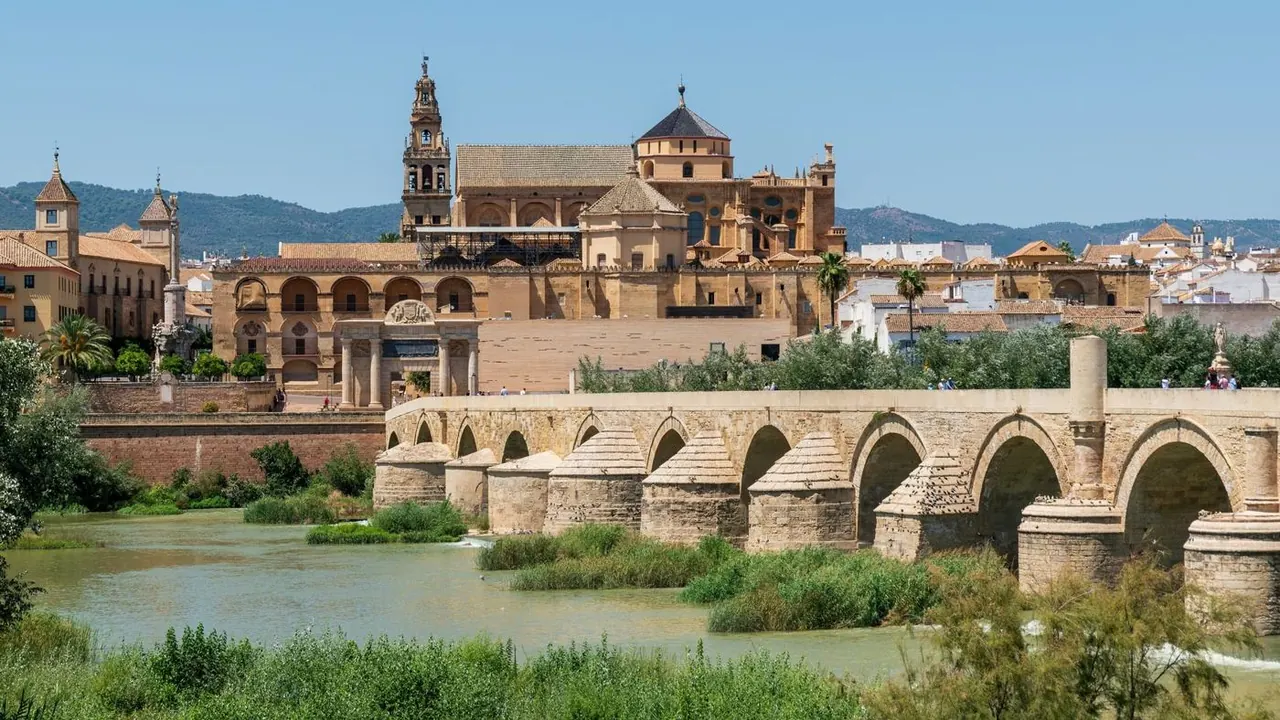
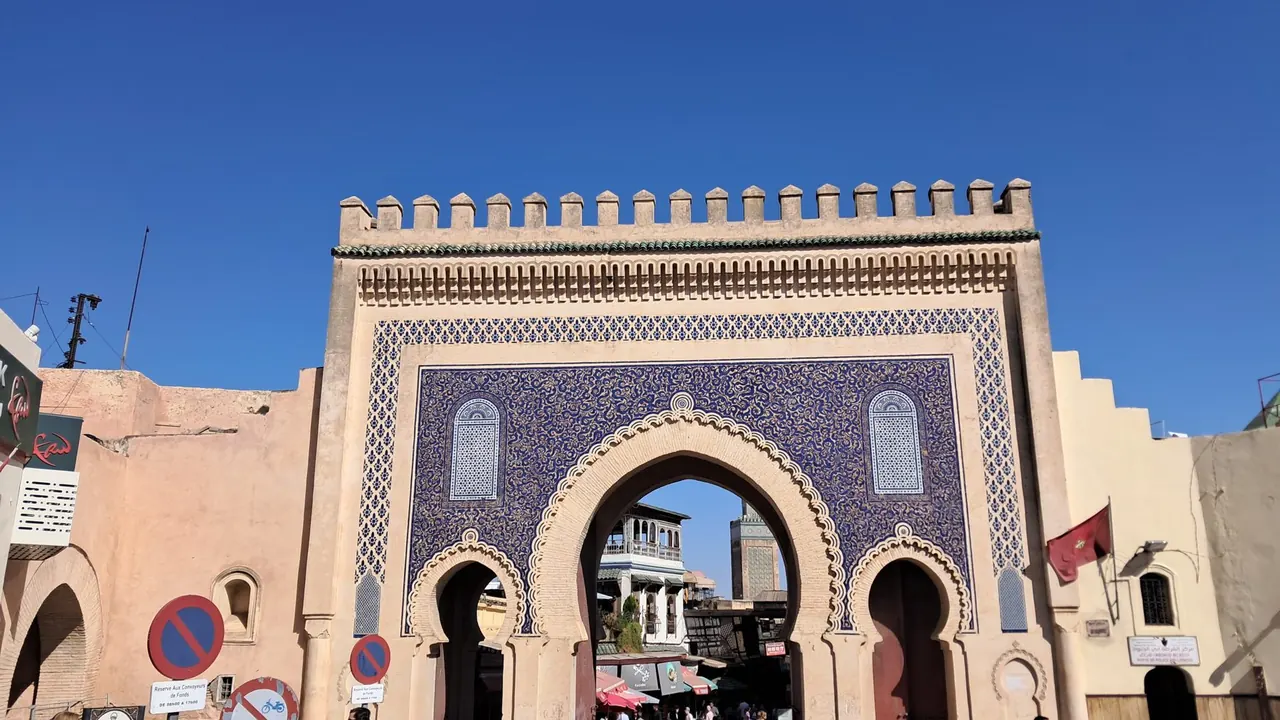
Photos: Cordoba by Jose María Ligero Loarte, CC BY-SA 4.0, cropped; Fes by Ideophagous, CC BY-SA 4.0, cropped.
Cordoba or Fes?
Our verdict in twelve categories, each scored against the same fixed benchmark cities, and the climate month by month, so you can choose for your trip.
Choose Cordoba for
- nightlife
- getting around
- day trips
Cordoba suits travellers who want an easy, walkable old town with plenty going on around it. The Mezquita, the Juderia and the Alcazar sit within a few minutes of one another, the evenings run late on tapas terraces, and fast trains put Seville, Granada and Malaga within a day's reach. It is also the gentler choice for families and for anyone who wants flamenco on the trip.
Choose Fes for
- shopping
- wellness
- prices
Fes is the stronger pick for travellers who want to be taken somewhere very different. You spend your days lost in a working medieval medina, buy leather and copper from the workshops that made them, and end the day in a hammam. Money goes further here too. In return you accept a disorienting maze by day and very quiet nights.
Scoreboard
Twelve categories on one fixed scale from 0 to 100. The shaded stretch is the gap between the two.
Your match
Pick a travel style or drag the sliders, and both match scores follow your weighting.
Wins on nightlife and getting around with your weighting.
Wins on shopping and wellness with your weighting.
What matters to you?
Category by category
What the scores mean for a trip.
Beaches & swimming
Neither city is a beach destination, but from Cordoba the sea is at least possible as a day out. The fast train reaches Malaga in about an hour, and the Costa del Sol beaches are a short walk or bus ride from the station. Fes is about three hours from either coast, so swimming there means the pool at your riad or hotel, and that is worth checking before you book.
Food & drink
Cordoba's best food is eaten standing at a bar, while in Fes it comes at a long sit-down dinner. In Cordoba you move from taberna to taberna in Santa Marina or San Agustin, ordering salmorejo, flamenquin and fried aubergine with cane honey among the wine casks, with a chilled glass of Montilla-Moriles at each stop.
In Fes the best meal is a long multi-course dinner in a riad, built around pastilla and slow tagines with preserved lemon. During the day you snack on bissara, sfenj and grilled skewers in the medina. Wine is the big gap, because outside the hotels and a few licensed places in the Ville Nouvelle there is little to drink but mint tea.
Culture & sights
These two belong together historically, and they are evenly matched as sights. In Cordoba one building dominates: the Mezquita, with its striped arches and the cathedral set inside it. The Juderia, the Alcazar gardens, the Roman bridge and the ruined palace city of Medina Azahara fill out a compact set you can see in two or three days.
In Fes the medina itself is the attraction. The Bou Inania and Al-Attarine madrasas show the finest Marinid craftsmanship, the Chouara tannery is watched from the terraces around it, and the trades still work in their old quarters. The museums are small, and non-Muslims see the Quaraouiyine only through its doors.
Nightlife
Cordoba gives you a proper night out, even if it is not a clubbing city. From about ten the terraces around the Corredera, Las Tendillas and the river fill with people, students keep a cluster of bars busy at weekends, and in summer and during the May fair the city stays up until dawn.
Fes offers almost nothing after dark. The medina empties when the shops close, and the evening means rooftop dinner and tea, with a few hotel bars in the Ville Nouvelle as the only alternative.
Nature & outdoors
Fes has the more striking countryside close by. About an hour south, the Middle Atlas climbs into cedar forest around Azrou, where Barbary macaques live wild, and on to plateaux with small lakes. Tazekka National Park adds caves and higher ridges, and the high ground sometimes gets snow in winter.
Cordoba's outdoors is gentler: the low holm oak and cork hills of the Sierra Morena, birds of prey in Hornachuelos and the limestone gorges of the Subbeticas. In both cities you need a car, and summer heat leaves only spring and autumn for walking.
Day trips
Cordoba is the far better base. High-speed trains reach Seville in under an hour and Granada in about an hour and a half, so you can see the Alhambra and Seville's old town without changing hotel. With a car you add Ubeda and Baeza, Carmona, Priego de Cordoba and the bodegas of Montilla.
Fes has one excellent outing: Meknes by train, or Meknes with the mosaics of Volubilis and the holy town of Moulay Idriss in a long day with a driver. Ifrane and Sefrou are pleasant extras, but Chefchaouen and Rabat are too far for a day trip.
Good for families
Cordoba is noticeably kinder to children. Its centre is small, safe and largely free of cars, and the Alcazar fountains, the royal stables horse show and the castle at Almodovar del Rio break up the adult sights.
Fes asks much more of parents: steep lanes shared with laden donkeys, persistent touts and the smell of the tannery quarter. Older children who like watching craftsmen at work can love it, but with small ones keep medina outings short and choose a place with a pool.
Getting around
Both old towns are explored on foot, but Cordoba's is far easier to find your way around. The main sights are a short walk apart, the railway station is close to the centre, and the only real nuisance is wheeling a case over the cobbles.
The Fes medina twists, climbs and runs into dead ends, so many visitors hire a guide for the first day, and porters with handcarts take luggage in from the gates. To get between the medina, the Ville Nouvelle and the station you take small red petit taxis.
Shopping & style
Fes is a real shopping destination, at least for handmade goods. Much of Morocco's craftwork is made in its medina: leather from the tanneries, copper and brass from Seffarine square, Fassi pottery, zellige and woven textiles, often with the workshop right behind the counter. Bargaining is expected, and you will do better shopping alone than following a guide on commission.
Cordoba offers a few well-chosen pieces, such as silver filigree, cordobán leather and locally made guitars, plus Spanish chains around Cruz Conde. Neither city is worth visiting for fashion.
Affordability
Both are cheap by Western European standards, but Fes goes further. Street food, mint tea, petit taxis and entry to the madrasas cost very little, and a modest medina riad gives you a lot of character for the money. Alcohol is the exception and is expensive.
In Cordoba, tapas, Montilla wine and lunch menus are good value, and the walkable centre saves on transport. Rooms near the Mezquita cost more, though, and in May, during the patio festival and the fair, prices jump.
Live music & performing arts
Cordoba has more to offer through the year. Flamenco is on most nights in tablaos and the more serious peñas, the Gran Teatro hosts the city orchestra and touring theatre, and the guitar festival and the Noche Blanca del Flamenco are fixed dates in the calendar.
Fes has a fine musical heritage, especially Andalusian classical music, which traces its roots to Muslim Spain, and Sufi devotional song, both showcased at the Festival of World Sacred Music. Outside the festival you get only the occasional concert and music at riad dinners.
Wellness & relaxation
Fes still has the bathing culture that Cordoba lost centuries ago. Every medina quarter has a hammam for steam, black soap and a hard scrub, riads offer gentler versions with massage, and the old hot springs of Moulay Yacoub are about half an hour away.
In Cordoba the Caliphal Baths survive only as ruins, and a few Arab-style bath houses recreate the experience under horseshoe arches. Otherwise, rest means a shaded courtyard with orange trees and the slow midday pause in summer.
When should you go?
Pick your month. The climate figures are measured averages, not a forecast.
Cordoba in July
Fes in July
Daytime high, °C
Rainfall in the month, mm
Where the figures come from
Fes's station stands 171 m above the city centre, so the centre is likely a little warmer than the figures say.
Fes has no rain gauge within 25 km of the centre, so its rainfall comes from a gridded climate dataset read at the city rather than from a gauge further away.
Fes's sunshine is measured 52 km from the centre, at Meknes.
Temperature and rainfall are climate normals, averaged over the years shown. Cordoba: 1991-2020 normals, Cordoba / Aeropuerto (7.6 km from centre). Fes: 1999-2020 (sunshine 1991-2020, rainfall 1991-2020) normals, Fes-Sais (12.4 km from centre).
The two cities share almost the same year. Both are best in spring, from March to May, and again from late September into October, when the days are warm enough to walk the old streets in comfort. July and August are fiercely hot in both, around 37°C in Cordoba and 36°C in Fes, so sightseeing shrinks to the early morning and the evening. Neither has a sea, so summer heat means a pool rather than a beach.
The differences show at the edges of the year. Fes dries out sooner after summer, with September almost rainless, while Cordoba's rain comes back earlier and peaks in winter at about 91mm in December. Fes also has more winter sunshine, so a January or February visit is brighter there. Cordoba warms up a little faster in spring.
Which traveller are you?
On a family trip with children, Cordoba is the easier choice. The sights fit into two or three unhurried days, and the late Spanish evenings suit children who rest after lunch. Fes, with its maze, touts and nothing built for children, works better with teenagers.
For a food and nightlife trip, Cordoba covers both halves. Dinner becomes a slow round of tabernas and squares, with a glass of wine at every stop, and it carries on well past midnight. Fes cooks just as well, but evenings end early with tea.
On a relaxing and wellness trip, Cordoba offers mostly its slow pace and shady courtyards. Fes builds rest into every day: steam and a scrub after a morning in the medina, a quiet riad in the evening, and massages that cost little.
Before you go
| Measure | Cordoba | Fes |
|---|---|---|
| Official language | Spanish | Arabic, Standard Moroccan Tamazight |
| Currency | Euro (EUR) | Moroccan Dirham (MAD) |
| Sockets | CF230 V, 50 Hz | CE50 Hz |
| Driving side | Right | Right |
| Time zone | UTC+1, UTC+2 in summer | UTC+1 |
| Emergency number | 112 | Police 19/112, ambulance 15, fire 15 |
| Elevation | 120 m | 408 m |
| Main airport | Córdoba Airport (ODB)8 km from centre3 non-stop destinations | Fes Saïss International Airport (FEZ)13 km from centre35 non-stop destinations |
| Public holidays this year | 12 days | 11 days |
By the numbers
| Measure | Cordoba | Fes |
|---|---|---|
| City population | 323,262 | 1,167,842 |
| People per km² | 258 | 3,650 |
| Museums within 10 km | 16 | 2 |
| UNESCO World Heritage sites within 50 km | 2 | 1 |
Where else could you go?
Every comparison below shares a destination with this one, so you can follow Cordoba or Fes somewhere new.