Costa Blanca or Formentera?
Our verdict in twelve categories, each scored against the same fixed benchmark cities, and the climate month by month, so you can choose for your trip.
Choose Costa Blanca for
- prices
- nightlife
- culture and sights
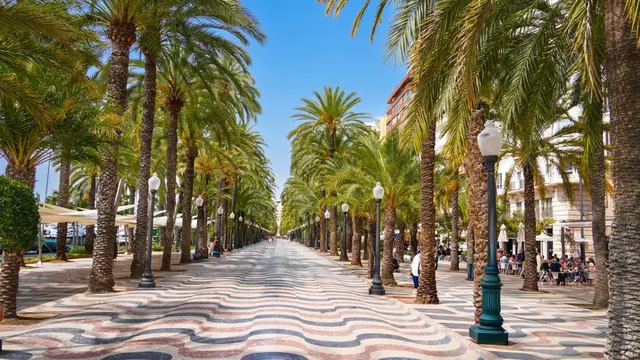
Costa Blanca suits a trip that wants more than the beach: rice lunches in Dénia or Alicante, late nights in El Barrio or Benidorm, hikes on the Bernia ridge or Puig Campana, and a day out in Valencia. It is far kinder on the budget and has the gently shelving bays and theme parks that families look for. It also works out of season, when the mountains are at their best for walking and winter stays are mild and sunny.
Choose Formentera for
- beaches
- wellness
Formentera is for travellers who want the beach and very little else, but want it at its finest. The water at Ses Illetes and the long dune sands of Migjorn are better than anything on the mainland coast, and the point of the island is its low-rise quiet, its bicycles and its early nights. Expect to pay heavily for that, to find little to see or do away from the sand, and to cross to Ibiza for clubs or proper shopping.
Scoreboard
Twelve categories on one fixed scale from 0 to 100. The shaded stretch is the gap between the two.
Your match
Pick a travel style or drag the sliders, and both match scores follow your weighting.
Wins on prices and nightlife with your weighting.
Wins on beaches and wellness with your weighting.
What matters to you?
Category by category
What the scores mean for a trip.
Beaches & swimming
Both coasts have long stretches of sand, but Formentera's beaches are in a different class. Ses Illetes is a spit pointing towards Espalmador, with shallow, glass-clear water on both sides, and Llevant is the wilder side of the same strip. Migjorn gives you kilometres of dune with room to spare, and even Es Pujols, the most ordinary of them, is a good resort beach.
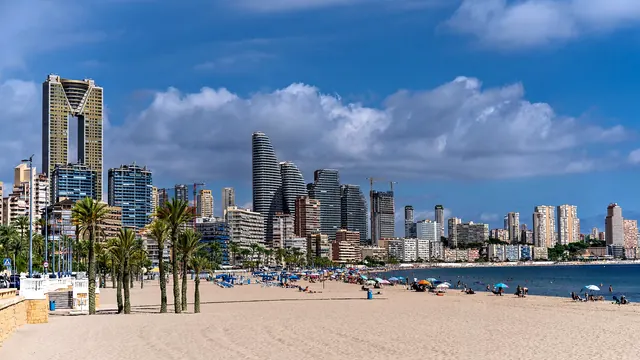
The Costa Blanca answers with variety and size: Benidorm's Levante and Poniente for children, the long strands of San Juan and Guardamar in the south, and clear coves such as Granadella and Portitxol in the north for snorkelling. The cost is crowded towels on the main beaches in high summer, and even the clearest northern coves rarely have the turquoise of Ses Illetes.
Food & drink
The Costa Blanca is the better place to eat, as long as you choose the town with care. Rice is at the heart of it, from arroz a banda by the sea to the egg-crusted arroz con costra of Elche. Dénia is known for its red prawns, Alicante's old town and Mercado Central make a proper tapas round, and Fondillón wine and turrón from Xixona add something local to take home.
Formentera's cooking is narrower. Grilled fish, lobster stew and the peix sec salad at a chiringuito above Migjorn make a fine long lunch. Beyond that there is no market, little street food and only a handful of good kitchens in Sant Francesc and Es Pujols, and many of those close outside the summer.
Culture & sights
Neither is a place to go for culture, but the Costa Blanca at least fills a few good days. Alicante has the Castle of Santa Barbara and the MARQ, Elche has its UNESCO-listed Palmeral, and the white old town of Altea and the clifftop castle at Guadalest are worth the trip. The Hogueras and the Moors and Christians parades show local tradition at full strength in summer.
Formentera's sights fit into one afternoon between swims: the fortified church at Sant Francesc, the lighthouses at Cap de Barbaria and La Mola, a Bronze Age tomb and the outline of a Roman fort.
Nightlife
After dark the two are hardly in the same league. The Costa Blanca has Benidorm, one of the Mediterranean's big party resorts: loud, good-humoured and in no way stylish, with shows and dancing well into the small hours, and some of it carries on through the winter. Alicante's old quarter below the castle offers a more Spanish kind of night, with locals moving between terraces and small bars that only fill up late. The northern towns wind down after a long dinner.
Formentera's nights are short and belong to the summer. The main event is a drink at sunset on the west coast. Es Pujols has a small cluster of bars and a club or two, and the rest of the island goes to bed early so as to be on the sand in the morning. Anyone who wants serious clubbing goes to Ibiza, and the ferry back sets the end of the night.
Nature & outdoors
The northern Costa Blanca is far more dramatic. The Peñón de Ifach rises from the sea at Calpe, Montgó stands over Jávea and the Serra Gelada forms sea cliffs. Inland, ranges climb above 1,500m with serious hiking, and the crags around Sella draw rock climbers from across Europe.
Formentera is flat and gentle, with pine scrub, salt pans and dunes. It is best seen by bicycle on its green routes, or underwater over the seagrass meadows, which make for superb snorkelling. Both have flamingos on salt lagoons, at Torrevieja and Santa Pola on the mainland and at Estany Pudent on the island.
Day trips
From the Costa Blanca you have a real choice of outings. Valencia has its cathedral, silk exchange and City of Arts and Sciences. Closer by are the Borgia palace at Gandia, the castles of Xàtiva and Villena, Alcoy's bridges over the gorge and the boat to Tabarca, and from the southern resorts Murcia and Roman Cartagena are both within reach.
Formentera offers Ibiza, half an hour away by fast ferry, with the walled hilltop of Dalt Vila and its cathedral, plus a boat to the islet of Espalmador. After that the list ends.
Good for families
With children, the Costa Blanca is much the better choice. Around Benidorm there is a theme park, water parks, an animal park and a marine park, all a short drive or bus ride away. The pools and waterfalls of the Fonts de l'Algar make a cool afternoon away from the sand. Add calm beaches and plenty of pool hotels and apartments, and there is enough to fill a long stay, even with small children.
Formentera has the sea and very little else for children. The shallow, sheltered water at Ses Illetes is ideal for paddling, and older children enjoy cycling between beaches. But nothing on the island is built for children, the beaches have little shade, and the flight to Ibiza and then the ferry make the journey harder with toddlers.
Getting around
Arriving is simpler on the Costa Blanca, with Alicante airport within an hour of the main resorts and the slow, scenic coastal TRAM running north towards Dénia. Even so, the coves, mountain villages and theme parks really need a car.
Formentera always means a ferry from Ibiza to La Savina. Once you are there, the island is only about 20km long and mostly flat, so a bike, e-bike or scooter gets you around easily.
Shopping & style
Neither is a shopping destination, but the Costa Blanca has more to offer. Alicante has high streets and a department store, Elche has shoe factory outlets, and the weekly markets in Jávea, Altea and Benidorm sell leather and ceramics.
Formentera's best is the summer artisans' market at El Pilar de La Mola, with handmade leather, silver and textiles, along with a few linen boutiques in Sant Francesc. For anything more, you cross to Ibiza.
Affordability
The gap is wide. Benidorm and the resorts around Torrevieja are among the cheaper beach destinations in Western Europe, with plenty of apartments and set lunch menus. Only the northern towns of Jávea, Moraira and Altea push costs up.
Formentera is expensive at every turn. A small stock of rooms meets heavy summer demand, beach restaurants charge resort prices, and the ferry and vehicle hire come on top. Self-catering and the shoulder months help, but there is no cheap way to do the island in high summer.
Live music & performing arts
Neither has much of a stage, but the Costa Blanca has a few things worth planning for. Alicante's Teatro Principal stages touring theatre and the ADDA has a season of orchestral concerts. Each August, Elche performs the Misteri d'Elx in its basilica, a sung medieval mystery play recognised by UNESCO.
On Formentera, live music means musicians at the La Mola market and sunset sets at a few beach bars, with no theatre or concert hall at all.
Wellness & relaxation
The two are level here, and in both the rest comes from the pace rather than from spas, with no bathing tradition in either. On Formentera the calm covers the whole island, which is low-rise and unhurried, with yoga and massage easy to find in summer.
On the Costa Blanca the quiet belongs to the northern coast around Altea and Moraira, which also has Arab-style baths in Alicante and health retreats in the hills. Benidorm and the busy southern resorts are not restful at all.
When should you go?
Pick your month. The climate figures are measured averages, not a forecast.
Costa Blanca in July
Formentera in July
Daytime high, °C
Rainfall in the month, mm
Where the figures come from
Costa Blanca's temperatures are measured 57 km from the centre, at Alicante.
Costa Blanca has no rain gauge within 25 km of the centre, so its rainfall comes from a gridded climate dataset read at the destination rather than from a gauge further away.
Temperature and rainfall are climate normals, averaged over the years shown. Costa Blanca: 1991-2020 normals, Alicante (56.6 km from centre). Formentera: 1991-2020 normals, Ibiza / Es Codola (17.7 km from centre).
You can swim at both from June to October, and the sea reaches about 26°C in August at each. July and August bring daytime heat of around 30°C on both. That makes walking the streets at midday hard work, and on the Costa Blanca it puts the mountain trails out of reach. Spring is pleasant at both and slightly warmer on the mainland.
Autumn and winter are where they part. Around the Costa Blanca resorts rain stays light all year, and winter days of about 17°C come with plenty of sunshine. Formentera turns noticeably wetter from September, with 63mm that month, and its winter days are a little cooler and cloudier. For a late-season or winter stay, the mainland coast is the safer choice.
Which traveller are you?
On a beach and sun trip, the Costa Blanca has plenty of good sand and lots of choice, but Formentera is the one to pick. On the island the beach is the whole point of the vacation, and the water is clearer and calmer than anywhere on the mainland coast.
For a trip on a tight budget, the Costa Blanca is the obvious choice, provided you stay in Benidorm or the southern resorts and not the smarter towns in the north. Formentera will push almost any budget past its limit, especially in high summer.
On a family trip with children, the Costa Blanca is the easier choice. It has plenty for children to do away from the sand, and resorts set up for them. Formentera suits families who want nothing but sea and sand, and it works best with older children.
Before you go
| Measure | Costa Blanca | Formentera |
|---|---|---|
| Official language | Spanish | Spanish |
| Currency | Euro (EUR) | Euro (EUR) |
| Sockets | CF230 V, 50 Hz | CF230 V, 50 Hz |
| Driving side | Right | Right |
| Time zone | UTC+1, UTC+2 in summer | UTC+1, UTC+2 in summer |
| Emergency number | 112 | 112 |
| Main airport | Alicante-Elche Miguel Hernández Airport (ALC)126 non-stop destinations | Ibiza Airport (IBZ)89 non-stop destinations |
| Public holidays this year | 13 days | 13 days |
By the numbers
| Measure | Costa Blanca | Formentera |
|---|---|---|
| Population | - | 11,661 |
| People per km² | - | 140 |
| Swim season, months above 21 °C | 5 months | 5 months |
Where else could you go?
Every comparison below shares a destination with this one, so you can follow Costa Blanca or Formentera somewhere new.
- Ibizavs Formentera
- Ibizavs Costa Blanca
- Mallorcavs Formentera
- Mallorcavs Costa Blanca
- Menorcavs Formentera
- Costa Bravavs Formentera