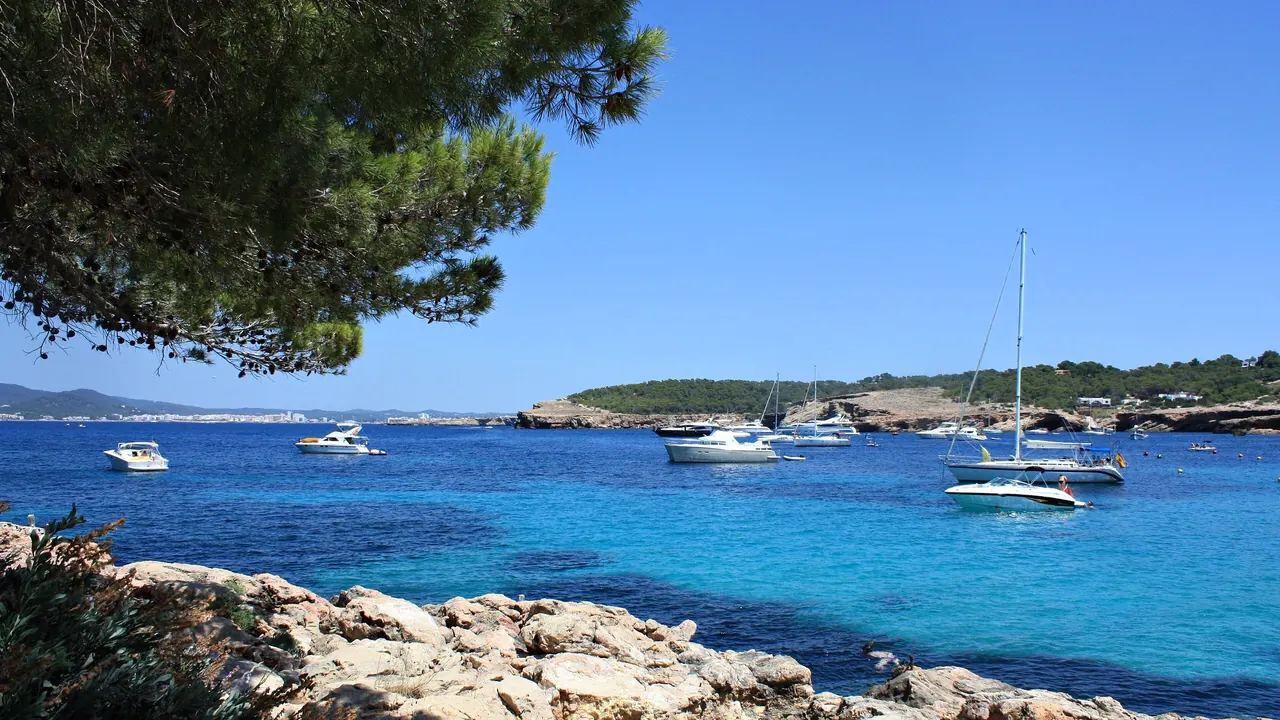
Andalusia or Ibiza?
Our verdict in twelve categories, each scored against the same fixed benchmark cities, and the climate month by month, so you can choose for your trip.
Choose Andalusia for
- live music and the arts
- day trips
- prices
Andalusia is for the traveller who wants a full, varied trip: the Alhambra, the Mezquita and Seville's cathedral, flamenco in its home towns, tapas and sherry, and mountains, wetlands and Atlantic dunes all within reach. It rewards moving between several cities, often with a car for the villages, and costs far less day to day than Ibiza.
Choose Ibiza for
- nightlife
- wellness
- beaches
Ibiza is the stronger choice when the trip is about the sea and the night. Its clear coves and the clubs that run every night through the season are what it does best, and its quieter north offers country retreats for those who come to unwind. Its heritage fills only a day or two, and it is an expensive island in summer.
Scoreboard
Twelve categories on one fixed scale from 0 to 100. The shaded stretch is the gap between the two.
Your match
Pick a travel style or drag the sliders, and both match scores follow your weighting.
Wins on live music and the arts and day trips with your weighting.
Wins on nightlife and wellness with your weighting.
What matters to you?
Category by category
What the scores mean for a trip.
Beaches & swimming
Ibiza has the edge for swimming, though the two coastlines are different in kind. Andalusia offers distance and variety: wide golden Atlantic beaches at Bolonia, Zahara and Conil backed by dunes, cooler water and the levante wind, or the calm but heavily built Costa del Sol with its grey sand and promenades.
Ibiza is a coast of coves rather than long strands, with water kept unusually clear by the seagrass offshore. Cala Comte's sandbars, the dunes of Ses Salines and the white spit of Ses Illetes on Formentera make the sea itself the attraction, and the quieter northern calas help when the famous ones fill up.
Food & drink
Andalusia is the far better place to eat. Its tapas culture, from the counters of Triana to Granada's free plate with every drink, is a way of spending the evening, and the sherry bodegas of Jerez and Sanlúcar, coastal fried fish and the covered markets of Cádiz and Málaga give it real depth.
Ibiza's own cooking, such as bullit de peix and flaó, is worth seeking out in inland country restaurants and fishermen's coves. Most coastal eating, though, is polished and costly beach and marina dining, with the resort strips and the lack of markets leaving little in between.
Culture & sights
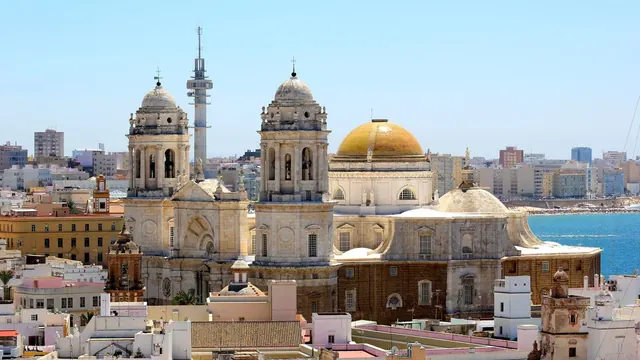
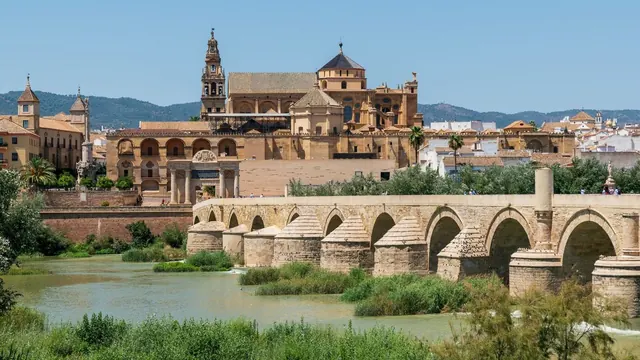
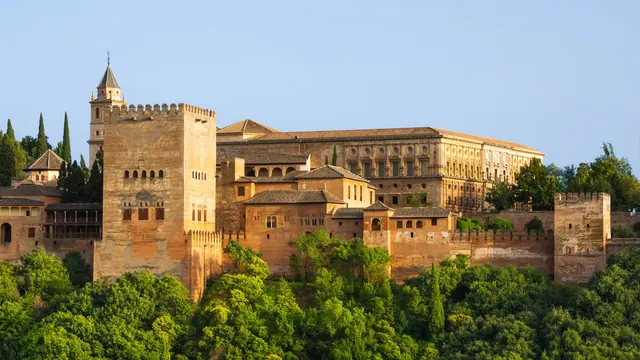
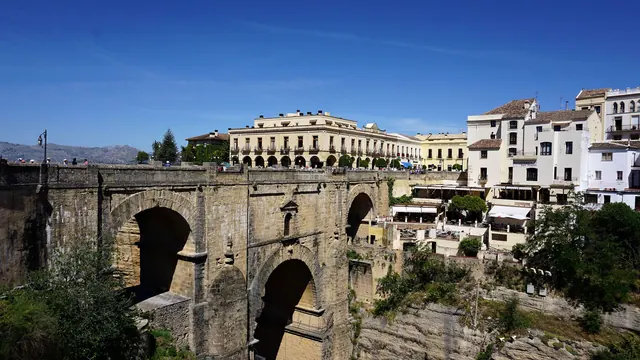
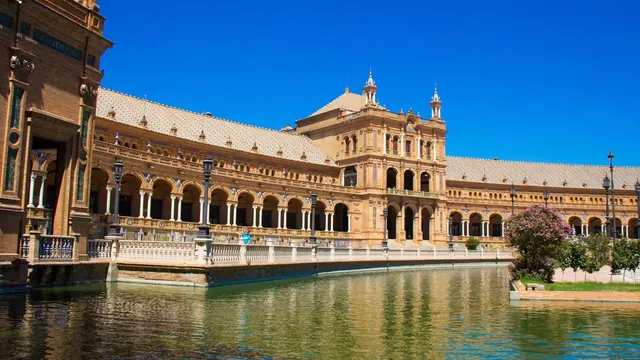
There is little contest. Andalusia holds the Alhambra, the Mezquita and Seville's vast cathedral and Alcázar, then adds Ronda, Cádiz and the Renaissance towns of Úbeda and Baeza, enough for a whole trip spread across several cities.
Ibiza's heritage is compact and specific: the walled old town of Dalt Vila, the Phoenician tombs of Puig des Molins and the island's fortified white churches. It is a good day or two, a pleasant break from the beach rather than a reason to come.
Nightlife
Ibiza's nights are what it is known for: large clubs open every night from late spring to early autumn, with famous DJs in residence, boat parties, and sunset bars on Sant Antoni's rocks before it all begins. People cross Europe for the season's opening and closing parties.
Andalusia's nights are a different thing, built on late dinners and crowded street terraces around Seville's Alameda and Triana, Granada's student bars and Málaga's old town. For clubs it relies on Marbella and Puerto Banús in summer, glossy but nowhere near Ibiza's scale.
Nature & outdoors
Andalusia's landscapes are on a different scale. The Sierra Nevada climbs to nearly 3,500m above Granada, with skiing in winter and the Alpujarras villages below, while the Caminito del Rey gorge, El Torcal's limestone, the Doñana wetlands and Tarifa's kitesurfing waters add real range.
Ibiza is low and pine-covered, and its best scenery is along the western cliffs facing Es Vedrà and in the flamingo salt pans of Ses Salines. Its strength lies on and under the water, with clear seas for snorkelling, diving and paddleboarding.
Day trips
From any Andalusian base the options run on and on: Roman Itálica near Seville, Jerez for sherry and horses, Ronda and the Antequera dolmens from Málaga, the white villages of the Cádiz hills, Gibraltar, and even a ferry from Tarifa to Tangier.
Ibiza's list is short. Formentera, a half-hour ferry away, is the one excursion everyone makes, and beyond it there are the inland villages and the hippy markets near Es Canar and Sant Carles.
Good for families
Andalusia gives families more to do. The Costa del Sol combines gentle beaches with water parks, the Fuengirola zoo and the Benalmádena aquarium, and Granada's hands-on science museum and the Tabernas film sets add variety, though inland heat in high summer rules out city sightseeing with small children.
Ibiza works for children only as a beach vacation. The calm, shallow bays around Santa Eulària, Es Canar and Cala Bassa suit young swimmers, but there is little else built for families, and parts of Sant Antoni and Platja d'en Bossa are best avoided.
Getting around
Andalusia is the easier of the two to travel around without a car. High-speed trains join Seville, Córdoba, Málaga and Granada, with Córdoba under an hour from Seville, and Seville and Málaga add trams and metro lines, while a coastal train runs along the Costa del Sol. A city-to-city trip works well by rail alone, though the white villages, the mountains and the Costa de la Luz still call for a hired car.
Ibiza is small, with nowhere much more than 45 minutes from Ibiza Town, and buses link the main resorts, but it has no rail and the smaller coves and rural north need a car or scooter. In July and August its roads, beach car parks and late-night taxis come under real strain.
Shopping & style
Neither is a shopping destination, but Andalusia has more that is genuinely made locally: Triana's ceramics, flamenco dresses and fans bought for wear, Ubrique leather, and Málaga's elegant Calle Larios, with luxury boutiques in Marbella.
Ibiza's offer is a single style, the loose white Adlib linen and boho clothing sold around the marina and in Santa Gertrudis, plus the hippy and evening craft markets. Beyond that it is mostly beachwear and souvenirs.
Affordability
Andalusia is much the easier on a budget. Tapas, wine and set lunches cost little, especially where a free tapa comes with each drink, and inland towns and the Almería coast are cheap to stay in; only Holy Week in Seville and the Costa del Sol in high summer push rooms up sharply.
Ibiza in summer is among the most expensive places in the Mediterranean, with costly rooms, club entry, beach restaurants and sunbeds. Apartments in Sant Antoni, the bus and the free coves help, as do June and late September, but it rarely feels cheap.
Live music & performing arts
Andalusia is the home of flamenco, from nightly shows in Santa Cruz and Triana to the peñas of Jerez and the zambra in Sacromonte's caves, and Seville's Maestranza and the summer festival in the Alhambra's gardens add opera and concerts.
On Ibiza the famous music comes from DJs rather than stages. Live performance is limited to summer open-air concerts, jazz on terraces, the odd flamenco night and village folk dancing.
Wellness & relaxation
Ibiza is the better place to switch off. Its north and interior around Sant Joan and Santa Gertrudis are full of farmhouse hotels among olive and almond groves, and yoga and meditation retreats have been part of island life since the hippy years.
Andalusia's version leans on bathing: Moorish-style bathhouses in Granada, Córdoba and Seville, though modern recreations, and old spa towns such as Lanjarón. Marbella's resort spas and quiet country houses in the hills give a slower rhythm away from the cities.
When should you go?
Pick your month. The climate figures are measured averages, not a forecast.
Andalusia in July
Ibiza in July
Daytime high, °C
Rainfall in the month, mm
Temperature and rainfall are climate normals, averaged over the years shown. Andalusia: 1991-2020 (sunshine 1981-2010, rainfall 1981-2010) normals, Sevilla / San Pablo (8.1 km from centre). Ibiza: 1991-2020 normals, Ibiza / Es Codola (6.4 km from centre).
Andalusia's figures reflect the inland cities where most sightseeing happens, and there summer is fierce: July and August reach about 36°C, too hot for long days on foot in the old centres. April, May and late September to October are the comfortable months for walking the streets, and in high summer the coasts are the better place to be. The rain comes in autumn and winter, heaviest in November at around 122mm.
Ibiza is gentler in summer, peaking at about 30°C, and the sea warms to 26°C in August, so June to October is reliable swimming weather under long hours of sun. Showers return from September. In winter the two are much alike, mild by day with a similar, modest share of sunshine, though too cool for the beach on Ibiza. For a mix of walking and swimming, both are at their best in late spring and early autumn.
Which traveller are you?
On a culture and arts trip, Andalusia is the clear pick. The Alhambra, Córdoba's Mezquita and Seville's Alcázar are among Europe's great monuments, and flamenco in Seville, Jerez and Sacromonte gives the evenings substance that Ibiza's thin stage programme cannot match.
For a trip on a tight budget, Andalusia again wins comfortably. Cheap tapas bars, free tapas with drinks in Granada, set lunches and modest regional trains keep costs down, whereas Ibiza in summer drains money through rooms, beach clubs, sunbeds and scarce taxis.
For clubbers, Ibiza has no real rival here. Its big rooms around Platja d'en Bossa and Sant Rafel host famous DJ residencies every night of the season, with parties past sunrise, while Andalusia's nights are mostly street terraces and summer beach clubs.
Before you go
| Measure | Andalusia | Ibiza |
|---|---|---|
| Official language | Spanish | Spanish |
| Currency | Euro (EUR) | Euro (EUR) |
| Sockets | CF230 V, 50 Hz | CF230 V, 50 Hz |
| Driving side | Right | Right |
| Time zone | UTC+1, UTC+2 in summer | UTC+1, UTC+2 in summer |
| Emergency number | 112 | 112 |
| Main airport | Seville Airport (SVQ)96 non-stop destinations | Ibiza Airport (IBZ)89 non-stop destinations |
| Public holidays this year | 12 days | 13 days |
By the numbers
| Measure | Andalusia | Ibiza |
|---|---|---|
| Population | 8,619,616 | 161,485 |
| People per km² | - | 280 |
| Swim season, months above 21 °C | - | 5 months |
Where else could you go?
Every comparison below shares a destination with this one, so you can follow Andalusia or Ibiza somewhere new.
- Formenteravs Ibiza
- Costa Blancavs Ibiza
- Mallorcavs Ibiza
- Algarvevs Andalusia
- Menorcavs Ibiza
- Costa Bravavs Ibiza