Spain
Ibiza
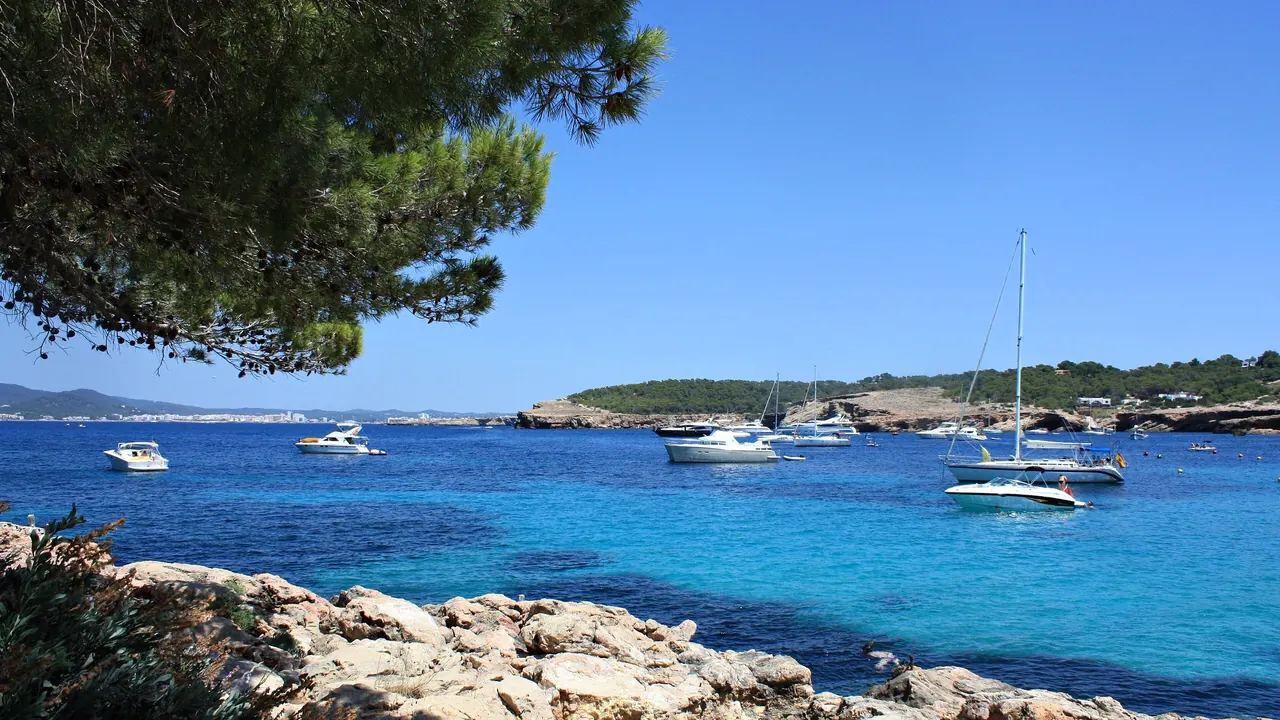
Turquoise water and sailing boats at Cala Bassa
- Nightlife97
- Beaches88
- Wellness & relaxation60
Match
53
Every category weighted equally
- Beach & sun57
- Culture & arts48
- Food & nightlife54
- Family trip50
- Outdoors50
- Relax & unwind54
- Shopping & style52
- On a budget48
Ibiza in twelve categories
Our verdict on each, scored 0 to 100 against the same fixed benchmark cities, so a score means the same thing on every page.
Beaches & swimming. Scores 88 out of 100.
Food & drink. Scores 54 out of 100.
Culture & sights. Scores 55 out of 100.
Nightlife. Scores 97 out of 100.
Nature & outdoors. Scores 52 out of 100.
Day trips. Scores 36 out of 100.
Good for families. Scores 54 out of 100.
Getting around. Scores 55 out of 100.
Shopping & style. Scores 46 out of 100.
Affordability. Scores 14 out of 100.
Live music & performing arts. Scores 20 out of 100.
Wellness & relaxation. Scores 60 out of 100.
Ibiza category by category
Beaches & swimming
88Ibiza's coast is a long run of coves, and the water is unusually clear because of the seagrass meadows offshore. The west has Cala Comte and Cala Bassa, with sandbars and turquoise shallows facing the sunset. The south has the long sand of Ses Salines and Es Cavallet among dunes and salt pans, and the north and east have quieter pine-backed inlets such as Cala Xarraco, Cala d'en Serra and Aigües Blanques. The sea is warm enough to swim from June to October and reaches about 25°C in August.
Formentera, half an hour away by ferry, adds Ses Illetes, a narrow spit of white sand between two shallow lagoons of water. In high summer the best-known coves fill early and parking is tight, so the smaller northern calas are the calmer choice. Beach life runs the whole day here, from a morning swim to drinks at sunset.
Food & drink
54The island has its own cooking, and it is worth looking for. There is bullit de peix, a fish stew whose broth is served afterwards with rice; sofrit pagès, a hearty country dish of meats and potatoes; and flaó, a cheese and mint tart. Meals end with a glass of hierbas, the local herb liqueur. The best of it turns up in country restaurants inland around Santa Gertrudis and Sant Josep, and in fishermen's coves where the catch is grilled.
Along the coast, dining is built around long lunches at beach restaurants and well-dressed dinners in the marina and Dalt Vila, polished but expensive. The resort strips of Sant Antoni and Platja d'en Bossa are mostly forgettable, and there is little street food or market culture to fill the gap.
Culture & sights
55The heritage centres on Dalt Vila, the old town of Ibiza Town, which sits behind 16th-century Renaissance walls built to resist Ottoman and pirate raids. Its ramps and bastions climb to the cathedral and the castle at the top, with wide views over the harbour. Below it, the Puig des Molins necropolis and its museum preserve thousands of Phoenician and Punic tombs. Together with the ruins of the Phoenician settlement at Sa Caleta, they make up a UNESCO listing.
Around the island, whitewashed fortified churches such as Puig de Missa above Santa Eulària and Sant Miquel de Balansat, along with old watchtowers on the headlands, show how island life was shaped by defence. It is a rewarding set, but a small one, and most visitors see it in a day or two.
Nightlife
97Going out is the main reason many people come to the island. From late spring to early autumn its large clubs run every night of the week. The best-known DJs play residencies here, and each night has its own name and crowd. The big rooms sit along Platja d'en Bossa and near Sant Rafel, and parties regularly go on past sunrise. The season is framed by opening and closing parties that people travel across Europe for.
The night starts earlier, with sunset bars on the rocks of Sant Antoni's west coast and terraces in the marina and around Dalt Vila. Sant Antoni's West End is the loud, young end of things, and the island's open-air and boat parties sit in between. Out of season most clubs close and the island goes quiet.
Nature & outdoors
52Ibiza is low, dry and green with pine and juniper. Its western and northern coasts are its most dramatic, especially around Cala d'Hort, where the rock island of Es Vedrà rises from the sea. Coastal paths along the north and west make good spring and autumn walks, and quiet country lanes inland suit cycling. In the south, the Ses Salines natural park protects salt pans that draw flamingos and other wading birds.
The water is the best part. The seagrass meadows keep the sea clear for snorkelling, diving, kayaking and paddleboarding along the cliffs, and boat trips run around the coast. Summer heat makes hiking hard work from June to September.
Day trips
36The obvious day out is Formentera, about half an hour by ferry from Ibiza Town. It is flatter and quieter than Ibiza, with small villages such as Sant Francesc and long beaches reached by bike or scooter. On Ibiza itself, a day can go to the white inland villages of Sant Carles, Santa Gertrudis and Sant Joan, or to the island's long-running hippy markets near Es Canar and Sant Carles.
Beyond that the list is short. Mallorca is too far by sea for an easy day, and the island's main heritage sits in Ibiza Town itself.
Good for families
54A family vacation here works well if it is built around the beaches. The east coast around Santa Eulària, Es Canar and Cala Llonga, along with sheltered western bays such as Cala Bassa and Port des Torrent, has shallow, calm water and an easy resort rhythm. Spanish late dinners and a welcoming attitude to children help too.
There is little beyond that made for children, though: no zoo, aquarium or theme park of note, and the attractions are boat trips and glass-bottom cruises. Families do best to avoid Sant Antoni's West End and Platja d'en Bossa, where the nightlife sets the tone.
Getting around
55The island is small, with nowhere more than about 45 minutes' drive from Ibiza Town. Buses link the town, the airport, Sant Antoni, Santa Eulària and the main beaches, and in summer night buses connect to the clubs. Water taxis also run between some coastal resorts. Ibiza Town and Dalt Vila are easy to walk, if steep in the upper town.
Most of the smaller coves and the rural north, though, are only practical by car or scooter. In July and August the roads around Ibiza Town clog up, beach car parks fill by late morning, and taxis are hard to find late at night. A hired car makes the most sense for anyone who wants to explore.
Shopping & style
46Ibiza has its own style: loose white linen and cotton, often called Adlib fashion, and a boho, hippy look sold in boutiques across Ibiza Town's marina, the lanes below Dalt Vila and the village of Santa Gertrudis. The hippy markets near Es Canar and Sant Carles, plus the evening craft markets that follow the summer, sell jewellery, leather, clothing and crafts, alongside plenty of trinkets.
There are designer boutiques by the marina, but beyond that the shopping is mostly beachwear, club merchandise and souvenirs. It is a pleasant browse rather than a reason to come.
Affordability
14In the summer season this is one of the most expensive places to vacation in the Mediterranean. Hotel rooms near the beaches and in Ibiza Town are expensive, club entry and drinks are costly, and beach restaurants and sunbed hire add up fast. Taxis are pricey and scarce at night.
There are ways to keep it lower. Apartments around Sant Antoni and the east coast resorts, simple country restaurants inland, the bus network and the free coves all help. June and late September also cost noticeably less than July and August. Even so, few visitors leave feeling it was cheap.
Live music & performing arts
20The music the island is famous for is played by DJs in clubs, not on stages. For live performance, there are open-air summer concerts, occasional flamenco evenings, acoustic and jazz sets at bars and terraces, and the folk dances of the island's village festivals, with dancers in traditional dress.
Ibiza has no opera, orchestra or theatre scene of any depth, and a visitor who cares about concerts or theatre will find little to attend.
Wellness & relaxation
60Away from the clubs, Ibiza has a quieter side built around retreat. The north and the interior, around Sant Joan, Sant Llorenç and Santa Gertrudis, are full of converted farmhouses and country hotels set among almond and olive groves. Yoga, meditation and holistic retreats have been part of the island's life since the hippy years. Hotel spas are good, and massage is easy to find.
There is no bathing tradition of its own, though, with no thermal springs or historic baths. Spring and autumn, when the island is calmer and still warm, suit a restful stay best.
Where to stay in Ibiza
Ibiza is small enough that one base covers the whole island, with nowhere more than about 45 minutes' drive from Ibiza Town, so the choice comes down to the kind of stay you want. Ibiza Town suits a first visit. Dalt Vila and the marina are walkable, evenings run to terraces and long dinners, and the ferry to Formentera leaves from the harbour. Platja d'en Bossa, just to the south, puts the big clubs within easy reach, and sleep comes second.
Sant Antoni, on the west coast, is the loud, young choice, with sunset bars on the rocks, late nights in the West End and apartments that keep costs lower. The sheltered bays of Port des Torrent and Cala Bassa nearby are calmer. Families do better on the east coast around Santa Eulària, Es Canar and Cala Llonga, where the water is shallow, the pace is easy and buses run into Ibiza Town.
For a quiet stay, spring walking or a second visit, the north and interior around Santa Gertrudis, Sant Joan and Sant Llorenç have converted farmhouses among almond and olive groves, country cooking and the calmest coves. You will need a hired car there, but on an island this size there is no need to move between bases.
When should you go?
Pick a month to see what it is like. The climate figures are measured averages, not a forecast.
Ibiza in July
Daytime high, °C
Rainfall in the month, mm
The whole year
Shaded against this city’s own year: the deepest cell is its best month for that figure and the palest its weakest.
Temperature and rainfall are climate normals, averaged over the years shown. Ibiza: 1991-2020 normals, Ibiza / Es Codola (6.4 km from centre).
Before you go
| Measure | Ibiza |
|---|---|
| Official language | Spanish |
| Currency | Euro (EUR) |
| Sockets | CF230 V, 50 Hz |
| Driving side | Right |
| Time zone | UTC+1, UTC+2 in summer |
| Emergency number | 112 |
| Main airport | Ibiza Airport (IBZ)89 non-stop destinations |
| Public holidays this year | 13 days |
By the numbers
| Measure | Ibiza |
|---|---|
| Population | 161,485 |
| People per km² | 280 |
| Swim season, months above 21 °C | 5 months |
Compare Ibiza with
Every comparison with a written verdict behind it.