Andalusia or Costa Blanca?
Our verdict in twelve categories, each scored against the same fixed benchmark cities, and the climate month by month, so you can choose for your trip.
Choose Andalusia for
- live music and the arts
- culture and sights
- day trips
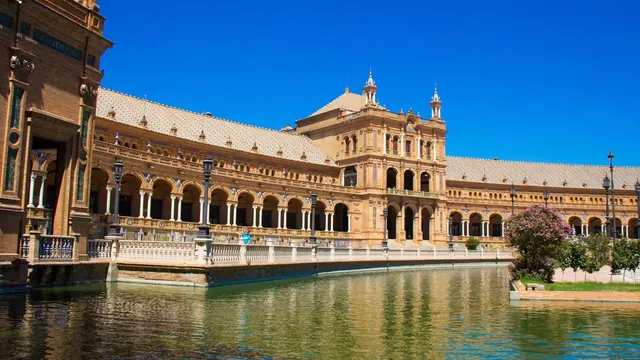
Andalusia is the choice for a trip built around places rather than a single beach. The Alhambra, the Mezquita and Seville's cathedral and Alcázar are an hour or two apart by fast train, flamenco is still part of ordinary nights out, and the tapas bars and sherry bodegas give each town its own reason to stay. It works best as a moving trip, a few nights in Seville or Granada and then a stretch on the coast, and it rewards travellers who don't mind summer heat or a hire car.
Choose Costa Blanca for
- families
- beaches
The Costa Blanca suits people who want to unpack once and spend the days by the sea. The water is warmer, the summers are less fierce and Benidorm's long sandy bays and nearby parks make it easier with children. The northern towns around Altea and Jávea are quieter places for a longer stay. You give up most of the great sights and the deep music culture, but you get a simpler vacation with less driving.
Scoreboard
Twelve categories on one fixed scale from 0 to 100. The shaded stretch is the gap between the two.
Your match
Pick a travel style or drag the sliders, and both match scores follow your weighting.
Wins on live music and the arts and culture and sights with your weighting.
Wins on families and beaches with your weighting.
What matters to you?
Category by category
What the scores mean for a trip.
Beaches & swimming
Both coasts are excellent, and the difference is in the kind of beach. Andalusia gives you two coasts to choose from. On the Atlantic, Bolonia, Zahara and Conil have the finest golden sand, backed by dunes and pine woods, but the water is cooler and the levante wind can blow for days. On the Costa del Sol the sea is calmer, the sand greyer and the shore heavily built.
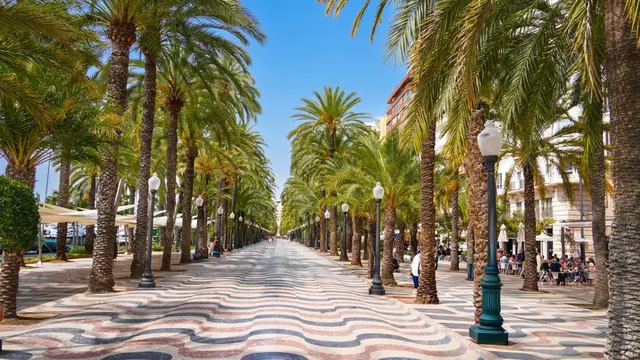
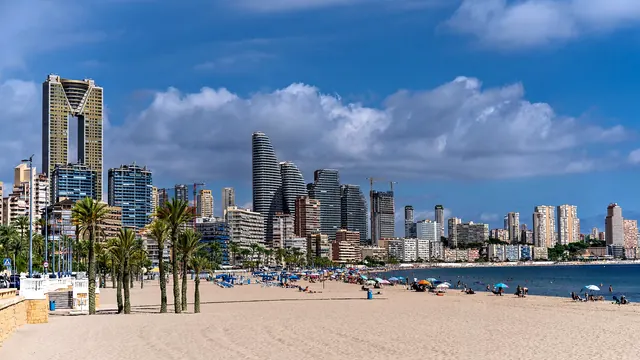
The Costa Blanca is more consistent for swimming. The sea is a few degrees warmer, Benidorm's Levante and Poniente are wide and gently shelving, and the dunes at Guardamar run for kilometres. North of Altea the shore becomes pebble and rocky coves, where the water is clearer and snorkelling is better than the sand.
Food & drink
Andalusia is the better place to eat. The tapas round is a whole evening in Seville's Triana. Granada still serves a free tapa with each drink, and each place has its own dishes, from salmorejo to Córdoba's oxtail. The sherry triangle of Jerez, El Puerto and Sanlúcar adds bodega visits and cold manzanilla with shellfish.
The Costa Blanca's strength is narrower: rice dishes eaten slowly at lunch by the sea, Dénia's red prawns and Alicante's tapas around the Mercado Central. Large parts of Benidorm and Torrevieja serve international menus for visitors, so good meals take more searching.
Culture & sights
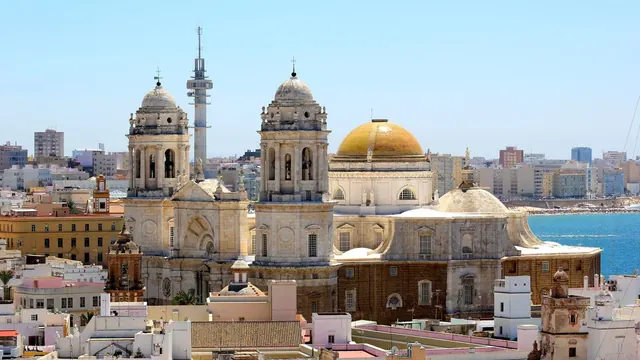
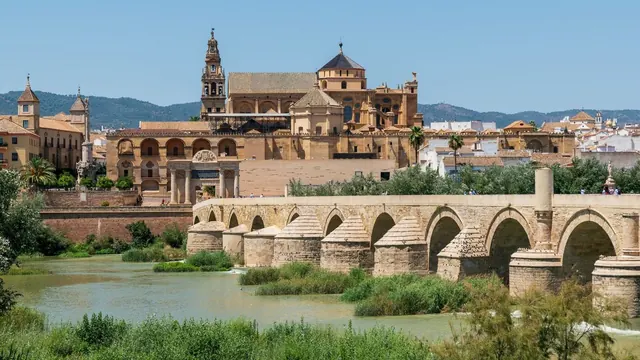
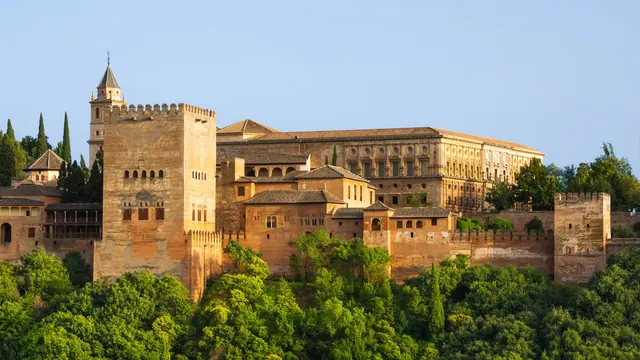
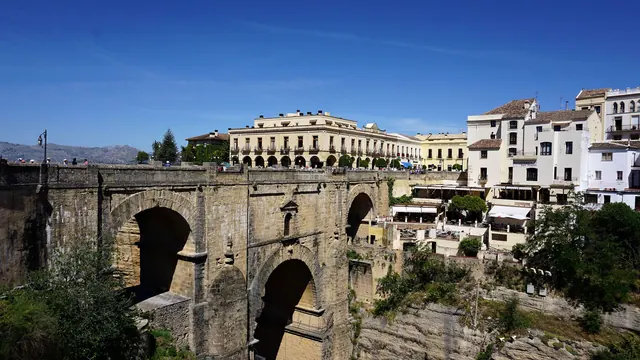
Andalusia has several monuments of the very first rank: the Alhambra above the Albaicín, Córdoba's Mezquita with a cathedral built among its striped arches, and Seville's Gothic cathedral beside the Mudéjar rooms of the Alcázar. Beyond those are Ronda on its gorge, the old port of Cádiz and the Renaissance towns of Úbeda and Baeza. Seeing them properly takes a week of moving between cities.
The Costa Blanca's heritage comes in smaller pieces. There is Alicante's castle on its rock and the MARQ archaeological museum, Elche's palm grove laid out in Moorish times and the white hilltop old town of Altea. Together they fill a few good days within a beach stay. The summer festivals, Alicante's Hogueras and the Moors and Christians parades, show more local character than the monuments do.
Nightlife
The two are fairly even, but the nights feel very different. Andalusia's nightlife happens on the street and across many towns: late terraces on Seville's Alameda de Hércules, cheap and crowded student bars in Granada, and in summer the glossy beach clubs of Marbella and Puerto Banús.
The Costa Blanca's big night is concentrated in Benidorm, a loud and cheerful resort scene of bars, drag shows, karaoke and late clubs that keeps going through the winter. For something more Spanish, Alicante's El Barrio fills its terraces late, while Altea and Jávea are quiet by the early hours.
Nature & outdoors
Andalusia has the larger and more varied outdoors. There is high walking and winter skiing in the Sierra Nevada, the Alpujarras villages, the Caminito del Rey gorge and El Torcal's limestone towers. Doñana's wetlands are home to birds and the Iberian lynx, and Tarifa is a centre for kitesurfing and whale watching.
The Costa Blanca has a smaller but dramatic landscape where limestone mountains drop straight into the sea at the Peñón de Ifach and the Serra Gelada. Its particular strength is rock climbing on the crags around Sella, along with diving in the marine reserves off its northern capes. On both, the trails are best outside summer.
Day trips
Andalusia's days out reach a long way, even across borders. Gibraltar is a short drive from Málaga, and from Tarifa a ferry reaches Tangier in about an hour, so a day in Morocco is possible. Closer to home there are the Roman ruins of Itálica near Seville, the sherry bodegas of Jerez, Ronda and the Antequera dolmens from Málaga, and the white villages of the Cádiz hills, which make a fine day by car.
On the Costa Blanca the best outing usually means a longer journey, to Valencia, which is more than an hour from most of the resorts. Closer to hand are the walled island village of Tabarca, Xàtiva's castle on its ridge and the gorge town of Alcoy, while the southern resorts are well placed for Murcia and Cartagena. These are good days out, but there are fewer of them and they are smaller.
Good for families
The Costa Blanca is a little easier with children. Around Benidorm, gentle beaches, pool hotels and a cluster of theme, water, animal and marine parks are all close together. The pools and waterfalls of the Fonts de l'Algar are a good way to cool off.
Andalusia has the same kind of resort life on the Costa del Sol and a few strong extras, such as Granada's hands-on science museum and the Western film sets near Almería. Its main attractions are inland cities, though, and in July and August their heat makes sightseeing hard for young children.
Getting around
Andalusia is easier for moving between cities. High-speed trains link Seville, Córdoba, Málaga and Granada, and Seville and Málaga have tram and metro lines. A car is still the best way to reach the white villages and the Costa de la Luz.
The Costa Blanca is a strip of coast rather than a network of cities. The TRAM from Alicante to Benidorm and Dénia is scenic but slow, buses connect the larger resorts, and you will want a car for the coves, the mountain villages and the theme parks.
Shopping & style
Andalusia has more worth buying. Look for Triana ceramics, flamenco dresses and fans sold for real use, leather from Ubrique in the Cádiz hills, Seville's Calle Sierpes and Málaga's Calle Larios, and luxury boutiques in Marbella.
On the Costa Blanca, shopping is mostly practical. The best things are the shoe outlets around Elche, turrón from Xixona and local wines. The weekly street markets in Jávea and Altea are more a part of the week's routine than a reason to go.
Affordability
Costs are broadly similar, but the cheap places are different. In Andalusia the cheapest eating is in the bars, especially in Granada and Jaén where a free tapa comes with each drink, and rooms are much cheaper inland and on the Almería coast than in Seville during its spring festivals or on the summer Costa del Sol.
On the Costa Blanca the savings come from package apartments and hotels in Benidorm and around Torrevieja. Jávea, Moraira and Altea cost noticeably more, and spring and autumn are cheaper everywhere.
Live music & performing arts
Andalusia is the home of flamenco, and that alone settles this category. There are nightly shows in Santa Cruz and Triana, the peñas of Jerez and the zambra in Sacromonte's cave houses, plus Seville's Bienal every other autumn and summer concerts in the gardens of the Alhambra.
The Costa Blanca's programme is mostly in Alicante, with touring productions at the Teatro Principal and orchestral seasons at the ADDA. Its one real event is the Misteri d'Elx, the medieval mystery play sung in Elche's basilica each August. In the resorts, live entertainment mostly means cabaret and tribute acts.
Wellness & relaxation
Neither is a major spa destination, and they relax you in different ways. Andalusia has Moorish-style bathhouses in Granada, Córdoba, Seville and Málaga, old-fashioned spa towns such as Lanjarón, and large resort spas around Marbella.
The Costa Blanca offers less in the way of bathing, with mostly hotel spas and a few health retreats in the hills near Altea. Its real advantage is a mild, quiet winter on the northern coast, where many people settle in for weeks of long lunches and walks along the promenade.
When should you go?
Pick your month. The climate figures are measured averages, not a forecast.
Andalusia in July
Costa Blanca in July
Daytime high, °C
Rainfall in the month, mm
Where the figures come from
Costa Blanca's temperatures are measured 57 km from the centre, at Alicante.
Costa Blanca has no rain gauge within 25 km of the centre, so its rainfall comes from a gridded climate dataset read at the destination rather than from a gauge further away.
Temperature and rainfall are climate normals, averaged over the years shown. Andalusia: 1991-2020 (sunshine 1981-2010, rainfall 1981-2010) normals, Sevilla / San Pablo (8.1 km from centre). Costa Blanca: 1991-2020 normals, Alicante (56.6 km from centre).
Andalusia's figures are measured inland, near the cities most visitors tour, and they show a hard summer. July and August reach 36°C, which is too hot for walking around Seville or Córdoba at midday, so spring from March to May and the month of October are the best times for sightseeing. Rain comes in autumn and winter, peaking at 122mm in November, and winter days are mild and fairly bright.
The Costa Blanca stays gentler all year. Summer highs stop at about 31°C, and the sea is warm enough for swimming from June to October, reaching 26°C in August. Rain is light throughout the year and comes mostly in short spells between September and November. Late winter and spring get more sunshine than they do in Andalusia, which helps explain why so many people come for the winter months. Inland Andalusia gets the hotter, sunnier high summer, but for a beach trip in July or August the Costa Blanca's milder heat is easier to live with.
Which traveller are you?
For a culture and arts trip, Andalusia wins clearly. The Alhambra, Córdoba's Mezquita and Seville's Alcázar are among Europe's great monuments. Flamenco in Triana, Jerez and Sacromonte adds a living art that the Costa Blanca's theatres and cabaret can't match.
On a family trip with children, the Costa Blanca is the easier choice. Benidorm's gently shelving bays, its apartments with pools and the theme, water and marine parks close by keep the days simple. The summer heat is also milder than in Andalusia's inland cities.
For a beach and sun trip, the Costa Blanca is easier, with warmer water, long sandy bays from Benidorm to Guardamar and coves for snorkelling near Jávea. Andalusia has wilder Atlantic sand, but the wind and cooler sea make some days harder work.
Before you go
| Measure | Andalusia | Costa Blanca |
|---|---|---|
| Official language | Spanish | Spanish |
| Currency | Euro (EUR) | Euro (EUR) |
| Sockets | CF230 V, 50 Hz | CF230 V, 50 Hz |
| Driving side | Right | Right |
| Time zone | UTC+1, UTC+2 in summer | UTC+1, UTC+2 in summer |
| Emergency number | 112 | 112 |
| Main airport | Seville Airport (SVQ)96 non-stop destinations | Alicante-Elche Miguel Hernández Airport (ALC)126 non-stop destinations |
| Public holidays this year | 12 days | 13 days |
By the numbers
| Measure | Andalusia | Costa Blanca |
|---|---|---|
| Population | 8,619,616 | - |
| Swim season, months above 21 °C | - | 5 months |
Where else could you go?
Every comparison below shares a destination with this one, so you can follow Andalusia or Costa Blanca somewhere new.
- Formenteravs Costa Blanca
- Ibizavs Costa Blanca
- Algarvevs Andalusia
- Mallorcavs Costa Blanca
- Menorcavs Costa Blanca
- Costa Bravavs Costa Blanca