Costa Blanca or Costa Brava?
Our verdict in twelve categories, each scored against the same fixed benchmark cities, and the climate month by month, so you can choose for your trip.
Choose Costa Blanca for
- getting around
- nightlife
- prices
Costa Blanca suits a straightforward sun-and-sand trip: long, gently shelving beaches, a warmer and drier climate that stretches the season into October, and a busy party scene in Benidorm for those who want it. It is also the cheaper and easier of the two to manage without a car, thanks to the airport and the coastal tram, which makes it the natural pick for families on a budget and for winter sun.
Choose Costa Brava for
- culture and sights
- day trips
- food and drink
Travellers who want their beach days mixed with sightseeing and good cooking will get more from the Costa Brava. Its pine-backed coves and cliff paths are lovelier for walking, Girona and the Dalí sights at Figueres give it real cultural weight, Empordà cooking is the stronger cuisine, and Barcelona and the French border are within a day out. The trade-off is a higher bill, a car you can hardly do without and a coast that largely goes quiet once summer ends.
Scoreboard
Twelve categories on one fixed scale from 0 to 100. The shaded stretch is the gap between the two.
Your match
Pick a travel style or drag the sliders, and both match scores follow your weighting.
Too close to call, 1 point apart
Wins on getting around and nightlife with your weighting.
Wins on culture and sights and day trips with your weighting.
What matters to you?
Category by category
What the scores mean for a trip.
Beaches & swimming
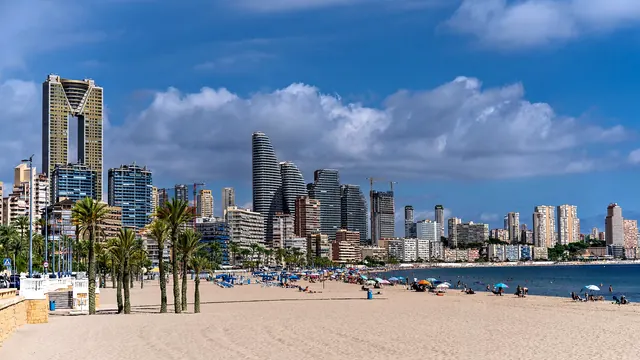
Both coasts are built for beach days, but the beaches are different in kind. The Costa Blanca's strength is long, gently shelving sand, at Benidorm's Levante and Poniente, San Juan and the dunes of Guardamar, with rocky coves only in the north around Jávea. Its sea is also warmer and the swimming season runs on into October.
The Costa Brava is mainly a coast of coves, small sandy bays under pine-covered cliffs around Begur, Calella de Palafrugell and Tamariu, with clear green water. Long stretches of sand are found mainly in the Bay of Roses and at Pals, and the tramontana wind can spoil the northern beaches for days.
Food & drink
The Costa Brava eats better. Empordà cooking, with its mar i muntanya dishes, suquet fish stew and L'Escala anchovies, is a regional cuisine with real character, and Girona and the countryside around it draw people who travel to eat.
The Costa Blanca's best food is its rice: arroz a banda, black rice and Elche's crusted arroz con costra, with Dénia's red prawns and Alicante's tapas around the Mercado Central. On both coasts the big resorts serve menus aimed at tourists, but on the Costa Blanca the good places are harder to find among them.
Culture & sights
The Costa Brava has far more to see. The Dalí Theatre-Museum in Figueres and the artist's houses at Portlligat and Púbol, Girona's cathedral steps and Jewish quarter, the Greek and Roman ruins at Empúries and the walled old town of Tossa make sightseeing a real part of a trip, although a car is needed to string them together.
The Costa Blanca has a handful of good sights rather than a centre of gravity: Alicante's Santa Barbara castle and the MARQ, Elche's UNESCO-listed palm grove and the hilltop villages of Altea and Guadalest. That fills a few days, and the summer Hogueras and Moors and Christians parades are its liveliest cultural moments.
Nightlife
For going out, the Costa Blanca has more to offer. Benidorm's old town and Rincón de Loix run late with bars, cabaret and clubs and never shut down entirely, even in winter, while Alicante's El Barrio offers a later, more Spanish night under the castle.
The Costa Brava's party scene is concentrated in Lloret de Mar and Platja d'Aro, and it is a summer affair. Beyond those two, nights mean long dinners and a drink in a village square, and outside summer most of the coast closes early.
Nature & outdoors
Mountains are the Costa Blanca's outdoor draw. The Peñón de Ifach rises from the sea at Calpe, Montgó stands over Jávea, and the Aitana range, above 1,500m, offers proper hill walking, while the crags around Sella and Guadalest draw rock climbers. In the flatter south, flamingos feed on the salt lakes at Torrevieja and Santa Pola.
The Costa Brava's best outdoors is at the water's edge. The Camí de Ronda runs between the coves around Calella de Palafrugell and Begur and on towards the bare headland of Cap de Creus. Offshore, the Medes Islands reserve gives better diving and snorkelling than the Costa Blanca's capes, and inland there are the Garrotxa volcanoes and quiet lanes that road cyclists use all year.
Day trips
The Costa Brava is better placed for days out. Barcelona is less than an hour from Girona by high-speed train, Collioure and Perpignan are across the French border, and Besalú's Romanesque bridge and the Empordà wine villages are close inland.
From the Costa Blanca, Valencia is the big outing, but it takes most of two hours from Alicante or Benidorm. Closer by, there are Xàtiva's castle, the gorge town of Alcoy, the island village of Tabarca, and Murcia and Cartagena from the southern resorts.
Good for families
The Costa Blanca is slightly the easier choice with children. Around Benidorm, gently shelving beaches sit within easy reach of a theme park, water parks, an animal park and a marine park, and the pools at Fonts de l'Algar make a cool escape in midsummer.
The Costa Brava works well too, especially in the campsites behind the shallow Bay of Roses and at L'Estartit, where glass-bottom boats run to the Medes Islands. Its prettiest coves are reached down long flights of steps, though, so younger children are confined to the bigger bays.
Getting around
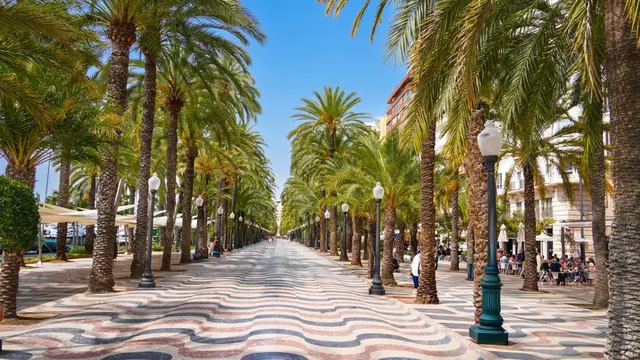
Without a car, the Costa Blanca is much easier to manage. Alicante's airport is within an hour of the main resorts, and the coastal TRAM runs north through Benidorm and Altea towards Dénia, although the coves near Jávea and the mountain villages still really need a car.
On the Costa Brava a car is close to essential. The high-speed line stops at Girona and Figueres but at no beach town, buses are sparse, and the lanes down to the coves at Begur and Cadaqués jam in summer. Once you have parked, the compact villages and coastal paths are good on foot.
Shopping & style
Neither coast is a place to come for the shops, and on both the best buys are local crafts and food rather than fashion. What differs is the speciality. The Costa Blanca's is shoes, sold at the factory outlets outside Elche, the heart of Spain's footwear trade, and it adds Xixona turrón and Elche's palm crafts as things to take home. The Costa Brava's answer is ceramics, made in the workshops of La Bisbal d'Empordà, a pottery town for centuries.
For clothes, the Costa Blanca's main town is Alicante, with its high streets and a big department store. On the Costa Brava the equivalent is Girona, whose old town and Eixample have more independent shops. Both coasts have weekly street markets, but the Costa Blanca's stalls lean towards leather and ceramics and the Costa Brava's towards cheese, sausages and Empordà wine. From the Costa Brava a serious shopping day in Barcelona is easy, and the Costa Blanca has nothing to match it.
Affordability
The Costa Blanca is the cheaper coast. Benidorm and the resorts around Torrevieja offer a large supply of affordable apartments, set lunches and inexpensive drinks, and with good public transport you can often do without a hire car.
In summer, the Costa Brava costs about as much as an average Western European destination, with boutique prices in Begur, Cadaqués and S'Agaró, and car hire and parking on top. Both have their upmarket corners, Jávea and Moraira on one coast and the Begur coves on the other, but the Costa Brava has fewer cheap alternatives beyond Lloret and the big campsites.
Live music & performing arts
Alicante keeps a modest programme going all year, with touring theatre and dance at the Teatro Principal and an orchestral season at the ADDA. Each August, Elche stages its medieval Misteri in the basilica. Elsewhere on the Costa Blanca, live performance means Benidorm's cabaret and tribute shows.
The Costa Brava saves its best for July and August, and its settings are the more memorable. There is opera and ballet in the castle grounds at Peralada, international acts in the cliff-top garden at Cap Roig, and havaneres sung by crowds on the beach at Calella de Palafrugell. Outside summer, most of what is on is in Girona.
Wellness & relaxation
Both coasts rest more on their pace than on spas. The Costa Brava has the one real spa town, Caldes de Malavella near Girona, with Roman baths and mineral springs, and quiet stone farmhouses in the Baix Empordà for June or September.
The Costa Blanca offers Arab-style baths in Alicante and health retreats in the hills above Altea, and its mild winter makes the calm northern towns a place to stay for weeks out of season.
When should you go?
Pick your month. The climate figures are measured averages, not a forecast.
Costa Blanca in July
Costa Brava in July
Daytime high, °C
Rainfall in the month, mm
Where the figures come from
Costa Blanca's temperatures are measured 57 km from the centre, at Alicante.
Costa Blanca has no rain gauge within 25 km of the centre, so its rainfall comes from a gridded climate dataset read at the destination rather than from a gauge further away.
Temperature and rainfall are climate normals, averaged over the years shown. Costa Blanca: 1991-2020 normals, Alicante (56.6 km from centre). Costa Brava: 1991-2020 normals, Gerona / Costa Brava (23.2 km from centre).
Around the main resorts, the Costa Blanca is the warmer, drier and sunnier coast. The sea is swimmable from June to October and reaches about 26°C in August, while midsummer is almost rainless, with about 5mm in July. July and August are too hot for hiking or long walks through the towns, so spring and autumn are the times for the mountains and for sightseeing, and the mild, sunny winter, with highs of about 17°C in January, draws long-stay visitors.
On the Costa Brava the beach season is shorter, running from late June to September, with a fresher sea in early summer. It gets rain in every month and is wettest in autumn, about 86mm in October, and winters are cooler, with highs near 14°C in January. June and September are its sweet spots for coastal walking and quieter coves, while the Costa Blanca stays pleasant for longer either side of summer.
Which traveller are you?
On a beach and sun trip, the Costa Blanca has the edge. Its long sandy bays at Benidorm, San Juan and Guardamar suit lazy days, the summers are drier and sunnier, and the sea stays warm enough for swimming well into October.
For a culture and arts trip, the Costa Brava is the clear choice. The Dalí Theatre-Museum, Girona's medieval old town, the ruins of Empúries and the summer festivals at Peralada and Cap Roig give it far more to see, and Barcelona is within a day out.
On a trip on a tight budget, the Costa Blanca stretches money further. Benidorm and the resorts around Torrevieja have plenty of affordable apartments and set lunch menus, and the tram and buses save on a hire car, which on the Costa Brava is almost unavoidable.
Before you go
| Measure | Costa Blanca | Costa Brava |
|---|---|---|
| Official language | Spanish | Spanish |
| Currency | Euro (EUR) | Euro (EUR) |
| Sockets | CF230 V, 50 Hz | CF230 V, 50 Hz |
| Driving side | Right | Right |
| Time zone | UTC+1, UTC+2 in summer | UTC+1, UTC+2 in summer |
| Emergency number | 112 | 112 |
| Main airport | Alicante-Elche Miguel Hernández Airport (ALC)126 non-stop destinations | Girona-Costa Brava Airport (GRO)18 non-stop destinations |
| Public holidays this year | 13 days | 14 days |
By the numbers
| Measure | Costa Blanca | Costa Brava |
|---|---|---|
| Swim season, months above 21 °C | 5 months | 3 months |
Where else could you go?
Every comparison below shares a destination with this one, so you can follow Costa Blanca or Costa Brava somewhere new.
- Formenteravs Costa Blanca
- Ibizavs Costa Blanca
- Menorcavs Costa Brava
- Mallorcavs Costa Brava
- Mallorcavs Costa Blanca
- Provencevs Costa Brava